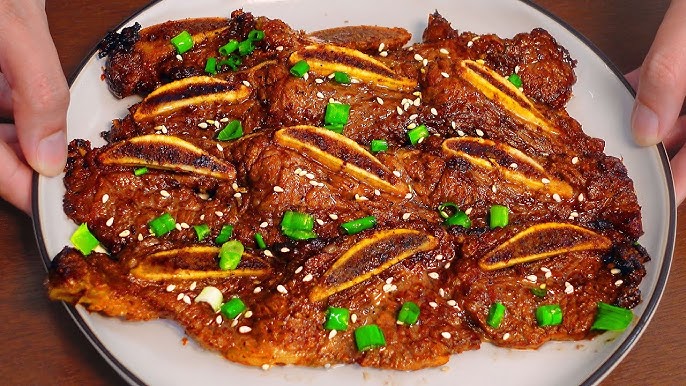
Korean Short Ribs Recipe: Korean short ribs, or Galbi (갈비), are quite distinct from their American counterparts. While traditional American ribs are often slow-cooked or smoked over hours, Korean-style ribs are all about a quick, flavorful punch achieved through a deeply savory marinade and high-heat grilling. The magic lies in the cut of the meat and the marinade. The ribs are typically cut “flanken-style” across the bone, which means you get thin slices of meat that are perfect for fast cooking and have a beautiful presentation.
The combination of sweet (from sugar or fruit), salty (from soy sauce), garlicky, and umami-rich flavors is what makes Korean short ribs stand out. These ribs are finger-licking good, with a caramelized outer crust and juicy, tender interior. They’re also incredibly versatile—you can grill them, broil them, or even cook them in an air fryer.
Popularity and Cultural Significance
Galbi is more than just food—it’s part of Korean culture. You’ll find it at family gatherings, birthdays, holidays, and of course, Korean BBQ joints. In Korea, sharing food is a sign of love, and Galbi is often at the center of the table. It’s a symbol of celebration and hospitality. You might even say that Galbi is to Korea what ribs are to the American South—a comfort food with a cultural heartbeat.
Ingredients You’ll Need
Main Ingredients for Korean Short Ribs
Let’s get to the heart of this recipe—the ingredients. First, the ribs. You’ll want beef short ribs, and specifically the flanken-cut kind, which are sliced across the bone into thin strips. They cook quickly and soak up the marinade beautifully.
Here’s what you’ll need:
- 3 to 4 pounds of flanken-cut beef short ribs
- 1 small Asian pear (or substitute with apple or kiwi)
- 1 medium onion
- 4 cloves garlic
- 1 thumb-sized piece of fresh ginger
- ½ cup soy sauce
- ¼ cup brown sugar
- 2 tablespoons sesame oil
- 2 tablespoons mirin (optional but recommended)
- 1 tablespoon rice vinegar
- 1 tablespoon honey
- 1 teaspoon freshly ground black pepper
- 2 green onions, chopped
- 1 tablespoon toasted sesame seeds
Ingredients for the Marinade
The marinade is what truly makes Korean short ribs burst with flavor. It’s a blend of sweet, salty, and savory, with hints of nuttiness and spice. Traditionally, Asian pear is used to tenderize the meat naturally, and it adds a subtle fruitiness that balances the soy sauce.
If you’re short on time or ingredients, don’t worry—I’ll also provide a simplified marinade option later on in the article.
Optional Add-ons and Garnishes
To elevate your dish even more, consider adding:
- Sliced scallions for freshness
- Extra toasted sesame seeds
- Kimchi on the side
- Steamed rice as a base
- Pickled vegetables for that Korean touch
These extras make your meal more colorful, textural, and authentic.
Choosing the Right Cut of Meat
English Cut vs. Flanken Cut
When shopping for ribs, you’ll usually come across two types: English cut and flanken cut.
- English cut ribs are the traditional American-style ribs. They’re thick and meaty but not ideal for this recipe.
- Flanken cut ribs, on the other hand, are sliced thinly across the bone, usually about ¼-inch thick. This cut is ideal for Korean BBQ because the thinner slices cook quickly and evenly. Each strip contains several cross-sections of bone, which adds incredible flavor.
So, if you want that authentic Korean BBQ experience, ask your butcher for flanken-cut beef short ribs.
Where to Buy Quality Short Ribs
You can usually find flanken-cut short ribs at:
- Asian grocery stores
- Local butchers
- Korean markets
- Some mainstream supermarkets (like Costco or Whole Foods)
If you don’t see them, ask the butcher to slice beef short ribs across the bone into ¼-inch thick strips. Trust me, it’s worth the ask!
Preparing the Marinade
Balancing Sweet, Savory, and Umami
A perfect Korean marinade is a delicate balance. The soy sauce provides saltiness and depth. The brown sugar and honey add sweetness. The pear or apple brings freshness and helps tenderize the meat. Garlic and ginger give it punch, while sesame oil adds nuttiness.
Want to adjust it to your taste? You can:
- Add more sugar for a sweeter profile.
- Include a touch of gochujang (Korean chili paste) for heat.
- Substitute low-sodium soy sauce for a healthier twist.
Marinating Tips for Maximum Flavor
- Marinate for at least 4 hours, but overnight is best.
- Use a ziplock bag or a large container with a lid.
- Ensure every piece is evenly coated.
- Flip or stir occasionally to distribute the marinade.
- Don’t marinate for more than 24 hours, or the meat may become mushy.
Step-by-Step Guide to Cooking Korean Short Ribs
Step 1: Preparing the Ribs
First things first—rinse your short ribs under cold water. This removes any bone fragments and helps clean the meat. Pat them dry using paper towels to ensure the marinade sticks properly.
Next, inspect the ribs. If they have too much fat on them, you can trim the excess. You don’t want to remove all the fat though—that’s where the flavor lives. A nice marbling of fat ensures juicy, tender ribs after grilling.
Once trimmed, lay them flat in a shallow dish or a resealable plastic bag to get ready for the marinade.
Step 2: Making the Marinade
Now for the star of the show—the flavor-packed marinade.
In a blender or food processor, combine the following:
- 1 Asian pear (or apple/kiwi)
- 1 onion
- 4 cloves garlic
- 1-inch piece of ginger
- ½ cup soy sauce
- ¼ cup brown sugar
- 2 tbsp sesame oil
- 2 tbsp mirin (optional)
- 1 tbsp rice vinegar
- 1 tbsp honey
- 1 tsp black pepper
Blend until smooth. You’re looking for a rich, thick liquid that smells like heaven. Once blended, pour the marinade over the ribs, making sure each piece is fully coated. Toss in your chopped green onions and sesame seeds for an added flavor punch.
Step 3: Marinating the Meat
Transfer the coated ribs into a ziplock bag or airtight container. Seal and refrigerate for a minimum of 4 hours—overnight is ideal. The longer you marinate, the deeper the flavor penetrates the meat.
A few pro tips:
- If you’re short on time, let the ribs sit at room temperature for 30–60 minutes before grilling. This jumpstarts the flavor absorption.
- Rotate or flip the ribs every few hours if possible to make sure every piece gets equal love.
Step 4: Grilling the Short Ribs
Time to bring the heat! Preheat your grill to medium-high heat. You want it hot enough to sear the ribs, but not so hot that they burn.
Grill each rib for about 3 to 4 minutes per side, depending on thickness. You’re looking for a nice char and caramelization. The sugar in the marinade should create a gorgeous crust while the inside stays juicy.
If you’re using a grill pan indoors, follow the same timing. Use tongs to flip and avoid piercing the meat—that’ll release those precious juices.
Tip: Don’t overcrowd the grill. Cook in batches if necessary to allow proper heat circulation.
Step 5: Serving Suggestions
Once off the grill, let the ribs rest for 5–10 minutes before serving. This allows the juices to redistribute, keeping each bite tender and moist.
Serve your Korean short ribs with:
- Steamed white rice or sticky rice
- Kimchi for that spicy, fermented zing
- Ssamjang (Korean dipping sauce) and lettuce leaves for wrapping
- Pickled radish or cucumber salad for a refreshing side
Don’t forget a sprinkle of toasted sesame seeds and some freshly chopped green onions on top for the final touch!
Cooking Methods Explained
Grilling vs. Broiling vs. Pan-Searing
While grilling is the traditional and most flavorful method for Korean short ribs, it’s not the only option. Here’s how other cooking methods compare:
Grilling
- Best flavor due to smoky char
- Requires outdoor grill or grill pan
- High heat = crispy exterior, juicy interior
Broiling
- Convenient for indoor cooking
- Place ribs on a wire rack over a baking sheet
- Broil on high for 4–5 minutes per side
- Watch closely to avoid burning!
Pan-Searing
- Great for small batches
- Use a cast iron skillet or heavy-bottomed pan
- Cook 3–4 minutes per side over medium-high heat
- Add a splash of water and cover if ribs are too thick
Each method can yield amazing results, but grilling will always give you that authentic BBQ flavor that’s hard to beat.
Best Practices for Each Method
No matter the method you choose:
- Always bring the meat to room temperature before cooking
- Do not overcrowd the pan or grill
- Let cooked meat rest before serving
- Use metal tongs for easy flipping
- Clean your grill or pan well before starting
Pairing and Serving Ideas
Traditional Korean Side Dishes
Korean cuisine is known for its vibrant banchan (side dishes) that accompany every meal. Here are some must-have sides with your short ribs:
- Kimchi – Fermented napa cabbage with spice
- Kongnamul – Seasoned soybean sprouts
- Oi Muchim – Spicy cucumber salad
- Japchae – Stir-fried glass noodles
- Gamja Jorim – Braised potatoes in soy sauce
- Sigeumchi Namul – Seasoned spinach
These sides not only enhance the flavors but offer contrasting textures and temperatures that make every bite more exciting.
Fusion Serving Ideas
Want to switch things up? Try these modern twists:
- Serve ribs over mashed potatoes with Korean glaze
- Make Korean short rib tacos with pickled slaw
- Add to a Korean-inspired rice bowl with veggies and egg
- Pair with a fresh mango salsa for a sweet-savory fusion
This recipe is flexible enough to shine in both traditional and modern meals.
Storage and Reheating Tips
Refrigerating and Freezing Cooked Ribs
Let’s say you made a huge batch (good call!) and have leftovers. Here’s how to store them:
- Refrigerate in an airtight container for up to 4 days
- Freeze cooked ribs in freezer bags or containers for up to 2 months
- Store marinade separately if you’re prepping uncooked meat
To freeze uncooked, marinated ribs: seal in a freezer-safe ziplock and lay flat for easy storage. Thaw in the fridge overnight before cooking.
Best Ways to Reheat without Losing Flavor
To reheat and still keep that juiciness:
- Oven method: Preheat to 300°F (150°C), wrap ribs in foil, and heat for 10–15 minutes.
- Stovetop method: Add a splash of water to a skillet, cover, and heat over low until warmed through.
- Microwave: Use in short 30-second bursts, cover with a damp paper towel to retain moisture.
Avoid overcooking during reheating—it can dry the meat out and ruin that rich, tender texture.
Nutritional Value and Dietary Adjustments
Health Considerations
Korean short ribs are definitely a treat, not an everyday meal, especially if you’re watching your sodium, sugar, or fat intake. But there are ways to make it a little healthier:
- Choose leaner cuts or trim excess fat
- Use low-sodium soy sauce
- Cut back on the sugar and honey in the marinade
- Grill instead of pan-frying to reduce oil usage
One serving (about 4 oz) of Korean short ribs can have approximately:
- Calories: 300–450
- Protein: 20–25g
- Fat: 20–30g
- Carbs: 10–20g (from marinade)
Low-Sodium or Low-Sugar Alternatives
If you’re on a special diet, try these adjustments:
- Replace soy sauce with coconut aminos (lower sodium)
- Swap sugar for monk fruit sweetener or erythritol
- Use fresh fruit juice for sweetness instead of honey
These swaps still let you enjoy that bold Korean flavor—without blowing your nutrition goals.
Common Mistakes to Avoid
Over-Marinating or Undercooking
One of the biggest pitfalls in making Korean short ribs is over-marinating the meat. Yes, longer marination means more flavor—but after 24 hours, the enzymes in fruits like pear or kiwi can break down the meat too much, making it mushy rather than tender.
The fix? Marinate for 4 to 12 hours, ideally overnight, and no more than 24 hours.
On the flip side, undercooking the ribs is also a no-no. These ribs are sliced thin and cook quickly, but make sure they’re fully cooked and nicely charred. That caramelization is where a lot of the flavor lives!
Choosing the Wrong Type of Meat
Another mistake is grabbing the wrong cut of meat. English-cut ribs are thick and suited for braising—not grilling. If you’re trying to make Galbi with English-cut, it just won’t cook properly on high heat.
Always go with flanken-style short ribs—sliced across the bone, ¼-inch thick. If you’re not sure, ask your butcher directly: “Can you give me Korean-style short ribs?” They’ll know what you mean.
Other common mistakes:
- Not drying the ribs before marinating: moisture waters down the flavor.
- Using raw garlic in the marinade without blending: it can leave a harsh aftertaste.
- Cooking cold meat straight from the fridge: always bring meat to room temp for even cooking.
Avoiding these slip-ups makes the difference between good ribs and unforgettable ribs.
Korean BBQ Party Tips
Hosting a Korean-Style BBQ at Home
Throwing a Korean BBQ night at home? You’re in for an epic time—this is more than just dinner, it’s an experience!
Here’s what you’ll need:
- Portable grill or tabletop BBQ: gas or charcoal
- Tongs and scissors (Korean-style BBQ often includes cutting meat at the table)
- Lettuce wraps (ssam): romaine or perilla leaves
- Ssamjang dipping sauce: a savory-spicy mix of gochujang and doenjang
- Plenty of banchan: kimchi, pickled radish, seasoned veggies
- Steamed rice and beer or soju
Set everything up buffet-style and let everyone grill their own meat. It’s interactive, social, and delicious. Play some K-pop, light candles, and let the good times roll!
Essentials for an Authentic Experience
To make it feel like you’re in Seoul without leaving your living room, here are some authentic touches:
- Use Korean-style metal chopsticks
- Serve in stone bowls or grill-safe plates
- Offer Korean rice wine (makgeolli) or soju
- Print little menus or signs with the names of the dishes
- Lay out grill tongs and kitchen scissors for easy slicing at the table
Hosting Korean BBQ at home is about sharing, tasting, and connecting. It’s hands-on, full of laughter, and totally memorable.
Make-Ahead and Meal Prep Ideas
Batch Cooking for the Week
Want to meal prep like a pro? Korean short ribs are perfect for batch cooking.
Here’s how:
- Marinate a large batch—enough for several meals
- Grill and cool completely
- Divide into individual containers with rice and veggies
- Store in the fridge for up to 4 days, or freeze for up to 2 months
These reheated ribs taste just as good the next day—some say even better! Pair with simple sides like cucumbers or kimchi to round out your lunchbox.
Prepping for Parties and Gatherings
If you’re hosting a party, prep everything the night before. Have your ribs marinated, your sides chilled, and your grill clean and ready.
You can even:
- Pre-chop green onions
- Toast sesame seeds ahead of time
- Set the table with all your serving dishes in place
On the day of the event, all you need to do is fire up the grill, pour some drinks, and enjoy. Stress-free hosting = happy host + full guests.
Pro tip: Make a DIY BBQ station where guests can build their own wraps with lettuce, ribs, rice, and sauces. It’s interactive and super fun!
Reader Reviews and Testimonials
Real Feedback from Korean Cuisine Lovers
Don’t just take my word for it—check out what other foodies have to say about this Korean short ribs recipe:
“I made these ribs for my family, and they were gone in 10 minutes! Better than any restaurant I’ve been to.” – Maria J.
“This marinade is next-level. The ribs were so juicy and flavorful. My husband said it’s his new favorite meal.” – Derek L.
“I hosted a Korean BBQ night with this recipe, and everyone raved about it. We’ll be doing this again!” – Samantha P.
“I’ve tried making Galbi before, but this one nailed it. The pear in the marinade makes all the difference.” – Kevin T.
“I’m not even a great cook, and these turned out amazing. Super easy to follow and ridiculously tasty.” – Emily R.
Try it yourself, and you might be the next to leave a glowing review!
FAQs about Korean Short Ribs Recipe
Can I use a different type of meat for this recipe?
Yes! While beef short ribs are traditional, you can also use boneless beef ribs, pork ribs, or even chicken thighs. Just adjust the cooking time and keep the marinade the same.
How long should I marinate Korean short ribs?
Marinate for at least 4 hours, but overnight (8–12 hours) gives the best flavor. Avoid going over 24 hours to prevent mushy texture.
What if I don’t have a grill?
No worries! You can broil the ribs in the oven, use a grill pan, or even pan-sear them on the stovetop. The flavor will still be amazing.
Are Korean short ribs spicy?
Not typically. The standard marinade is more sweet and savory than spicy. Want heat? Add gochujang or chili flakes to the marinade.
Can I cook Korean short ribs in an air fryer?
Yes! Cook them at 375°F for about 8–10 minutes, flipping halfway. Make sure they’re in a single layer to get that crispy edge.
Conclusion
Korean short ribs, or Galbi, are the ultimate crowd-pleaser. Whether you’re cooking for a weeknight dinner or throwing an epic BBQ party, this dish brings flavor, fun, and a taste of Korean culture right into your kitchen.
With the right cut of meat, a beautifully balanced marinade, and a hot grill, you’ll turn simple ribs into something absolutely extraordinary. Add in your favorite sides, wrap them in lettuce, and prepare for a meal that’ll have people talking long after the last bite.
Ready to fire up the grill?