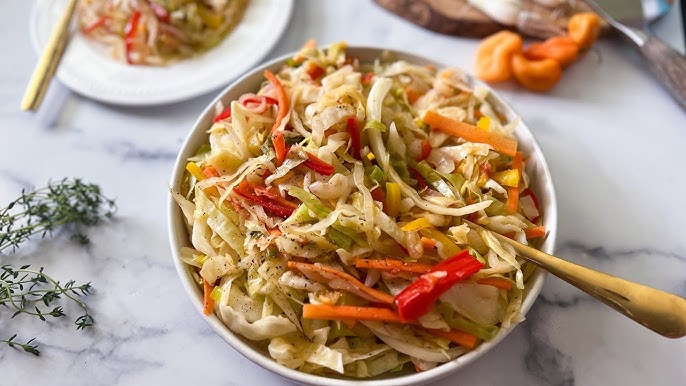
Jamaican Cabbage Recipe: Jamaican cabbage isn’t your average boiled or bland veggie dish. It’s a flavor-packed, colorful, spicy stir-fry that celebrates bold Caribbean seasonings and fresh vegetables. What makes it stand out is the combination of cabbage with fragrant herbs, sweet bell peppers, hot scotch bonnet peppers, and sometimes even meat or seafood. It’s not only delicious but also versatile. Whether you’re a vegan, vegetarian, or meat-lover, this recipe has something to offer.
The rich flavors come from Jamaica’s vibrant culture and diverse culinary roots. African, Spanish, and Indian influences are present in this seemingly simple dish. You’ll notice that it’s often served alongside rice and peas, jerk chicken, or even fried dumplings. The spice level can be adjusted, but the real essence lies in the balance of heat, herbs, and sweetness.
A Staple in Caribbean Kitchens
Across the Caribbean, cabbage is a go-to ingredient because it’s affordable, accessible, and easy to cook. In Jamaican households, cabbage dishes are common at family dinners, street food stalls, and festive gatherings. It’s the kind of meal that brings people together—comforting, hearty, and rich in tradition.
If you’ve ever walked into a Jamaican kitchen, the smell of garlic, thyme, and sizzling peppers instantly tells you you’re in for something special. This cabbage recipe is often paired with “food”—a term used in Jamaica to refer to starchy sides like boiled green bananas, yam, or dumplings. It’s a reflection of how islanders make the most of fresh produce with minimal fuss and maximum flavor.
Essential Ingredients for Jamaican Cabbage
Fresh Produce
Let’s start with the heart of the dish—cabbage. You’ll want a medium-sized green cabbage, firm and crisp. Avoid ones that feel light or have browned leaves. You’ll also need:
- 1 large carrot (julienned)
- 1 bell pepper (red, yellow, or green – or a combo for more color)
- 1 medium onion (thinly sliced)
- 2 cloves garlic (minced)
- 1 scotch bonnet pepper (finely chopped, seeds removed for less heat)
- 2 stalks of scallions (chopped)
These veggies not only add flavor but also bring texture and color to the dish. The carrots add a hint of sweetness, the bell peppers give a mild crunch, and the onion and garlic are key flavor bases.
Spices and Seasonings
Seasoning is where Jamaican cabbage really shines. You won’t need fancy sauces or artificial flavor enhancers. Here’s what you’ll typically need:
- 1 tsp salt
- ½ tsp black pepper
- 1 tsp dried thyme or 2 sprigs fresh thyme
- ½ tsp all-purpose seasoning or chicken bouillon (optional)
- 1 tbsp vegetable oil or coconut oil
These seasonings create a layered taste—savory, slightly earthy, and aromatic. Fresh thyme is non-negotiable; it brings a traditional island flavor you just can’t fake. If you love spice, keep the seeds in the scotch bonnet, but be careful—it’s fiery!
Optional Add-ins for Flavor Boost
Want to level it up? Consider adding:
- Shredded callaloo or spinach for extra greens
- Sliced hot dogs, saltfish, or corned beef for protein
- Sweet corn or peas for added texture
These variations are common in Jamaican homes and make the cabbage even more satisfying. You can adapt the dish based on what’s in your fridge, making it perfect for busy weeknights or budget-friendly meals.
Kitchen Tools You’ll Need
Must-Have Utensils and Cookware
You don’t need fancy equipment to make Jamaican cabbage, but having the right tools makes prep and cooking much smoother:
- Large skillet or wok – Cabbage takes up space until it wilts, so use a wide pan.
- Sharp knife – Essential for slicing the cabbage thin and dicing your other veggies.
- Cutting board – Preferably a big one to handle all the chopping.
- Wooden spoon or spatula – For stirring the cabbage as it cooks.
- Mixing bowl – To combine your veggies before cooking if needed.
Having these basics ensures your workflow is smooth and keeps the cooking process stress-free. Clean as you go—it’s part of the Caribbean kitchen culture!
Preparing Your Ingredients
Chopping and Slicing the Right Way
Getting the texture right starts with proper cutting. Slice your cabbage thin, but not too fine—it should be able to hold up during cooking without turning to mush. Cut the carrot into matchsticks for visual appeal and even cooking. Bell peppers and onions should be in thin strips, while garlic and scallions need to be finely chopped for better distribution of flavor.
The scotch bonnet deserves careful handling. Always wash your hands after touching it or use gloves. Remove the seeds unless you love extreme heat. One small pepper can flavor an entire pot, so don’t overdo it.
Prepping the ingredients in advance (mise en place) not only makes things easier but also prevents overcooking while you’re distracted chopping something else.
Tips for Perfect Veggie Prep
- Wash all your vegetables thoroughly, especially cabbage. Dirt often hides between the leaves.
- Dry the cabbage with a kitchen towel to prevent sogginess.
- Uniform cuts mean even cooking. Try to keep everything similarly sized.
- Store chopped ingredients in separate bowls to avoid flavor mixing until cooking time.
Now that everything is prepped, let’s dive into the fun part—cooking this mouthwatering dish!
Cooking Jamaican Cabbage – Step by Step
Step 1: Sauté the Aromatics
Start by heating 1 tablespoon of oil in your skillet over medium heat. Once hot, add the onion, garlic, and scotch bonnet pepper. Stir gently until the onions become translucent and the garlic is fragrant—about 2-3 minutes. This forms the base of your flavor.
Add thyme and let it sizzle in the oil. This step releases the herbs’ aroma and lays the foundation for that signature Jamaican taste. If you’re adding bell peppers, toss them in now too. Cook until slightly tender but still vibrant in color.
Step 2: Add in the Cabbage and Veggies
Once your aromatics are sizzling and your kitchen smells amazing, it’s time to pile in the star of the show—cabbage. Add the sliced cabbage gradually, stirring it into the sautéed onion and garlic mixture. Don’t worry if it seems like too much at first. Cabbage shrinks a lot as it cooks, so what looks like a mountain now will reduce significantly in volume.
After the cabbage is in, add your julienned carrots and scallions. Give everything a good toss to coat the veggies in the seasoned oil. At this point, reduce the heat slightly so you can allow the cabbage to soften without burning. Cover the skillet with a lid and let it steam in its own juices for about 5 to 7 minutes. Stir occasionally to prevent sticking and ensure even cooking.
This stage is all about transforming the raw crunch of cabbage into a tender, flavorful base. You want it soft but still with a bit of bite—no one likes mushy cabbage!
Step 3: Season and Simmer
Now it’s time to introduce the bold Jamaican seasoning. Sprinkle in your salt, black pepper, and all-purpose seasoning if you’re using it. Don’t be afraid to taste as you go. Jamaican cooking is all about instinct, and every cook has their own flavor profile.
If the mixture seems too dry, you can add a splash of water or vegetable broth—just enough to keep things moist but not soupy. Stir everything again to distribute the seasoning. At this point, you can also toss in any add-ins like sweet corn, cooked protein, or extra greens.
Cover the pot and let everything simmer for another 8-10 minutes on low heat. This allows all the flavors to marry together, and the cabbage to reach that sweet spot between soft and slightly crisp. Keep stirring occasionally to avoid burning.
As the cabbage finishes cooking, you’ll notice the colors become richer, and the aroma intensifies. That’s when you know you’re almost there.
Step 4: Final Touches and Taste Test
Once your cabbage is cooked to perfection, uncover the pot and give everything one final stir. Let any excess moisture evaporate for a minute or two. This helps concentrate the flavors and gives the cabbage a slightly caramelized finish.
Do a final taste test and adjust the seasoning if needed. A splash of fresh lime juice or a pinch of sugar can be added at this stage to balance flavors, especially if your cabbage tastes too spicy or salty.
Turn off the heat and let the cabbage sit for a few minutes before serving. This short rest allows the flavors to settle and makes the dish even tastier. Garnish with a few fresh thyme leaves or chopped scallions if desired.
And just like that, your authentic Jamaican cabbage is ready to serve!
Serving Suggestions for Jamaican Cabbage
Perfect Pairings with Your Cabbage
Jamaican cabbage is incredibly versatile. It’s the type of dish that can star as a main course or play a tasty supporting role. Traditionally, it’s served with a variety of classic Jamaican staples. Here are some delicious pairings to try:
- Rice and Peas – This coconut-infused rice dish is the perfect mild companion to the spiced cabbage. The softness of the rice balances the crunch of the veggies beautifully.
- Jerk Chicken or Jerk Tofu – The smoky, spicy jerk flavors pair perfectly with cabbage, creating a bold, satisfying meal.
- Fried Dumplings or Festival Bread – These fluffy, slightly sweet carbs soak up all the juices from the cabbage and add comfort food vibes.
- Saltfish (Codfish) – For a traditional island breakfast or brunch, cabbage with saltfish is a winner. Add boiled green bananas on the side for a full Jamaican breakfast experience.
Don’t hesitate to get creative. Jamaican cabbage is a chameleon—it fits into almost any meal. Even wrapped in a warm roti or used as a sandwich filling, it never disappoints.
Why You’ll Love This Recipe
Health Benefits and Dietary Perks
This Jamaican cabbage recipe is more than just tasty—it’s actually good for you too. Packed with fiber, antioxidants, and vitamins A and C, cabbage supports digestion, reduces inflammation, and boosts your immune system.
Add to that the minimal oil, no heavy creams or cheese, and tons of fresh vegetables, and you’ve got a dish that’s heart-healthy and weight-loss-friendly. It’s naturally low in carbs and sugar, and you can make it vegan or gluten-free with no extra effort.
Here’s what you get in every serving:
- Low calories, high volume – perfect for staying full without overeating
- Tons of fiber for gut health
- Immune-boosting vitamin C from cabbage and bell peppers
- Healthy fats from coconut or vegetable oil (in small amounts)
It’s a guilt-free side dish that doesn’t compromise on flavor—and your body will thank you for it.
Tips to Make It Your Own
Customize Based on Your Taste and Pantry
One of the best things about this Jamaican cabbage recipe is how adaptable it is. Here are some easy ways to make it your own:
- Make it spicy: Add extra scotch bonnet or even a touch of cayenne pepper.
- Add protein: Stir in sautéed shrimp, chunks of chicken breast, or even leftover grilled meat.
- Make it hearty: Include potatoes, chickpeas, or kidney beans for extra substance.
- Go tropical: A few chunks of pineapple or a splash of coconut milk can add a sweet island twist.
- Add crunch: Toasted cashews or roasted peanuts give it an unexpected but welcome texture.
Feel free to experiment. Jamaican cooking is all about flavor and freedom. As long as you’ve got the core seasonings and a love for bold tastes, you’re golden.
Storage and Reheating Tips
Meal Prep Friendly and Even Better the Next Day
Leftover Jamaican cabbage? Lucky you! This dish stores wonderfully and the flavors actually deepen overnight.
To store:
- Let the cabbage cool completely before storing.
- Place it in an airtight container and refrigerate.
- It will stay fresh for up to 4 days.
To freeze:
- You can freeze cooked cabbage for up to 2 months.
- Use freezer-safe bags or containers.
- Thaw overnight in the fridge before reheating.
To reheat:
- Microwave in a covered dish with a splash of water.
- Or reheat in a skillet over low heat, stirring gently.
Avoid overcooking when reheating, as the veggies can turn mushy. A quick warm-up is all it needs to be delicious again.
FAQs about Jamaican Cabbage Recipe
1. Can I make Jamaican cabbage without scotch bonnet pepper?
Yes! If you prefer a milder dish, you can skip the scotch bonnet or substitute it with a milder pepper like jalapeño or bell pepper. The dish will still be flavorful without the heat.
2. Is Jamaican cabbage vegan?
Absolutely. This recipe is naturally vegan, but be sure to use vegetable oil and skip any meat-based add-ins if you’re keeping it plant-based.
3. Can I use red cabbage instead of green cabbage?
You can, but it will slightly change the flavor and color of the dish. Red cabbage is more bitter and has a firmer texture, but it works in a pinch.
4. What if I don’t have thyme?
Fresh thyme is preferred, but if you don’t have it, dried thyme will work. You can also substitute with a pinch of oregano or Italian seasoning if needed.
5. How do I reduce the spiciness?
To tone down the heat, remove the seeds from the scotch bonnet or use just a small piece. You can also add a splash of coconut milk or serve it with a mild side dish like rice to balance things out.
Conclusion
Jamaican cabbage is one of those humble dishes that punches way above its weight. With just a handful of ingredients and minimal effort, you can create a Caribbean feast that’s rich in culture, full of flavor, and easy on the budget.
It’s spicy, colorful, comforting, and completely customizable. Whether you serve it with jerk chicken, rice and peas, or enjoy it straight from the skillet, this dish will make you feel like you’ve been transported to the islands.
Next time you’re looking for a quick, nutritious, and utterly satisfying side dish, let Jamaican cabbage be your go-to. Your taste buds—and your kitchen—will thank you.