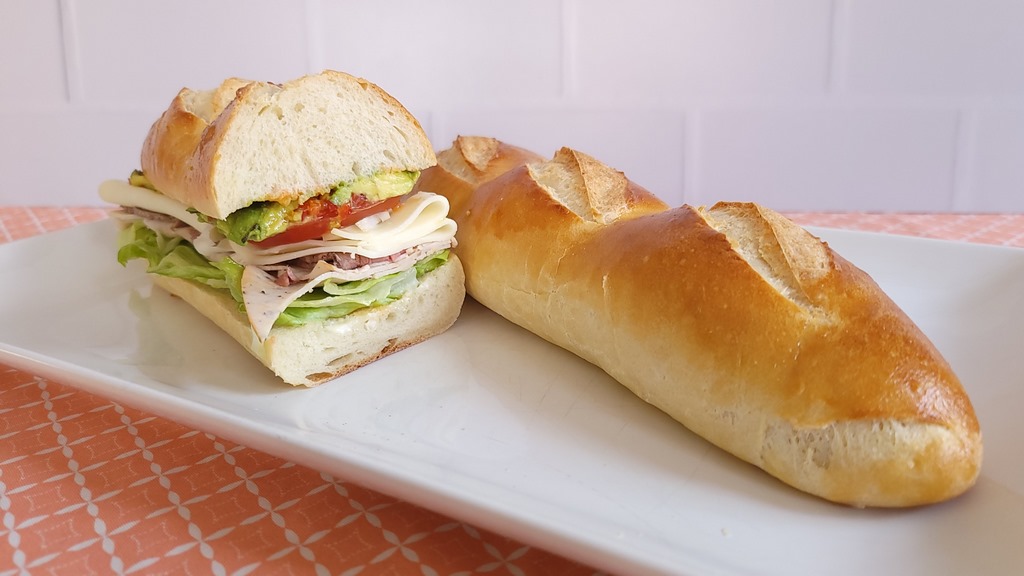
When we want to make a truly satisfying sandwich, the bread matters just as much as the filling. A great hoagie bread recipe gives us a loaf that is soft inside, lightly chewy, beautifully golden outside, and strong enough to hold meats, cheese, vegetables, and sauces without falling apart. That balance is what makes homemade hoagie rolls so rewarding. They are sturdy but not tough, tender but not fragile, and flavorful without overpowering the ingredients tucked inside.
This recipe is designed for anyone who wants bakery-style homemade hoagie bread using simple pantry ingredients and a clear method. The dough is easy to work with, the shaping is straightforward, and the final loaves are ideal for Italian subs, cheesesteaks, deli sandwiches, meatball subs, and grilled sandwiches. Once we make them from scratch, it becomes easy to see why fresh bread transforms an ordinary sandwich into something memorable.
Ingredients You’ll Need
To make delicious hoagie bread, we need a dependable combination of flour, yeast, liquid, and a few enriching ingredients to improve texture and flavor.
For the Dough
- 4 cups all-purpose flour or bread flour
- 2 1/4 teaspoons active dry yeast or instant yeast
- 1 cup warm water
- 1/2 cup warm milk
- 2 tablespoons granulated sugar
- 2 tablespoons unsalted butter, softened
- 1 1/2 teaspoons salt
- 1 large egg
Optional for Brushing
- 1 egg white
- 1 tablespoon water
The flour forms the structure of the bread, while the milk and butter help create a softer crumb. The egg adds richness and improves the overall texture. Sugar supports the yeast and adds a subtle flavor that works especially well in sandwich bread.
How to Make Hoagie Bread Step by Step
Making homemade hoagie rolls is a simple process when we break it down into manageable stages. Each step helps build the final texture, shape, and flavor.
Step 1: Activate the Yeast
In a large mixing bowl, combine the warm water, warm milk, sugar, and yeast. Stir gently and let the mixture sit for about 5 to 10 minutes. It should look foamy on top when the yeast is active.
If using instant yeast, we can mix it directly into the flour, but blooming it first still helps confirm that it is fresh and ready to work.
Step 2: Mix the Dough
Add the egg, softened butter, and salt to the yeast mixture. Stir until combined. Gradually add the flour, one cup at a time, mixing until a shaggy dough forms.
Once the dough begins to pull away from the sides of the bowl, transfer it to a lightly floured surface. Knead for about 8 to 10 minutes until it becomes smooth, elastic, and slightly tacky. If the dough feels too sticky, add a little more flour, one tablespoon at a time. Avoid adding too much, because overly dry dough leads to dense bread.
A stand mixer with a dough hook can also be used. Mix on low speed for about 6 to 8 minutes until the dough is smooth and elastic.
Step 3: Let the Dough Rise
Place the dough into a lightly greased bowl and turn it once so the surface is lightly coated. Cover with a clean towel or plastic wrap and let it rise in a warm place for about 1 to 1 1/2 hours, or until doubled in size.
This first rise is important because it develops flavor and creates a light interior. A properly risen dough will feel airy and soft when gently pressed.
Step 4: Divide and Shape the Dough
Punch down the dough gently to release excess air. Transfer it to a lightly floured surface and divide it into 4 equal pieces for large hoagie rolls or 6 pieces for slightly smaller sandwich rolls.
Shape each portion into a rectangle, then roll it tightly into a log. Pinch the seam closed and tuck the ends slightly under if needed. Each roll should be about 6 to 8 inches long, depending on the size we want.
Place the shaped dough pieces seam-side down on a parchment-lined baking sheet, leaving enough space between them for expansion.
Step 5: Second Rise
Cover the shaped loaves loosely and let them rise again for about 30 to 45 minutes. They should look puffier but still hold their shape well.
This second rise gives the bread its final lightness. Skipping it can result in tighter, heavier rolls.
Step 6: Prepare for Baking
Preheat the oven to 375°F (190°C).
If we want a shinier, more attractive crust, whisk together the egg white and water, then brush it lightly over the tops of the rolls. For the classic hoagie look, make a shallow lengthwise slash down the center of each roll using a sharp knife or bread lame.
The slash helps the bread expand neatly in the oven and gives it that familiar sandwich-shop appearance.
Step 7: Bake Until Golden
Bake the rolls for 18 to 22 minutes, or until they are light golden brown on top and sound slightly hollow when tapped.
Once baked, remove them from the oven and let them cool on a wire rack. Allowing the bread to cool fully helps the crumb set properly, making the rolls easier to slice.
What Makes a Great Hoagie Bread Recipe
A successful hoagie bread recipe is not just about mixing dough and baking it. The texture must be carefully balanced. The rolls should be:
- Soft enough to bite through comfortably
- Firm enough to hold fillings without collapsing
- Lightly chewy for the right sandwich texture
- Golden outside without becoming too crusty
- Tender inside with a fine, even crumb
This recipe works so well because it uses milk, butter, and egg in measured amounts. Those ingredients enrich the dough without making it too soft or brioche-like. The result is classic sub roll bread that feels right for everyday sandwiches.
Best Flour for Homemade Hoagie Bread
We can make excellent hoagie rolls with either all-purpose flour or bread flour.
- All-purpose flour gives us a softer, slightly lighter texture.
- Bread flour produces a bit more chew and structure.
If we want a sandwich roll that feels closer to deli-style bread, bread flour is an excellent option. If we prefer a softer bite, all-purpose flour works beautifully.
Tips for Soft and Flavorful Hoagie Rolls
A few small details make a major difference in the final result.
Use Warm, Not Hot Liquids
Warm liquid helps activate yeast, but liquid that is too hot can damage it. A comfortable warm temperature is ideal.
Knead Until the Dough Is Elastic
Under-kneaded dough often creates dense bread. The dough should feel smooth and stretch without tearing too quickly.
Do Not Over-Flour the Dough
Sticky dough can be tempting to correct with extra flour, but too much flour makes the bread heavy. The dough should remain soft and slightly tacky.
Allow Enough Rise Time
Bread develops its best texture when we give the dough enough time to rise properly. Rushing the process often leads to compact rolls.
Cool Before Slicing
Fresh bread smells amazing right out of the oven, but slicing too early can compress the crumb. Letting it cool creates cleaner cuts and better structure.
How to Shape Hoagie Rolls Properly
Shaping is one of the most important parts of making homemade hoagie bread. A good shape creates a better final loaf and improves the sandwich experience.
To shape evenly:
- Flatten each piece of dough into a small rectangle.
- Roll it tightly from one long side into a log.
- Pinch the seam firmly.
- Place seam-side down on the baking tray.
Rolling tightly helps create surface tension, which gives the loaf a smoother appearance and better rise. Loose shaping often causes uneven bread with weak structure.
How to Store Hoagie Bread
Once cooled, the bread can be stored in several ways depending on how soon we plan to use it.
- At room temperature: Store in an airtight bag or container for up to 2 days
- In the refrigerator: Not ideal, because it can dry the bread out faster
- In the freezer: Freeze for up to 2 months
To freeze, wrap each roll tightly in plastic wrap or foil, then place in a freezer-safe bag. When ready to use, thaw at room temperature and warm briefly in the oven for the best texture.
How to Use Homemade Hoagie Rolls
These rolls are incredibly versatile and work well with a wide range of fillings. They are especially good for:
- Italian hoagies
- Turkey and cheese sandwiches
- Chicken subs
- Philly cheesesteaks
- Meatball sandwiches
- Grilled vegetable subs
- Sausage sandwiches
- Tuna melts
Because the bread is soft yet stable, it handles juicy fillings better than many standard sandwich loaves.
Common Mistakes to Avoid
Even a simple hoagie bread recipe can go wrong if a few basics are ignored. Here are the most common issues.
Using Too Much Flour
This is one of the biggest reasons homemade bread turns out dry or heavy. Add flour gradually and stop once the dough becomes workable.
Not Kneading Enough
Without proper kneading, the gluten structure stays weak, and the bread may not rise well.
Skipping the Second Rise
The second rise improves the final texture and shape. It should not be rushed or omitted.
Overbaking the Rolls
Too much time in the oven creates overly hard crusts. Bake until lightly golden, not deeply dark.
Cutting While Hot
Hot bread is delicate inside. Wait until it cools to keep the crumb soft and even.
Can We Make Hoagie Bread Ahead of Time?
Yes, this dough can be prepared ahead. After kneading, we can place it in a greased bowl, cover it, and refrigerate it overnight. The next day, let it sit at room temperature for about 30 to 45 minutes, then shape, rise, and bake.
This method can deepen the flavor slightly and makes it easier to fit homemade bread into a busy schedule.
Why Homemade Hoagie Bread Is Worth Making
Store-bought rolls can be convenient, but they often lack the freshness, softness, and balanced flavor that make a sandwich truly enjoyable. When we make hoagie bread from scratch, we control the ingredients, the size, the texture, and the final quality. We get bread that tastes fresh, smells incredible, and complements every filling more naturally.
Homemade bread also gives us flexibility. We can make the rolls larger for generous deli sandwiches or smaller for meal prep and lunch portions. We can bake them softer for cold cuts or slightly firmer for hot sandwiches with melted cheese and warm fillings.
FAQs about Hoagie Bread Recipe
1. What is hoagie bread?
Hoagie bread is a soft, slightly chewy long roll used for sandwiches such as hoagies, subs, and grinders. It has a light texture inside with a thin crust outside.
2. What makes hoagie bread different from regular bread?
Hoagie bread is shaped into long sandwich rolls and is usually softer than many crusty artisan breads. Therefore, it is ideal for holding fillings without becoming too hard.
3. What ingredients are used in hoagie bread?
Most hoagie bread recipes use flour, yeast, warm water, sugar, salt, and oil or butter. Some recipes also include milk for a softer texture.
4. Why is my hoagie bread dense?
Dense hoagie bread often happens when the dough does not rise enough or when too much flour is added. As a result, the rolls may turn out heavy instead of light and airy.
5. How long does hoagie bread take to make?
It usually takes about 2 to 3 hours, including mixing, rising, shaping, and baking time. However, the exact time depends on room temperature and yeast activity.
6. Can I freeze hoagie bread?
Yes, hoagie bread freezes well. Let it cool completely, then wrap it tightly and freeze for up to 2 months.
7. How do I keep hoagie bread soft?
Store it in an airtight bag or container once it has cooled. This helps keep the bread soft and fresh for longer.
8. What can I use hoagie bread for?
You can use hoagie bread for sub sandwiches, cheesesteaks, meatball sandwiches, garlic bread, or deli-style rolls. It is very versatile and easy to enjoy.
Final Thoughts
This hoagie bread recipe delivers exactly what a great sandwich roll should provide: a soft interior, a light chew, a smooth shape, and dependable structure. It is simple enough for everyday baking yet reliable enough to become a regular staple in the kitchen. With basic ingredients and a method that works, we can create fresh homemade hoagie rolls that elevate every sandwich we make.
Once we master this recipe, it becomes easy to adapt it for different sandwich styles, different sizes, and different occasions. Whether we are preparing a hearty lunch, a family dinner, or a tray of party subs, these rolls bring the right texture and flavor every time. Freshly baked, golden, and ready to fill, they are the kind of bread that turns a good sandwich into an exceptional one.