Hawaiian Poke Recipe: Hawaiian poke is one of the freshest, most flavorful dishes we can prepare at home with minimal cooking and maximum taste. Built around sushi-grade fish, bold seasonings, and crisp toppings, this island favorite brings together texture, color, and clean flavor in every bite. A well-made Hawaiian poke recipe is simple, balanced, and deeply satisfying. When we use high-quality ingredients and follow the right method, we can create a bowl that tastes vibrant, rich, and restaurant-worthy.
Unlike heavy meals, poke feels light yet filling. It works beautifully for lunch, dinner, meal prep, or even a casual gathering. The beauty of this dish lies in its contrast. We get tender marinated fish, savory soy sauce, nutty sesame oil, bright green onions, and optional toppings that add crunch and freshness. The result is a bowl that feels complete without being complicated.
In this guide, we will cover everything needed to make an authentic-style Hawaiian poke bowl recipe, including the ingredients, preparation method, serving ideas, flavor tips, and mistakes to avoid.
What Is Hawaiian Poke?
Poke is a traditional Hawaiian dish made with cubed raw fish that is seasoned and served with simple but flavorful ingredients. The word “poke” refers to cutting the fish into chunks. Traditionally, ahi tuna is the preferred choice, although salmon is also widely used in modern versions.
A classic Hawaiian poke recipe focuses on freshness and balance. It does not rely on heavy sauces or overpowering spices. Instead, it highlights the fish and enhances it with ingredients like soy sauce, sesame oil, sea salt, green onions, sweet onions, and sesame seeds. Some versions also include seaweed, macadamia nuts, avocado, or cucumber for more texture and flavor.
When prepared correctly, poke is refreshing, savory, slightly nutty, and wonderfully clean on the palate.
Ingredients You’ll Need for Hawaiian Poke
To make the best Hawaiian poke recipe, we need fresh, quality ingredients. Since this dish is raw and lightly seasoned, every component matters.
For the Poke
- 1 pound sushi-grade ahi tuna, cut into small cubes
- 3 tablespoons soy sauce
- 1 tablespoon sesame oil
- 1 teaspoon rice vinegar
- 1 teaspoon grated fresh ginger
- 2 green onions, thinly sliced
- 1/4 cup sweet onion, finely sliced
- 1 teaspoon sesame seeds
- 1 teaspoon chili flakes or a small amount of chopped chili, optional
- 1/2 teaspoon sea salt
- 1/2 teaspoon sugar or honey, optional for balance
Optional Bowl Additions
- Cooked sushi rice or jasmine rice
- Avocado, sliced
- Cucumber, diced
- Edamame
- Seaweed salad
- Shredded carrots
- Radish, thinly sliced
- Mango, cubed
- Pickled ginger
- Nori strips
- Macadamia nuts or roasted cashews
These ingredients allow us to create either a simple traditional poke or a full Hawaiian poke bowl with extra texture and color.
How to Choose the Best Fish for Poke
The most important step in any Hawaiian poke recipe is choosing the fish. We must use sushi-grade fish from a trusted source. This is not optional. Since the fish is served raw, quality and freshness define both the safety and flavor of the dish.
Ahi tuna is the classic option because it has a firm texture, rich taste, and beautiful deep color. However, salmon also works well if we want a buttery and softer texture. When buying fish, it should smell clean and fresh, never overly fishy. It should also look moist, firm, and bright.
If we are unsure about the quality, it is better to buy from a fishmonger who clearly labels products as safe for raw preparation.
Preparing the Rice for a Poke Bowl
If we want to serve this dish as a full Hawaiian poke bowl recipe, rice is the ideal base. Sushi rice is the most common choice because it has a slightly sticky texture that holds the bowl together well.
We can cook the rice ahead of time and let it cool until slightly warm or fully chilled. Some people prefer poke over warm rice, while others enjoy it over cold rice. Both work well. The key is to avoid overly hot rice, since heat can affect the texture of the fish.
For extra flavor, we can season the rice lightly with a mixture of rice vinegar, a pinch of sugar, and a small amount of salt.
Step-by-Step Guide to Making Hawaiian Poke
Step 1: Prepare the Fish
Start by placing the sushi-grade tuna on a clean cutting board. Using a sharp knife, cut it into even bite-sized cubes. Try to keep the pieces uniform so the texture feels consistent in every bite.
Once cubed, place the tuna in a chilled mixing bowl. Keeping the fish cold is important throughout the process. Therefore, avoid leaving it at room temperature for too long.
Step 2: Slice the Fresh Ingredients
Thinly slice the green onions and sweet onion. Grate the fresh ginger. If using fresh chili, chop it finely. Keep all ingredients ready before mixing. This makes the preparation faster and cleaner.
Because poke is a quick dish, good prep makes a noticeable difference.
Step 3: Make the Marinade
In a small bowl, combine the soy sauce, sesame oil, rice vinegar, grated ginger, sea salt, and optional sugar. Stir until the mixture looks smooth and balanced.
This marinade should taste savory, slightly nutty, and gently bright. It should enhance the fish rather than hide it.
Step 4: Season the Tuna
Pour the marinade over the cubed tuna. Add the sliced green onions, sweet onion, sesame seeds, and optional chili. Gently toss everything together with a spoon or spatula.
Do not overmix. The goal is to coat the fish evenly without breaking it apart.
Step 5: Chill Before Serving
Cover the bowl and let the poke chill in the refrigerator for about 10 to 15 minutes. This short resting time helps the flavors blend without making the fish too salty or too soft.
Since poke is best when fresh, avoid marinating it for too long. A brief chill is enough.
Step 6: Assemble the Poke Bowl
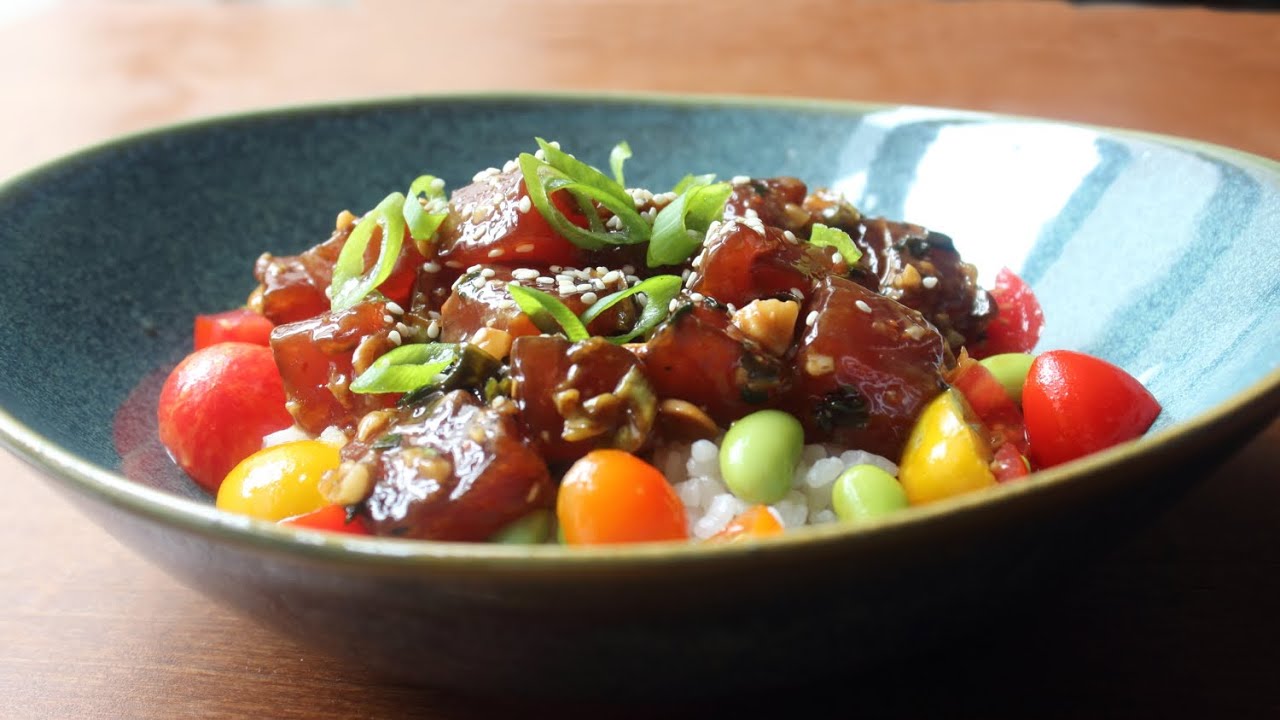
Add a scoop of prepared rice to each serving bowl. Top it with the marinated poke. Then arrange your preferred toppings around the fish. Avocado, cucumber, edamame, and seaweed salad are excellent choices because they add freshness and contrast.
Finish with extra sesame seeds, more green onions, and a few nori strips if desired.
Best Toppings for a Hawaiian Poke Bowl
A strong Hawaiian poke bowl recipe becomes even better with toppings that add crunch, color, and balance. Soft fish benefits from crisp vegetables and creamy additions.
Avocado adds richness and smooth texture. Cucumber brings a cool, crisp bite. Seaweed salad contributes a briny, slightly sweet layer. Edamame adds body and protein. Meanwhile, mango offers a sweet contrast that pairs well with chili and soy.
We can also add pickled ginger for brightness or radishes for sharp crunch. For extra richness, chopped macadamia nuts offer a subtle Hawaiian touch.
Tips for the Best Hawaiian Poke Recipe
To get the best result every time, a few simple details matter.
Always keep the fish cold before serving. Use a sharp knife to cut clean cubes instead of ragged pieces. Season lightly at first, then adjust if needed. Since soy sauce is salty, it is wise to avoid over-seasoning too early.
It also helps to serve poke soon after mixing. Fresh poke has the best texture. If it sits too long, the fish can lose its clean bite. In addition, balance is important. Too much sesame oil can feel heavy, while too much soy sauce can dominate the bowl.
For a more authentic result, keep the seasoning focused and let the freshness lead.
Common Mistakes to Avoid
One common mistake is using fish that is not labeled for raw use. This should always be avoided. Another mistake is over-marinating the fish. Poke is not meant to sit for hours in sauce. A short marinade keeps the flavor clean and the texture firm.
Some recipes also add too many toppings. While variety is great, too many ingredients can bury the fish. A better approach is to choose a few toppings that complement the poke instead of competing with it.
Finally, avoid drowning the bowl in extra sauce. A good Hawaiian poke recipe should taste balanced, not soggy or overly salty.
How to Store Hawaiian Poke
Poke is best enjoyed fresh on the day it is made. However, if needed, it can be kept in an airtight container in the refrigerator for a short time. Ideally, it should be eaten within 24 hours.
Do not freeze assembled poke, and do not leave it unrefrigerated. If preparing in advance, store the toppings, rice, and fish separately until close to serving time. This helps preserve both freshness and texture.
Why This Hawaiian Poke Recipe Works
This recipe works because it keeps the method simple and the flavors focused. The ahi tuna stays at the center of the dish, while the seasoning enhances its natural richness. The soy sauce adds depth, the sesame oil brings warmth, and the green onions lift the entire bowl with freshness.
At the same time, the optional toppings make the meal customizable. We can keep it traditional and minimal, or build it into a colorful, satisfying bowl with rice and vegetables. Either way, the dish remains clean, bold, and deeply enjoyable.
FAQs about Hawaiian Poke Recipe
1. What is Hawaiian poke?
Hawaiian poke is a fresh dish made with cubed raw fish mixed with seasonings, sauces, and simple toppings. It is known for its light, savory flavor.
2. What type of fish is usually used?
Fresh tuna is the most common choice, but salmon or other sushi-grade fish can also be used.
3. Does poke always contain raw fish?
No, while traditional poke often uses raw fish, some versions use cooked seafood, tofu, or vegetables instead.
4. What seasonings are commonly added?
Common ingredients include soy sauce, sesame oil, green onions, seaweed, sesame seeds, and onions.
5. Is Hawaiian poke spicy?
It can be mild or spicy, depending on whether ingredients like chili sauce or spicy peppers are added.
6. What can we serve with poke?
Poke is often served with rice, salad, cucumber, avocado, edamame, or seaweed.
7. Why is fresh fish important for poke?
Fresh fish is important because poke is usually served uncooked, so quality and freshness greatly affect the taste and texture.
8. Can we make poke ahead of time?
It is best enjoyed fresh, but it can be prepared shortly before serving and kept chilled for a limited time.
9. What is the difference between poke and a poke bowl?
Poke refers to the seasoned fish mixture, while a poke bowl includes the poke served over rice or greens with toppings.
10. Can Hawaiian poke be customized?
Yes, poke is very flexible. We can adjust the fish, sauce, toppings, and spice level to match personal taste.
Final Thoughts
A homemade Hawaiian poke recipe is one of the easiest ways to create a fresh and flavorful meal that feels special without being difficult. With the right fish, a balanced marinade, and a few crisp toppings, we can prepare a dish that looks beautiful and tastes even better.
Whether we serve it as a classic poke plate or a full Hawaiian poke bowl, this recipe delivers freshness, texture, and bold island-inspired flavor in every bite. Once we master the basics, we can also create variations with salmon, spicy toppings, tropical fruit, or extra vegetables.
The secret is always the same: fresh ingredients, clean seasoning, and careful preparation. That combination turns a simple bowl into a truly memorable meal.