Guava Paste Recipe: Guava paste is a rich, fruity preserve made by cooking fresh guava pulp with sugar until it becomes thick, smooth, and sliceable. We love this recipe because it turns ripe guavas into a beautiful homemade treat with deep flavor, vibrant color, and a firm texture that works well for desserts, snacks, and breakfast spreads.
This guava paste recipe is simple, practical, and rewarding. With the right technique, we can make a paste that is glossy, fragrant, and packed with natural guava flavor. Whether we want to enjoy it with cheese, spread it on toast, or use it in pastries, this recipe gives us a reliable method from start to finish.
Ingredients You’ll Need for Guava Paste
To make a classic homemade guava paste, we need only a few basic ingredients. However, each one matters.
- 1.5 kg ripe guavas
- 3 to 4 cups granulated sugar
- 1/4 cup water
- 2 tablespoons fresh lemon juice
The guavas should be ripe but still firm. Overripe fruit can make the paste too loose. Meanwhile, lemon juice helps balance the sweetness and improves the final texture.
How to Choose the Best Guavas for Guava Paste
For the best guava paste recipe, we should choose guavas with strong aroma, smooth skin, and a slight softness when pressed. Good guavas have a sweet fragrance and rich color inside. Pink guavas are especially popular because they produce a lovely deep rose paste. Still, white guavas also work well and create a lighter result.
Fresh, quality fruit makes a noticeable difference. If the guavas are bland, the paste will also taste flat. Therefore, always begin with flavorful fruit.
Preparing the Guavas Properly
Before we cook anything, we need to wash the guavas very well under running water. Then we trim the ends and cut each fruit into halves or quarters. There is no need to peel them at this stage because the skin softens during cooking and helps develop flavor.
Next, we place the chopped guavas in a large pot with the water. We cook them over medium heat until they become very soft. This usually takes about 20 to 30 minutes. The fruit should break down easily with a spoon.
At this point, the kitchen will smell sweet and tropical. That is a good sign that the guavas are ready for the next step.
How to Make Smooth Guava Pulp
Once the guavas are soft, we need to separate the seeds and tough bits from the pulp. This is one of the most important steps in making smooth guava paste.
We transfer the cooked fruit into a food processor or blender and pulse gently until the mixture becomes thick and uniform. After that, we push the puree through a fine sieve or food mill. This removes the seeds and gives us a silky pulp.
Although this step takes a little effort, it creates the smooth, refined texture that makes homemade guava paste look and taste professional.
Measuring the Pulp and Sugar Correctly
For the best balance, we should measure the strained guava pulp before adding sugar. A common method is to use equal parts guava pulp and sugar by volume. If we have 4 cups of pulp, we use 4 cups of sugar.
This ratio helps the paste set properly and keeps it sweet enough for preservation. However, if the guavas are naturally very sweet, we can reduce the sugar slightly. Even so, cutting too much sugar may affect the thickness and shelf life.
Then we stir the pulp, sugar, and lemon juice together in a heavy-bottomed pot.
Cooking the Guava Paste Step by Step
Now we begin the main cooking stage. We place the pot over low to medium heat and stir continuously as the sugar dissolves into the pulp. At first, the mixture will look loose. However, it gradually thickens as moisture evaporates.
As it cooks, the color becomes deeper and more beautiful. The mixture will also begin to pull away from the sides of the pot. This is exactly what we want.
Here is the process in clear steps:
Step 1: Combine the Ingredients
Add the strained guava pulp, sugar, and lemon juice to a heavy pot. Stir well before heating.
Step 2: Cook Over Medium-Low Heat
Allow the mixture to warm slowly. Stir often to prevent sticking.
Step 3: Keep Stirring as It Thickens
As the liquid reduces, the paste becomes dense. At this stage, we should stir more frequently.
Step 4: Watch for the Right Texture
The paste is ready when it becomes very thick and leaves a trail on the bottom of the pan when stirred.
Step 5: Test the Paste
Drop a small spoonful onto a plate. If it cools and firms up, the guava paste is done.
This stage usually takes 45 to 70 minutes, depending on the amount of pulp and the water content of the fruit.
How to Know When Guava Paste Is Ready
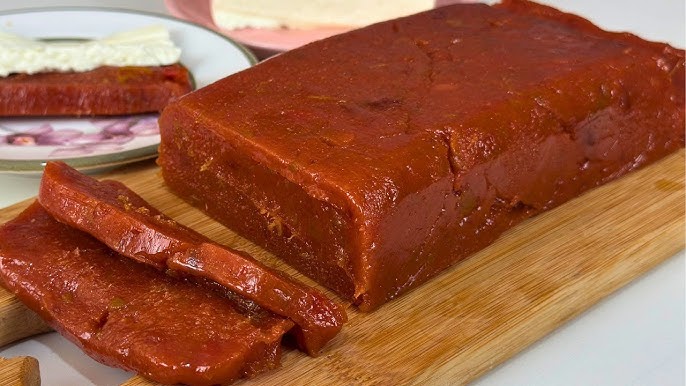
A perfect guava paste should be thick, glossy, and spread slowly when hot. Once cooled, it should hold its shape well. If we drag a spoon through the mixture and it parts cleanly for a few seconds, it is close to done.
Another useful sign is when the mixture forms a mass and starts leaving the sides of the pot. That means enough moisture has cooked off.
We should not rush this stage. Undercooked paste stays sticky and loose. On the other hand, overcooked paste can become too hard after cooling. Therefore, careful attention gives the best result.
Setting and Shaping the Guava Paste
When the paste reaches the correct consistency, we quickly transfer it into a prepared dish or tray lined with parchment paper and lightly greased. Then we smooth the top with a spatula.
We leave it to cool completely at room temperature. After that, we can refrigerate it for several hours to firm up further. Once set, the paste can be sliced into neat blocks or squares.
This is when the texture becomes truly satisfying. A well-made guava paste recipe produces slices that are firm, smooth, and easy to cut.
Tips for the Best Homemade Guava Paste
A few simple tips can improve the final result:
Use a Heavy Pot
A thick-bottomed pot distributes heat more evenly. As a result, the paste is less likely to burn.
Stir Constantly Near the End
The thicker the mixture gets, the faster it sticks. Frequent stirring prevents scorching.
Strain Thoroughly
A smooth pulp makes a smooth paste. Therefore, do not skip the fine straining step.
Do Not Use High Heat
High heat can burn the sugars quickly. Low to medium heat works better and gives more control.
Cool Completely Before Slicing
Warm paste may seem too soft. Once cooled fully, it firms up beautifully.
Common Mistakes to Avoid When Making Guava Paste
Even a simple guava paste recipe can go wrong if we overlook a few details.
One common mistake is using unripe fruit. This can result in poor flavor and a rough texture. Another issue is not straining the pulp well enough. Seeds and gritty bits can ruin the smooth finish.
Also, many people stop cooking too early. If the paste still looks loose in the pot, it likely needs more time. In contrast, cooking too long can create a rubbery paste. Because of that, texture testing is essential.
Finally, storing the paste before it fully cools can trap moisture and affect the set. Letting it cool properly helps preserve both texture and flavor.
How to Store Guava Paste Properly
Once fully cooled and set, homemade guava paste should be stored in an airtight container. We can keep it in the refrigerator for 2 to 3 weeks. For longer storage, we can wrap slices individually and freeze them.
If we want a firmer paste for slicing, refrigeration works best. If we prefer a softer paste for spreading, we can let it sit at room temperature for a few minutes before serving.
Proper storage keeps the paste fresh, flavorful, and easy to use whenever needed.
Best Ways to Serve Guava Paste
There are many delicious ways to enjoy guava paste. It pairs beautifully with both sweet and savory foods.
We can serve it:
- With cheese and crackers
- Spread on toast or bread
- As a filling for pastries and cookies
- With cakes and sponge desserts
- Alongside yogurt or oatmeal
- With cream cheese in sandwiches
One of the most classic combinations is guava paste with cheese. The sweet fruit flavor and salty creaminess create a balanced bite that feels rich and elegant.
Why This Guava Paste Recipe Works So Well
This recipe works because it focuses on the key elements that matter most: ripe fruit, smooth pulp, the right sugar ratio, and patient cooking. Each step builds toward a paste that is flavorful, firm, and glossy.
The lemon juice lifts the flavor. The slow cooking deepens the sweetness. Meanwhile, straining the pulp creates the smooth finish that makes the paste attractive and enjoyable to eat.
Instead of relying on shortcuts, we use a traditional method that delivers dependable results every time.
FAQs about Guava Paste Recipe
1. What is guava paste?
Guava paste is a thick, sweet fruit preserve made from guava pulp and sugar. It is smooth, firm, and often sliced or spread.
2. What does guava paste taste like?
It tastes sweet, fruity, and slightly tangy, with a rich tropical guava flavor.
3. Is guava paste the same as guava jam?
No, guava paste is usually thicker and firmer than guava jam. Jam is softer and easier to spread.
4. What type of guava is best for guava paste?
Ripe guavas are best because they have a stronger aroma, better sweetness, and smoother pulp.
5. Why is sugar important in guava paste?
Sugar adds sweetness, helps preserve the paste, and gives it the thick, firm texture it is known for.
6. How do we know when guava paste is ready?
It is ready when the mixture becomes very thick, pulls away from the sides of the pan, and holds its shape after cooling.
7. Can we make guava paste without pectin?
Yes, guavas naturally contain pectin, so the paste can thicken well without extra pectin when cooked properly.
8. How should we store guava paste?
We should keep it in an airtight container in the refrigerator after it has cooled completely.
9. How long does homemade guava paste last?
It usually lasts about 2 to 3 weeks in the refrigerator, depending on the recipe and storage method.
10. How can we serve guava paste?
We can serve it with cheese, crackers, bread, pastries, or desserts. It also works well as a filling or sweet snack.
Final Thoughts
By choosing ripe guavas, cooking the fruit gently, straining the pulp well, and reducing it slowly with sugar, we can make a beautiful homemade guava paste that tastes far better than many store-bought versions.
Whether we slice it for snacks, use it in desserts, or serve it with cheese, this recipe gives us a classic fruit preserve with bold tropical flavor and a satisfying texture. With careful preparation and a little patience, we can make guava paste that looks impressive, stores well, and tastes absolutely delicious.