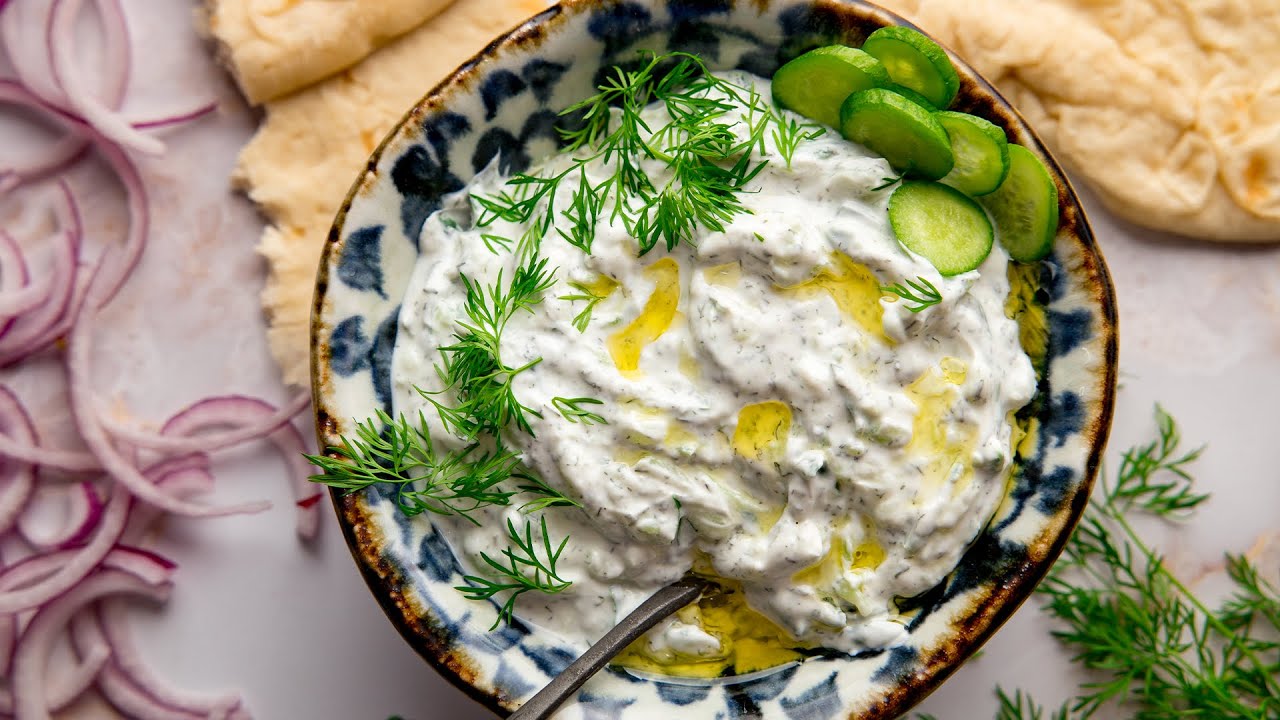
Greek Tzatziki Recipe: Tzatziki is one of those timeless dips that instantly brings the flavors of the Mediterranean to your table. It’s a creamy, refreshing, and tangy sauce made primarily from thick Greek yogurt, grated cucumber, garlic, olive oil, and fresh herbs. Unlike heavy dips that often feel overwhelming, tzatziki is light yet flavorful, making it the perfect companion for grilled meats, fresh vegetables, or simply a slice of warm pita bread. Think of it as the Greek version of comfort food in a bowl, except it’s healthy, fresh, and bursting with flavor.
The Origin of Tzatziki in Greek Cuisine
The word “tzatziki” itself is derived from the Turkish word “cacık,” but its roots stretch deeper into the culinary history of the Eastern Mediterranean. Greeks have perfected this dip for centuries, incorporating local yogurt made from sheep’s or goat’s milk and fresh cucumbers grown in abundance under the Mediterranean sun. Traditionally, it was served as a cooling condiment alongside grilled lamb or souvlaki, balancing the smoky flavors of the meat with its refreshing creaminess. Today, tzatziki is not just confined to Greek cuisine; it has found its way into international kitchens, becoming a beloved dip and sauce around the world.
Why Tzatziki is Loved Worldwide
There are endless reasons why tzatziki has become a global favorite. For starters, it’s incredibly versatile—you can use it as a dip, a spread, or a sauce. It’s also healthy, packed with probiotics from the yogurt, hydration from cucumbers, and the immune-boosting powers of garlic. On top of that, it requires no cooking, which makes it quick and easy to prepare. Its ability to transform even the simplest meal into something special is what makes tzatziki truly stand out. Whether you’re throwing a barbecue, meal prepping, or just looking for a guilt-free snack, tzatziki checks every box.
Ingredients You’ll Need
The Core Ingredients for Authentic Flavor
To make an authentic Greek tzatziki, you’ll need:
- Greek Yogurt (2 cups): Thick and creamy, preferably full-fat for the best texture.
- Cucumber (1 medium): Grated and drained to avoid excess water.
- Garlic (2–3 cloves): Finely minced for that signature punch.
- Olive Oil (2 tablespoons): Extra virgin for a rich, smooth finish.
- Vinegar or Lemon Juice (1 tablespoon): Adds tanginess and balance.
- Fresh Dill (2 tablespoons): Finely chopped, adds freshness and aroma.
- Salt and Pepper (to taste): To enhance the flavors.
Optional Ingredients to Enhance Taste
While the classic tzatziki recipe is simple, you can always elevate it with optional add-ins:
- Fresh mint leaves for a cooling twist.
- A dash of paprika for a hint of smokiness.
- Grated lemon zest for brightness.
- A touch of cumin for an earthy flavor profile.
Choosing the Best Quality Ingredients
The secret to exceptional tzatziki lies in ingredient quality. Always choose thick, strained Greek yogurt—the thicker, the better. Cucumbers should be fresh and firm, preferably English cucumbers since they have fewer seeds. Garlic should be freshly minced, not pre-minced from a jar, as that can dull the flavor. When it comes to olive oil, extra virgin is non-negotiable—it ties the flavors together and gives the dip its luxurious finish.
Tools and Kitchen Equipment Required
Basic Kitchen Tools
You don’t need a chef’s kitchen to whip up a great tzatziki. Here’s all you need:
- A mixing bowl
- A whisk or spoon for stirring
- A grater for the cucumber
- A garlic press or knife for mincing garlic
- A strainer or cheesecloth for draining cucumber water
Tips for Easier Preparation
If you want to save time, consider using a food processor to blend ingredients smoothly. Another useful hack is to keep a small colander lined with cheesecloth handy—this will make draining the cucumber effortless. And here’s a tip: always prepare tzatziki at least an hour before serving. This allows the flavors to meld beautifully, creating that authentic restaurant-style taste.
Preparing Your Ingredients
How to Prepare the Cucumber
The cucumber is the heart of tzatziki, and preparing it correctly makes all the difference. Start by washing and peeling the cucumber (peeling is optional if you prefer a rustic look). Grate it using the large holes of a grater, then place the grated cucumber in a cheesecloth or clean kitchen towel. Squeeze out as much water as possible—this step is crucial because cucumbers naturally hold a lot of water, and skipping this step will make your dip watery. Once drained, set the cucumber aside.
Preparing the Garlic for Best Flavor
Garlic is the flavor bomb in tzatziki. To prepare it, peel the cloves and mince them finely with a sharp knife, or use a garlic press for convenience. If you want a milder garlic flavor, you can lightly roast or blanch the cloves before mincing. On the other hand, if you’re a garlic lover, keep it raw for that bold, sharp kick.
Handling the Yogurt for Creaminess
Greek yogurt is naturally thick, but sometimes even store-bought brands can be a bit runny. To ensure creaminess, you can strain the yogurt further by placing it in a cheesecloth-lined strainer for 30 minutes. This will remove excess whey, giving you the thick, luxurious base that tzatziki is known for.
Fresh Herbs Preparation
Fresh dill is the star herb of traditional tzatziki. Wash and pat dry the dill before chopping it finely. If you’re adding mint, follow the same process. Herbs should always be fresh, never dried, as they provide that burst of aroma and freshness essential to tzatziki.
Step-by-Step Guide to Making Tzatziki
Step 1 – Preparing the Cucumber
Start with your grated and drained cucumber. Place it into a mixing bowl, ensuring it’s well-squeezed to remove excess water.
Step 2 – Mixing Yogurt and Garlic
In the same bowl, add the thick Greek yogurt. Stir in the finely minced garlic until well combined.
Step 3 – Adding Olive Oil and Vinegar/Lemon Juice
Drizzle in the olive oil and vinegar (or lemon juice). Whisk until smooth and creamy.
Step 4 – Blending in the Herbs
Fold in the chopped dill (and mint if using). Add salt and pepper to taste.
Step 5 – Chilling and Serving
Cover the bowl with plastic wrap and refrigerate for at least one hour. This resting time allows the flavors to meld together. Serve chilled with pita bread, grilled meats, or vegetables.
Variations of Tzatziki Recipe
Traditional vs. Modern Versions
The beauty of tzatziki lies in its adaptability. The traditional Greek version sticks to yogurt, cucumber, garlic, olive oil, vinegar or lemon juice, dill, and salt. It’s clean, refreshing, and true to its roots. But as tzatziki traveled across borders, modern variations emerged. Some versions add mint instead of dill, while others incorporate parsley, chives, or even cilantro for unique twists. In some Western kitchens, you’ll find tzatziki made with sour cream instead of Greek yogurt for a richer consistency. While purists might argue against altering the classic recipe, modern adaptations show how versatile this dip can be without losing its Greek essence.
Vegan or Dairy-Free Tzatziki
If you’re vegan or lactose-intolerant, don’t worry—tzatziki can still be on your menu. Replace Greek yogurt with coconut yogurt, soy yogurt, or cashew yogurt. The key is choosing a non-dairy yogurt that’s thick and unsweetened. The rest of the recipe stays the same—grated cucumber, garlic, olive oil, herbs, and lemon juice. You’ll be surprised at how closely this version mimics the taste of the original. A dairy-free tzatziki is just as refreshing and delicious, making it perfect for plant-based diets.
Spicy Tzatziki for an Extra Kick
For those who love bold flavors, a spicy tzatziki is the way to go. Simply add crushed red pepper flakes, diced jalapeños, or a dash of cayenne pepper to the mix. This twist gives the dip an exciting heat that pairs perfectly with grilled meats, roasted vegetables, or even as a spicy sandwich spread. Think of it as the Greek dip with a fiery personality—refreshing yet sizzling.
How to Serve Tzatziki
As a Dip with Bread or Vegetables
The most common way to enjoy tzatziki is as a dip. Serve it in a small bowl surrounded by warm pita bread, pita chips, or sliced fresh vegetables like carrots, cucumbers, bell peppers, and celery. It makes a light yet satisfying appetizer for parties, barbecues, or family gatherings. The creamy, tangy flavor balances beautifully with the crunch of fresh veggies.
As a Sauce for Grilled Meats
In Greece, tzatziki is most often paired with grilled meats. Whether it’s lamb kebabs, chicken souvlaki, or even beef gyros, tzatziki adds a cooling contrast to smoky, charred flavors. The creaminess of the yogurt cuts through the richness of the meat, while the garlic and herbs add a refreshing zing. If you’ve ever had a gyro sandwich, you’ve likely already enjoyed tzatziki as its signature sauce.
Pairing with Mediterranean Dishes
Tzatziki doesn’t stop at being a dip or sauce—it’s a versatile condiment that pairs well with many Mediterranean dishes. Try serving it alongside falafel, roasted eggplant, stuffed grape leaves (dolmades), or grilled fish. It can also be used as a spread for wraps, sandwiches, or burgers, giving them a Mediterranean flair. Think of it as a healthier alternative to mayonnaise or heavy cream-based sauces.
Storage Tips for Tzatziki
Refrigeration Guidelines
Tzatziki is best enjoyed fresh, but it can be stored for a few days. Place it in an airtight container and refrigerate for up to 3–4 days. Always give it a quick stir before serving, as cucumbers may release some water over time. If you want to keep it fresher for longer, avoid adding herbs until the day you plan to serve it—this helps preserve the dip’s vibrant flavor.
Can You Freeze Tzatziki?
Freezing tzatziki isn’t recommended. The yogurt tends to separate when thawed, and cucumbers lose their crisp texture, leaving the dip watery. If you must freeze it, drain as much liquid as possible and store in small portions. However, the flavor and texture won’t be the same as freshly made tzatziki. For the best experience, always make tzatziki fresh and in small batches.
Nutritional Value of Tzatziki
Calories and Macronutrients
Tzatziki is not only delicious but also healthy. A 2-tablespoon serving of traditional tzatziki typically contains:
- Calories: ~35–45
- Protein: 2g
- Fat: 2g (mostly from olive oil)
- Carbohydrates: 2–3g
- Fiber: <1g
It’s low in calories compared to most dips and spreads, making it a guilt-free choice for snacking or as a condiment.
Health Benefits of Ingredients
Each ingredient in tzatziki contributes to its health benefits:
- Greek Yogurt: Rich in protein and probiotics, supports gut health.
- Cucumber: Hydrating and packed with vitamins.
- Garlic: Boosts immunity and heart health.
- Olive Oil: Provides healthy monounsaturated fats.
- Herbs (Dill/Mint): Offer antioxidants and anti-inflammatory properties.
Together, they make tzatziki a nutrient-dense dip that supports overall wellness while satisfying your taste buds.
Common Mistakes to Avoid
Overwatering the Cucumber
One of the most common mistakes is skipping the step of draining the cucumber. This leads to a watery dip that loses its creamy texture. Always squeeze out as much liquid as possible before mixing.
Using Low-Quality Yogurt
Not all yogurts are created equal. Regular yogurt can be too thin, resulting in a runny tzatziki. Always opt for thick, strained Greek yogurt, preferably full-fat for richness.
Skipping the Resting Time
Tzatziki needs time to rest. Serving it immediately may taste good, but giving it at least one hour in the fridge allows the flavors to meld and intensify. Skipping this step often leads to a less flavorful dip.
Expert Tips for the Perfect Tzatziki
Balancing Flavors
The secret to a perfect tzatziki lies in balancing its flavors. Too much garlic, and the dip becomes overpowering. Too little, and it loses its punch. The same applies to lemon juice or vinegar—add enough to brighten the yogurt but not so much that it turns sour. Start small with your seasonings, taste as you go, and adjust gradually. Remember, the flavors intensify as the dip chills, so don’t overdo it from the start. A pinch of salt, a drizzle of olive oil, and the freshness of dill work together like a perfectly tuned orchestra—each ingredient playing its part without overshadowing the others.
Achieving the Right Texture
Texture can make or break a tzatziki. For creaminess, use full-fat Greek yogurt, which is naturally thick. For freshness, make sure your cucumber is grated finely and drained thoroughly. If you prefer a chunkier texture, grate the cucumber coarsely or even dice it into small cubes. On the other hand, for a smoother, dip-like consistency, you can blend the ingredients in a food processor. The key is to avoid too much water, as that will thin out the dip. Aim for a texture that’s creamy enough to cling to bread but light enough to feel refreshing.
FAQs about Greek Tzatziki Recipe
Q1: Can I make tzatziki a day ahead?
Yes! In fact, making tzatziki a day before serving is a great idea. It gives the flavors time to meld together, making the dip even more flavorful. Just be sure to store it in an airtight container in the fridge.
Q2: Is tzatziki healthy?
Absolutely. Tzatziki is low in calories, packed with protein from Greek yogurt, and full of nutrients from cucumber, garlic, and olive oil. It’s a guilt-free dip that fits well into most diets.
Q3: Can I use dried dill instead of fresh?
Fresh dill is always recommended, as it provides a brighter and more authentic flavor. However, if you only have dried dill on hand, use about one-third of the amount since dried herbs are more concentrated.
Q4: What can I use instead of cucumber?
If you’re out of cucumbers, try grated zucchini or even finely chopped celery. While the flavor won’t be identical, it will still create a refreshing dip. Just remember to drain the water thoroughly, just like with cucumbers.
Q5: How long does homemade tzatziki last?
Homemade tzatziki lasts for 3–4 days in the fridge when stored properly. After that, the cucumbers start to lose their freshness, and the dip may become watery. Always stir before serving.
Conclusion
Tzatziki is more than just a dip—it’s a celebration of Greek flavors in every spoonful. With its creamy yogurt base, refreshing cucumber, bold garlic, and fragrant herbs, this versatile sauce has earned its place in kitchens worldwide. Whether you’re serving it with pita bread, pairing it with grilled meats, or adding it to a wrap, tzatziki elevates any meal with a touch of Mediterranean magic. The best part? It’s easy to make, healthy, and endlessly adaptable. Follow the step-by-step guide, use fresh ingredients, and let it rest before serving—you’ll have an authentic homemade tzatziki that rivals any restaurant version. So next time you’re planning a meal, skip the store-bought dips and whip up your own. Trust me, once you taste it, you’ll never look back.