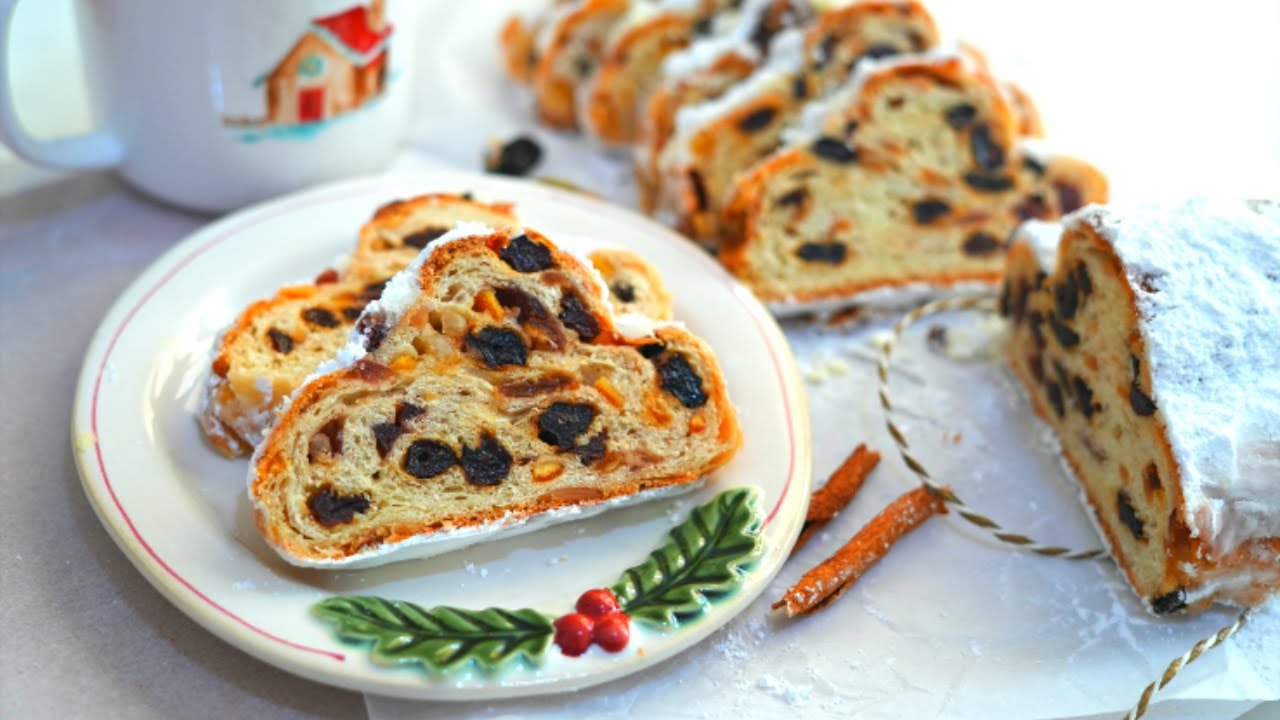
German Stollen Recipe: German Stollen is one of those magical Christmas treats that immediately fills your kitchen with a festive aroma and your heart with cozy holiday vibes. This traditional German bread-like cake is loaded with dried fruits, nuts, and warm spices, and often filled with a log of marzipan in the center. Topped off with a snowy dusting of powdered sugar, it looks just like a little snow-covered mountain—perfect for the holidays.
But Stollen isn’t just a delicious treat; it’s a centuries-old tradition. Passed down through generations and protected by European food laws, it’s more than just a sweet bread—it’s a piece of history. And the best part? With the right ingredients and a little patience, you can make your very own authentic German Stollen at home.
Ready to impress your friends and family this holiday season? Let’s dive right into what makes this Christmas bread so special.
History of German Stollen
Stollen dates all the way back to the 14th century, originally crafted in the city of Dresden. At that time, it was a much plainer bread, made during Advent—a period of fasting before Christmas. Because of religious restrictions, the early versions contained only flour, oats, and water.
However, over time—and with a bit of lobbying to the Pope—German bakers were granted permission to use butter, and that’s when the Stollen we know today began to take shape. Dresden Stollen (or Dresdner Christstollen) became so iconic that it now holds a Protected Geographical Indication (PGI) status in the EU, meaning only Stollen made in Dresden under strict conditions can use that name.
Traditionally, it symbolizes the baby Jesus wrapped in a white blanket (represented by the powdered sugar). Each slice is rich, dense, and bursting with Christmas cheer.
Different Types of Stollen
Not all Stollen are created equal. Depending on your personal preference or family tradition, there are a few delicious versions to try:
- Classic Christstollen – The most well-known type, made with raisins, candied citrus peel, almonds, and a generous coating of butter and powdered sugar.
- Marzipanstollen – Features a rich almond marzipan log baked into the center, adding a sweet and moist surprise in every bite.
- Nuss-Stollen – Perfect for nut lovers, this version includes crushed or chopped hazelnuts, walnuts, or almonds mixed into the dough.
- Mohnstollen – This variation has a poppy seed filling, adding a unique, nutty flavor and extra moisture.
Each variation is delicious in its own way, and you can easily customize the base recipe to make your favorite version.
Ingredients You’ll Need
Here’s everything you’ll need to make a traditional German Stollen:
Main Ingredients
- 4 cups (500g) all-purpose flour
- 1 packet (7g) active dry yeast
- ¾ cup (180ml) warm milk
- ⅓ cup (70g) sugar
- 1 tsp salt
- 1 tsp vanilla extract
- ½ tsp ground cardamom
- ½ tsp ground cinnamon
- 1 cup (225g) unsalted butter, softened
- 1 large egg
Fruit and Nut Mix
- 1 cup (150g) golden raisins or sultanas
- ½ cup (80g) chopped candied orange and lemon peel
- ½ cup (70g) chopped almonds
- 3 tbsp dark rum (for soaking the fruits)
Marzipan Filling (Optional)
- 7 oz (200g) marzipan, shaped into a log
For Finishing
- ¼ cup (60g) melted butter (for brushing after baking)
- ½ cup (60g) powdered sugar (for dusting)
Optional Add-ins
- Chopped hazelnuts or walnuts
- Poppy seed filling
- Orange zest
- A pinch of nutmeg
Kitchen Tools Required
To make this recipe, you’ll need:
- Large mixing bowl
- Measuring cups and spoons
- Dough scraper or wooden spoon
- Clean kitchen towel or plastic wrap
- Baking tray lined with parchment paper
- Rolling pin (if adding marzipan)
- Pastry brush
- Cooling rack
If you don’t have a stand mixer, don’t worry—you can knead the dough by hand. Just prepare for a bit of a workout!
Preparing the Ingredients
Before you even touch the dough, there’s some prep work that needs to happen. The most important step is soaking the dried fruits in rum overnight. This not only softens them up but also infuses them with deep flavor.
Don’t skip this part—it makes a big difference!
Here’s how to prep:
- Combine raisins, candied peel, and rum in a bowl.
- Cover and let sit overnight or at least 4 hours.
You’ll also want to soften your butter and bring the egg to room temperature. If using marzipan, roll it into a thick log about 10 inches long and wrap it in plastic wrap until ready to use.
Step-by-Step Guide to Making German Stollen
Alright, let’s get into the real action—baking the perfect German Stollen. Here’s your detailed, step-by-step walkthrough:
1. Activate the Yeast
In a small bowl, warm the milk (make sure it’s lukewarm, not hot), then sprinkle in the active dry yeast and a teaspoon of the sugar. Stir gently and let it sit for 10 minutes until it becomes frothy. This shows your yeast is alive and ready to help your dough rise.
2. Mix the Dry Ingredients
In a large mixing bowl, combine the flour, the rest of the sugar, salt, cardamom, and cinnamon. Give it a good whisk to distribute everything evenly.
3. Add the Wet Ingredients
Make a well in the center of the flour mixture. Add the yeast mixture, softened butter, vanilla extract, and egg. Mix everything together until it forms a sticky dough. At this point, you can switch to kneading—either by hand or with a dough hook in a stand mixer.
4. Knead the Dough
Knead the dough for 8–10 minutes, until it’s smooth and elastic. It might still be a little tacky because of the butter and sugar, but avoid adding too much flour—you want it soft, not dry.
5. Incorporate the Fruit and Nuts
Drain the soaked fruit (don’t rinse it—you want that rum flavor!), and fold it into the dough along with the chopped almonds. It might seem like a lot, but this is what makes the Stollen rich and flavorful.
Keep kneading until everything is evenly distributed. This part takes some effort but is totally worth it.
6. First Rise
Form the dough into a ball and place it in a lightly greased bowl. Cover it with a clean towel or plastic wrap and let it rise in a warm spot for 1.5 to 2 hours, or until it doubles in size.
7. Shape the Stollen
Punch down the risen dough gently. Turn it out onto a floured surface and roll or press it into an oval shape, about 1 inch thick.
If you’re using marzipan, place the log lengthwise in the center of the dough. Fold one side of the dough over the marzipan so it covers two-thirds of the other side, creating the traditional folded shape. Press lightly to seal.
8. Second Rise
Place your shaped Stollen on a parchment-lined baking sheet. Cover loosely and let it rise again for 45–60 minutes, until slightly puffy.
9. Bake the Stollen
Preheat your oven to 350°F (175°C). Bake the Stollen in the center rack for 35 to 45 minutes, or until golden brown and cooked through. You can check doneness by tapping the bottom—it should sound hollow.
If the top is browning too fast, loosely cover it with foil for the last 10–15 minutes of baking.
10. Butter and Sugar Coating
As soon as the Stollen comes out of the oven, brush it generously with melted butter while it’s still hot. Then dust it heavily with powdered sugar. Let it cool slightly, then dust again for that classic “snowy” look.
Allow it to cool completely on a wire rack before wrapping or slicing.
How to Make Marzipan Filling (Optional but Traditional)
If you’re a marzipan lover (or want to go traditional), making your own is easier than you might think:
Ingredients
- 1 cup (100g) almond flour
- 1 cup (120g) powdered sugar
- 2 tsp almond extract
- 1–2 tbsp water or light corn syrup
Instructions
- Mix almond flour and powdered sugar in a bowl.
- Add almond extract.
- Add water a little at a time, mixing until it forms a smooth, pliable dough.
- Roll into a log and wrap in plastic wrap until ready to use.
This homemade version adds extra almond flavor and richness to your Stollen. You can refrigerate any leftovers for up to 2 weeks.
Baking Tips for Perfect Stollen
Stollen isn’t complicated, but a few smart tips can make the difference between dry, bland bread and festive perfection.
- Don’t overbake: Keep an eye on it in the final 10 minutes. A dry Stollen won’t improve much with aging.
- Use good quality ingredients: Especially with dried fruit and marzipan—quality really shows here.
- Let it rest: Stollen tastes better after a few days. Wrap it in parchment paper and foil, and store it in an airtight container.
- Don’t skimp on butter and sugar: The coating preserves the bread and keeps it moist.
- Adjust to your taste: Add a touch of orange zest or a sprinkle of nutmeg for a personalized twist.
Storing and Aging Your Stollen
One of the best things about Stollen? It ages like fine wine.
Wrap your completely cooled loaf tightly in parchment paper and then again in aluminum foil. Store it in a cool, dry place (not the fridge!) for at least 3–5 days before slicing.
Aged Stollen can last up to 3–4 weeks, and some bakers swear it tastes best at the two-week mark. The flavors deepen, the bread softens, and the whole thing becomes even more magical.
You can also freeze it for longer storage—just make sure it’s wrapped well.
Serving Suggestions
Once your Stollen is aged and ready, it’s time to enjoy it! Traditionally, German Stollen is served in thin slices with a hot drink—usually coffee, black tea, or Glühwein (a spiced German mulled wine). Each slice is rich and packed with fruit, so a little goes a long way.
Here are some creative and cozy ways to serve your Stollen:
- Holiday breakfast – Toast a slice lightly and spread a bit of butter for a warm, slightly crisp texture.
- Afternoon tea – Serve with black tea and fruit preserves for a fancy feel.
- Cheese board – Sounds weird? It works! Pair Stollen with aged cheddar or creamy Brie.
- Festive dessert – Plate it with a scoop of vanilla ice cream or whipped cream and a drizzle of warm rum sauce.
- Gift idea – Wrap small loaves in parchment, tie them with ribbon, and include a handwritten tag.
No matter how you serve it, Stollen adds a special touch to holiday meals and gatherings. Its festive look and rich, satisfying flavor make it a star on any winter table.
Making Stollen Ahead of Time
If you’re baking Stollen for a holiday event, or giving it as gifts, making it ahead of time is actually a huge advantage.
Here’s how to prep ahead like a pro:
- Bake up to 4 weeks in advance – Just remember to wrap it tightly and store in a cool, dry spot.
- Label and date each loaf so you can keep track of aging time.
- Freezing – You can freeze fully baked and cooled Stollen for up to 3 months. Wrap in two layers (plastic wrap + foil) and thaw in the fridge overnight before serving.
- Mini loaves – Try dividing your dough into smaller loaves for easier gifting and shorter baking times (adjust time accordingly).
Stollen not only holds up well, it improves with time. That makes it one of the best make-ahead holiday recipes out there.
Common Mistakes and How to Avoid Them
Even experienced bakers can hit a few snags with Stollen. Here are the most common mistakes and how to fix—or avoid—them:
1. Dry Stollen
- Cause: Overbaking or too much flour.
- Fix: Check your oven temperature with an oven thermometer and bake until just golden. Don’t add extra flour while kneading unless absolutely necessary.
2. Dough Doesn’t Rise
- Cause: Old or inactive yeast.
- Fix: Always proof your yeast in warm milk first. If it doesn’t foam after 10 minutes, it’s dead—start over with fresh yeast.
3. Fruit Falls to the Bottom
- Cause: Poor distribution or heavy chunks.
- Fix: Chop large dried fruit and roll them in a little flour before mixing into the dough.
4. Burnt Top
- Cause: Oven too hot or baking too long.
- Fix: Tent the Stollen loosely with foil halfway through baking if it’s browning too fast.
5. Sugar Coating Falls Off
- Cause: Not applying butter and sugar at the right time.
- Fix: Brush the loaf with melted butter while it’s still hot, then dust with sugar. Repeat once it’s slightly cooled for a thick, clingy coating.
Avoiding these issues will help ensure your Stollen turns out bakery-quality every single time.
Nutritional Breakdown (Per Slice)
Here’s an approximate breakdown for one slice (1/12 of a large loaf):
| Nutrient | Amount |
|---|---|
| Calories | 290–320 kcal |
| Fat | 12g |
| Saturated Fat | 7g |
| Carbohydrates | 40g |
| Sugar | 18g |
| Protein | 5g |
| Fiber | 2g |
| Sodium | 100mg |
Please note, values will vary based on ingredients and portion size. While it’s an indulgent treat, it’s meant to be enjoyed in moderation—especially during the holidays!
FAQs about German Stollen Recipe
1. Can I make Stollen gluten-free?
Yes! Substitute all-purpose flour with a gluten-free flour blend that’s suitable for yeast-based doughs. Add 1 tsp of xanthan gum if your mix doesn’t include it.
2. How long does homemade Stollen last?
When stored properly (wrapped in parchment and foil), it lasts up to 3–4 weeks. The flavor actually improves over time.
3. Can I skip the marzipan?
Absolutely. While it’s traditional, you can make a marzipan-free Stollen and still enjoy a rich, delicious loaf. Just increase the fruit or nut mix if you like.
4. What’s the best way to ship homemade Stollen as a gift?
Let it cool completely, wrap tightly in parchment and foil, place in a sturdy box, and cushion it with bubble wrap. Include a tag with storage and serving tips!
5. Can I reduce the sugar?
Yes, but not too much. Reducing sugar by 20–25% still gives you good flavor and texture. Just keep in mind the powdered sugar coating adds sweetness too.
Conclusion
Making German Stollen at home might take a little time, but it’s one of those satisfying holiday traditions that becomes easier and more rewarding every year. The blend of spices, dried fruit, buttery dough, and optional marzipan creates a flavor profile that’s unmistakably festive. It’s rich in history, packed with flavor, and perfect for gifting—or just treating yourself.
Whether you’re enjoying a slice by the fireplace or wrapping loaves for loved ones, homemade Stollen brings warmth and joy to any winter day. So gather your ingredients, take your time, and enjoy the process. You’re not just baking bread—you’re making memories.