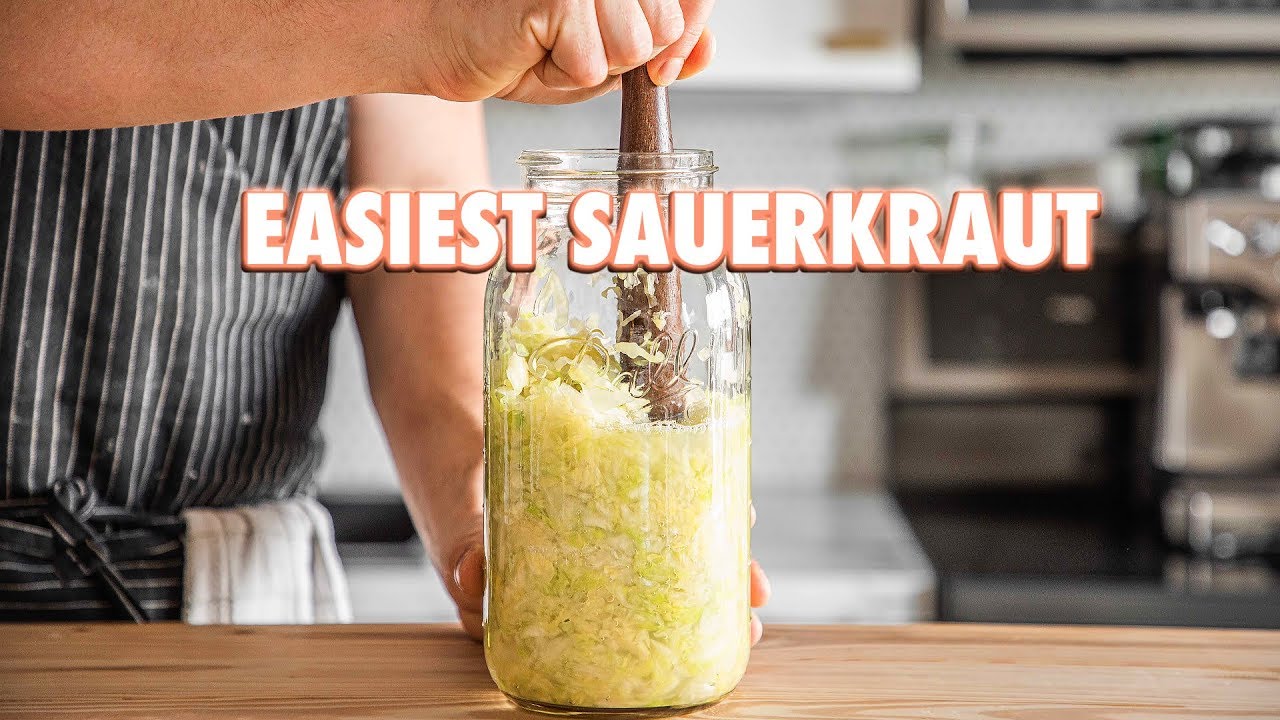
German Sauerkraut Recipe: When you think about classic German cuisine, what’s the first thing that comes to mind? For many, it’s that tangy, crunchy, fermented goodness called sauerkraut. While it might seem like just fermented cabbage, there’s so much more to it. This iconic dish has stood the test of time, not just for its unique flavor, but also for its impressive health benefits and cultural significance.
Sauerkraut literally means “sour cabbage” in German, and that’s exactly what it is. The magic lies in the natural fermentation process that transforms humble cabbage and salt into a probiotic-rich powerhouse. The result is a dish that’s slightly sour, a little crunchy, and endlessly versatile. From bratwurst to boiled potatoes, sauerkraut brings a zing to the plate that no other side can match.
And guess what? Making sauerkraut at home is easier than you think. You don’t need fancy tools or secret ingredients. Just a bit of patience, the right method, and our detailed step-by-step guide.
So let’s dive deep into how to create the perfect German sauerkraut right in your own kitchen!
What Makes German Sauerkraut Unique?
German sauerkraut isn’t just chopped cabbage in vinegar—far from it. The traditional method relies on wild fermentation, a natural process where beneficial bacteria transform the sugars in cabbage into lactic acid. This is what gives sauerkraut its signature sour flavor, along with the preservation benefits.
But what really sets German-style sauerkraut apart is its simplicity and depth. It’s typically just cabbage and salt, but the result is surprisingly complex in flavor. Some regional variations add caraway seeds, juniper berries, or apples to infuse more flavor and aromatics. Southern German recipes, for example, are slightly milder and may include onions and wine, while Northern styles are sharper and tangier.
Another unique feature is its traditional fermentation vessels—stone crocks with water-sealed lids—which help maintain the right environment for lactic acid bacteria to thrive.
There’s also a cultural element to it. Germans often serve sauerkraut alongside sausages, pork dishes, or mashed potatoes. It’s comfort food with a purpose—flavorful, nourishing, and steeped in history.
Ingredients You’ll Need
Let’s keep it real—this recipe doesn’t ask for anything fancy. The beauty of traditional German sauerkraut is its simplicity. Here’s everything you need:
Basic Ingredients:
- Green cabbage – about 2 medium heads (5 lbs / 2.25 kg total)
- Sea salt or pickling salt – about 3 tablespoons (non-iodized!)
Optional Add-Ins (For Flavor Variation):
- Caraway seeds – 1-2 teaspoons
- Juniper berries – 1-2 teaspoons
- Bay leaves – 1 or 2
- Thin apple slices – adds mild sweetness
- Garlic cloves – crushed
Tools and Equipment:
- A large mixing bowl
- A sharp knife or mandoline slicer
- A fermentation crock, mason jar, or food-grade bucket
- A weight (like a smaller jar or glass weight)
- A lid or cloth cover
- Clean hands (you’ll be massaging the cabbage!)
Having these ingredients and tools ready ensures your sauerkraut-making session is smooth and enjoyable. Now, let’s prep your cabbage and get fermenting!
Choosing the Right Cabbage
Not all cabbage is created equal—especially when it comes to making authentic German sauerkraut. To get the best flavor, texture, and fermentation success, choosing the right cabbage is absolutely key.
Best Types of Cabbage
The go-to choice for traditional sauerkraut is green cabbage. It’s firm, tightly packed, and has a slightly sweet flavor that balances beautifully with the salty tang of fermentation. Look for these varieties:
- Dutch white cabbage – Classic and dense.
- Brunswick cabbage – Known for its cold hardiness and strong flavor.
- Late-season cabbages – These tend to have less water content and more sugar, which is perfect for fermentation.
You can experiment with red cabbage too—it adds a stunning purple color and slightly earthier taste, but it’s not traditionally “German” sauerkraut.
How to Pick the Best Cabbage
Here’s what to look for when you’re standing in the produce aisle or at the farmer’s market:
- Firm and heavy – Pick a cabbage that feels solid and heavy for its size.
- Tight leaves – The outer leaves should be tight and not loose or wilted.
- No bruises or brown spots – Surface damage can introduce unwanted bacteria.
- Medium to large heads – Smaller ones tend to be less mature and less flavorful.
Organic vs. Non-Organic
Organic cabbage is always a better choice for fermentation. It hasn’t been treated with pesticides or waxes that could interfere with the fermentation process. If organic isn’t available, just be sure to remove the outer leaves and wash thoroughly.
Freshness matters. Cabbage that’s been sitting in storage for too long might have lost its natural sugars—essential for good fermentation. So pick it fresh, pick it firm, and you’re already halfway to delicious sauerkraut.
Preparing Your Workspace
Before you dive into chopping and salting, take a moment to prep your space. Fermentation is a natural but sensitive process—cleanliness is key to keeping bad bacteria out and letting the good guys thrive.
Cleanliness is Everything
- Wash your hands thoroughly with soap and warm water.
- Sanitize all tools—including bowls, knives, jars, and weights. A quick rinse with boiling water or a vinegar solution does the trick.
- Wipe down your countertops and keep pets, dust, or strong-smelling foods (like onions or raw meat) away from your work area.
Choose the Right Environment
Your workspace should be:
- Cool and dry
- Out of direct sunlight
- Free from temperature swings
Temperature plays a big role in how your sauerkraut ferments. Ideally, the room should stay between 65°F to 72°F (18°C to 22°C).
Creating a clean, calm environment sets the stage for a successful fermentation. Now that your cabbage is chosen and your tools are clean, let’s get into the fun part—making the kraut!
Step-by-Step Guide to Making German Sauerkraut
This is where the magic begins. Follow this method closely, and you’ll have your own tangy, probiotic-rich German sauerkraut ready in no time (well, a few weeks—but it’s worth it!).
Step 1: Prepping the Cabbage
Choose a fresh, firm green or white cabbage. Remove outer leaves, rinse, and set aside one clean leaf for later. Cut the cabbage into quarters, remove the core, and shred finely using a knife or mandoline.
Step 2: Salting and Massaging Process
Place shredded cabbage in a large bowl. Sprinkle with salt (about 1 tablespoon salt per 1 kg cabbage). Massage and squeeze the cabbage with clean hands for 5–10 minutes until it releases liquid and becomes soft. This brine is essential for fermentation.
Step 3: Packing into Jars or Crocks
Pack the cabbage tightly into a clean jar or fermentation crock, pressing it down firmly to remove air pockets. Pour any released liquid over the cabbage. It must be fully submerged.
Step 4: Weighing and Sealing
Use a fermentation weight, small jar, or clean stone to keep the cabbage under the brine. Fold the reserved cabbage leaf on top if needed. Cover loosely with a lid or cloth to allow gases to escape.
Step 5: Fermentation Time and Conditions
Store at room temperature (18–22°C / 65–72°F), away from direct sunlight. Fermentation usually takes 1–4 weeks. Check daily during the first week to ensure cabbage stays submerged.
Step 6: How to Know When It’s Done
Sauerkraut is ready when it smells pleasantly sour, tastes tangy, and the cabbage is tender but still crisp. Once fermented to your liking, seal tightly and refrigerate to slow further fermentation.
Homemade sauerkraut improves with time and pairs perfectly with sausages, meats, or sandwiches.
How Long Should You Ferment Sauerkraut?
This is the big question: how long do you let your sauerkraut do its thing? The answer really depends on your taste preference—but here’s the scoop.
Minimum Fermentation Time
You can start tasting your sauerkraut after 5–7 days, but at that stage, it’ll still be pretty mild. It won’t have that deep tang that makes German sauerkraut so beloved. The texture will be crunchier, and the sourness light.
Best Fermentation Time for Flavor
For a classic, fully developed flavor, let your sauerkraut ferment for 3 to 4 weeks. At this point, it becomes:
- Tangy and sour without being overpowering
- Soft but still crunchy
- Probiotic-rich, loaded with beneficial bacteria
The longer it ferments, the more complex and mellow the flavor becomes. Some people even go up to 6 weeks if they want a super punchy kraut.
Temperature Matters
Fermentation speeds up in warmer temperatures. If your room is:
- 70°F–75°F (21°C–24°C): 2–3 weeks may be enough
- 65°F–69°F (18°C–20°C): Aim for 3–4 weeks
- Below 65°F (18°C): Expect 4–6 weeks
Keep your jar somewhere stable, like a cupboard or pantry—not near the stove or windows.
Taste as You Go
Starting from day 7, taste it every few days with a clean spoon. If you like it, it’s done! If you want more sourness, let it sit. The fermentation is very forgiving as long as it stays submerged and no mold forms.
Once it’s perfect, pop it into the fridge to slow down the fermentation and enjoy it for months.
Storage Tips for Sauerkraut
Once your sauerkraut is fermented to perfection, you’ll want to store it properly to keep it safe, delicious, and full of probiotics.
Best Storage Options
- Glass jars (like mason jars): These are ideal. Use tight-fitting lids to keep air out and freshness in.
- Fermentation crocks: Great if you plan to ferment in large batches, but they’re bulky for fridge storage.
- Food-grade plastic containers: These work too, though glass is always preferred.
Refrigeration is Key
Sauerkraut should be stored in the refrigerator once fermentation is complete. The cold temperature slows down the fermentation almost entirely while keeping all the good bacteria alive.
Shelf Life of Sauerkraut
- In the fridge: Properly stored, your sauerkraut can last 4 to 6 months, sometimes even longer.
- Smell test: It should always smell pleasantly sour. If it smells rotten or off, discard it.
- Mold or slime? If you see mold or if the brine becomes thick and slimy, it’s time to toss it.
Handling Tips
- Always use a clean utensil to scoop kraut from the jar—this prevents contamination.
- Keep it submerged in brine, even in storage. If needed, top off with a bit of saltwater (½ tsp salt to ½ cup filtered water).
With the right storage practices, you’ll have a jar of fresh, zingy sauerkraut ready whenever your cravings strike.
Serving Suggestions
Now that you’ve got your sauerkraut ready, let’s talk about how to eat it. Spoiler alert: it’s not just for sausages!
Classic German Pairings
- Bratwurst and sauerkraut – A match made in heaven
- Pork roast (Schweinebraten) – Rich meat meets tangy kraut
- Schnitzel – Serve with a side of sauerkraut and potatoes
- Kassler (smoked pork chops) – Traditional and satisfying
Simple Side Dish
Just serve a spoonful of sauerkraut next to:
- Mashed potatoes
- Grilled chicken or fish
- Roasted vegetables
It adds acidity and crunch that balances out heavier dishes.
Modern Ways to Eat Sauerkraut
- On sandwiches – Especially Reubens, hot dogs, or grilled cheese
- In grain bowls – Combine with quinoa, roasted veggies, and a soft-boiled egg
- On avocado toast – Tangy kraut meets creamy avocado
- Mixed into salads – A spoonful adds zing and probiotics
Cooked or Raw?
Both work, but keep this in mind:
- Raw sauerkraut retains all its probiotic benefits
- Cooked sauerkraut is delicious in stews and soups, but high heat kills some of the good bacteria
Try both ways and see what you love!
Flavor Variations and Add-Ins
Once you master the basic sauerkraut, it’s time to get creative! Adding spices, herbs, or fruits can transform your kraut into something uniquely yours.
Popular German Additions
- Caraway seeds – Traditional and aromatic
- Juniper berries – Add a mild, piney flavor
- Bay leaves – Subtle earthy note
- Onions or garlic – Stronger punch and depth
- Apple slices – A sweet touch that balances sourness
International Twists
- Ginger + garlic – Adds a kimchi-style kick
- Turmeric + black pepper – Anti-inflammatory and colorful
- Chili flakes – For spice lovers
- Shredded carrots or beets – Extra crunch and vibrant color
Tips for Flavoring
- Mix in your chosen add-ins while salting the cabbage
- Don’t overdo it—less is more with strong spices
- Always keep add-ins thinly sliced or crushed to aid fermentation
Experimenting with flavors is half the fun. You’ll never want store-bought kraut again.
Troubleshooting Common Fermentation Problems
So, you’ve followed all the steps and still something seems off? Don’t worry—fermentation is both an art and a science. Here are the most common issues you might face when making sauerkraut at home, and exactly how to fix them.
1. Mold on Top
Seeing white or fuzzy stuff on the surface? Don’t panic—it’s often just kahm yeast, a harmless (though unsightly) byproduct of fermentation.
How to handle it:
- Skim it off gently using a clean spoon.
- Make sure your cabbage is fully submerged in the brine.
- Clean the edges of your jar and weigh it down better.
If you see green, black, or pink mold or it smells truly rotten, it’s safest to discard the whole batch.
2. Sauerkraut is Too Salty
This often happens when:
- You use more salt than needed.
- You have less cabbage but used full salt.
Solution:
- Rinse the finished kraut lightly before eating.
- Mix it into other dishes to balance the saltiness.
- Next time, measure salt based on cabbage weight.
3. It’s Too Crunchy or Too Soft
Crunchy kraut is often under-fermented or too cool during fermentation.
Fix it:
- Let it sit longer.
- Move it to a slightly warmer spot.
If it’s mushy, you may have:
- Overfermented it.
- Used cabbage that was too old or soft.
- Let the temperature get too high.
Use firmer cabbage next time and ferment in cooler conditions.
4. It’s Not Sour Enough
If your kraut isn’t tangy, chances are it didn’t ferment long enough.
Try this:
- Let it sit another week or two.
- Check the temperature—it may be too low.
- Make sure it’s submerged in brine so fermentation continues.
5. Brine Disappears
Sometimes, you’ll find your cabbage floating above the liquid. This can lead to spoilage.
Fix it:
- Push the cabbage down and re-submerge.
- Add a simple brine: ½ teaspoon of salt per ½ cup of filtered water.
Consistency and a little patience will help you troubleshoot like a pro. Even if your first batch isn’t perfect, every attempt teaches you more.
Health Benefits of Sauerkraut
Beyond its bold, tangy flavor, sauerkraut packs a serious health punch. It’s not just food—it’s functional, which is why it’s been loved for generations.
1. Loaded with Probiotics
Since sauerkraut is lacto-fermented, it’s teeming with good bacteria like Lactobacillus. These probiotics:
- Help balance gut flora
- Improve digestion
- Support immunity
Want better gut health? A spoonful of sauerkraut a day might be more effective than a supplement.
2. Nutrient-Rich
Cabbage is naturally rich in:
- Vitamin C – Boosts the immune system
- Vitamin K – Supports bone health
- Fiber – Keeps your digestion running smoothly
- Iron and folate – Important for energy and cell growth
Fermentation actually increases bioavailability, meaning your body absorbs these nutrients more easily.
3. May Support Weight Loss
Thanks to its high fiber and low calorie content, sauerkraut can help you feel full without adding lots of calories. It also:
- Aids in digestion
- Reduces cravings
- Supports metabolism via gut health
4. Reduces Inflammation
The probiotics in sauerkraut may also reduce inflammation, which is linked to many chronic diseases. Pair that with the antioxidants in cabbage, and you’ve got a potent little side dish.
Eating sauerkraut regularly can be a simple way to boost your overall health—naturally, affordably, and deliciously.
German Sauerkraut History and Tradition
Sauerkraut isn’t just a recipe—it’s a cultural icon. Its roots stretch deep into German soil, both literally and historically.
Ancient Beginnings
Believe it or not, fermented cabbage likely originated in China over 2,000 years ago, but it was the Germans who perfected and popularized it across Europe.
By the Middle Ages, sauerkraut had become a staple in German households, especially during the winter months when fresh vegetables were scarce. Its ability to preserve cabbage for months made it an essential survival food.
Sauerkraut in War and Exploration
Did you know that sauerkraut even played a part in military history? Sailors used it to prevent scurvy on long voyages due to its high Vitamin C content.
In both World Wars, Germans and even American soldiers included sauerkraut in rations for its long shelf life and health benefits.
Cultural Celebrations
Today, sauerkraut is part of:
- Oktoberfest menus
- New Year’s Day feasts (eating sauerkraut on Jan 1 is said to bring prosperity!)
- Traditional weddings and family gatherings
It’s more than food—it’s a link to the past, a tradition passed down from Oma to grandchild.
Quick Sauerkraut vs. Traditional Fermented Sauerkraut
In a hurry? There are shortcut versions of sauerkraut available—but they’re a far cry from the real deal.
Quick Sauerkraut
This method uses vinegar to mimic the sourness and skips the fermentation.
Pros:
- Ready in under an hour
- Tangy taste
- Easy to prepare
Cons:
- No probiotics
- One-dimensional flavor
- Lacks the depth of traditional kraut
Traditional Sauerkraut
Made through natural fermentation over weeks.
Pros:
- Rich, complex flavor
- Full of gut-boosting probiotics
- Preserves better
Cons:
- Takes time and patience
- Requires proper technique
If you’re in a rush, quick sauerkraut will do. But for full flavor and health benefits, nothing beats the slow-fermented traditional German way.
FAQs about German Sauerkraut Recipe
1. Can I use red cabbage instead of green?
Yes! Red cabbage makes a beautiful, vibrant sauerkraut with a slightly earthier taste. Just be aware that the texture may differ slightly, and it tends to stain everything purple.
2. Why is my sauerkraut too salty?
You might’ve added too much salt or not weighed your cabbage accurately. Try rinsing before eating or using less salt next time—aim for 2% salt by cabbage weight.
3. What do I do if mold appears?
If it’s white kahm yeast, just skim it off. But if you see black, pink, or fuzzy mold—or if it smells bad—throw it out and start fresh.
4. How do I know when fermentation is complete?
Taste is your best guide! Start sampling after 7 days. Once it reaches your preferred level of tanginess, transfer it to the fridge to stop fermentation.
5. Can I freeze sauerkraut?
Yes, but it may lose some crunch. Freezing can damage probiotics too. If you do freeze, portion it in small containers and thaw in the fridge.
Conclusion
So there you have it—the complete guide to crafting your own authentic German sauerkraut, right in your kitchen. From understanding its cultural roots to perfecting the fermentation process, this humble yet powerful dish is more than just cabbage. It’s a celebration of tradition, health, and flavor.
Making sauerkraut isn’t just a cooking task—it’s an experience. It teaches patience, rewards curiosity, and delivers a jar full of tangy, crunchy goodness that your gut (and taste buds) will thank you for.
Whether you enjoy it on a bratwurst, mixed into a salad, or straight from the jar, homemade sauerkraut brings something special to the table.
Give it a try. Play with flavors. Share a batch with friends or family. Your perfect kraut is just a cabbage and a little salt away.