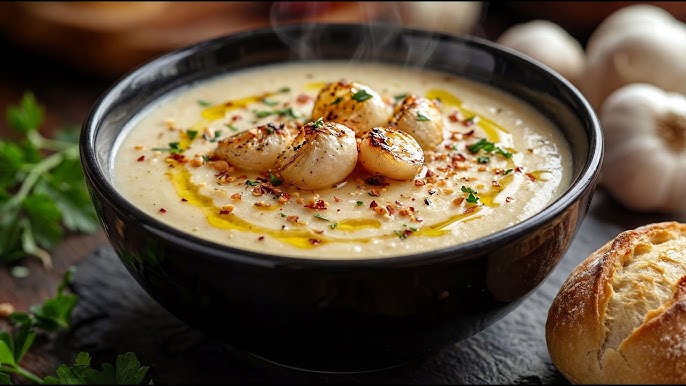
Garlic Soup Recipe: When you think about comfort food, soup often tops the list. Now imagine a warm, soothing bowl loaded with the bold, aromatic flavor of garlic—sounds like heaven, right? Garlic soup isn’t just comfort food; it’s a traditional remedy, a gourmet delight, and a simple, budget-friendly meal all in one. Whether you’re battling a cold, looking to impress your dinner guests, or just craving something soul-warming, garlic soup is your go-to option.
Garlic has been revered for centuries for both its culinary and medicinal properties. From ancient Greece to modern kitchens, this small but mighty bulb has been at the heart of flavorful dishes and natural remedies. Garlic soup, in particular, stands out for its healing potential and rich flavor profile.
Not only is it easy to make, but garlic soup is also versatile. You can keep it rustic and brothy or make it creamy and indulgent. You can stick to the basics or dress it up with add-ons like croutons, herbs, or even a poached egg. And the best part? It requires very few ingredients, most of which you probably already have in your pantry.
So let’s dive deep into how to make the perfect garlic soup from scratch. This step-by-step guide will walk you through everything—from the ingredients you need to serving suggestions—so you can make a flavorful, nourishing garlic soup that tastes like it came straight out of a restaurant kitchen.
List of Ingredients You’ll Need
Creating a delicious garlic soup doesn’t require fancy ingredients. Most of the magic comes from basic pantry staples, elevated by garlic’s bold, irresistible flavor. Here’s what you’ll need to whip up a traditional and flavorful garlic soup:
Core Ingredients:
- Garlic cloves (10-12 large cloves) – The star of the show. You can use more or less based on how strong you like your garlic flavor.
- Olive oil or butter (2 tablespoons) – Helps in sautéing and adds richness.
- Onion (1 medium, chopped) – Adds depth and sweetness to the flavor.
- Vegetable or chicken broth (4 cups) – Use homemade or store-bought. Bone broth adds extra richness.
- Salt and black pepper (to taste) – Essential seasonings.
- Thyme or rosemary (1 tsp, dried or fresh) – Optional, but adds a nice herbal undertone.
- Bay leaf (1) – For added aroma and flavor during simmering.
- Cream or milk (½ cup, optional) – For a creamy version of the soup.
Optional Add-ons for Extra Flavor:
- Potatoes (1 cup diced) – Adds body and thickness.
- Parmesan cheese (for garnish) – For a savory finish.
- Croutons or toasted bread – Classic pairing.
- Egg (1, poached or stirred in) – Spanish garlic soup twist.
- Chili flakes or paprika (a pinch) – If you like a bit of heat.
Substitutions and Dietary Swaps:
- Vegan? Use olive oil instead of butter, skip cream, and use vegetable broth.
- Dairy-free? Use plant-based milk or leave out cream altogether.
- Low-carb? Skip potatoes and bread—garlic alone is flavorful enough!
Keep in mind, the beauty of this recipe lies in its adaptability. You can make it your own depending on what’s available in your kitchen or your specific taste preferences.
Kitchen Tools You’ll Need
Before you start cooking, make sure your kitchen is stocked with the right tools. Luckily, garlic soup doesn’t require anything fancy. Here’s your essential kitchen checklist:
- Large soup pot or Dutch oven – For sautéing and simmering the soup.
- Blender or immersion blender – To make the soup creamy (optional).
- Cutting board and knife – For prepping garlic and onions.
- Garlic press or grater – Speeds up the garlic prep process.
- Ladle – For serving.
- Wooden spoon or spatula – For stirring ingredients as they cook.
Having everything ready beforehand makes the whole cooking experience smoother and way more enjoyable. Plus, it keeps the kitchen chaos to a minimum!
Choosing the Right Garlic
Not all garlic is created equal, and when garlic is the star of the show, quality really matters. Fresh, firm garlic bulbs are your best bet. Avoid anything that feels soft, looks moldy, or has sprouted (unless you’re going for roasted sprouted garlic, which can actually be tasty in some cases).
Fresh vs. Pre-minced Garlic:
Let’s get one thing straight—pre-minced garlic in jars can be a huge time-saver, but it doesn’t hold a candle to fresh garlic when it comes to flavor. Jarred garlic tends to taste slightly metallic or sour, which could throw off the balance of your soup. If you’re making this dish for the first time or serving it to guests, go the extra mile and use fresh cloves.
How to Roast Garlic for Deeper Flavor:
Want to level up your soup? Roasting garlic transforms its sharp bite into a mellow, sweet nuttiness. Here’s how:
- Preheat your oven to 400°F (200°C).
- Slice the top off a whole garlic bulb to expose the cloves.
- Drizzle with olive oil, wrap in foil, and roast for 30-40 minutes.
- Once soft, squeeze the cloves out like toothpaste.
This roasted garlic can be added during the blending step for an ultra-rich, velvety finish.
Prepping Your Ingredients
Before you jump into the cooking process, prepping your ingredients the right way makes all the difference. Trust me, spending a few extra minutes here can elevate your garlic soup from decent to deeply delicious.
How to Peel Garlic Quickly
Peeling garlic doesn’t have to be a tedious task. Here are a few pro tips to make it fast and easy:
- Smash and peel: Place the flat side of your knife over a garlic clove and give it a quick smash with the palm of your hand. The peel usually slides right off.
- Shake method: Break apart a whole bulb and place the cloves in a metal bowl. Cover with another bowl and shake vigorously for 20–30 seconds. The friction helps loosen the skins.
- Soak in warm water: Soaking the cloves for 10 minutes softens the skins and makes them easier to peel.
Once peeled, you can slice, mince, or even mash the garlic depending on how strong or subtle you want the flavor to be in your soup.
Chopping and Prepping Vegetables
If you’re including onions, leeks, celery, or potatoes, make sure they’re chopped into even pieces. Uniform chopping ensures that everything cooks evenly, especially when you’re simmering or blending.
Here’s a quick tip: For a smoother soup, dice your onions and vegetables finely. For a chunkier, rustic feel, go for rougher cuts. Just make sure they’re all about the same size to avoid uneven textures.
Pro tip: If you’re planning to blend the soup, don’t stress too much about making your cuts perfect. But if you’re keeping it brothy, take your time to make the presentation count.
Step-by-Step Guide to Making Garlic Soup
Now that your ingredients and tools are ready, it’s time to dive into the magic of cooking. Here’s the step-by-step breakdown of how to make a perfect pot of garlic soup from scratch.
Step 1: Roast the Garlic (Optional but Recommended)
Roasting garlic adds sweetness and depth. Cut the top off a head of garlic, drizzle with olive oil, wrap in foil, and roast at 180°C (350°F) for 35–40 minutes until soft and golden. Squeeze out the cloves when cool.
Step 2: Sauté the Aromatics
Heat olive oil or butter in a pot over medium heat. Add chopped onions or shallots and cook until soft and translucent. Stir in the roasted garlic (or raw minced garlic if skipping roasting) and cook briefly until fragrant.
Step 3: Add Broth and Simmer
Pour in vegetable or chicken broth and bring to a gentle simmer. Add a bay leaf or thyme if desired. Let the soup simmer for 15–20 minutes to allow the flavors to blend.
Step 4: Blend for a Creamy Texture
Remove any herbs. Use an immersion blender or countertop blender to puree the soup until smooth. For extra creaminess, add a splash of cream or milk while blending.
Step 5: Season and Adjust Flavors
Season with salt and black pepper to taste. Add a squeeze of lemon juice or a pinch of nutmeg to brighten and balance the flavors.
Step 6: Serve and Garnish
Serve hot, garnished with chopped parsley, croutons, or grated cheese. Garlic soup pairs beautifully with crusty bread for a comforting meal.
Variations of Garlic Soup
Garlic soup is incredibly versatile. Here are some tasty regional and dietary variations:
Spanish Garlic Soup (Sopa de Ajo)
This rustic soup is made with garlic, stale bread, paprika, and poached eggs. It’s brothy, smoky, and often served as a hangover cure or cold remedy in Spain. The key is smoked paprika and lots of olive oil.
Creamy French Garlic Soup
Often made with roasted garlic, leeks, and cream, this version is velvety smooth and sophisticated. Perfect as a starter for a dinner party.
Vegan Garlic Soup
Skip the dairy and use olive oil and plant-based milk or cream (like oat or cashew). Nutritional yeast can add cheesy, umami notes without the cheese.
Keto-Friendly Garlic Soup
Focus on healthy fats and low-carb ingredients. Use bone broth, heavy cream, and skip the potatoes or bread. Roasted garlic and butter make this version super satisfying.
Serving Suggestions
So, your garlic soup is ready—now let’s talk presentation and pairings. Garlic soup may be simple in ingredients, but how you serve it can turn it into a cozy weeknight meal or an elegant starter at a dinner party.
Best Breads to Pair With
Bread and soup are a classic combo, and garlic soup is no exception. Here are some excellent choices:
- Crusty baguette – Toasted and rubbed with garlic for an extra hit.
- Sourdough slices – Adds a slightly tangy contrast to the savory soup.
- Ciabatta or focaccia – Soaks up the soup beautifully without falling apart.
- Cheesy garlic bread – Because more garlic is never a bad idea.
To take it up a notch, brush the bread with olive oil, sprinkle with herbs or cheese, and toast it until golden. Dip it, dunk it, or float it on top of the soup like a crouton raft—it’s all good.
Toppings and Garnishes
Toppings not only add texture and flavor, but they also make the dish look appealing. Here are some crowd-pleasers:
- Toasted breadcrumbs or croutons – Crunchy contrast to the creamy soup.
- Chopped herbs (parsley, chives, thyme) – Fresh and fragrant.
- Grated parmesan or vegan cheese – Savory umami hit.
- A swirl of cream or olive oil – For that fancy, restaurant-style touch.
- Paprika or chili flakes – A pop of color and spice.
Ideal Side Dishes
If you’re making a meal out of it, consider pairing your garlic soup with these sides:
- Simple green salad – Light and crisp to balance the soup.
- Grilled veggies – Adds more nutrition and flavor.
- Quiche or savory tart – A heartier meal pairing.
- Roasted mushrooms or chickpeas – Earthy and protein-rich additions.
When served right, garlic soup can be comforting and gourmet at the same time—perfect for any occasion.
Storage and Reheating Tips
Garlic soup stores beautifully, and in many cases, it actually tastes better the next day. The flavors get a chance to deepen and mingle overnight.
Refrigeration:
- Let the soup cool completely before storing.
- Transfer to an airtight container.
- Store in the fridge for up to 4–5 days.
Freezing:
- Garlic soup freezes well, especially if it doesn’t contain dairy. If you’re planning to freeze, skip the cream and add it after reheating.
- Pour into freezer-safe containers or ziplock bags.
- Label and date it.
- Freeze for up to 3 months.
Reheating:
- Reheat on the stove over medium heat until it’s hot throughout.
- If it has thickened, stir in a splash of water or broth.
- For creamy soups, stir often to prevent separating.
A batch of garlic soup in your freezer is like having a secret weapon for busy days, chilly nights, or surprise dinner guests.
Common Mistakes to Avoid
Even though garlic soup is simple, there are a few easy mistakes that can throw off the taste or texture. Here’s what to watch out for:
1. Burning the Garlic
Garlic cooks fast—really fast. Burnt garlic turns bitter and can ruin the entire soup. Always sauté garlic gently on low to medium heat, and never leave it unattended.
2. Overcrowding the Pot
Trying to cook too many ingredients at once can lead to uneven cooking. Give your onions, garlic, and other veggies room to sweat and caramelize.
3. Not Roasting (When Needed)
While raw or sautéed garlic gives a sharp punch, roasted garlic brings sweetness and complexity. Skipping it might leave your soup tasting one-dimensional.
4. Under-seasoning
Broth-based soups often need a little more salt than expected to bring out the flavors. Taste as you go, and adjust.
5. Over-blending or Under-blending
For creamy versions, blend just until smooth. Over-blending can make the soup gluey if potatoes are involved, and under-blending can leave chunks that ruin the texture.
Avoid these pitfalls, and you’re guaranteed a silky, flavorful bowl every time.
Garlic Soup for Cold and Flu Relief
Garlic soup is more than delicious—it’s medicinal. Known for its antiviral, antibacterial, and anti-inflammatory properties, garlic has been used in natural remedies for centuries.
Why It Works:
- Allicin, found in raw or lightly cooked garlic, helps fight infection.
- Warm broth soothes sore throats and provides hydration.
- Steam and heat help clear nasal passages.
Best Time to Have It:
- At the first sign of a cold.
- When you’re feeling fatigued or run-down.
- As a preventive during cold and flu season.
Make it a little stronger, spicier, and more garlicky when you’re aiming for its medicinal benefits. It’s like a warm, healing hug in a bowl.
How to Make It in a Slow Cooker or Instant Pot
Short on time or want to set it and forget it? Good news—garlic soup works wonderfully in both the slow cooker and Instant Pot.
Slow Cooker Method:
- Add all ingredients except cream to the cooker.
- Cook on low for 6–7 hours or high for 3–4 hours.
- Blend and stir in cream at the end.
Instant Pot Method:
- Use Sauté mode to cook onions and garlic.
- Add broth and other ingredients.
- Pressure cook for 5 minutes, then natural release.
- Blend and finish with cream or toppings.
Both methods bring out the depth of flavor with minimal effort—perfect for busy days.
Garlic Soup for Meal Prep
If you’re into meal prepping, garlic soup is a no-brainer. It’s quick to make in large batches, stores well, and you can customize it differently each day with toppings or mix-ins.
Pro Meal Prep Tips:
- Store individual portions in mason jars or containers.
- Keep toppings separate to avoid sogginess.
- Freeze half the batch for later weeks.
Meal prep a pot of garlic soup and your future self will thank you every time you’re too tired to cook but still want something warm and healthy.
FAQs about Garlic Soup Recipe
1. Can I use garlic powder instead of fresh garlic?
While garlic powder can add flavor, it won’t bring the same depth or aroma as fresh garlic. It’s best used as a backup, not a replacement.
2. Is garlic soup good for digestion?
Yes! Garlic stimulates digestion and can help regulate gut bacteria. The warm broth also eases the digestive process.
3. Can I freeze garlic soup?
Absolutely. Just avoid adding cream before freezing. Add it after reheating for best texture and flavor.
4. How long does garlic soup last in the fridge?
Garlic soup keeps well for 4–5 days when stored in an airtight container in the fridge.
5. Can I add noodles or rice to garlic soup?
Definitely. Adding cooked rice, pasta, or even lentils can turn it into a more filling, hearty meal.
Conclusion
Garlic soup is the kind of recipe that makes you wonder why you haven’t been making it all along. It’s simple yet soulful, budget-friendly yet elegant, and incredibly good for you. Whether you’re curled up on the couch with a cold or hosting a dinner party, garlic soup brings warmth, flavor, and comfort with every spoonful.
With just a handful of ingredients, a pot, and a bit of time, you can create something that tastes gourmet and feels like home. Play with the variations, try new toppings, and make it your own—this is a dish that invites experimentation.
So go ahead, grab that garlic bulb sitting on your kitchen counter and get cooking. You’ve got a bowl of magic waiting for you.