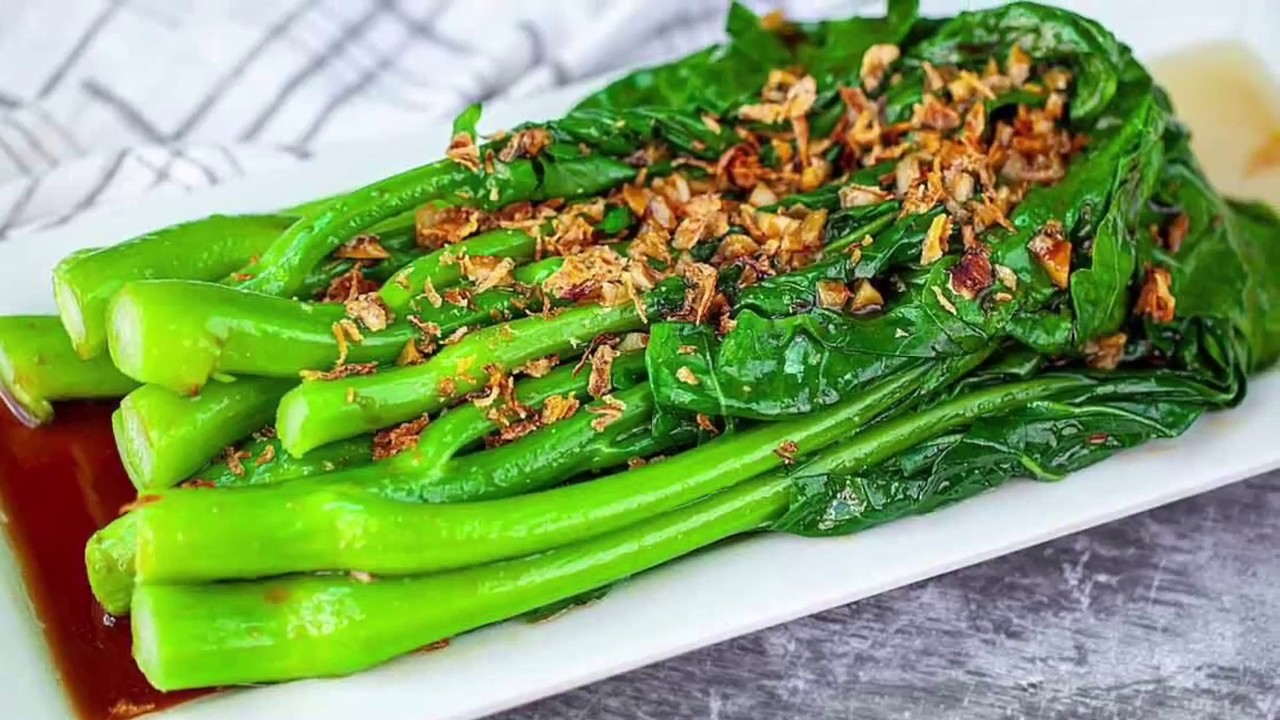
Gai Lan Recipe: Gai Lan, also known as Chinese broccoli, is a leafy green vegetable often found in Chinese cuisine. Unlike the Western broccoli you may be familiar with, Gai Lan has flat, glossy blue-green leaves, thick stems, and small white flowers when in bloom. It belongs to the brassica family, the same group that includes kale, cabbage, and Brussels sprouts. What makes it distinct is its unique bitter-yet-pleasant taste, which is perfectly complemented by savory sauces, especially garlic and oyster sauce.
The stems are crunchy, the leaves tender, and the slight bitterness mellows beautifully when cooked. This vegetable is commonly stir-fried, steamed, or blanched, making it one of the most versatile greens in Asian kitchens. You’ll often see it paired with meats or tofu, or simply served as a side dish. It’s also incredibly popular in dim sum restaurants, typically topped with a glossy garlic or oyster sauce.
Not only is it delicious and versatile, but it’s also simple to prepare, making it an excellent green to introduce into your weekly meal rotation.
Nutritional Value and Health Benefits
Gai Lan isn’t just a flavor powerhouse—it’s packed with nutrition too. Like many leafy greens, it’s low in calories but rich in vitamins and minerals that support overall health.
Here’s a breakdown of the benefits:
- Vitamin A: Great for eye health and immune function.
- Vitamin C: Boosts immunity and acts as a powerful antioxidant.
- Calcium: Supports bone health.
- Iron: Essential for red blood cell production.
- Fiber: Aids digestion and promotes a healthy gut.
Thanks to its nutrient density and low-calorie profile, it’s a smart choice for those aiming for weight management or improving their daily vegetable intake. Plus, its slightly bitter taste can help stimulate digestion and appetite.
Consuming Gai Lan regularly can help you meet your daily vegetable needs while adding variety and flavor to your meals. Whether you’re cooking for health or taste—or both—this green veggie deserves a spot on your plate.
Why You’ll Love This Gai Lan Recipe
There’s a reason this dish is a staple in Asian kitchens and restaurant menus. It’s:
- Fast and easy – Ready in under 15 minutes.
- Nutritious – A low-calorie, high-fiber veggie dish.
- Customizable – Spice it up, keep it simple, or make it vegetarian.
- Delicious – Garlic and umami-rich sauces take it to the next level.
- Budget-friendly – Gai Lan is affordable and available at most Asian supermarkets.
Once you try it, you’ll realize just how effortlessly this dish brings flavor, texture, and color to your table. Whether you’re new to Chinese cuisine or a seasoned home cook, this recipe is a keeper.
Ingredients You’ll Need
Fresh Ingredients
The beauty of this recipe lies in its simplicity. You’ll need just a few fresh ingredients to get started:
- 1 bunch of Gai Lan – Choose fresh, vibrant greens with firm stems and minimal yellowing.
- 4 cloves garlic (minced) – Fresh garlic brings bold, authentic flavor.
- 1 tablespoon fresh ginger (optional, minced) – Adds a subtle zing if you like complexity.
Freshness is key. When selecting Gai Lan, look for bundles with moist, snappy stems and rich green leaves. Avoid wilted or yellowing greens.
Pro Tip: The younger the Gai Lan, the more tender it will be. If you prefer softer stalks, go for smaller bunches.
Pantry Staples
In addition to your fresh items, a few pantry staples will help you bring the flavors to life:
- 2 tablespoons oyster sauce – Classic umami-rich topping.
- 1 tablespoon soy sauce – Adds savory depth.
- 1 tablespoon vegetable oil (or sesame oil for added aroma) – For stir-frying.
- 1 teaspoon sugar – Balances the bitterness of Gai Lan.
- 1 tablespoon water – Helps in blending the sauce.
- Salt (to taste) – For blanching or seasoning.
If you’re going vegetarian, you can use mushroom-flavored vegetarian oyster sauce as a great alternative. A little goes a long way with these ingredients, so don’t overdo it—this recipe is about balance.
Ingredient Substitutions and Tips
Let’s face it, not everyone has access to Asian grocery stores or specific sauces. No problem! Here are some handy swaps:
- No oyster sauce? Try hoisin sauce with a splash of soy sauce.
- No Gai Lan? Broccolini or tender-stem broccoli can stand in.
- No fresh garlic? Garlic paste or powder works in a pinch (though fresh is best).
Also, if you like your dish spicy, add a few chili flakes or a splash of chili oil at the end for an extra kick.
These simple swaps won’t sacrifice flavor and ensure you can make this dish no matter what’s in your pantry.
Equipment You’ll Need
Kitchen Tools
Cooking Gai Lan doesn’t require fancy equipment. In fact, it’s a perfect one-pan dish. Here’s what you’ll need:
- Large skillet or wok – A wok is ideal, but a deep pan works fine.
- Knife and chopping board – For trimming and slicing.
- Colander – Useful for rinsing and draining Gai Lan.
- Small bowl – To mix your sauce ingredients.
- Tongs or chopsticks – For stirring and plating.
Using a wok will give you the best results because it distributes heat evenly and allows for quick, high-heat cooking—essential for crisp-tender veggies.
Optional Add-ons
Want to take your recipe up a notch? Here are some optional tools and add-ons:
- Steamer basket – If you prefer steaming over blanching.
- Microplane grater – For finely mincing garlic or ginger.
- Serving platter – Because presentation matters!
Although these aren’t required, they can make the prep easier and the results a bit more polished.
How to Prepare Gai Lan
Cleaning and Trimming
Before cooking, it’s essential to clean and prep your Gai Lan properly. Here’s how:
- Rinse thoroughly – Gai Lan can trap dirt in its folds and stems, so rinse under cold water and soak if needed.
- Trim the ends – Cut off about an inch of the tough bottom stems.
- Slice thick stalks – If your Gai Lan is large, slice thicker stems in half lengthwise so everything cooks evenly.
- Remove wilted leaves – Discard any yellow or limp leaves.
Proper prep ensures even cooking and better presentation. A little care here goes a long way in delivering a restaurant-style dish at home.
Blanching or Steaming Methods
Blanching is the traditional way to prep Gai Lan before tossing it in sauce. It softens the stems and keeps the color vibrant. Here’s how to do it:
To Blanch:
- Bring a large pot of salted water to a boil.
- Add Gai Lan and cook for 1.5–2 minutes.
- Drain and immediately plunge into ice water (this stops the cooking process and locks in color).
- Drain again and set aside.
To Steam:
- Place trimmed Gai Lan in a steamer basket.
- Steam over boiling water for about 3–4 minutes until tender-crisp.
- Remove and set aside.
Blanching is faster and better for sauces that cling to the leaves, while steaming preserves more nutrients.
Preparing Aromatics and Sauce
While your Gai Lan is cooling, it’s time to prep the flavorful base that will bring it all together.
Garlic Sauce Base:
- Heat oil in a pan and sauté minced garlic until golden.
- Mix oyster sauce, soy sauce, sugar, and a splash of water in a bowl.
- Pour this into the garlic and simmer for 1 minute.
That’s it—your sauce is ready! This umami-rich drizzle is what transforms plain veggies into a crave-worthy side.
Step-by-Step Cooking Instructions
Step 1: Prep All Ingredients
Before you even turn on the stove, make sure all your ingredients are cleaned, chopped, and measured out. This “mise en place” (everything in its place) approach is crucial for stir-fry dishes, which cook quickly.
Here’s what you’ll do:
- Wash and trim the Gai Lan as described earlier.
- Mince the garlic and ginger finely.
- Measure your sauces: oyster sauce, soy sauce, sugar, water, and oil.
- Mix the sauce in a small bowl, so it’s ready to pour when needed.
You want to move quickly once the heat is on, and there’s no time to mince garlic mid-cook. Taking a few minutes upfront to prep everything will save you from chaos later—and help you avoid overcooking anything.
This prep time should take no more than 10 minutes, and it sets you up for a smooth cooking process. Plus, you’ll feel like a total pro when you’re just tossing things in with precision like a seasoned chef.
Step 2: Blanch Gai Lan Perfectly
Blanching helps remove bitterness and ensures your greens are vibrant and tender, not soggy or limp.
Here’s how to do it:
- Bring a large pot of salted water to a boil.
- Drop the trimmed Gai Lan into the water.
- Cook for just 1.5 to 2 minutes, max. You want it tender but with a bite.
- Drain immediately.
- Transfer to a bowl of ice water to shock the greens. This step keeps the bright green color and halts the cooking.
- Drain thoroughly before stir-frying or serving.
Avoid overcooking here—mushy Gai Lan is a no-go. The stems should be firm, and the leaves soft but intact. If you skip the ice bath, the heat may continue cooking the greens, making them dull and soggy.
Blanching is a game-changer and makes your final dish look and taste restaurant-quality.
Step 3: Make the Savory Garlic Sauce
The soul of this dish lies in its sauce. A perfectly balanced garlic sauce adds that glossy, umami-rich finish that makes you want to eat your greens with joy.
Here’s the process:
- Heat 1 tablespoon of oil in a small pan over medium heat.
- Add the minced garlic (and ginger if using) and stir-fry until golden brown and aromatic—about 30-45 seconds.
- Lower the heat slightly and pour in the pre-mixed sauce: 2 tablespoons oyster sauce, 1 tablespoon soy sauce, 1 teaspoon sugar, and 1 tablespoon water.
- Stir and let it simmer for another 30 seconds until it thickens slightly.
Pro Tip: Don’t burn the garlic—it should be golden and fragrant, not bitter and brown. The sugar balances the umami, while the soy and oyster sauce bring depth. You can double the sauce if you love extra drizzle or want to use it over rice too.
You’ll smell that intoxicating aroma once the garlic hits the pan—it’s the kind of scent that draws people into the kitchen asking, “What’s cooking?”
Step 4: Stir-Fry or Drizzle with Sauce
Now, the magic happens. You’ve got your vibrant Gai Lan and a hot, savory garlic sauce. Time to bring it all together.
Two options here:
Option 1: Stir-fry
- Heat a bit of oil in a large wok or skillet over high heat.
- Add the blanched Gai Lan and stir-fry for 1–2 minutes.
- Pour in the sauce and toss to coat evenly.
- Stir quickly until everything is hot and well combined.
Option 2: Sauce drizzle (restaurant style)
- Arrange the blanched Gai Lan on a plate.
- Reheat the garlic sauce gently if needed.
- Pour the sauce generously over the Gai Lan.
The stir-fry method is more interactive and infuses flavor directly into the greens. The drizzle method is elegant and common in dim sum restaurants—letting the greens shine with a glossy, garlicky topping.
Either way, you’re in for a treat. You’ve created a dish that’s fresh, fragrant, and full of flavor.
Step 5: Garnish and Serve
The final step: make it look irresistible. A well-garnished dish is not only more appealing—it also adds flavor and texture.
Garnishing ideas:
- Toasted sesame seeds – Add nuttiness and crunch.
- Crispy fried shallots – For extra depth and a delightful texture.
- Chili oil or flakes – If you like a spicy kick.
- Thinly sliced green onions – For freshness and color.
- A squeeze of lime or lemon juice – Optional but brings brightness.
Plate the Gai Lan neatly on a serving platter or individual plates. Spoon any extra sauce over the top and sprinkle your chosen garnish. It’s ready to eat!
This dish pairs beautifully with steamed jasmine rice or as a side to noodles, dumplings, or grilled proteins. But honestly? It can hold its own just fine.
You’ve just made a restaurant-quality vegetable dish that’s healthier, fresher, and more delicious than takeout.
Flavor Variations and Add-ons
With Oyster Sauce
Oyster sauce is the most popular way to enjoy Gai Lan, and for good reason. It adds a deep umami richness that balances perfectly with the slight bitterness of the greens. If you’re going for the classic dim sum experience, this is the variation you want.
To make Gai Lan with oyster sauce:
- Follow the standard recipe up to the blanching step.
- Skip the stir-frying.
- Make the sauce separately using oyster sauce, soy sauce, garlic, sugar, and a bit of oil.
- Pour it generously over the blanched Gai Lan.
- Serve immediately.
Want to make it extra authentic? Add a splash of Chinese Shaoxing wine or a drop of sesame oil to the sauce for that traditional flavor kick. It’s simple, elegant, and absolutely delicious.
This version is so good it can turn a veggie skeptic into a believer.
Spicy Garlic Version
For those who love a little heat, the spicy garlic version is an absolute winner. It turns a wholesome side dish into something bold and exciting.
Here’s how to spice it up:
- Add a teaspoon of chili flakes when frying your garlic.
- Stir in a teaspoon of chili oil into the sauce.
- Garnish with fresh chopped red chili or a drizzle of Sriracha before serving.
You get that signature garlic flavor with a spicy punch that lingers in the best way. It’s perfect alongside milder mains like steamed fish or tofu, where it really pops.
This variation is also fantastic in noodle bowls—just toss in some rice noodles and protein, and you’ve got a full, spicy, and satisfying meal.
Vegetarian-Friendly Option
Want to keep things plant-based? No problem. Gai Lan is vegetarian by default—the only thing you need to swap out is the oyster sauce.
Use this plant-based substitute:
- Vegetarian oyster sauce – Made from mushrooms and just as flavorful.
- Tamari or soy sauce – For a gluten-free option.
- Add shiitake mushrooms – For extra umami and texture.
You can also throw in tofu cubes, edamame, or tempeh to make it heartier. This vegetarian version is just as savory and satisfying as the original—and it aligns with clean, conscious eating.
If you’re cooking for guests with dietary restrictions, this version ensures everyone can enjoy the meal without compromise.
Serving Suggestions
Best Pairings with Gai Lan
Gai Lan is incredibly versatile, and its savory, garlicky flavor pairs beautifully with both Asian and non-Asian dishes. Here are some stellar ideas to complete your meal:
- Steamed jasmine or basmati rice – Soaks up the sauce like a sponge.
- Fried rice or noodle bowls – Toss it in or serve on the side.
- Grilled meats – Especially chicken, beef, or pork with an Asian marinade.
- Tofu or tempeh – For plant-based protein.
- Dim sum dishes – Like dumplings, buns, or shumai.
This dish works equally well as a side dish or a light main. Its adaptability makes it a regular in many home kitchens.
As a Side or Main Dish
Typically, Gai Lan is served as a side dish. But with a few tweaks, it can be the star of the plate.
To serve as a main:
- Increase the portion size.
- Add a protein like tofu, chicken, or shrimp.
- Serve with a generous helping of rice or noodles.
- Top with sesame seeds and fried shallots for texture.
You can even serve it cold as a salad-style dish in the summer. Just blanch, chill, and toss with sesame oil, soy sauce, and vinegar.
No matter how you serve it, Gai Lan adds color, nutrition, and bold flavor to your table.
Storage and Reheating Tips
How to Store Leftovers
Gai Lan is best eaten fresh, but if you have leftovers, you can store them for up to 3 days in the fridge.
Tips for storing:
- Let it cool completely before storing.
- Use an airtight container to retain moisture and flavor.
- Keep sauce and greens together or separate—it’s up to you.
Avoid freezing cooked Gai Lan—it tends to get mushy and lose its bright green color.
If you’re meal prepping, store the sauce separately and pour it over the greens just before eating to keep the texture fresh.
Reheating Without Losing Texture
Reheating leafy greens can be tricky. You want them hot, but not soggy. Here’s the best method:
- Stovetop: Heat a skillet over medium heat with a touch of oil. Toss the Gai Lan for 1–2 minutes until warm.
- Microwave: Heat in short bursts (30 seconds), checking frequently to avoid overcooking.
Avoid reheating multiple times—each cycle breaks down the texture more. It’s best to reheat only what you plan to eat.
Now that your leftovers are just as tasty the next day, you’ll be glad you made extra.
Common Mistakes to Avoid
Overcooking or Undercooking
Cooking Gai Lan might seem easy, but getting the texture just right is key. Overcooking turns it limp and dull green, while undercooking leaves the stems too tough to chew. The goal? Tender-crisp perfection.
Here’s how to avoid mistakes:
- Stick to a strict blanching time of 1.5 to 2 minutes.
- If stir-frying, don’t go beyond 2 minutes—just enough to heat and coat the greens.
- Use an ice bath post-blanching to halt cooking immediately.
Test the stems with a fork or knife—they should give slightly but not be mushy. Mastering this texture makes a huge difference in both flavor and presentation.
Using Too Much Sauce
Yes, the sauce is delicious—but drowning your Gai Lan in it will mask the natural flavor and make the dish too salty. This is a vegetable-forward recipe, not a sauce delivery system.
Pro Tips:
- Use a light drizzle for a balanced flavor.
- Mix sauce in advance and taste before pouring.
- Always add sauce gradually, not all at once.
Let the greens shine. The sauce should complement, not overwhelm.
Not Drying Gai Lan Properly
After blanching, many people make the mistake of not drying their Gai Lan completely. Wet greens in a hot wok = steamed veggies, not stir-fried.
Avoid sogginess by:
- Patting dry with paper towels after the ice bath.
- Letting it air dry for a few minutes.
- Using a salad spinner for a quick, even dry.
This small step is often skipped—but it makes the difference between a great dish and a soggy one.
Gai Lan vs Broccoli: What’s the Difference?
Gai Lan and broccoli come from the same family but are quite different in taste, texture, and appearance.
| Feature | Gai Lan | Broccoli |
|---|---|---|
| Appearance | Long stalks, broad leaves | Bushy florets |
| Taste | Slightly bitter, earthy | Mild, sweet, vegetal |
| Cooking Time | Shorter (2–4 mins) | Longer (5–7 mins) |
| Common Dishes | Stir-fry, blanched with sauce | Steamed, roasted, casseroles |
Gai Lan is more delicate and complex, while broccoli is heartier and neutral. You can substitute one for the other in a pinch, but the flavor profile will shift. Broccolini is a closer match to Gai Lan in taste and cooking style.
Where to Buy Gai Lan
Asian Markets
The best and most reliable place to buy fresh Gai Lan is your local Asian grocery store. Stores like 99 Ranch, H Mart, or local Chinatown markets usually carry it year-round.
What to look for:
- Dark green, crisp leaves
- Moist stems (not shriveled or brown)
- Small flower buds (a sign of tenderness)
Gai Lan is often sold in bundles and priced affordably, especially in season.
Seasonal Availability
Gai Lan is typically in peak season during the cooler months—fall through spring. However, many stores import it or grow it locally in greenhouses, so you’ll find it almost year-round in major cities.
If you’re lucky enough to have a farmer’s market that sells Asian produce, you may find locally grown Gai Lan in early spring. It’s fresher and sometimes even organic.
Gai Lan in Asian Cuisine
Regional Variations
Gai Lan is used across various Asian cuisines, each with a twist.
- Cantonese: Lightly blanched and topped with oyster sauce—simple and elegant.
- Thai: Stir-fried with garlic, chilies, and fish sauce.
- Vietnamese: Used in broths or sautéed with lemongrass and shallots.
- Filipino: Cooked in clear soups or sautéed with shrimp paste.
Each variation highlights different notes—umami, spice, sweetness—and shows how adaptable Gai Lan truly is.
Gai Lan in Chinese New Year Meals
During Chinese New Year, Gai Lan is often featured for its symbolic value—its long stems represent longevity and prosperity.
It’s usually served blanched with oyster sauce or stir-fried with mushrooms, often alongside other lucky foods like fish, dumplings, or sticky rice cakes.
So next time you cook it, know that you’re not just making a meal—you’re carrying on a tradition of health, luck, and happiness.
Nutritional Profile per Serving
A standard serving of Gai Lan (1 cup cooked) provides:
- Calories: 40–50
- Protein: 3–4g
- Fiber: 2–3g
- Vitamin A: 100% DV
- Vitamin C: 80% DV
- Calcium: 10% DV
- Iron: 8% DV
It’s low in carbs and fat, making it perfect for keto, low-carb, and plant-based diets. Plus, it’s packed with antioxidants and phytonutrients that support healthy aging and immunity.
This little green powerhouse is worth adding to your weekly rotation—both for your tastebuds and your health.
FAQs about Gai Lan Recipe
1. Can I use broccoli instead of Gai Lan?
Yes, you can. Broccolini is a closer match than regular broccoli. It has similar long stems and a mild flavor, but it’s less bitter. Adjust cooking time slightly as broccoli may need longer to soften.
2. Is Gai Lan healthy for weight loss?
Absolutely. It’s low in calories, high in fiber, and packed with vitamins. Its bitter taste may also help control appetite, making it a great choice for a weight-loss diet.
3. How long does it take to cook Gai Lan?
From start to finish, it takes about 10–15 minutes. Blanching takes under 2 minutes, and the sauce can be done in another 5. Stir-frying, if used, takes just a few minutes more.
4. What’s the best sauce for Gai Lan?
Oyster sauce is the traditional favorite, but garlic soy, sesame soy, and even spicy chili sauces work great too. It depends on your taste—mild, savory, spicy, or sweet.
5. Can I freeze cooked Gai Lan?
It’s not recommended. Freezing ruins the texture, making it mushy upon reheating. If you must freeze, blanch it, dry thoroughly, and freeze without sauce. Reheat gently.
Conclusion
Gai Lan may seem like just another green veggie, but once you get familiar with it, it’s anything but ordinary. With its bold taste, nutritional benefits, and simple prep, it deserves way more attention in everyday cooking.
Whether you keep it classic with oyster sauce, spice it up with chili, or make it vegan-friendly, this dish is always a winner. It’s quick, affordable, and deeply satisfying—perfect for weeknight dinners, weekend feasts, or even special celebrations.
Now that you know how to pick it, prep it, cook it, and serve it—you’re ready to make Gai Lan a new household favorite.