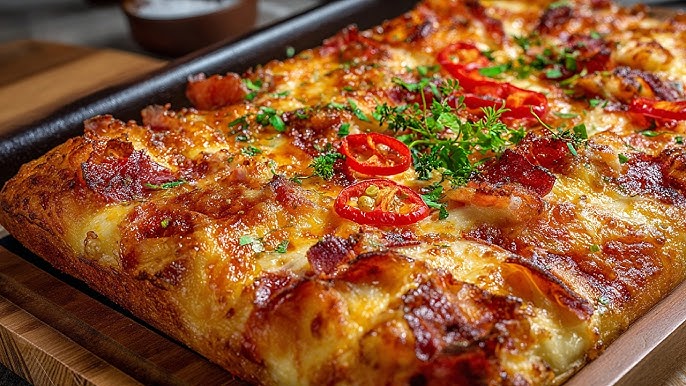
Focaccia Pizza Recipe: Focaccia pizza is like the lovechild of traditional Italian focaccia bread and your favorite deep-dish pizza. Think of it as a thick, airy, golden-brown crust topped with all the cheesy, saucy, and savory goodness you’d expect from a pizza—but with even more flavor and texture. It’s rustic, hearty, and absolutely mouthwatering. Whether you’re a newbie in the kitchen or a seasoned home cook, this recipe is going to win you over.
The beauty of focaccia pizza lies in its simplicity. You don’t need fancy ingredients or a pizza stone—just a basic baking pan, good-quality olive oil, and a little patience to let the dough rise. And the result? A fluffy, chewy crust with crisp, golden edges that carry your favorite toppings like a champ.
Let’s be honest, once you taste homemade focaccia pizza, it’ll ruin delivery forever. Ready to make some dough magic? Let’s dive into the details.
What Makes Focaccia Pizza Unique?
Focaccia pizza is not your average thin-crust pie. What sets it apart is its bread-like, thick, pillowy base made from a highly hydrated dough. It’s often enriched with olive oil and topped generously with herbs, vegetables, cheeses, or meats. You can taste the difference in every bite—airy inside, crispy outside, and packed with flavor.
Unlike classic pizza dough, which aims for a chewy texture and thinner base, focaccia dough leans more toward artisan bread. It rises longer, includes more water, and is handled with a delicate touch. No rolling pin here. Just your fingertips to dimple and spread the dough, giving it that rustic charm.
The other highlight? Focaccia pizza can be fully customized. Whether you’re into basic tomato sauce and cheese or want to get wild with caramelized onions, roasted garlic, or spicy sausage, it all works. The dough is your canvas, and every topping adds another layer of flavor.
Benefits of Making Focaccia Pizza at Home
Still debating whether to make focaccia pizza from scratch? Here’s why you absolutely should:
- Customization Heaven: You control the toppings, thickness, herbs, and cheese levels.
- Better Ingredients: Say goodbye to preservatives. You’re using fresh olive oil, whole ingredients, and love.
- Cost-Effective: One homemade focaccia pizza can feed multiple people at a fraction of takeout costs.
- Therapeutic Experience: Kneading, dimpling, rising… the whole process is surprisingly relaxing and rewarding.
- Wow Factor: It looks artisan and gourmet, perfect for impressing guests or making a regular dinner feel fancy.
And here’s a bonus: the leftovers (if there are any) are just as good the next day.
List of Ingredients You’ll Need
Let’s break down the ingredients for both the dough and toppings. You’ll find most of these in your pantry already.
For the Dough:
- 3 ¾ cups (450g) all-purpose flour
- 1 ½ teaspoons salt
- 1 packet (2 ¼ teaspoons) active dry yeast
- 1 ½ cups warm water (around 110°F/45°C)
- 2 tablespoons olive oil (plus more for greasing)
- 1 teaspoon sugar
For the Toppings:
These are suggestions—feel free to mix and match.
- ¾ cup pizza sauce or crushed San Marzano tomatoes
- 1 ½ cups shredded mozzarella cheese
- ¼ cup grated Parmesan
- Cherry tomatoes, halved
- Fresh basil leaves
- Sliced black olives
- Thinly sliced red onion
- Roasted garlic cloves
- Oregano, red chili flakes (optional)
Remember: keep it simple or go bold—it’s your creation.
Kitchen Tools You’ll Need
Having the right tools will make your cooking smoother:
- Large mixing bowl
- Whisk or spoon
- 9×13 inch baking pan or sheet pan
- Silicone spatula
- Measuring cups and spoons
- Clean kitchen towel or plastic wrap
- Oven mitts
- Cooling rack
- Pastry brush (optional, for olive oil)
Step-by-Step Guide to Making Focaccia Pizza
Step 1: Preparing the Dough
In a bowl, mix bread flour, yeast, salt, sugar, olive oil, and warm water until a sticky dough forms. Knead lightly or stretch and fold until smooth. Focaccia dough should be soft and slightly wet.
Step 2: First Rise – Let the Dough Rest
Place the dough in an oiled bowl, cover, and let it rise in a warm place for 1–1½ hours until doubled in size. This rise develops flavor and airy texture.
Step 3: Shaping the Dough in the Pan
Generously oil a baking pan. Transfer the dough to the pan and gently stretch it toward the edges. If it resists, let it rest for 10 minutes, then continue stretching.
Step 4: Second Rise – More Proofing
Cover the pan and allow the dough to rise again for 30–45 minutes. The dough should look puffy and full of air bubbles.
Step 5: Prepping the Toppings
Prepare toppings such as tomato sauce, mozzarella, olives, onions, cherry tomatoes, herbs, or cooked meats. Keep toppings light to avoid weighing down the dough.
Step 6: Dimpling the Dough
Drizzle olive oil over the dough. Use your fingertips to press deep dimples across the surface. This creates focaccia’s signature texture and helps hold toppings.
Step 7: Adding the Toppings
Spread a thin layer of sauce if using, then add cheese and toppings evenly. Sprinkle with salt and herbs like rosemary or oregano.
Step 8: Baking the Focaccia Pizza
Bake in a preheated oven at 220°C (425°F) for 18–22 minutes until golden, crisp on the edges, and fully cooked through.
Step 9: Cooling & Slicing
Let the focaccia pizza cool for 5–10 minutes before slicing. This allows the crumb to set and keeps toppings in place. Serve warm.
Tips for the Perfect Focaccia Pizza
Want to take it to the next level? Here are some tried-and-true tips:
- Use high-quality olive oil – It makes all the difference in flavor and texture.
- Let your dough rest overnight in the fridge for deeper flavor (optional but highly recommended).
- Don’t overtop – Heavy toppings can weigh down the dough and make it soggy.
- Use a metal pan – Avoid glass; metal conducts heat better for that crispy bottom.
- Add fresh herbs after baking – Basil, arugula, or a drizzle of pesto adds a fresh, fragrant finish.
Flavor Variations to Try
Get creative! Focaccia pizza is super forgiving and works with tons of combinations.
Cheesy Garlic Focaccia
- No sauce—just olive oil, roasted garlic, mozzarella, and Parmesan
- Finish with parsley and red chili flakes
Veggie-Lovers Focaccia
- Add sautéed mushrooms, zucchini, cherry tomatoes, and spinach
- Sprinkle goat cheese for tang
Margherita Style
- Tomato sauce, fresh mozzarella slices, and fresh basil leaves
- Drizzle with olive oil after baking
Each version brings its own flair. Play with ingredients based on what’s in season or what you’re craving.
Troubleshooting Common Problems
Even with the best recipes, things can go sideways sometimes. Don’t worry—here’s how to fix the most common focaccia pizza mishaps:
1. Dough Didn’t Rise Enough?
Make sure your yeast is fresh and the water is warm but not hot (around 110°F). A cold kitchen can also slow rising—try placing your dough in a slightly warm oven with the light on.
2. Dough Too Sticky to Handle?
This dough is meant to be sticky, but if it’s unmanageable, lightly oil or flour your hands—not the dough. Don’t over-flour it, or you’ll lose that signature airy texture.
3. Crust Not Crispy?
Make sure your oven is fully preheated and that you’re using a metal pan. Adding a bit more olive oil to the base before baking can also help create a beautifully crisp bottom.
4. Dough Won’t Stretch in the Pan?
Let it rest. Dough tightens when it’s overworked. Cover it, wait 10–15 minutes, and it should stretch more easily.
5. Soggy Toppings?
Wet toppings like tomatoes or mushrooms can release moisture. Try roasting or patting them dry before adding to your pizza.
Fix these, and you’ll be well on your way to pizza glory!
How to Store Leftovers Properly
So you didn’t eat the whole thing in one sitting? (Congrats on your willpower!) Here’s how to keep it tasting fresh:
- Cool completely before storing.
- Place slices in an airtight container or wrap tightly with foil.
- Store in the refrigerator for up to 3–4 days.
To prevent sogginess, avoid stacking slices directly on top of each other. Use parchment paper between layers if needed.
How to Reheat Without Ruining Texture
Microwaving? Nah. That makes the crust rubbery. Here’s the best way:
Stovetop Method (Best for crispiness):
- Heat a non-stick skillet over medium heat.
- Place slice in pan and cover with lid.
- Heat for 4–5 minutes until the bottom is crisp and cheese is melted.
Oven Method:
- Preheat to 375°F.
- Place slices on a baking sheet.
- Heat for 8–10 minutes or until warmed through.
This way, your leftovers will taste almost as good as fresh from the oven.
Can You Freeze Focaccia Pizza?
Absolutely! Focaccia freezes beautifully.
To freeze:
- Cool pizza completely.
- Wrap each slice in foil or plastic wrap.
- Place in a freezer-safe bag or container.
- Freeze for up to 2 months.
To reheat from frozen:
- Bake at 375°F for 15–18 minutes until heated through and crispy.
Freezing is perfect for batch cooking. You can prep a whole pan, slice it up, and have pizza night any time you want.
Nutritional Value (Per Slice)
Here’s an approximate breakdown for one square slice (based on 8 slices per pan):
| Nutrient | Amount |
|---|---|
| Calories | 280–320 |
| Total Fat | 12g |
| Saturated Fat | 4g |
| Carbohydrates | 36g |
| Protein | 9g |
| Fiber | 2g |
| Sugar | 3g |
| Sodium | 400mg |
Keep in mind: toppings will affect the numbers. Add more cheese or meat? Calories will go up. Load it with veggies? It’s a little lighter.
FAQs about Focaccia Pizza Recipe
1. What’s the difference between focaccia and regular pizza dough?
Focaccia dough is more hydrated and oil-rich, resulting in a thicker, fluffier, and airier texture. Pizza dough is usually leaner and stretchier for a thinner crust.
2. Can I use store-bought dough?
Yes, but it won’t have the same rich texture as homemade focaccia dough. Still, it’s a good shortcut if you’re short on time.
3. How long can I let the dough proof?
At room temperature, up to 2 hours is ideal. For more flavor, you can let it slow-rise in the fridge overnight and bring it to room temp before baking.
4. What’s the best flour to use for focaccia?
All-purpose flour works perfectly. For a chewier bite, you can mix in bread flour (50/50 ratio).
5. Is focaccia pizza gluten-free?
Not by default, but you can make it gluten-free using a gluten-free flour blend and adjusting hydration. Texture may vary, but still tasty!
Conclusion
And there you have it—your complete guide to making focaccia pizza from scratch. It’s crispy, fluffy, cheesy, and insanely flavorful. From kneading the dough to dimpling with your fingertips, the process is as satisfying as the final bite. It’s the kind of recipe that’ll quickly become a staple in your kitchen, perfect for weeknight dinners, weekend parties, or just treating yourself on a cozy night in.
Don’t be afraid to get creative with toppings or even the dough itself. Once you master the basics, the possibilities are endless. And remember, it’s not about perfection—it’s about flavor, fun, and that moment when you take your first bite and think, “Dang, I made this!”