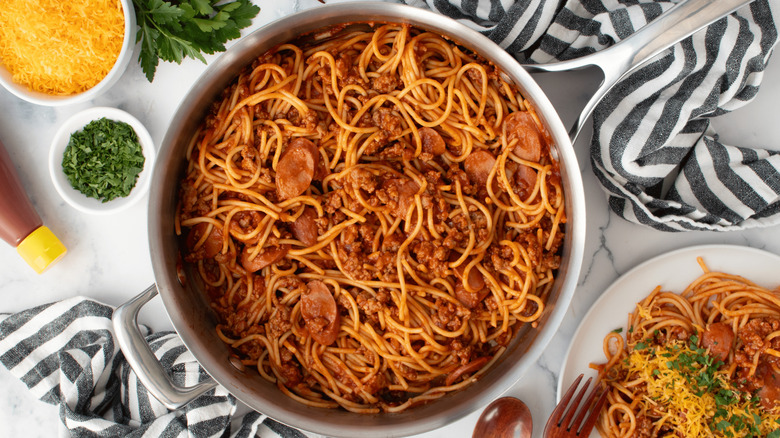
Filipino Spaghetti Recipe: There’s something uniquely charming about Filipino-style spaghetti. It’s sweet, savory, and always brings back memories of birthdays, family reunions, or just a comforting meal at home. If you’ve ever tasted this Pinoy favorite and wondered how to recreate it in your own kitchen, you’re in for a treat.
This guide will walk you through every step of making delicious Filipino spaghetti—complete with sweet-style sauce, hotdogs, and lots of cheese!
What Makes Filipino Spaghetti Unique?
Filipino spaghetti stands out from the traditional Italian version thanks to its signature sweet and savory sauce. Instead of being tangy and herb-heavy like its Italian cousin, this dish features a combination of tomato sauce, banana ketchup, sugar, and sometimes condensed milk to create its well-loved sweetness.
The meat sauce includes sliced hotdogs and ground pork or beef, while the top is loaded with grated cheese, often processed cheese that melts into gooey goodness. It’s not trying to be authentic Italian—it’s proudly and unapologetically Filipino. It’s comfort food that appeals to both kids and adults, and it’s a staple during birthday parties and holiday feasts.
Origins and History of Filipino Spaghetti
Filipino spaghetti is a product of cultural adaptation. During the American colonization of the Philippines, spaghetti was introduced along with other Western food items. However, Filipinos added their own twist—using banana ketchup, a locally made condiment, to sweeten the tomato base. Over time, hotdogs and processed cheese became popular additions, partly due to affordability and accessibility.
The dish gained popularity thanks to fast-food chains like Jollibee, which served their version of sweet spaghetti, winning the hearts of millions. Today, it’s not just food—it’s nostalgia on a plate.
Why Filipinos Love Their Sweet-Style Spaghetti
Filipino palates typically lean toward sweeter flavors, and this dish is the perfect representation of that preference. For many Filipinos, this spaghetti is tied to childhood memories. It’s the first dish served at birthday parties, often prepared with love by parents or grandparents.
The sweetness appeals to children, while the combination of savory meat, hotdogs, and cheesy topping adds depth that keeps adults coming back. It’s more than just spaghetti—it’s a celebration of Filipino culture and family bonding.
Ingredients You’ll Need
Main Ingredients
Here’s what you need to make a basic, delicious batch of Filipino-style spaghetti:
- 500g spaghetti noodles
- 2 tablespoons cooking oil
- 5 cloves garlic, minced
- 1 medium onion, chopped
- 500g ground pork (or beef)
- 1 pack Filipino-style spaghetti sauce (about 560g)
- 1/2 cup banana ketchup
- 1/4 cup sugar (adjust to taste)
- 1 cup sliced hotdogs (preferably red Filipino-style hotdogs)
- 1/2 cup water or beef broth
- Salt and pepper to taste
- 1 to 2 cups grated cheddar cheese (Eden cheese is a common choice)
Optional Ingredients for More Flavor
- 1/4 cup condensed milk (adds creaminess)
- 1 small bell pepper, diced
- 1 teaspoon soy sauce or fish sauce
- 1 teaspoon Worcestershire sauce
- Mushrooms or carrots for extra texture
Kitchen Tools You’ll Need
Before diving into cooking, make sure you’ve got the following tools on hand:
- Large pot (for boiling pasta)
- Deep pan or skillet (for making the sauce)
- Strainer
- Wooden spoon or spatula
- Cheese grater
- Knife and chopping board
These simple tools are all you need to whip up this festive favorite.
Preparing Before You Cook
Meat Preparation
Start by selecting good quality ground pork or beef. You can even mix both for extra flavor. Rinse and drain the meat if needed, and have it ready to cook.
Vegetable Chopping
Chop your onions and garlic finely—they’re the flavor base. If you’re using bell pepper, dice it into small cubes. Set everything aside in small bowls for easy access while cooking.
Boiling the Spaghetti Noodles
In a large pot of salted boiling water, cook the spaghetti noodles according to the package instructions—usually 8–10 minutes. Stir occasionally to avoid sticking. Once done, drain and set aside. You can toss the noodles with a little oil to prevent clumping.
Step-by-Step Guide to Cooking Filipino Spaghetti
Let’s get cooking! Follow this detailed step-by-step process for the best results.
Step 1: Sauté the Aromatics
Heat oil in a deep pan over medium heat. Add chopped onions and cook until they’re translucent. Throw in the minced garlic and sauté until fragrant. This step builds the foundation of your sauce.
Step 2: Cook the Ground Meat
Add the ground pork or beef into the pan. Break it up with a spoon and stir continuously. Cook until it turns light brown and is no longer pink. Drain excess oil if necessary, but keep some for flavor.
Step 3: Add the Hotdogs
Toss in the sliced hotdogs and stir them with the meat. Let them cook for 3–4 minutes, or until they start to brown slightly. This gives the hotdogs a little crisp edge that adds texture to the dish.
Step 4: Pour in the Sauce
Time to get saucy! Pour in the Filipino-style spaghetti sauce, banana ketchup, and a splash of water or broth. Stir everything well. The mixture should be thick but pourable.
Step 5: Simmer and Season
Lower the heat and let the sauce simmer for 15–20 minutes. Add sugar, salt, and pepper to taste. If using optional ingredients like condensed milk or soy sauce, add them now. Stir occasionally to prevent sticking.
Step 6: Combine the Sauce with the Noodles
Once the sauce is done simmering, you have two options: either mix the noodles into the sauce directly or serve the sauce on top of a bed of noodles. Mixing it in allows the pasta to absorb more flavor.
Step 7: Add Cheese and Serve
Sprinkle a generous amount of grated cheddar cheese on top. Let it melt slightly from the heat of the noodles and sauce. Serve hot with extra cheese on the side if you like it cheesy!
Tips for the Best Filipino Spaghetti
Want to elevate your Filipino spaghetti game? These tips can help you make the most flavorful and memorable version of this dish:
- Use Filipino-style hotdogs: These are typically sweeter and have a distinct red color. They give the spaghetti its traditional taste and a vibrant appearance.
- Balance the sweetness: Everyone has different preferences. If you’re not used to sweet spaghetti, start with less sugar and ketchup—then adjust to your taste as it simmers.
- Simmer low and slow: Letting your sauce simmer for at least 20–30 minutes enhances the flavor and allows all the ingredients to blend together beautifully.
- Don’t overcook your noodles: Make sure the spaghetti is al dente. Overcooked noodles get soggy and won’t hold the sauce as well.
- Grate your cheese fresh: Freshly grated cheese melts better and has a much richer taste than pre-shredded versions.
These small tweaks can take your dish from good to unforgettable.
Variations You Can Try
Filipino spaghetti is incredibly versatile, and you can personalize it to suit your taste or what’s available in your kitchen. Here are some fun and tasty variations:
- Spaghetti with ground chicken or turkey: A leaner option that’s still flavorful.
- Vegetarian version: Skip the meat and hotdogs, and add mushrooms, carrots, and bell peppers instead.
- Spaghetti with liver spread: Some households mix in liver spread or liver pâté for a richer, deeper flavor.
- Creamy spaghetti: Stir in some all-purpose cream or evaporated milk to make the sauce smooth and silky.
- Baked Filipino spaghetti: After mixing the noodles and sauce, transfer to a baking dish, top with cheese, and bake until bubbly and golden.
Don’t be afraid to experiment and make this dish your own!
How to Store Leftovers
Filipino spaghetti stores really well, making it great for meal prep or future cravings. Here’s how to do it right:
- Refrigerate: Store the spaghetti in an airtight container. It’ll last 3–4 days in the fridge.
- Separate noodles and sauce: If you haven’t combined them yet, store them separately. This keeps the noodles from getting too soft.
- Freezer-friendly: You can freeze the sauce for up to a month. Just thaw it in the fridge overnight and reheat on the stove.
- Reheating tips: Add a splash of water or milk when reheating to keep the sauce from drying out. Microwave in short intervals or reheat on low heat in a saucepan.
Leftover Filipino spaghetti often tastes even better the next day!
What to Serve with Filipino Spaghetti
This dish is already hearty, but you can pair it with a few sides or drinks to make it a complete meal:
- Garlic bread: Perfect for mopping up the extra sauce.
- Fried chicken: A common combo in Filipino birthday parties.
- Pan de sal: Soft, sweet Filipino bread that pairs wonderfully with the savory sauce.
- Coleslaw or potato salad: Adds a refreshing crunch.
- Iced tea or soda: Sweet drinks are popular accompaniments.
It’s a feast no matter how simple or grand you choose to go.
Perfect Occasions for This Dish
Filipino spaghetti is more than just food—it’s a party staple. Here’s where it shines brightest:
- Birthday parties (especially kids’)
- Holiday gatherings
- Potlucks or family reunions
- Noche Buena or Media Noche (Christmas and New Year feasts)
- Weeknight comfort meals
No matter the occasion, this dish brings comfort, joy, and a little touch of celebration.
Healthier Alternatives
Want to enjoy this dish but keep it a bit lighter? Here are some easy swaps:
- Whole wheat or vegetable noodles: Adds fiber and nutrients.
- Ground chicken or turkey: Lower in fat but still delicious.
- Skip the sugar: Let the banana ketchup and hotdogs provide the sweetness.
- Low-sodium hotdogs and cheese: Cuts down the salt without losing flavor.
- Add veggies: Sneak in carrots, bell peppers, or zucchini for added nutrition.
Healthy can still be hearty—and it doesn’t mean giving up on taste.
FAQs about Filipino Spaghetti Recipe
1. Can I make Filipino spaghetti without banana ketchup?
Yes, though banana ketchup is key to its signature sweetness. If unavailable, you can mix regular ketchup with a bit of sugar and mashed bananas for a substitute.
2. What type of cheese is best for Filipino spaghetti?
Processed cheddar cheese (like Eden brand) is the classic choice. It’s creamy, salty, and melts perfectly into the sauce.
3. Is Filipino spaghetti gluten-free?
It can be if you use gluten-free pasta and check that your hotdogs and sauces are gluten-free. Always read the labels!
4. Can I use Italian pasta sauce instead?
You can, but you’ll need to sweeten it and add banana ketchup to achieve the traditional Filipino flavor.
5. How do I stop the noodles from sticking together?
Toss them in a little oil after boiling and draining, especially if you’re not combining them with the sauce right away.
Final Thoughts
Filipino spaghetti is more than just a twist on an Italian classic—it’s a celebration of Filipino culture, family, and flavor. Its unique sweetness, comforting meat sauce, and cheesy topping make it an irresistible dish that satisfies every craving. Whether you’re cooking it for the first time or have been making it for years, it’s one of those meals that always brings people together.
So next time you’re planning a party or just want something cozy and nostalgic, bring out the pot and make some Filipino spaghetti. Trust us—it’s more than worth the effort.