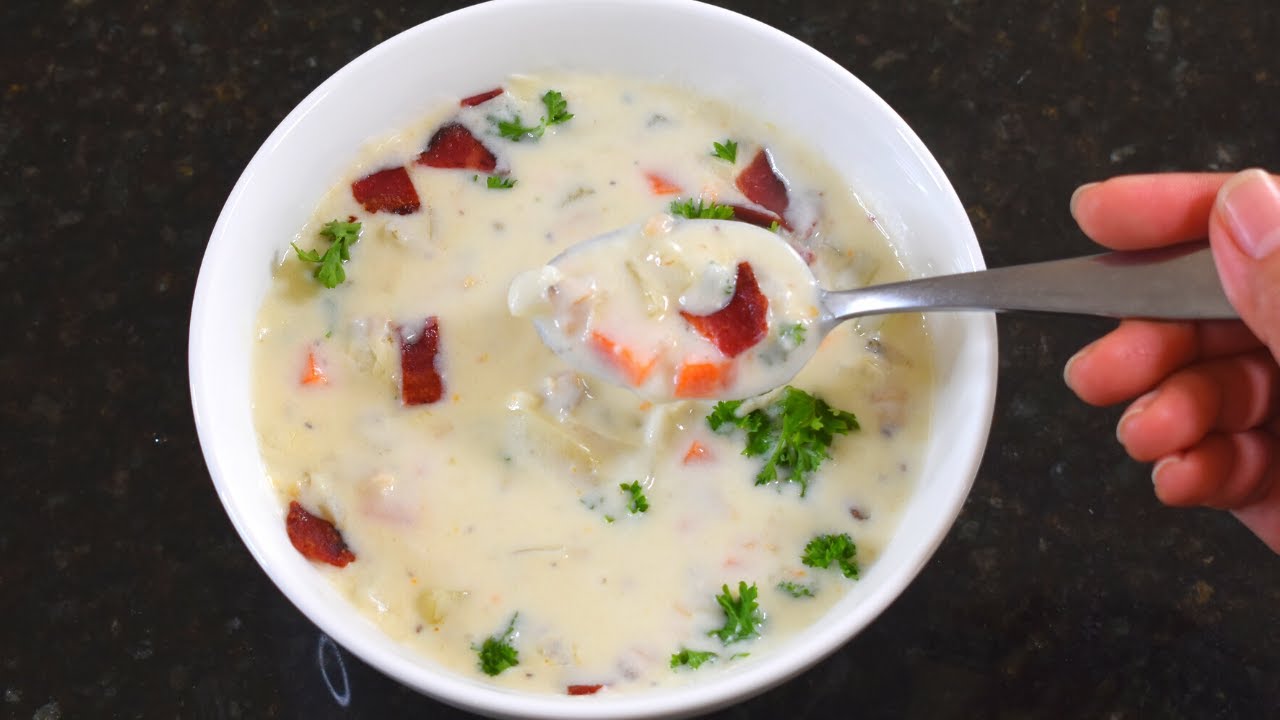
Clam Chowder Soup Recipe: We prepare clam chowder soup as a deeply satisfying dish that delivers briny clam flavor, silky broth, tender potatoes, and a balanced richness that feels hearty without becoming overly heavy. A well-made bowl of chowder should be creamy, savory, and full of texture, with every spoonful carrying the taste of the sea, smoky aromatics, and soft vegetables cooked to perfection.
This guide presents a classic clam chowder soup recipe with a detailed method that helps us build flavor in the right order. The result is a chowder that tastes layered, polished, and restaurant-worthy while still being practical for home cooking.
Ingredients You’ll Need
To make a flavorful clam chowder soup, we need ingredients that contribute body, aroma, and depth.
Main Ingredients
- 2 cans chopped clams with juice, about 6.5 ounces each
- 4 slices bacon, chopped
- 2 tablespoons unsalted butter
- 1 medium onion, finely diced
- 2 celery stalks, finely chopped
- 2 cloves garlic, minced
- 3 medium potatoes, peeled and diced
- 2 tablespoons all-purpose flour
- 2 cups clam juice or seafood stock
- 1 cup whole milk
- 1 cup heavy cream
- 1 bay leaf
- 1 teaspoon fresh thyme or 1/2 teaspoon dried thyme
- 1/2 teaspoon black pepper
- Salt, to taste
- 1 tablespoon chopped fresh parsley
- Optional oyster crackers or crusty bread, for serving
Optional Flavor Enhancers
- 1 small carrot, finely diced for subtle sweetness
- A dash of hot sauce for gentle warmth
- 1 teaspoon Worcestershire sauce for extra savory depth
- A pinch of paprika for color and mild smokiness
Why This Clam Chowder Soup Recipe Works
A proper clam chowder soup recipe depends on method more than complexity. We begin by rendering bacon so the fat flavors the vegetables. We then build the base with onion, celery, garlic, and butter. Flour thickens the soup just enough to create a velvety consistency without making it pasty. Potatoes release starch as they simmer, which adds even more body. The clams are added near the end so they remain tender and flavorful rather than becoming rubbery.
The milk and cream soften the saltiness of the clams and bring the chowder together into a balanced, luxurious broth. Every ingredient has a purpose, and each one supports the final texture and flavor.
Choosing the Best Clams for Chowder
For convenience and consistency, canned chopped clams are excellent in chowder. They are easy to use, packed in flavorful juice, and perfect for achieving a classic taste. The clam liquid in the can is especially valuable because it intensifies the seafood character of the soup.
If we want a fresher and more premium result, we can use fresh clams that have been steamed and chopped. In that case, the strained steaming liquid can replace bottled clam juice. Whether canned or fresh, the key is to preserve the clam liquid because it forms part of the chowder’s signature taste.
Preparing the Vegetables Properly
The vegetables in chowder should support the soup, not overpower it. We dice the onion and celery finely so they soften quickly and blend smoothly into the base. Potatoes should be cut into small, even cubes so they cook at the same rate and fit comfortably on a spoon.
The best potatoes for chowder are Yukon Gold or russet potatoes. Yukon Gold potatoes hold their shape and add a buttery finish, while russets release more starch and create a thicker broth. Either works well, but the texture changes slightly depending on the choice.
Step-by-Step Guide for Clam Chowder Soup
Step 1: Cook the Bacon for a Flavorful Base
Place a large heavy-bottomed pot or Dutch oven over medium heat. Add the chopped bacon and cook slowly until it becomes crisp and renders its fat. Stir occasionally so it browns evenly without burning.
Once crisp, remove the bacon with a slotted spoon and set it aside on a plate. Leave about 1 to 2 tablespoons of bacon fat in the pot. This fat will act as the first layer of flavor in the chowder. If there is too much fat, remove the excess so the soup does not become greasy.
This stage matters because the bacon provides smoky depth and a savory backbone that complements the clams beautifully.
Step 2: Sauté the Aromatics Until Soft and Fragrant
Add the butter to the pot with the reserved bacon fat. Once melted, add the diced onion and celery. Cook over medium heat for about 5 to 7 minutes, stirring often, until the vegetables soften and the onion turns translucent.
Add the minced garlic and cook for another 30 seconds to 1 minute, just until fragrant. Do not let the garlic brown, because burnt garlic can introduce bitterness into the chowder.
At this point, the kitchen should smell rich, warm, and savory. This is the aromatic foundation that gives the soup its rounded flavor.
Step 3: Add Flour to Create the Chowder’s Body
Sprinkle the flour evenly over the softened vegetables. Stir continuously for about 1 to 2 minutes so the flour coats everything and cooks gently in the fat. This forms a light roux directly in the pot.
Cooking the flour briefly removes the raw taste while preparing the soup to thicken properly. The mixture should look slightly pasty but still moist. If it becomes too dry, the heat may be too high. The goal is a smooth base that will blend easily once liquid is added.
Step 4: Pour in the Clam Juice and Build the Broth
Gradually pour in the clam juice or seafood stock while stirring constantly. This helps prevent lumps and ensures the flour distributes evenly. Add the reserved juice from the canned clams as well, then stir until the mixture is smooth.
Add the diced potatoes, bay leaf, thyme, black pepper, and optional Worcestershire sauce or paprika if using. Bring the soup to a gentle simmer, not a rolling boil. Chowder benefits from controlled heat because it protects the dairy added later and keeps the texture refined.
Let the soup simmer for 12 to 15 minutes, or until the potatoes are tender when pierced with a fork.
Step 5: Add the Milk and Cream for a Velvety Finish
Reduce the heat to low. Pour in the milk and heavy cream, stirring gently to combine. The chowder will begin to look pale, rich, and creamy. Keep the heat low and steady. Boiling at this stage can cause the dairy to separate and affect the final texture.
Allow the soup to warm through for.
Allow the soup to warm through for about 5 minutes. As it sits, the potatoes continue to release starch, which naturally thickens the chowder even more. If the soup looks too thick, add a small splash of milk or clam juice. If it seems too thin, let it simmer a bit longer uncovered over low heat.
This stage is where the chowder becomes lush and satisfying.
Step 6: Stir in the Clams at the End
Add the chopped clams only after the chowder base is fully developed. Stir them in gently and cook for just 2 to 3 minutes, enough to heat them through.
This is one of the most important details in any clam chowder soup recipe. Clams are delicate. If overcooked, they lose tenderness and become chewy. Adding them at the end preserves their texture and keeps their flavor clean and fresh.
Taste the chowder before adding salt. Because bacon, clam juice, and canned clams already contain salt, the soup may need only a small amount, if any.
Step 7: Finish and Serve the Soup Properly
Remove the bay leaf. Stir in the chopped parsley and half of the cooked bacon. Ladle the chowder into bowls and top with the remaining bacon for a crisp finish.
Serve hot with oyster crackers, saltines, or thick slices of crusty bread. A final crack of black pepper on top adds aroma and a polished look.
The finished chowder should be thick but spoonable, creamy without being heavy, and filled with tender potatoes, soft vegetables, and flavorful clams in every bowl.
Tips for the Best Clam Chowder Soup
Use Gentle Heat
A slow simmer is essential. High heat can toughen clams and split the dairy.
Balance the Thickness
Good chowder is never watery, but it should not resemble mashed potatoes either. Adjust with extra clam juice or milk if needed.
Season at the End
Clams and bacon already contribute salt. Final seasoning should happen only after the soup is complete.
Do Not Skip the Bacon
Even a small amount of bacon adds depth that supports the seafood flavor and makes the chowder more complex.
Let It Rest Briefly Before Serving
A few minutes off the heat allows the chowder to settle and thicken slightly, improving texture.
Common Mistakes to Avoid
Overcooking the Clams
This leads to a rubbery texture. Add them last and heat briefly.
Boiling After Adding Dairy
Boiling can cause the milk and cream to separate, making the soup look grainy.
Using Too Much Flour
Excess flour creates a gluey consistency. The chowder should feel creamy and natural, not heavy and pasty.
Cutting Potatoes Too Large
Large chunks take longer to cook and disrupt the balance of each spoonful.
Underseasoning the Base
Even a creamy chowder needs black pepper, herbs, and aromatic vegetables for full flavor.
Serving Ideas for Clam Chowder Soup
This soup pairs especially well with simple sides that do not compete with its richness. We can serve it with:
- Warm sourdough bread
- Buttered dinner rolls
- Oyster crackers
- A crisp green salad
- Roasted corn on the side
- Garlic toast for extra indulgence
For a classic presentation, serve the chowder in wide bowls or even in bread bowls for a hearty, comforting meal.
How to Store and Reheat
Allow leftover chowder to cool before transferring it to an airtight container. Refrigerate for up to 3 days. When reheating, use low heat on the stovetop and stir often. Add a splash of milk if the soup thickens too much in the refrigerator.
Freezing is possible, but dairy-based soups can change texture after thawing. For the best quality, enjoy clam chowder fresh or within a few days of making it.
Simple Variations to Try
New England Style
This is the classic creamy version, rich with milk or cream.
Extra Smoky Version
Add more bacon or a small pinch of smoked paprika.
Vegetable-Forward Chowder
Include corn, leeks, or finely diced carrots for more texture and sweetness.
Herb-Finished Chowder
Add chives, dill, or extra parsley just before serving for a brighter finish.
Spicy Clam Chowder
A little hot sauce or cayenne adds warmth without overwhelming the seafood flavor.
FAQs about Clam Chowder Soup Recipe
1. What is clam chowder soup?
Clam chowder soup is a hearty soup made with clams, potatoes, broth, and seasonings. Many versions also include cream, butter, onions, and celery for a rich flavor.
2. Is clam chowder always creamy?
No. New England clam chowder is creamy and milk-based, while Manhattan clam chowder has a tomato-based broth. Both are popular, but they taste quite different.
3. Can I use canned clams for clam chowder soup?
Yes. Canned clams are convenient and commonly used in homemade clam chowder soup. They save time and still add plenty of flavor.
4. What potatoes are best for clam chowder soup?
Yukon Gold and Russet potatoes are both good choices. Yukon Golds hold their shape well, while Russets can help create a thicker texture.
5. How do I thicken clam chowder soup?
You can thicken it with flour, cornstarch, or a roux made with butter and flour. Letting the soup simmer longer can also help it become thicker.
6. Can I make clam chowder soup ahead of time?
Yes. The flavor often gets even better after sitting for a few hours. Just reheat it gently so the cream does not separate.
7. What can I serve with clam chowder soup?
It pairs well with crackers, crusty bread, oyster crackers, garlic bread, or a side salad. A bread bowl is also a classic serving idea.
8. How should I store leftovers?
Store leftover clam chowder soup in an airtight container in the refrigerator for up to 2 to 3 days. Reheat slowly over low heat for the best texture.
Final Thoughts
A truly memorable clam chowder soup is built through careful layering, controlled heat, and attention to texture. We start with bacon and aromatics, thicken the broth just enough, simmer the potatoes until tender, and finish with milk, cream, and clams at exactly the right moment. The result is a chowder that feels classic, comforting, and deeply flavorful.
This is the kind of soup that works for a cozy family dinner, a cold-weather lunch, or a meal meant to impress with simple ingredients handled well. When prepared with care, clam chowder soup becomes more than a recipe. It becomes a bowl of rich comfort with every spoonful delivering creaminess, savoriness, and the unmistakable taste of clams done right.