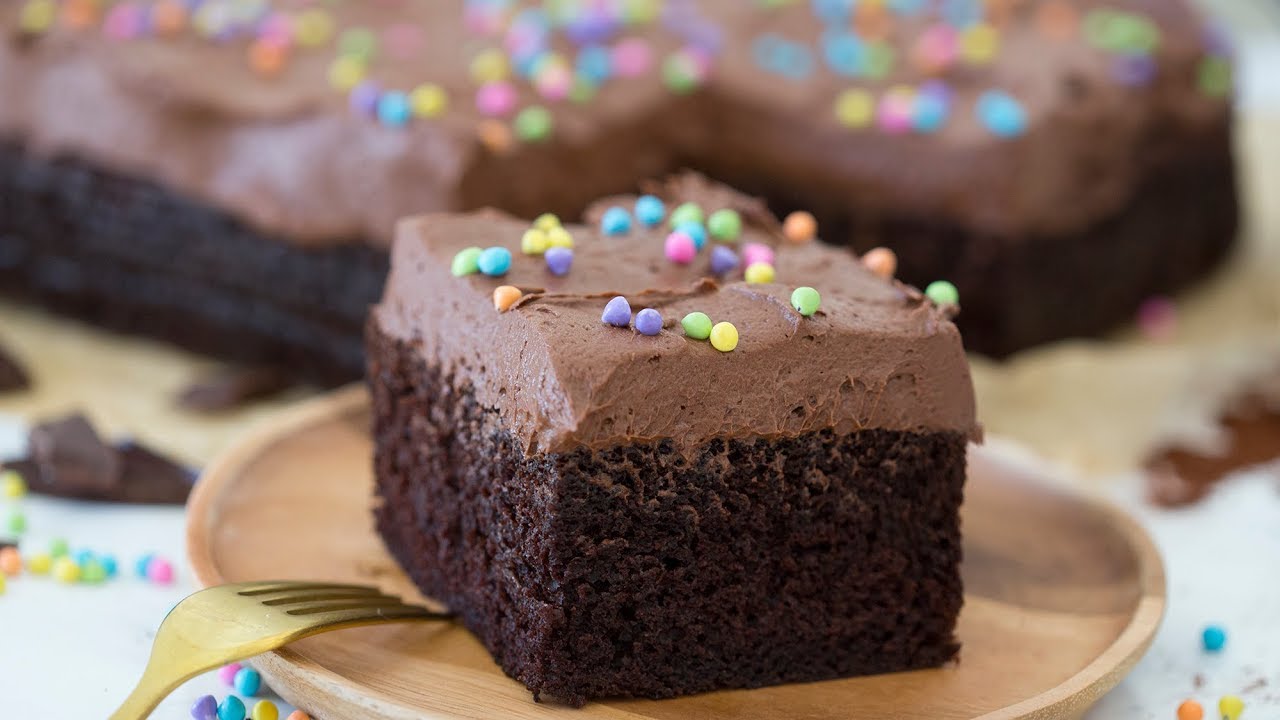
Chocolate Sheet Cake Recipe: Few desserts bring the same level of comfort, nostalgia, and indulgence as a homemade chocolate sheet cake.
Whether you’re baking for a birthday, family gathering, office party, or simply a weekend treat, this classic dessert delivers rich chocolate flavor and a moist, tender crumb that’s impossible to resist.
The beauty of a sheet cake lies in its simplicity: it’s easy to prepare, serves a crowd, and is versatile enough to customize with various toppings and frostings.
In this guide, we’ll take you through everything from ingredients to baking tips, ensuring your cake turns out perfectly every time.
Why Sheet Cakes Are a Crowd Favorite
Sheet cakes are a go-to for home bakers and professional caterers alike because they’re practical, fuss-free, and easily scalable. Unlike layered cakes that require intricate stacking and decorating, sheet cakes are baked in a single rectangular pan, meaning less risk of collapsing layers and far fewer dishes to clean. The flat surface is perfect for spreading an even layer of frosting, decorating with sprinkles, or writing personalized messages. Another reason they’re beloved? They cut beautifully into uniform squares or rectangles, making them ideal for serving large groups without wasting any cake. Plus, the rectangular shape fits neatly in most baking dishes and storage containers.
Think of sheet cakes as the reliable friend who always shows up to the party — not overly fancy, but always appreciated and enjoyed by everyone. And when chocolate is involved, they move from “good” to “irresistible.”
A Brief History of Chocolate Sheet Cake
The chocolate sheet cake, while popular worldwide, has deep roots in American home baking culture, particularly in the South and Midwest. The “Texas Sheet Cake” variation is especially famous, characterized by a thin, moist cake topped with warm chocolate icing poured directly over the cake while still warm. Some food historians believe the sheet cake gained popularity in the mid-20th century because it was cost-effective, easy to transport, and perfect for potlucks and church gatherings. Over time, recipes evolved, with some bakers adding buttermilk for tanginess, coffee to enhance the chocolate flavor, or nuts for added texture.
Ingredients You’ll Need
The key to a great chocolate sheet cake is balance — the right combination of rich cocoa, sweetness, moisture, and a soft crumb. Below is a breakdown of ingredients you’ll need for both the cake and the frosting.
Core Baking Ingredients
- All-purpose flour – Provides structure. Use fresh, sifted flour to avoid lumps.
- Granulated sugar – Sweetens the cake and contributes to moisture retention.
- Unsweetened cocoa powder – The main source of chocolate flavor; opt for high-quality cocoa for a richer taste.
- Baking powder & baking soda – Leavening agents that ensure the cake rises evenly.
- Salt – Enhances and balances flavors.
Flavor Enhancers
- Eggs – Bind the ingredients together and add richness.
- Vegetable oil or melted butter – Oil yields a moister texture; butter offers a richer flavor.
- Buttermilk – Adds tang and tenderness.
- Strong brewed coffee (optional) – Intensifies chocolate flavor without making the cake taste like coffee.
- Vanilla extract – Rounds out the flavor profile.
Frosting Essentials
- Butter – The creamy base for your frosting.
- Powdered sugar – Creates a smooth, fluffy frosting texture.
- Milk or heavy cream – Adjusts consistency.
- Cocoa powder – For a matching chocolate topping.
Pro tip: Measure all ingredients precisely. Baking is science, and even small deviations can affect texture and flavor.
Essential Baking Tools and Equipment
To make a flawless sheet cake, having the right tools can make your baking experience smoother and your results more consistent.
Baking Pans and Trays
A standard 9×13-inch rectangular pan is most common for sheet cakes. For larger gatherings, a half-sheet pan (18×13 inches) can be used. Non-stick pans are convenient, but it’s still best to grease and line them with parchment paper for easy cake removal.
Mixing Tools
- Mixing bowls – You’ll need at least two: one for dry and one for wet ingredients.
- Hand or stand mixer – Speeds up mixing and ensures smooth batter.
- Whisk – Perfect for combining dry ingredients evenly.
Measuring Tools
- Measuring cups and spoons – Accuracy is crucial.
- Kitchen scale – Ideal for weighing flour and sugar to avoid overpacking.
Preparing Your Workspace and Preheating the Oven
Before you crack an egg or scoop flour, take a few minutes to set up your workspace.
- Clear your countertop.
- Lay out all ingredients and tools (“mise en place” — a French culinary principle meaning “everything in its place”).
- Preheat your oven to the temperature specified in your recipe — usually 350°F (175°C) for most chocolate sheet cakes.
A properly preheated oven ensures the cake starts baking immediately, which affects texture and rise. If the oven is too cool, your cake may be dense; too hot, and it may burn or dome unevenly.
Step-by-Step Guide to Making Chocolate Sheet Cake
We’ll now break down the cake-making process into five easy-to-follow steps.
Step 1 – Mixing the Dry Ingredients
In a large bowl, sift together:
- All-purpose flour
- Cocoa powder
- Baking powder & baking soda
- Salt
Sifting helps prevent lumps and evenly distributes leavening agents. Whisk lightly to ensure even blending before setting aside.
Step 2 – Blending the Wet Ingredients
In a separate large mixing bowl, whisk together the eggs, sugar, and vanilla extract until the mixture is pale and slightly thickened. This step incorporates air, which helps the cake achieve a light texture. Next, slowly add your melted butter or vegetable oil while whisking continuously.
Once combined, mix in the buttermilk. If you’re using coffee for that extra chocolate depth, add it at this stage (ensure it’s cooled to room temperature). The goal is to have a smooth, uniform liquid mixture without streaks of oil floating on top.
Pro tip: Avoid overbeating here—too much air in the wet ingredients can make the cake overly spongy and fragile instead of tender and moist.
Step 3 – Combining Wet and Dry Mixtures
Now comes the moment where your cake batter starts to come together. Slowly add the dry ingredients to the wet mixture in batches, gently folding with a spatula or mixing on low speed.
Baking is all about balance—overmixing at this stage can lead to a dense, rubbery cake because it develops too much gluten in the flour. Aim for just-combined; it’s okay if a few small streaks of flour remain, as they’ll disappear during baking.
Step 4 – Pouring into the Baking Pan
Grease your baking pan with butter or cooking spray, then line the bottom with parchment paper for easy removal. Pour the batter into the prepared pan, smoothing the surface with a spatula to ensure even baking.
For larger sheet pans, you might need to tilt the pan gently back and forth so the batter levels naturally. Avoid tapping the pan too aggressively—this can knock out air bubbles you actually want in your batter for fluffiness.
Step 5 – Baking to Perfection
Place the pan on the middle rack of your preheated oven. Bake for 25–35 minutes (for a standard 9×13 pan) or until a toothpick inserted into the center comes out with only a few moist crumbs.
Every oven is different, so start checking a few minutes before the suggested time. The top should look set and slightly spring back when gently pressed. Overbaking can cause dryness, so keep a close eye toward the end.
Once baked, remove the cake from the oven and let it cool in the pan on a wire rack for about 15–20 minutes before adding frosting or slicing.
Creating the Perfect Frosting
Classic Chocolate Buttercream
Buttercream is the go-to for sheet cakes because it’s creamy, stable, and incredibly easy to spread. To make it, beat softened butter until light and fluffy, then gradually add powdered sugar and cocoa powder. Drizzle in milk or heavy cream to reach your desired consistency, and finish with a splash of vanilla extract.
The key is to beat the frosting long enough to incorporate air, giving it a light texture while still being rich and indulgent. For extra silkiness, sift the cocoa and powdered sugar before adding them to avoid lumps.
Whipped Chocolate Ganache Option
If you prefer something even richer, make a ganache by heating heavy cream until just simmering, then pouring it over finely chopped chocolate. Let it sit for a minute, stir until smooth, then chill slightly. Whip the ganache until it becomes light and fluffy—it’s an indulgent frosting option that pairs beautifully with the moist texture of sheet cake.
Cooling and Frosting the Cake
Why Cooling Is Essential
It’s tempting to frost your cake immediately, but patience pays off. Applying frosting to a warm cake will cause it to melt, slide, and soak into the crumb, making it greasy. Let your cake cool completely for the best results.
Applying Frosting Evenly
For a smooth, bakery-style finish:
- Dollop frosting in the center of the cake.
- Spread outward in gentle, even strokes with an offset spatula.
- Finish by swirling the top for a homemade touch or smoothing it completely for a clean, professional look.
If you want a thick frosting layer, you can chill the cake slightly before applying a second coat.
Serving and Presentation Tips
Cutting for Parties and Events
One of the beauties of a sheet cake is how easy it is to cut and serve. For a clean cut:
- Use a long, sharp knife.
- Wipe the blade clean between each slice to keep edges neat.
- Cut in one confident motion rather than sawing back and forth.
For casual gatherings, you can serve straight from the pan. For more formal occasions, lift the cake onto a flat serving board before slicing. You can also pre-mark slices with a light score so portions are even for every guest.
Garnishing for Extra Flair
While chocolate frosting is wonderful on its own, a little garnish can turn your cake into a showstopper:
- Fresh berries for color and tartness
- Shaved chocolate for elegance
- A light dusting of powdered sugar for a vintage feel
- Sprinkles for birthdays and kids’ parties
Storage and Make-Ahead Tips
Refrigeration vs. Freezing
If you plan to enjoy the cake within three days, store it covered at room temperature in a cool spot. For longer storage, refrigerate it in an airtight container for up to a week, but allow it to come to room temperature before serving for the best texture.
For even longer storage, sheet cake freezes beautifully. Wrap slices or the whole cake (unfrosted or frosted) in plastic wrap, then in foil. Freeze for up to three months. To thaw, place it in the fridge overnight, then bring to room temperature.
How to Keep the Cake Moist
Moisture loss is the enemy of any cake. To prevent drying out:
- Keep it covered when not serving.
- Add a slice of bread to the storage container—the cake will absorb moisture from the bread.
- Avoid cutting into it until you’re ready to serve.
Common Mistakes to Avoid
Overmixing the Batter
Too much mixing activates the gluten in flour, making the cake dense rather than soft and tender. Stop as soon as the flour streaks disappear.
Incorrect Baking Time or Temperature
Baking at too high a temperature can dry out your cake or burn the edges before the center is done. Too low, and you’ll end up with a dense, undercooked middle. Always preheat your oven fully and check for doneness early to avoid overbaking.
Variations and Creative Twists
Adding Nuts or Fruit
Stir in chopped walnuts, pecans, or even cherries for extra flavor and texture.
Flavored Frostings
Switch out the classic chocolate buttercream for:
- Peanut butter frosting for a salty-sweet twist
- Mint buttercream for a refreshing note
- Salted caramel drizzle for indulgence
Nutritional Information
Calories per Serving
A typical slice (about 1/15th of a 9×13 cake with frosting) contains around 350–400 calories, depending on ingredient brands and frosting thickness.
Adjusting for Healthier Options
- Substitute half the flour with whole wheat pastry flour for more fiber.
- Replace some sugar with a natural sweetener like honey or maple syrup.
- Swap butter for Greek yogurt or applesauce for reduced fat.
FAQs about Chocolate Sheet Cake Recipe
Q1: Can I make this cake gluten-free?
Yes, substitute all-purpose flour with a 1:1 gluten-free baking blend.
Q2: Can I use cocoa powder instead of melted chocolate?
Yes—this recipe already uses cocoa powder for a rich, deep flavor.
Q3: How long will the cake stay fresh?
Stored properly at room temperature, it’s best enjoyed within 3 days.
Q4: Can I bake this in advance?
Absolutely—sheet cakes freeze well for up to 3 months.
Q5: What’s the best way to transport a sheet cake?
Leave it in its baking pan, cover with a tight-fitting lid or wrap, and place on a flat surface in your vehicle.
Conclusion
The chocolate sheet cake is a timeless dessert that’s easy to make, crowd-pleasing, and endlessly customizable. With the right ingredients, tools, and techniques, you can create a cake that’s moist, rich, and perfect for any occasion. Whether you stick to the classic recipe or explore creative variations, you’ll have a dessert that keeps people coming back for seconds.