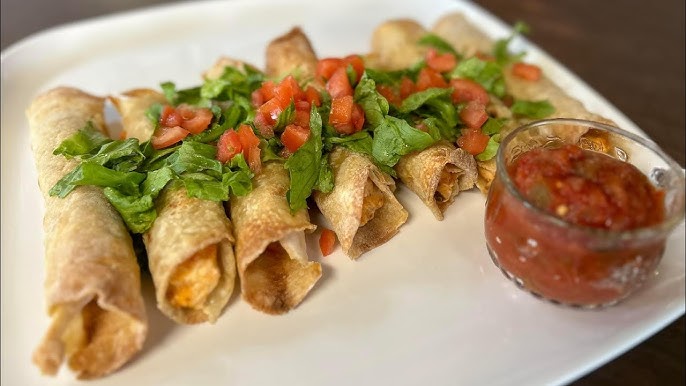
Chicken Flautas Recipe: Few dishes bring together the perfect combination of crispy texture, savory fillings, and bold flavors like Chicken Flautas.
This Mexican favorite is as fun to make as it is to eat. Imagine golden, rolled tortillas stuffed with tender, seasoned chicken, fried until perfectly crisp, and served with fresh dips like guacamole and salsa.
Whether you’re cooking for a casual family dinner, a festive party, or meal prepping for the week, this guide will take you through every detail of making the best Chicken Flautas you’ve ever tasted.
What are Chicken Flautas?
Chicken flautas are a popular Mexican street food made by rolling seasoned shredded chicken inside a tortilla, then frying it until crispy and golden. The name “flauta” actually means “flute” in Spanish, referring to their long, thin shape. Typically, they are served with sides like Mexican rice, refried beans, and fresh garnishes like shredded lettuce, sour cream, and salsa.
Unlike a burrito or taco, flautas are tightly rolled and shallow or deep-fried, which gives them their signature crunch. While corn tortillas are the traditional choice, many cooks use flour tortillas for a slightly softer bite and easier rolling.
Why This Recipe Works Every Time
The secret to a great flauta is balance — a moist, flavorful filling paired with a crisp, golden shell that doesn’t crack or fall apart. In this recipe, we’ll cover:
- Perfect seasoning for the chicken.
- How to soften tortillas so they roll without breaking.
- Frying tips for max crunch with minimal oil absorption.
- Serving suggestions that elevate them from snack to full meal.
Whether you’re a beginner in the kitchen or an experienced home chef, this step-by-step method ensures consistent, restaurant-quality results.
History and Origin of Flautas
The Mexican Culinary Roots
Flautas are believed to have originated in central Mexico, where they were first sold by street vendors as a portable, filling snack. They quickly spread across the country and into Mexican-American cuisine in the United States.
Historically, the dish was made with leftover meat—often chicken or beef—wrapped in corn tortillas and fried in lard. Over time, the recipe evolved, and today you’ll find variations including pork, cheese, or even vegetarian fillings.
Flautas vs. Taquitos – What’s the Difference?
At first glance, flautas and taquitos look similar: both are rolled tortillas with a savory filling, fried until crispy. The difference usually comes down to:
- Tortilla size – Flautas are often made with larger, flour tortillas, while taquitos typically use smaller, corn tortillas.
- Shape – Flautas tend to be longer and slimmer, mimicking the look of a flute, while taquitos are shorter.
- Region – The terminology varies depending on the part of Mexico or the U.S. you’re in.
If you’re making them at home, don’t get too hung up on the name—what matters is that they’re delicious.
Ingredients You’ll Need
Core Ingredients for Authentic Flavor
To make classic chicken flautas, you’ll need:
- Shredded cooked chicken (breast or thighs)
- Flour or corn tortillas
- Onion and garlic (for aromatic depth)
- Cheese (optional but adds creaminess)
- Cooking oil (vegetable, canola, or avocado oil)
- Salt, pepper, and spices (cumin, paprika, chili powder)
The filling can be customized with ingredients like diced jalapeños, sautéed bell peppers, or fresh cilantro for added flavor.
Optional Add-ons & Variations
Want to get creative? Try:
- Spinach and cheese for a vegetarian version.
- Chorizo and chicken mix for extra richness.
- Black beans or refried beans for added protein and fiber.
Choosing the Right Tortillas
Tortillas make or break your flautas. Corn tortillas give a traditional, earthy flavor, but can crack if not warmed properly. Flour tortillas are more pliable and great for beginners.
Kitchen Tools & Equipment
Essential Cooking Tools
Before you start, gather:
- Large skillet or frying pan
- Tongs for flipping
- Paper towels for draining
- Cutting board & knife
Helpful Extras for Speed and Precision
Optional but useful:
- Thermometer to check oil temperature (around 350°F for frying)
- Toothpicks to keep flautas rolled while frying
- Food processor for quick shredding of chicken
Step-by-Step Guide to Making Chicken Flautas
Step 1 – Preparing the Chicken Filling
The base of any good flauta is its filling. Start with shredded chicken—this can be from freshly poached breasts, leftover roast chicken, or even a rotisserie chicken for convenience.
In a skillet, sauté diced onion and minced garlic in a splash of oil until fragrant. Add your shredded chicken, along with spices like cumin, paprika, salt, and pepper. Mix well so every bite bursts with flavor.
For a creamy twist, stir in a bit of cheese or sour cream before rolling.
Step 2 – Warming and Softening Tortillas
If you’ve ever tried rolling a tortilla straight from the package only to watch it split down the middle, you know how frustrating it can be. The trick to making perfect chicken flautas starts with properly warming and softening your tortillas.
For corn tortillas, heat them on a dry skillet for about 20–30 seconds per side until they become pliable. You can also steam them by wrapping a stack in a clean, damp kitchen towel and microwaving for 30–40 seconds. If you’re using flour tortillas, they’re naturally softer, but warming them still helps prevent cracking and gives them that fresh-off-the-griddle taste.
Another great tip is to brush each tortilla lightly with oil before rolling—this not only prevents sticking but also helps them crisp up evenly when frying. If you plan to make a large batch, keep your warmed tortillas wrapped in a towel to maintain their softness until you’re ready to fill them.
Remember, tortillas are the foundation of your flauta. If they’re too stiff, they’ll break during rolling or frying, causing the filling to spill out and the oil to splatter. Taking a couple of extra minutes to heat them properly ensures a smooth, frustration-free cooking experience and perfectly rolled flautas every single time.
Step 3 – Rolling the Flautas Properly
Rolling flautas isn’t just about stuffing chicken into a tortilla—it’s about technique. Lay your warm tortilla flat on a clean surface. Spoon about 2–3 tablespoons of your prepared chicken filling along one edge, leaving about half an inch at the ends to prevent overflow.
Start rolling tightly but gently, making sure there’s no large air gap between the filling and the tortilla. A loose roll can cause the flauta to fall apart while frying, while an overly tight roll can make the tortilla tear.
If you’re new to making flautas, you can secure them with toothpicks before frying. This extra step keeps them intact, especially when making big batches. However, remember to remove the toothpicks before serving—your guests will thank you.
Proper rolling ensures even cooking and a satisfying crunch in every bite. Think of it as wrapping a delicious little gift—when done right, you’ll be rewarded with beautifully shaped, golden-brown flautas that hold together from the first bite to the last.
Step 4 – Frying to Crispy Perfection
Here’s where the magic happens—turning soft, rolled tortillas into golden, crunchy flautas. Heat about 1 inch of oil in a skillet to 350°F (175°C). If you don’t have a thermometer, test the oil by dropping in a small piece of tortilla—if it sizzles and bubbles right away, the oil’s ready.
Carefully place the flautas in the oil, seam side down, using tongs to avoid burns. Fry in small batches so the oil temperature stays consistent. Overcrowding the pan will lower the heat and result in soggy, greasy flautas instead of crispy ones.
Cook for 2–3 minutes per side, turning them gently until they’re an even golden brown. Once fried, transfer them to a plate lined with paper towels to drain excess oil. For an extra-crispy texture, you can stand them vertically in a wire rack instead of laying them flat.
This frying method locks in the juicy chicken filling while creating that irresistible crunch on the outside. Just be prepared—once you hear that first bite, it’s going to be hard not to eat them straight from the plate.
Step 5 – Draining and Serving
Even the best-fried foods need a moment to drain and rest before serving. After removing the flautas from the hot oil, place them on a paper towel-lined plate to soak up any excess oil. This step not only improves texture but also makes them less greasy to eat.
Serving flautas is all about presentation. Arrange them neatly on a platter, pile on fresh toppings like shredded lettuce, diced tomatoes, crumbled queso fresco, or a dollop of sour cream. Add sides of salsa, guacamole, or creamy chipotle sauce for dipping.
Flautas are best enjoyed immediately while the shells are at their crunchiest. If you’re cooking for a crowd, keep them warm in a low oven (around 200°F) until you’re ready to serve. The combination of crispy tortilla, juicy chicken, and cool, fresh toppings is nothing short of addictive.
Tips for Perfect Chicken Flautas
Preventing Tortilla Cracks
The most common complaint when making flautas is cracked tortillas. As we covered earlier, proper heating solves most of this problem, but here are extra tips:
- Don’t overfill—too much filling puts stress on the tortilla.
- Work quickly—tortillas dry out fast after heating.
- Use slightly thicker tortillas if available—they’re less prone to tearing.
Achieving the Crispiest Texture
If you want your chicken flautas to have that signature shatteringly crisp bite, it’s all about the frying method and post-cooking care. First, make sure your oil is at the correct temperature—350°F (175°C) is the sweet spot. Too hot, and the tortillas will brown too quickly, leaving the inside undercooked. Too cool, and they’ll absorb more oil, becoming greasy instead of crisp.
A common mistake is flipping too early. Let the first side fry long enough to develop a firm crust before turning. This prevents the seam from opening and keeps the filling safely tucked inside.
Another pro tip? Lightly oil the tortillas before rolling. This creates a thin barrier that helps them crisp evenly without absorbing too much oil. And once they’re out of the pan, drain them upright on a wire rack instead of flat on paper towels—this allows steam to escape and prevents the bottoms from going soggy.
Finally, if you’re making them ahead of time, you can re-crisp them in the oven at 375°F for a few minutes before serving. This revives the crunch without overcooking the filling. When you nail the perfect crunch, every bite of your flauta becomes a symphony of textures—crispy shell, tender chicken, and creamy toppings.
Best Side Dishes for Flautas
Traditional Mexican Sides
A plate of chicken flautas isn’t complete without the right accompaniments. The most classic pairing is Mexican rice—fluffy, tomato-infused grains that balance the richness of fried tortillas. Add a spoonful of refried beans or whole black beans for a protein boost and extra creaminess.
Pickled jalapeños and carrots, known as escabeche, are another must-try. Their tangy, slightly spicy flavor cuts through the heaviness of the fried flautas, refreshing your palate between bites. For a true restaurant-style plate, garnish with shredded iceberg lettuce, diced tomatoes, crumbled queso fresco, and a drizzle of Mexican crema.
These traditional sides not only enhance flavor but also turn flautas from a simple snack into a hearty, well-rounded meal.
Fresh and Healthy Options
If you’re aiming for a lighter spread, consider fresh sides that bring brightness and crunch. A simple cabbage slaw tossed in lime juice works beautifully, as does a refreshing pico de gallo made with tomatoes, onions, cilantro, and jalapeños.
You can also serve them alongside a corn and avocado salad for a mix of sweetness and creaminess. Not only do these lighter sides balance the fried component of the flautas, but they also add vibrant color to your plate, making the meal visually appealing and appetizing.
Dipping Sauces to Elevate Flavor
Classic Salsa and Guacamole
When it comes to flautas, dips are half the fun. Fresh salsa roja or salsa verde brings a bright, tangy contrast to the crispy tortilla. Salsa roja, made from tomatoes, onions, garlic, and chili peppers, is bold and savory, while salsa verde, made with tomatillos, offers a citrusy, slightly tart flavor.
Guacamole is another essential—creamy, buttery avocado mashed with lime juice, cilantro, and a hint of chili. It not only adds richness but also helps cool down the spice from the salsa. Serving both together gives guests the best of both worlds—zesty freshness and smooth creaminess.
Creative Sauce Ideas
If you want to step outside tradition, try a chipotle crema, blending sour cream with chipotle peppers in adobo for a smoky, spicy kick. Another option is jalapeño ranch, which combines the herbiness of ranch dressing with a fresh chili heat.
For those who like it extra bold, a habanero mango salsa offers a sweet-heat combination that pairs surprisingly well with savory chicken. Having a variety of dips not only caters to different spice tolerances but also turns your flauta platter into an interactive, flavor-packed experience.
Storage and Reheating Tips
Storing in the Fridge
If you somehow end up with leftovers (which is rare because flautas tend to vanish quickly), store them in an airtight container in the refrigerator for up to 3–4 days. To prevent sogginess, let them cool completely before sealing them—trapping steam inside the container will soften the tortillas.
Freezing for Later
Flautas freeze beautifully, making them a great make-ahead option. After frying, allow them to cool completely, then arrange them in a single layer on a baking sheet and freeze until firm. Transfer to a freezer-safe bag or container, separating layers with parchment paper. They can be stored for up to 2 months.
Reheating Without Losing Crisp
The best way to bring back the crunch is to reheat flautas in a preheated oven at 375°F (190°C) for about 10–15 minutes, flipping halfway through. Avoid microwaving unless you’re in a rush—it will make them soft and chewy instead of crisp.
Common Mistakes to Avoid
Overfilling the Tortilla
It’s tempting to pack in as much chicken as possible, but overstuffing is one of the fastest ways to ruin a flauta. Too much filling makes it difficult to roll tightly, causing the tortilla to burst open during frying. Even if it holds together, an overfilled flauta won’t crisp evenly—parts of the tortilla will be exposed to direct oil, while others stay soggy.
The ideal ratio is about 2–3 tablespoons of filling per tortilla, depending on size. This leaves enough room to roll without stretching or tearing. Remember, flautas are meant to be slim and easy to bite—more like a finger food than a burrito.
Using Cold Tortillas
Trying to roll a cold tortilla is a recipe for disaster—literally. Cold tortillas are stiff and prone to cracking. Even if they look fine before frying, tiny breaks can open up once they hit hot oil, letting the filling escape and causing dangerous splattering.
Always warm your tortillas before rolling, either on a skillet, in the microwave, or by steaming them. A few seconds of heat makes them pliable and much easier to work with, saving you frustration and wasted ingredients.
Healthier Alternatives
Baking Instead of Frying
If you’re watching your oil intake, baking is a great option. Preheat your oven to 425°F (220°C) and place the rolled flautas on a baking sheet lined with parchment paper. Brush lightly with oil and bake for 15–20 minutes, flipping halfway through. While you won’t get the exact same crunch as frying, baked flautas still deliver a golden, crispy texture without the excess oil.
Using Whole Wheat or Gluten-Free Tortillas
For a fiber boost, try whole wheat tortillas—they add a subtle nuttiness that pairs well with chicken. If you’re gluten-sensitive, use gluten-free flour tortillas, which are widely available in grocery stores. Just be mindful that some gluten-free tortillas can be more delicate, so handle them gently when rolling.
Serving Suggestions
Party Platter Presentation
Chicken flautas are perfect for gatherings because they can be made in bulk and eaten by hand. Arrange them in a circular pattern on a large platter, surrounding bowls of salsa, guacamole, and sour cream for dipping. Add colorful garnishes like radish slices, chopped cilantro, and lime wedges to make the presentation pop.
Family Dinner Style
For a more casual setup, serve flautas family-style in a large dish, accompanied by bowls of toppings so everyone can customize their own plate. This not only makes the meal interactive but also ensures that even picky eaters find something they like.
FAQs about Chicken Flautas Recipe
Q1: Can I use leftover turkey instead of chicken?
Yes! Leftover turkey works wonderfully, especially around the holidays. Just shred it and season it the same way you would chicken.
Q2: How do I keep the flautas warm if I’m cooking in batches?
Place cooked flautas on a baking sheet in a warm oven (200°F) until ready to serve.
Q3: What’s the best oil for frying flautas?
Neutral oils with high smoke points like canola, vegetable, or avocado oil are best.
Q4: Can I make vegetarian flautas?
Absolutely—try fillings like black beans, sautéed mushrooms, or cheese and spinach.
Q5: Why are my flautas greasy?
Grease usually means the oil wasn’t hot enough. Always heat to 350°F and avoid overcrowding the pan.
Conclusion
Chicken flautas are a perfect combination of crunchy, savory, and satisfying. With the right preparation, they’re easy to make and endlessly versatile—you can tweak the filling, play with dips, or adjust the sides to match any occasion. Whether fried or baked, served at a party or for a cozy family dinner, they never fail to impress.
Follow these steps, and you’ll have golden, crispy flautas every time—no cracks, no sogginess, just pure deliciousness wrapped in a tortilla.