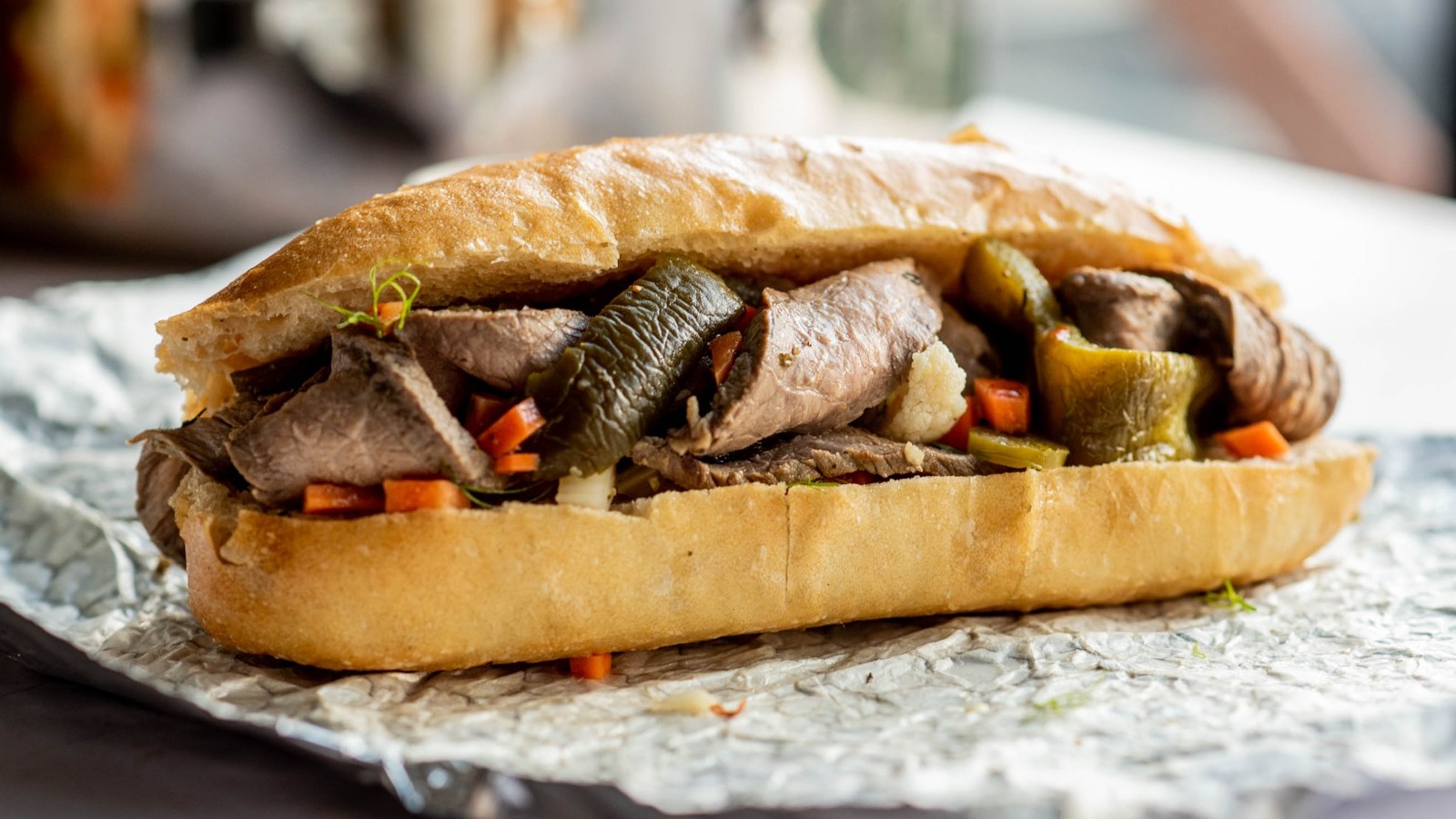
Chicago Italian Beef Recipe: A Chicago Italian beef sandwich is not just another roast beef sandwich pretending to be something bigger. It is messy, bold, juicy, and packed with the kind of flavor that makes you pause after the first bite and wonder why all sandwiches do not taste this alive.
The magic comes from thinly sliced seasoned beef that is simmered in rich, savory juices and piled into sturdy Italian bread, often finished with sweet peppers or hot giardiniera.
That combination of tender meat, peppery heat, garlicky depth, and soaked bread creates a sandwich that feels rustic and unforgettable at the same time. It is comfort food, but with attitude.
A Brief History of Chicago Italian Beef
The story of Chicago Italian beef goes back to the city’s Italian immigrant communities, where resourcefulness in the kitchen was not just admirable, it was necessary. Cheaper cuts of beef were often slow-cooked until tender, sliced very thin, and served on bread to stretch portions for large gatherings. That practical approach slowly evolved into something much bigger than a frugal family meal. Over time, the sandwich became woven into the food identity of Chicago, standing shoulder to shoulder with deep-dish pizza and Chicago-style hot dogs. It was local, hardworking, and absolutely packed with flavor.
One reason the sandwich became so beloved is that it reflects the city itself. Chicago food tends to be direct, hearty, and unpretentious. Italian beef fits that character perfectly. It is not trying to look delicate or refined. It arrives overflowing with shaved beef, dripping with juices, and unapologetically messy. You do not eat it politely. You lean in and commit. That kind of honesty is part of its charm. It is a sandwich built on flavor first, and every little detail exists for a reason.
As neighborhood stands and family-run restaurants began serving their own versions, the sandwich developed traditions that people now treat almost like house rules. The bread had to be strong enough to hold up. The beef had to be sliced paper-thin. The juices had to be deeply seasoned. The toppings had to offer contrast, whether through the sweetness of roasted peppers or the fiery crunch of giardiniera. Today, even though there are plenty of variations, the soul of Chicago Italian beef remains the same: slow-cooked beef, robust jus, and a sandwich experience that feels both humble and iconic.
Ingredients You’ll Need
Below is a full ingredient list, broken down so it is easy to shop and prep. This section is especially important because you asked to make sure the Ingredients You’ll Need are clearly listed. So here they are, front and center, organized for easy use.
Beef and Main Components
For the core of the recipe, you will need:
- 3 to 4 pounds beef chuck roast or top round roast
- 2 tablespoons olive oil
- 4 cups beef broth
- 1 cup water
- 1 medium onion, sliced
- 4 to 6 cloves garlic, minced
The beef is the star, so choosing a roast with enough connective tissue or marbling matters. Chuck roast gives you deep beef flavor and tenderness after slow cooking, while top round is leaner and closer to what many sandwich shops use for sliceable roast beef. Beef broth forms the base of the cooking liquid, and the onion and garlic quietly build that deep savory backbone. Olive oil helps with searing, which adds a darker, richer layer of flavor before the roast even begins to braise.
Seasonings and Flavor Builders
You will also need:
- 1 tablespoon dried oregano
- 1 tablespoon dried basil
- 1 teaspoon dried thyme
- 1 teaspoon crushed red pepper flakes
- 1 teaspoon black pepper
- 1 tablespoon kosher salt
- 1 teaspoon onion powder
- 1 teaspoon garlic powder
- 1 tablespoon Worcestershire sauce
- 1 teaspoon fennel seeds (optional, but recommended)
- 1 bay leaf
These seasonings are what make the sandwich unmistakably Italian beef instead of plain pot roast on bread. Oregano and basil bring that signature Italian profile, while Worcestershire deepens the broth with umami. Red pepper flakes add a quiet heat in the background. Fennel seeds are optional, but they add a subtle sausage-shop aroma that feels incredibly right in this recipe.
Bread, Toppings, and Optional Additions
For serving, you will need:
- 6 to 8 Italian sandwich rolls or French rolls
- 1 to 2 cups sweet bell peppers, sliced and sautéed
- 1 cup hot giardiniera
- Provolone cheese (optional)
- Extra broth or reserved jus for dipping
The bread matters more than people expect. Soft sandwich buns can collapse under the juices, while proper Italian rolls hold the meat and absorb jus without falling apart too quickly. Sweet peppers bring balance, and hot giardiniera adds crunch, tang, oil, and heat in one bold spoonful. Some people add cheese, and while that is not the most classic move, it can still taste great at home.
Kitchen Tools for the Best Results
You do not need a professional sandwich counter to make a fantastic Chicago Italian beef recipe, but a few kitchen tools will make the process smoother and the result much better. Think of these tools like the backstage crew in a theater production. The audience may only notice the main star, but without good support, the whole performance wobbles. A large Dutch oven or heavy-bottomed pot is one of the most helpful pieces of equipment because it allows you to sear the roast properly and then braise it slowly in the same vessel. That means more flavor stays in the pot, where it belongs.
A sharp carving knife is another big one, especially if you plan to slice the beef by hand. Italian beef is known for being sliced thin, almost shaved, and while you can still make a delicious version with slightly thicker slices, thinner is better. If you own a meat slicer, great, that gives you a more deli-style texture. If not, chilling the cooked beef slightly before slicing can help you get much cleaner cuts. Tongs, a ladle, and a fine mesh strainer also come in handy when you are moving the beef around or clarifying the broth for serving.
You will also want a skillet for the peppers if you are making sweet peppers from scratch, and a small bowl or jar if you are setting out giardiniera on the side. Some cooks use a slow cooker instead of a Dutch oven, and that works well too, particularly for long, low cooking. The main point is not having the fanciest gadgets. It is using tools that help you control heat, keep the roast moist, and handle the final sandwich assembly without stress. Good tools do not make the recipe for you, but they absolutely make it easier to hit that authentic, juicy result.
Choosing the Right Cut of Beef
The cut of beef can make or break your sandwich, so this is not the place to guess and hope for the best. A proper Chicago Italian beef needs meat that becomes tender enough to slice thin and still stay juicy when soaked in the cooking liquid. Two of the best choices are chuck roast and top round roast, and each one brings something slightly different to the table. Chuck roast has more marbling and connective tissue, which means it turns deeply flavorful and tender after slow cooking. Top round is leaner, slices neatly, and gives a texture that feels very close to many classic beef stands.
If you want the safest route for a home kitchen, chuck roast is often easier because it is forgiving. Even if you cook it a little longer than planned, it usually stays rich and tasty. Top round can be excellent, but because it is leaner, it needs a little more attention to avoid drying out. That said, once it is sliced thin and returned to the jus, it can be absolutely outstanding. It all comes down to the texture you are after. Chuck is a bit more rustic. Top round is a bit more traditional deli-style.
Whatever cut you choose, look for a roast with good color and a fresh smell, and avoid anything that looks gray or dried out. Size matters too. A roast around 3 to 4 pounds is ideal for feeding a family or creating leftovers for the next day, which honestly might taste even better. As the beef rests in the seasoned juices overnight, the flavors deepen and settle in. That is one of the quiet little joys of this recipe. It is delicious on day one, but it often becomes even more impressive on day two.
Why Seasoning Matters in Italian Beef
Seasoning in Chicago Italian beef is not just decoration. It is the engine. Without the right seasoning blend, you would still have tender beef and bread, but the sandwich would not carry that unmistakable aroma and bold personality people expect. The herbs and spices in the cooking liquid do more than sit around for appearances. As the roast slowly cooks, they seep into the broth, into the outer layer of the meat, and eventually into every slice once the beef is returned to the jus. That layered seasoning is what makes each bite feel savory, peppery, garlicky, and just a little bit electric.
The classic profile leans heavily on oregano, basil, garlic, onion, black pepper, and a touch of heat. Worcestershire sauce adds dark umami richness, while red pepper flakes create that subtle background fire that keeps the sandwich from tasting flat. Salt matters too, maybe more than anything else. Beef needs salt to wake up its natural flavor. Too little, and the whole dish tastes sleepy. Too much, and it becomes harsh. That is why tasting the broth near the end of cooking is a smart move. The jus should taste bold because once it soaks into bread and beef, it naturally mellows out.
There is also a rhythm to seasoning in this recipe. Some flavor goes on the meat before searing, while the rest gets stirred into the broth for a slow, steady infusion. This split approach helps build depth instead of just surface flavor. It is a bit like painting a wall with primer first and then adding color. The foundation matters. The top layer matters. Together, they create something full and finished. That is exactly what good seasoning does here. It gives the sandwich identity.
Preparing the Beef Before Cooking
Before the roast ever touches heat, a little preparation goes a long way. This part may seem small, but it shapes the entire dish. First, pat the beef dry with paper towels. That simple step helps it sear properly instead of steaming in the pot. A dry surface creates better browning, and browning means flavor. It is one of those kitchen truths that feels almost unfair in how effective it is. A few moments of prep can add a huge amount of depth later.
Next, season the roast generously with salt, black pepper, garlic powder, and onion powder. You do not need to bury it under spices, but you do want an even coating across the surface. This is your first layer of flavor, and it helps build that delicious crust when the roast hits hot oil. Some cooks like to let the seasoned beef sit at room temperature for 20 to 30 minutes before cooking, which can help it cook a bit more evenly. That is helpful, though not absolutely required. What matters most is not skipping the drying and seasoning stage.
This is also the perfect time to prep the onions, garlic, peppers, and broth ingredients so everything is ready once searing is done. Italian beef is not difficult, but it flows better when you are organized. Think of mise en place as setting the table before the guests arrive. It keeps you calm, focused, and less likely to forget something important. Once the beef is browned, the process moves into building the braising liquid fairly quickly, so having everything prepped means you can move from one step to the next without losing momentum.
Step-by-Step Guide for Chicago Italian Beef
Below, each step is broken down clearly so you can follow along without guesswork. Read through once before starting, then cook with confidence.
Step 1: Season and Sear the Beef
Start by seasoning the beef roast generously with salt, pepper, garlic, and Italian-style herbs or seasoning. Heat a little oil in a large pot or skillet, then sear the beef on all sides until it develops a rich brown crust. This step adds deeper flavor and gives the meat a stronger, more savory base.
Step 2: Build the Cooking Liquid
In the same pot or slow cooker, add beef broth, a little Worcestershire sauce, garlic, and Italian seasoning. Some recipes also include pepperoncini and a bit of their juice for extra tang and heat. Stir everything together so the flavors blend into a rich cooking liquid that will soak into the beef as it cooks.
Step 3: Slow Cook Until Tender
Place the seared beef into the cooking liquid and cover the pot or slow cooker. Let it cook slowly until the meat becomes very tender and easy to pull apart or slice. Low and slow cooking is what gives Chicago Italian beef its juicy texture and bold flavor.
Step 4: Rest and Slice the Beef Thin
Once the beef is done, remove it from the liquid and let it rest for a few minutes. Slice it as thinly as possible using a sharp knife, or shred it lightly if preferred. Thin slices are important because they absorb the juices better and create the classic sandwich texture.
Step 5: Return the Beef to the Juices
Place the sliced beef back into the warm cooking juices and let it soak for a few minutes. This step keeps the meat moist and flavorful before serving. Once ready, pile the beef into rolls and top as desired.
How to Make the Signature Au Jus
The au jus is not an optional side note in this recipe. It is the pulse of the sandwich. A great jus should taste rich, seasoned, and deeply beefy, but not greasy or overpowering. Since the roast cooks directly in the broth, you are already building the jus from the beginning. Once the meat is done, you can improve that liquid by skimming excess fat from the surface and straining out solids if you want a smoother finish. What remains should be dark, aromatic, and bold enough to flavor bread without tasting salty.
If the jus seems too thin, simmer it uncovered for a few minutes to reduce and concentrate it. If it tastes too intense, add a splash of broth or water. Some home cooks add a little extra Worcestershire or a pinch more oregano at the end, but do that carefully. The jus should support the beef, not overpower it like a loud singer drowning out the band. Balance is everything here.
When serving, you can spoon the jus over the sandwich or offer extra on the side for dipping. This is where people often decide how authentic they want to go. A lightly juiced sandwich is easier to handle, while a dipped Italian beef is gloriously messy. There is no bad choice, only different levels of commitment. Either way, the jus is what transforms the sandwich from good to unforgettable.
Best Bread for Chicago Italian Beef
Bread might seem like a supporting player, but in a Chicago Italian beef sandwich, it has a serious job to do. It needs to cradle a pile of hot sliced beef, absorb flavorful jus, and still hold together long enough to get the sandwich from plate to mouth. That is not a task for weak, fluffy buns. The best option is a sturdy Italian roll or a lightly crusty French-style roll with a soft interior. You want structure on the outside and some give on the inside, like a boxer wearing a tailored jacket.
A roll that is too soft will collapse as soon as the jus touches it. A roll that is too crusty can make the sandwich harder to bite and less cohesive overall. The sweet spot is bread that has enough chew to stand up to moisture without turning the experience into a jaw workout. Warming the rolls before serving also helps, because warm bread absorbs jus better and feels more inviting against the hot beef. Some people lightly toast the inside, which can create a small barrier against sogginess, though traditional dipped sandwiches often skip that for maximum absorption.
The size of the roll matters too. You want enough room for a generous amount of beef without the bread dwarfing the filling. This sandwich is about seasoned meat first, bread second. The roll is there to support and enhance, not to steal the spotlight. When the bread is right, the first bite gives you meat, juice, peppers, and just enough chew to pull it all together. That is the goal.
Classic Toppings and Variations
The toppings on a Chicago Italian beef sandwich are not random extras tossed on for color. They are essential contrasts that bring balance to the richness of the beef and the intensity of the jus. The two most iconic options are sweet peppers and hot giardiniera, and each one changes the sandwich in a distinct way. Sweet peppers bring mellow, slightly caramelized softness. Giardiniera brings heat, crunch, vinegar, and an oily, spicy kick that cuts through the beef like a bright spark. Choosing between them is a bit like picking a soundtrack. Both work, but they create a different mood.
Some people go with one topping, while others pile on both for a sandwich that is layered and bold. At home, you also have room to play with small variations, like adding provolone cheese or using roasted peppers instead of sautéed ones. Still, the closer you stay to the sweet-pepper-and-giardiniera combination, the more classic the result will feel. Italian beef does not need ten toppings to be exciting. In fact, too many extras can distract from the thing that makes it special: that seasoned, juicy beef.
The sections below break down the two classic toppings and why they matter.
Sweet Peppers
Sweet peppers are often made by sautéing sliced bell peppers with a little oil, salt, and sometimes onion until they become soft and lightly caramelized. They add sweetness and gentle texture without competing with the beef. In a sandwich loaded with savory juices and bold seasoning, that mild sweetness acts like a small spotlight, highlighting the richness instead of trying to beat it. They make the sandwich feel rounder and a little more balanced.
Green bell peppers are common, but red, yellow, or orange peppers can also work beautifully. Mixing colors gives the sandwich a more vibrant look and a sweeter overall flavor. Some cooks roast the peppers first for extra depth, while others keep them simple and sautéed. Either way, they should be tender enough to bite through easily and flavorful enough to stand beside the beef without disappearing.
If you are serving a crowd, sweet peppers are a smart topping because they are family-friendly and easy to make in advance. They also pair wonderfully with a little extra jus spooned over the top. That combination creates a sandwich that is rich and juicy without being aggressively spicy.
Hot Giardiniera
Hot giardiniera is where the sandwich gets its swagger. This pickled vegetable relish usually contains chopped peppers, carrots, celery, cauliflower, and olives packed in oil with herbs and chiles. It is crunchy, spicy, tangy, and wildly flavorful. One spoonful can wake up an entire sandwich. Against the deep richness of beef and broth, giardiniera acts like a bright electric current, cutting through heaviness and making each bite feel more alive.
The heat level varies by brand or homemade recipe, so taste it first before piling it on. Some versions are pleasantly warm, while others come in swinging like they have something to prove. Either can work, but balance is key. You want the giardiniera to complement the beef, not set your mouth on fire so intensely that the meat disappears into the background.
For many fans of authentic Italian beef, giardiniera is the topping that makes the sandwich complete. It adds complexity in a single spoonful: acid, spice, texture, and a touch of briny sharpness. If sweet peppers are the calm, comforting side of the sandwich, giardiniera is the bold, fast-talking cousin who shows up late and steals the room.
How to Assemble an Authentic Italian Beef Sandwich
Assembly may sound like the easiest part, but this is where the final sandwich either sings or stumbles. Start by warming your Italian rolls so they are soft and ready. Then use tongs to pile a generous amount of hot sliced beef into each roll. Do not pack it down too tightly. Let the slices fold and layer naturally, because that creates a better texture and helps the jus flow through the meat. Once the beef is in place, spoon over a little extra cooking liquid or dip the whole sandwich briefly into the jus, depending on how wet you want it.
Next, add your toppings. A layer of sweet peppers gives a softer, sweeter contrast, while a spoonful of hot giardiniera brings heat and crunch. Some people add both, and honestly, that combination can be fantastic. The sandwich should look abundant and slightly chaotic, not neat and restrained. Italian beef is supposed to feel generous, almost unruly. That is part of the fun.
Serve immediately, ideally with extra jus on the side. This is not a sandwich that likes to wait around. The longer it sits, the softer the bread gets and the more the texture changes. When served fresh, though, it is magic. The bread catches the juices, the beef stays tender, and the toppings create contrast in every bite. It is messy in the best possible way, like a recipe that refuses to be boring.
Common Mistakes to Avoid
A few common mistakes can pull your Chicago Italian beef recipe away from greatness, even if the ingredients are solid. One of the biggest is under-seasoning the broth. Since the meat gets sliced and returned to the liquid, the jus has to be flavorful enough to carry the entire sandwich. A weak broth leads to a sandwich that tastes strangely flat, no matter how good the beef looked when it came out of the pot. Another common issue is skipping the sear. That first browning step adds depth you simply cannot fake later.
Using the wrong bread is another trap. A soft hamburger bun might work for other sandwiches, but here it tends to collapse quickly and turn mushy before you are halfway done. Thick slices of beef can also be a problem. They make the sandwich feel heavy and less authentic. Thin slices soak up jus better and create that signature layered texture people expect. If hand-slicing feels tricky, let the roast cool more before cutting.
The final mistake is overcooking or boiling the sliced beef once it is back in the broth. Gentle heat is enough. Hard boiling can make the meat tight and the jus cloudy. This recipe rewards patience, not force. Treat the beef with a little respect and the sandwich will absolutely return the favor.
Serving Suggestions for a Full Chicago-Style Meal
A Chicago Italian beef sandwich can stand proudly on its own, but pairing it with the right sides turns it into a full meal that feels even more satisfying. Classic options include French fries, potato wedges, or chips, all of which provide a salty, crispy contrast to the juicy sandwich. That contrast matters because the sandwich itself is soft, rich, and soaked with flavor. A crunchy side acts like a reset button between bites, helping each mouthful feel fresh instead of heavy.
You could also serve it with a simple pickle spear, which adds acidity and brightness. That little sharp bite works especially well if your sandwich is dipped and extra juicy. Some people enjoy a side salad, but if you are going for a true comfort-food moment, fries and peppers are usually the more natural pairing. There is something about a hot, messy beef sandwich with crisp fries that feels wonderfully unapologetic.
For drinks, iced tea, soda, or sparkling water all work nicely. If you are making these for a gathering, set out bowls of sweet peppers, giardiniera, and extra jus so everyone can build their own ideal sandwich. It creates a casual, interactive meal that feels generous without being complicated. Good sandwich food should invite people in, not make them nervous.
Storage, Reheating, and Make-Ahead Tips
One of the best things about this recipe is that it stores beautifully. In fact, many people think Chicago Italian beef tastes even better the next day because the flavors have more time to settle into the broth and the sliced meat. Store the beef and jus together in an airtight container in the refrigerator for up to 4 days. Keeping them together helps prevent the meat from drying out and preserves that signature juicy texture. Store the bread separately so it does not absorb moisture too early.
To reheat, warm the beef gently in the jus over low heat until hot. Avoid boiling it aggressively, which can toughen the slices. If the broth has thickened or reduced in the fridge, add a splash of beef broth or water. Warm the rolls separately, then assemble as usual with your toppings. This method keeps the sandwich tasting freshly made rather than reheated and tired.
For make-ahead cooking, you can prepare the entire beef a day in advance, refrigerate it overnight, and slice it the next day when it is colder and firmer. That often makes thin slicing much easier. Then just reheat the slices in the jus before serving. It is a practical trick and one that can actually improve both texture and convenience. Not every leftover gets a second act this good, but Italian beef absolutely does.
FAQs about Chicago Italian Beef Recipe
1. What cut of beef is best for Chicago Italian beef?
A chuck roast or top round roast is commonly used because it becomes tender and flavorful after slow cooking. These cuts hold up well in the seasoned broth and slice nicely when cooked properly. The goal is a cut that stays juicy and can absorb plenty of flavor.
2. Why is the beef sliced so thin?
Thin slices help the beef soak up the savory cooking juices and create the classic tender texture found in Chicago Italian beef sandwiches. Thick slices can feel heavier and do not absorb the broth as well. Using a sharp knife or slicing the beef when slightly chilled can make this easier.
3. What bread is used for Chicago Italian beef?
Chicago Italian beef is usually served on a long, sturdy Italian roll that can hold the juicy meat without falling apart too quickly. The bread should be soft inside but strong enough to handle the extra juices. A good roll is a big part of the sandwich experience.
4. What toppings go on Chicago Italian beef?
Popular toppings include giardiniera for heat and crunch or sweet peppers for a milder flavor. Some people like both together for extra texture and taste. These toppings add balance to the rich, juicy beef.
5. What does it mean to have the sandwich dipped?
A dipped sandwich is one where the bread is quickly placed into the beef juices before serving. This makes the sandwich extra moist and flavorful. Some people prefer it lightly dipped, while others like it fully soaked.
6. Can I make Chicago Italian beef ahead of time?
Yes, it is actually a great make-ahead dish because the flavors deepen as it sits. Store the beef in its juices and reheat gently before serving. This helps keep the meat tender and juicy.
Conclusion
The best part is that you do not need to live in Chicago to enjoy one that tastes authentic and memorable. With a sturdy roll, a generous pile of juicy beef, and the right topping of sweet peppers or hot giardiniera, you can bring that iconic experience into your own kitchen. It is messy, savory, bold, and exactly the kind of recipe that wins people over fast.
Make it once, and there is a good chance it becomes one of those recipes you return to whenever you want comfort food that feels a little legendary. Some dishes feed you. This one shows off a little while doing it.