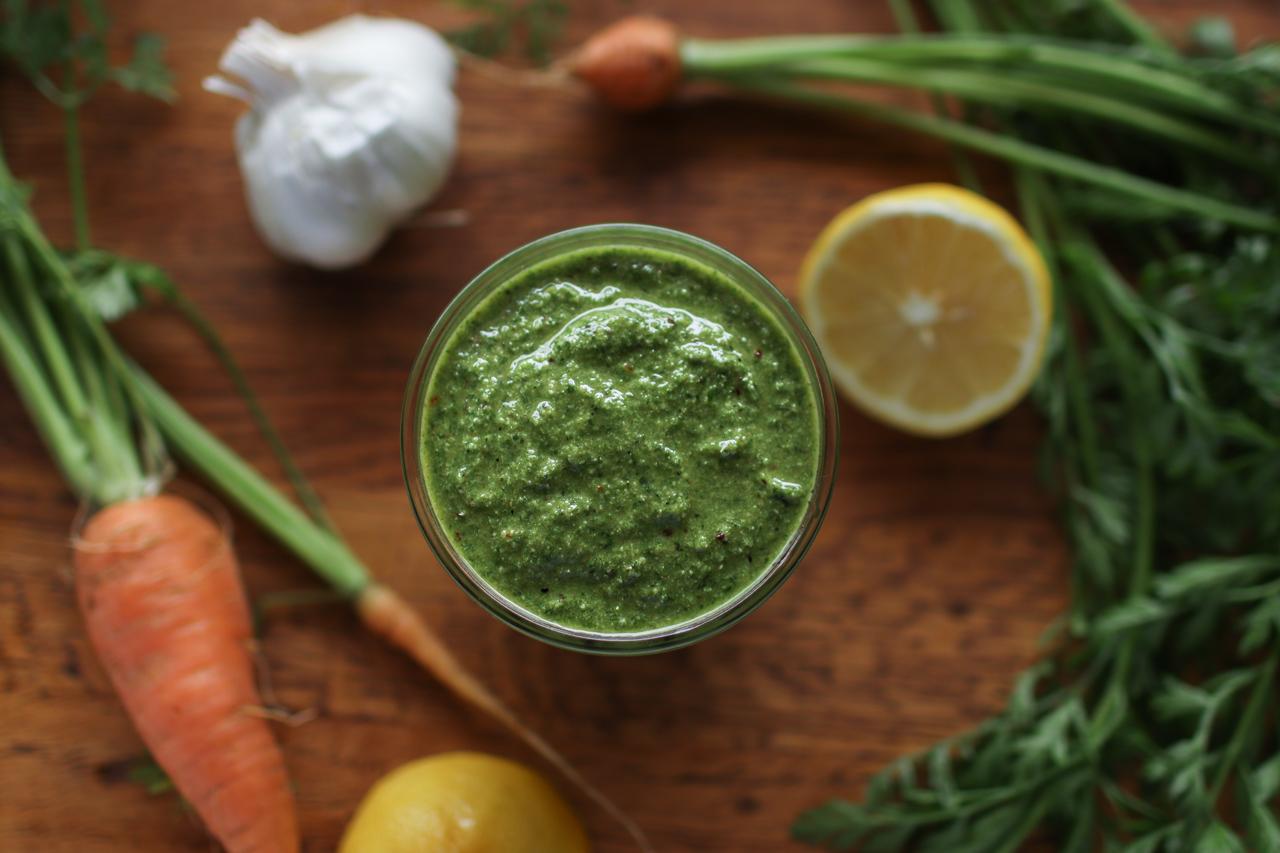
Carrot Top Pesto Recipe: Ever bought a bunch of fresh carrots and felt a little guilty tossing those leafy tops in the trash or compost? You’re not alone. Most of us grow up thinking carrot greens are useless—just something to discard. But here’s the truth: those vibrant, leafy tops are a goldmine of flavor and nutrition. Welcome to the world of carrot top pesto—a genius way to turn kitchen scraps into gourmet magic. Not only does it taste incredible, but it’s also a clever way to reduce food waste. This isn’t just pesto—it’s a celebration of resourcefulness, flavor, and simplicity.
What if we told you that what usually ends up in your compost bin could be the secret ingredient in your next go-to sauce? Carrot top pesto is herbaceous, zesty, and every bit as versatile as its basil cousin. Whether you’re a seasoned home cook or a total beginner, this recipe is going to become one of your favorite ways to use every part of the plant. So, tie on your apron, and let’s dive in.
What is Carrot Top Pesto?
If you’re familiar with pesto, you know it traditionally calls for basil, garlic, pine nuts, Parmesan, olive oil, and salt. Carrot top pesto follows a similar formula but swaps out the basil for—you guessed it—carrot greens. These greens have a subtly bitter, earthy taste that pairs beautifully with the richness of nuts and the brightness of lemon. The result is a pesto that’s fresh, flavorful, and packed with character.
Carrot top pesto isn’t some fad—it’s rooted in traditional methods of using every part of a vegetable. Think of it as old-school cooking made modern again. It’s a versatile condiment that can be stirred into pasta, smeared on sandwiches, or even used as a marinade. And the best part? You can tailor it to your tastes. Don’t like walnuts? Use almonds. Vegan? Skip the cheese. It’s that easy.
Benefits of Using Carrot Tops
Let’s talk perks. First, carrot greens are highly nutritious. They’re rich in potassium, calcium, vitamin K, and chlorophyll—all great for boosting energy, supporting bone health, and even detoxing your system.
Second, using them is a great step toward zero-waste living. When you use the whole carrot, root to tip, you’re minimizing food waste and getting more bang for your buck. In a world where food prices are rising, that’s no small thing.
Third, the flavor is something else. It’s not just about saving the tops—carrot greens actually bring a distinctive, herbal bitterness that can elevate your dishes. It’s like parsley and arugula had a delicious, slightly wild baby.
So, nutrition, sustainability, and flavor—all in one. Why wouldn’t you try it?
Flavor Profile of Carrot Top Pesto
Alright, let’s talk taste. Carrot top pesto isn’t just a swap—it’s a flavor adventure. While traditional basil pesto is sweet and aromatic, carrot top pesto leans a little more herbaceous, slightly bitter, and earthy, with a touch of spice if you include garlic or chili flakes.
It pairs well with sharp lemon juice or zest to brighten things up, and a touch of Parmesan adds that umami depth we all crave. Want it creamier? Add an avocado or a bit of Greek yogurt. Want it punchier? More garlic or red chili flakes will do the trick.
And the real magic? It tastes fresh, green, and alive. Like spring in a spoonful.
List of Ingredients You’ll Need
Here’s what you need to pull off this flavor-packed green goodness:
- 1 cup fresh carrot tops (loosely packed, washed, and dried)
- 1/2 cup nuts or seeds (walnuts, almonds, sunflower seeds, or pine nuts)
- 2 cloves garlic
- 1/2 cup grated Parmesan cheese (optional or use nutritional yeast for vegan version)
- 1/2 cup olive oil (extra virgin preferred)
- 2 tablespoons lemon juice (freshly squeezed)
- Salt and pepper to taste
- Optional add-ins: chili flakes, parsley, basil, mint, or avocado for creaminess
These ingredients are flexible. You can customize depending on what’s in your pantry or dietary preferences.
Essential Tools & Equipment
Before diving in, make sure you’ve got the right gear:
- Food processor or blender – to bring it all together
- Cutting board & knife – for prepping the greens and garlic
- Measuring cups & spoons – accuracy counts!
- Spatula – to scrape down the sides
- Storage container – jar or airtight container for storing your pesto
No fancy gadgets required—just a good blender and a bit of kitchen spirit.
How to Prepare Carrot Tops
First things first: those leafy carrot tops need a little love before they’re pesto-ready. Here’s how to prep them:
- Trim the carrot tops from the stems. Use only the tender leafy parts. The thicker stems can be tough and bitter.
- Rinse thoroughly to remove dirt or grit. Carrot tops grow close to the soil and tend to hold a lot of debris.
- Dry completely using a clean towel or salad spinner. Wet leaves make soggy pesto.
Don’t skip this prep step—gritty, watery pesto is no one’s idea of delicious.
Step-by-Step Guide to Making Carrot Top Pesto
Let’s get into the fun part—making the pesto!
Step 1: Wash and Prep the Greens
Place your washed and dried carrot tops in a bowl. Roughly chop them to make blending easier.
Step 2: Toast Your Nuts or Seeds
This step is optional but worth it. Toast your nuts or seeds in a dry pan over medium heat for 3–5 minutes until fragrant. This adds a rich, nutty depth to the pesto.
Step 3: Blend the Ingredients
Add the carrot tops, toasted nuts/seeds, garlic, and Parmesan into your food processor. Pulse a few times to break everything down.
Step 4: Add Oil and Blend Again
With the food processor running, slowly drizzle in the olive oil. Blend until it reaches your desired consistency—some like it chunky, some smooth.
Step 5: Adjust Flavor and Texture
Add lemon juice, salt, and pepper. Taste and adjust. Want more tang? Add more lemon. Too thick? More oil or a splash of water.
Step 6: Store the Pesto Properly
Scoop your pesto into a clean jar. Top it with a thin layer of olive oil to prevent oxidation. Store in the fridge for up to 5 days.
Tips to Make the Best Carrot Top Pesto
Want to take your carrot top pesto from good to “please give me that recipe”? Here are some practical tips that can seriously elevate your game:
- Balance is everything: Carrot greens have a naturally bitter bite. To offset that, use enough acid (lemon juice or even a splash of vinegar) and salt to round it out. Parmesan also helps mellow things out with its rich umami flavor.
- Toast your nuts or seeds: Don’t skip this. A quick toast (about 3–5 minutes in a dry skillet) deepens the flavor, adds complexity, and enhances the aroma. You’ll taste the difference.
- Adjust the oil slowly: When blending, drizzle in your olive oil gradually. This allows the pesto to emulsify properly, giving it that creamy, luxurious texture.
- Scrape down the sides often: Pesto can get stuck along the sides of your blender or food processor. Use a spatula to scrape it down between pulses so everything gets evenly incorporated.
- Taste as you go: This is your creation. Want it zestier? Add more lemon. Creamier? A spoonful of yogurt or avocado does wonders. Spicier? Add a pinch of red chili flakes.
- Let it rest: If you have time, let the pesto sit for 15-20 minutes before using it. This allows the flavors to meld together beautifully.
Following these small yet powerful tricks will make your pesto stand out—and keep people coming back for more.
Substitutions and Variations
One of the best things about carrot top pesto? It’s endlessly customizable. You’re not stuck with a rigid formula. Here’s how you can play around with it:
Nut-Free Options
- Allergic to nuts? No problem. Sunflower seeds, pumpkin seeds (pepitas), or even hemp hearts make excellent replacements. They offer the same creamy texture without any allergy risks.
Vegan & Dairy-Free Versions
- Replace Parmesan with nutritional yeast for a cheesy, umami-rich flavor minus the dairy.
- You can also try vegan Parmesan-style cheese or skip it entirely and boost the flavor with garlic and lemon.
Herb Blends
- Combine carrot tops with parsley, cilantro, basil, or even mint for a more layered flavor.
- Mixing in a handful of arugula gives the pesto a peppery kick.
Creamy Additions
- Avocado or Greek yogurt adds silkiness and a mellow tone that balances the bitterness of carrot tops.
- You can even stir in a spoonful of hummus for a protein boost.
Spicy Twist
- Add red chili flakes or a fresh green chili for heat.
- Try blending in a small roasted jalapeño if you’re feeling adventurous.
Feel free to mix, match, and get creative. There’s no “wrong” pesto—only new favorites waiting to be discovered.
How to Store Carrot Top Pesto
You’ve made your masterpiece. Now how do you keep it fresh? Proper storage makes all the difference in flavor and shelf life.
Refrigerator Storage
- Transfer the pesto to a clean, airtight container—glass jars work best.
- Smooth the surface with a spoon and pour a thin layer of olive oil on top. This seals out air and helps prevent browning.
- Store in the fridge for up to 5 days. Make sure to use a clean spoon each time you scoop to avoid contamination.
Freezing Instructions
- For longer storage, freeze it! Pesto freezes beautifully.
- Spoon pesto into ice cube trays, freeze until solid, then pop out and transfer to a freezer bag.
- These cubes are perfect for tossing into pasta, soups, or sautéed veggies—no need to thaw first.
- Frozen pesto lasts for up to 3 months without losing flavor.
Quick tip: Label your container with the date. You’ll thank yourself later when you forget how long it’s been in there.
Creative Ways to Use Carrot Top Pesto
Sure, pasta’s the classic go-to, but don’t stop there. This green goodness is way more versatile than you think:
1. Pasta, Gnocchi, or Ravioli
- Toss warm pasta with a spoonful or two of pesto and a splash of the pasta water for a silky, glossy sauce.
- Mix into gnocchi for a comforting, flavor-packed dish.
2. Sandwiches & Wraps
- Spread it on bread instead of mayo or mustard for a fresh, herby twist.
- Drizzle it into a veggie wrap or on a grilled cheese sandwich for next-level flavor.
3. Salad Dressing
- Thin with a bit more lemon juice and olive oil for a zesty vinaigrette.
- Toss with roasted veggies, grain bowls, or leafy greens.
4. Dip or Spread
- Use as a dip for crackers, raw veggies, or pita chips.
- Mix into hummus or Greek yogurt for a fusion-style dip.
5. Marinade for Proteins
- Brush on chicken, fish, or tofu before grilling or roasting.
- Use as a base for marinade mixed with extra lemon and oil.
This isn’t just a sauce—it’s a flavor bomb that can transform almost any dish.
Pairing Suggestions
Carrot top pesto has an earthy, slightly bitter tone that pairs beautifully with certain foods. Here are some combos to try:
- Proteins: Grilled chicken, baked fish (especially salmon), seared tofu, or roasted chickpeas.
- Veggies: Roasted carrots (naturally!), zucchini, eggplant, potatoes, and mushrooms.
- Grains & Legumes: Quinoa, couscous, farro, lentils, and wild rice all soak up the flavor beautifully.
- Cheeses: Goat cheese, feta, mozzarella, or ricotta love this pesto.
Pair it thoughtfully and you’ll discover new favorite meals in no time.
Common Mistakes to Avoid
Let’s save you some headaches. Here are the most common carrot top pesto mistakes—and how to avoid them:
- Using dirty or gritty greens: Carrot tops trap dirt like crazy. Wash thoroughly and dry them well. A sandy pesto is not what we’re aiming for.
- Using the tough stems: Only the leafy parts should go in. The stems are woody, bitter, and hard to blend.
- Skipping the acid: Without lemon juice or vinegar, your pesto might taste flat or too bitter. Acid brightens everything up.
- Adding too much oil too fast: Dumping in all the oil at once can make the mixture greasy. Drizzle it in slowly for better texture.
- Over-blending: Pesto should still have some texture. Over-blending can turn it into green mush. Pulse and check as you go.
Avoid these pitfalls, and your pesto will shine every time.
FAQs about Carrot Top Pesto Recipe
1. Can I freeze carrot top pesto?
Absolutely. Freeze it in ice cube trays and store the cubes in a freezer-safe bag. It’ll stay fresh for up to 3 months.
2. Do carrot tops taste bitter?
A little, yes—but in a good way. They’re herbaceous and slightly peppery, similar to parsley or arugula. Lemon juice and cheese help balance the flavor.
3. Can I use other herbs with carrot tops?
Totally! Mix in basil, parsley, mint, or cilantro to customize your flavor. It’s very forgiving.
4. How long does carrot top pesto last in the fridge?
If stored in an airtight container with a layer of olive oil on top, it lasts 4–5 days in the fridge.
5. Is it safe to eat carrot greens?
Yes, carrot greens are 100% edible and safe to eat when washed properly. They’re packed with nutrients and flavor.
Conclusion
Who knew those humble carrot tops could turn into something so vibrant and delicious? Carrot top pesto is more than just a smart way to reduce waste—it’s a celebration of creativity in the kitchen. With just a handful of ingredients and a few easy steps, you can whip up a sauce that’s fresh, versatile, and loaded with flavor.
From pasta to wraps, from dips to marinades, the possibilities are endless. You’ll never look at carrot greens the same way again. So next time you buy a bunch of carrots, think twice before tossing those tops. There’s a jar of green gold waiting to be made—and now, you’ve got the recipe to make it happen.