Carne Picada Recipe: Carne picada is a flavorful Mexican-style beef dish made with finely chopped or thinly sliced beef, often slow-cooked or quickly seared depending on the recipe. The name itself means “minced” or “chopped meat” in Spanish, and it’s known for its tender texture and rich, savory flavor. Unlike ground beef, carne picada retains small, thin pieces of beef that absorb spices beautifully without turning into a paste. This makes it ideal for tacos, burritos, rice bowls, or even as a filling for empanadas.
Carne picada is a household favorite in many Mexican kitchens because of its versatility. Whether you prefer a simple version seasoned with just salt, pepper, and garlic, or a more complex preparation with chilies, onions, tomatoes, and spices, this dish adapts to your taste. Its ease of cooking also means you don’t need to be a professional chef to make it mouthwatering — just follow the right steps, and you’ll have a dish bursting with flavor.
Why This Recipe Stands Out
This recipe is not just another carne picada guide — it’s designed to bring out maximum flavor with minimal effort. I’ve broken the process into manageable steps so that even beginners can cook it perfectly. By using fresh ingredients, layering spices at the right moments, and cooking at the correct temperature, you’ll get tender, juicy meat every single time. Plus, I’ll show you how to make it work with what you have at home — whether you’re cooking for a quick weekday meal or planning a family feast.
Ingredients Needed for Carne Picada
Main Ingredients
To make an authentic carne picada, you’ll need:
- Beef: 2 lbs of chuck steak, round steak, or brisket, chopped into small, thin strips.
- Onion: 1 large, diced.
- Tomatoes: 2 medium, finely chopped (or 1 cup canned diced tomatoes).
- Bell Peppers: 1-2, any color, diced.
- Garlic: 4 cloves, minced.
- Olive Oil or Vegetable Oil: 3 tablespoons for cooking.
- Spices: 1 teaspoon cumin, 1 teaspoon paprika, ½ teaspoon chili powder, ½ teaspoon oregano, salt, and black pepper to taste.
- Beef Broth: 1 cup for simmering.
Optional Ingredients for Extra Flavor
Want to elevate the taste? Try adding:
- Jalapeños or serrano peppers for heat.
- Fresh cilantro for garnish.
- A splash of lime juice before serving.
- Smoked paprika for depth.
Ingredient Substitutions
If you can’t find chuck steak, use flank steak or skirt steak — just be sure to slice it thin against the grain for tenderness. For a vegetarian twist, replace beef with finely chopped mushrooms and cooked lentils. If you’re avoiding nightshades, substitute bell peppers and tomatoes with diced zucchini and carrots.
Choosing the Best Cut of Beef
Recommended Cuts
The best carne picada comes from cuts with good marbling — meaning a balance of meat and fat that keeps the dish juicy and flavorful. Chuck steak is the most popular choice because it’s affordable and tenderizes beautifully when cooked. Round steak is leaner but still works well when cut thin and simmered. Skirt steak offers a slightly chewier texture but with intense beefy flavor.
How to Trim and Prepare the Beef
Always start by removing excess fat and silver skin. While a little fat adds flavor, too much can make the dish greasy. Slice the beef into small strips or coarse cubes — about ½ inch in size — for even cooking. Remember to cut against the grain to shorten muscle fibers, making the meat more tender.
The Importance of Freshness
Fresh beef not only tastes better but also cooks more evenly. Choose meat with a bright red color and a firm texture. Avoid beef that has turned brown or has an off smell, as this can ruin the flavor of your dish.
Tools and Equipment You’ll Need
Essential Kitchen Tools
- A sharp chef’s knife for cutting the beef.
- A sturdy cutting board (preferably wood or heavy-duty plastic).
- A large skillet or cast-iron pan for searing.
- A wooden spoon or spatula for stirring.
Optional Tools for Better Results
- Meat thermometer to check doneness.
- Slow cooker for hands-off cooking.
- A non-stick pan if you prefer a lighter sear with less oil.
Step-by-Step Preparation Guide
Step 1 – Preparing the Beef
Start by trimming your beef and cutting it into small, even pieces. This ensures the meat cooks uniformly. If you want extra tenderness, you can marinate the beef in lime juice, garlic, and a little olive oil for 30 minutes before cooking.
Step 2 – Prepping Vegetables and Spices
Vegetables and spices are what give carne picada its depth of flavor. Dice your onions, bell peppers, and tomatoes into small, uniform pieces so they cook evenly. Mince the garlic finely so it releases its aroma quickly when heated.
For spices, measure everything out beforehand—this makes cooking smoother and prevents over-seasoning. Cumin adds an earthy undertone, paprika provides a smoky warmth, oregano brings a herbal note, and chili powder gives that gentle kick. Salt and black pepper will enhance all the other flavors.
If you’re going for a spicier version, slice up some fresh jalapeños or serranos. You can leave the seeds in for more heat or remove them for a milder taste.
Step 3 – Cooking the Meat to Perfection
Heat a large skillet or cast-iron pan over medium-high heat. Add your oil and wait until it’s shimmering hot before adding the beef. This ensures a good sear, which locks in flavor and juices.
Cook the meat in batches if necessary—overcrowding the pan will cause the beef to steam rather than sear. Each batch should cook for about 3–4 minutes, just until browned on all sides. Don’t worry if the inside is not fully cooked at this stage; it will finish cooking during the simmering process.
Once each batch is done, transfer it to a plate and keep warm.
Step 4 – Simmering for Flavor
In the same pan, add a little more oil if needed, then sauté onions, garlic, and bell peppers until soft and fragrant, about 3–4 minutes. Add tomatoes and cook until they break down into a sauce.
Return the seared beef to the pan, sprinkle in your spices, and pour in the beef broth. Stir everything together, scraping the bottom of the pan to release all those flavorful browned bits.
Reduce the heat to low, cover, and let it simmer for 20–30 minutes for a quick version, or up to 1 hour for a deeper, more tender flavor. The slow simmer allows the beef to absorb the sauce and spices, creating a rich, savory dish.
Step 5 – Final Seasoning Adjustments
Taste the sauce and adjust seasonings as needed. Add more salt if the flavors feel flat, a squeeze of lime for brightness, or extra chili powder for heat. Fresh cilantro sprinkled on top before serving adds a refreshing finish.
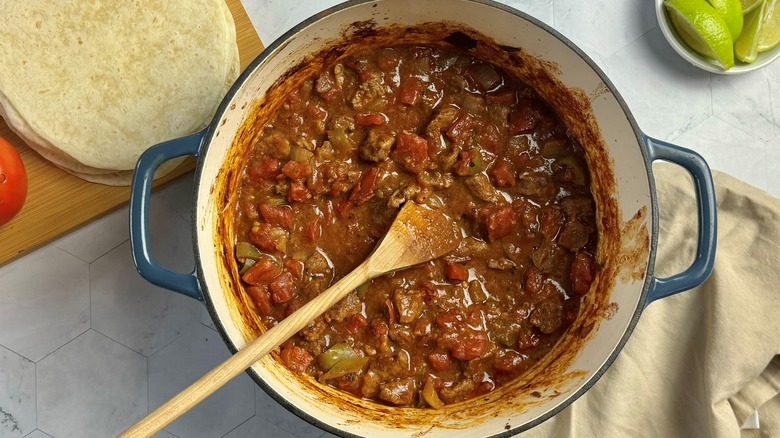
At this stage, your carne picada should have tender beef chunks coated in a rich, aromatic sauce. It’s now ready to serve in your favorite way—over rice, tucked into tortillas, or alongside roasted vegetables.
Cooking Variations of Carne Picada
Carne Picada Tacos
Use warm corn or flour tortillas and fill them generously with carne picada. Top with diced onions, fresh cilantro, and a squeeze of lime juice. For extra indulgence, add shredded cheese and salsa.
Carne Picada Stew
Increase the beef broth to 2–3 cups, add diced potatoes and carrots, and let it simmer longer. This creates a hearty stew perfect for cold weather.
Carne Picada with Rice
Serve the carne picada over fluffy white rice or Spanish rice for a satisfying and filling meal. The rice soaks up the sauce beautifully, making every bite flavorful.
Tips for Perfect Carne Picada Every Time
Balancing Spices
Start with the recommended spice amounts, but always taste and adjust. The perfect balance should have a warm, savory base with a hint of spice that doesn’t overpower the beef.
How to Avoid Overcooking
Beef can turn tough if cooked too long at high heat. Always simmer on low once the meat is seared, allowing the fibers to relax and tenderize slowly.
Common Mistakes and How to Avoid Them
Overcrowding the Pan
If you dump all the beef in at once, it will steam instead of sear, resulting in bland, pale meat. Always cook in batches for the best flavor.
Using the Wrong Beef Cut
Leaner cuts like sirloin may dry out during simmering. Stick to well-marbled cuts like chuck or brisket for tenderness and juiciness.
Serving Suggestions
Best Side Dishes
- Warm tortillas
- Mexican rice
- Refried beans
- Grilled corn on the cob
- Fresh guacamole
Presentation Tips
Serve carne picada in a rustic bowl with colorful sides for a vibrant table spread. Garnish with fresh herbs, lime wedges, and thinly sliced chili for a restaurant-style look.
Nutritional Value of Carne Picada
Calories and Macronutrients
A typical serving of carne picada (about 1 cup) contains:
- Calories: 250–300
- Protein: 25–28g
- Fat: 12–15g
- Carbohydrates: 6–8g (mainly from vegetables)
Health Benefits
Carne picada is a protein-rich meal that provides essential amino acids for muscle repair. The vegetables add fiber, vitamins, and antioxidants, while spices like cumin and chili offer anti-inflammatory properties.
How to Store and Reheat Carne Picada
Storing in the Refrigerator
Place leftovers in an airtight container and refrigerate for up to 4 days.
Freezing Tips
Cool completely before transferring to freezer-safe bags. Freeze for up to 3 months. Thaw overnight in the fridge before reheating on the stove.
FAQs about Carne Picada Recipe
Can I make carne picada in a slow cooker?
Yes! Brown the beef first, then transfer it to a slow cooker with the vegetables, spices, and broth. Cook on low for 6–8 hours.
Can I use chicken instead of beef?
Absolutely—just adjust cooking time as chicken cooks faster.
Is carne picada spicy?
It can be mild or spicy depending on how much chili you use.
Can I make this ahead of time?
Yes, in fact, the flavors often deepen when made a day ahead.
What’s the best way to serve carne picada?
In tacos, over rice, or with tortillas for scooping.
Conclusion
Carne picada is a simple yet incredibly flavorful dish that’s perfect for weeknight dinners or festive gatherings. With the right cut of beef, balanced spices, and a little patience, you can create a meal that’s both comforting and versatile. Whether you serve it in tacos, over rice, or as a stew, it’s sure to impress.