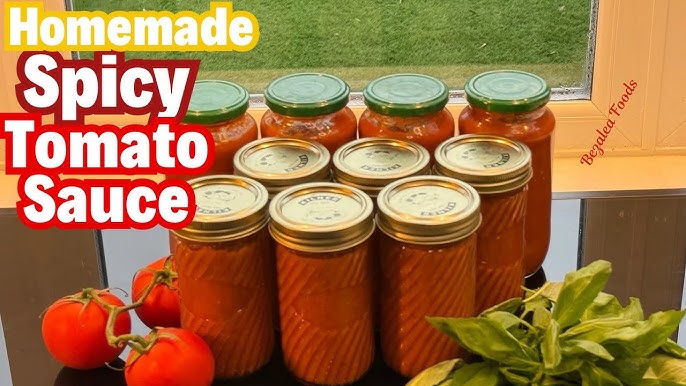
Canning Tomato Sauce Recipe: There’s something incredibly satisfying about popping open a jar of homemade tomato sauce in the dead of winter and tasting the sun-ripened tomatoes you canned months ago. If you’ve ever tasted fresh, homemade sauce, you already know it’s a whole different world from the store-bought kind. Canning tomato sauce not only helps you enjoy your garden’s bounty year-round, but it also gives you full control over what goes into your food—no hidden preservatives, no mystery ingredients. Just pure, wholesome, delicious sauce made by you.
Whether you’re a home gardening enthusiast or just looking to save some money and eat cleaner, canning tomato sauce is a skill worth mastering. This step-by-step guide will walk you through everything from selecting the perfect tomatoes to sealing the final jar. And don’t worry—this process might sound a bit complicated at first, but once you get the hang of it, it becomes second nature.
Ready to roll up your sleeves and make the best tomato sauce you’ve ever tasted? Let’s dive right in!
Why Can Your Own Tomato Sauce?
Why go through all the trouble of making your own tomato sauce when grocery store shelves are lined with convenient jars? Well, the answer lies in the taste, quality, and health benefits. When you make and can your own sauce, you’re in control. That means no unnecessary sugar, salt, or preservatives. You pick the flavor profile, you choose the tomatoes, and you know exactly what’s inside.
Home-canned tomato sauce is also far more economical in the long run—especially if you grow your own tomatoes or buy them in bulk during peak season. Think about how many meals you can enhance with your own sauce: spaghetti, pizza, chili, lasagna, soups, and more. You’re not just canning sauce; you’re preserving countless dinners filled with love and flavor.
Plus, canning is an amazing way to reduce food waste. That bumper crop of tomatoes from your garden? Don’t let them rot on the vine—can them! Shelf-stable tomato sauce can last up to a year or more when done right, making your summer harvest work for you all year round.
Choosing the Right Tomatoes
Not all tomatoes are created equal—especially when it comes to making sauce. For thick, flavorful sauce, you want tomatoes that are meaty with fewer seeds and lower water content. Here are a few of the best varieties:
- Roma (Plum) Tomatoes: These are the gold standard for sauce-making. They’re firm, have minimal seeds, and cook down beautifully.
- San Marzano: A type of plum tomato known for its sweet flavor and low acidity. Often considered the best for Italian-style sauces.
- Amish Paste: Another excellent paste tomato, these are larger and meatier than Romas.
- Opalka and Heinz: Known for their rich flavor and ideal texture for sauce.
Look for ripe, deep red tomatoes that are firm but not hard. Avoid overripe or bruised ones—they can affect both the taste and safety of your sauce. If you don’t grow your own, farmers’ markets are your best bet for finding the freshest, most flavorful options.
Tools and Equipment You’ll Need
Canning tomato sauce doesn’t require a professional kitchen setup, but you will need some specific tools to get the job done safely and efficiently. Here’s a checklist to make sure you’re fully prepared:
Basic Kitchen Tools:
- Large stockpot (for cooking the sauce)
- Sharp knives
- Cutting board
- Mixing bowls
- Measuring cups and spoons
- Wooden spoon or spatula
Canning Tools:
- Canning jars (quart or pint size, depending on preference)
- New lids and screw bands
- Jar lifter
- Funnel
- Ladle
- Bubble remover tool or butter knife
- Clean dish towels
Sterilization and Processing Tools:
- Water bath canner or large pot with a rack
- Tongs or jar lifter
- Timer
- Thermometer (optional but helpful)
Optional, but helpful items include a food mill or immersion blender for a smooth sauce, and a tomato strainer or peeler for quick prep.
List of Ingredients You’ll Need
Here’s what you’ll need to create a basic, flavorful tomato sauce that’s perfect for canning. This recipe is flexible, so feel free to adjust it based on your taste.
Basic Ingredients:
- 20 pounds of ripe tomatoes (yields about 7-9 pints of sauce)
- 4 cloves of garlic, minced
- 1-2 medium onions, finely chopped
- 2 tablespoons olive oil (optional for flavor)
- Salt, to taste (start with 1 tablespoon)
- Black pepper, to taste
- Fresh or dried basil, oregano, thyme, or Italian seasoning mix
Optional Ingredients:
- 1-2 tablespoons of sugar (to balance acidity)
- Red pepper flakes (for a bit of heat)
- Lemon juice or citric acid (mandatory for safe canning)
Acidity Adjustment for Safe Canning:
- Bottled lemon juice: 2 tablespoons per quart or 1 tablespoon per pint
- OR
- Citric acid: ½ teaspoon per quart or ¼ teaspoon per pint
Acidity is crucial. Even though tomatoes are acidic, you must add lemon juice or citric acid to prevent the growth of botulism when water bath canning. Never skip this step!
Prepping the Tomatoes
Prepping your tomatoes properly is the key to a rich, smooth sauce. It might take a little time, but it’s absolutely worth it. Here’s how to get your tomatoes ready for cooking:
1. Wash and Core
Start by rinsing your tomatoes thoroughly under cold water to remove any dirt or debris. Then, use a paring knife to remove the stem and core from each tomato. This part is fibrous and won’t cook down well, so be sure to cut it out cleanly.
2. Blanch and Peel
Peeling tomatoes may seem tedious, but trust us—your sauce will be much smoother without the skins. The easiest way to do this is by blanching:
- Bring a large pot of water to a boil.
- Fill a separate bowl with ice water.
- Score a small “X” on the bottom of each tomato.
- Drop a few tomatoes at a time into the boiling water for 30–60 seconds.
- Remove with a slotted spoon and place them immediately in the ice bath.
- Once cooled, the skins should slip right off.
3. Cut and Remove Seeds (Optional)
After peeling, cut the tomatoes in half. You can squeeze out the seeds with your hands or use a spoon. Some people prefer to leave the seeds in for extra texture and flavor, but if you’re after a smoother sauce, remove them.
Now, chop the tomatoes roughly if you’re cooking them down traditionally, or run them through a food mill for a smoother consistency. This prepped tomato base is now ready for sauce-making!
Cooking the Sauce
Now comes the fun part—turning all that tomato goodness into a flavorful, thick sauce you’ll be proud to can. Don’t rush this step; a good sauce takes time to develop deep, rich flavor.
1. Sauté the Aromatics
In a large stockpot, heat olive oil over medium heat (if using). Add your chopped onions and cook until soft and translucent, about 5 minutes. Then add minced garlic and cook for another 1–2 minutes until fragrant. Be careful not to burn the garlic—it can turn bitter fast.
2. Add Tomatoes
Add your prepared tomatoes to the pot. Stir to combine with the aromatics and bring everything to a gentle boil. Once boiling, reduce the heat and let it simmer uncovered.
3. Simmer and Season
This is when you can add your salt, pepper, herbs, and optional sugar. Start small—you can always add more, but you can’t take it out once it’s in. Let the sauce simmer for 1.5 to 2 hours, stirring occasionally to prevent sticking or burning.
As it simmers, the sauce will thicken as the water evaporates. You’ll notice the flavor intensify the longer it cooks. If you want a completely smooth sauce, you can use an immersion blender during or after cooking. For a rustic sauce, leave it chunky—it’s totally up to you.
Sterilizing Your Jars and Lids
Before you can fill your jars, you need to make sure everything is completely sterile. This is a critical step to ensure your tomato sauce stays safe and shelf-stable for months.
1. Wash Everything First
Start by washing jars, lids, and rings in hot, soapy water. Rinse thoroughly.
2. Sterilize the Jars
You can sterilize jars in one of three ways:
- Boiling Method: Place jars in a large pot, cover with water, and boil for 10 minutes.
- Dishwasher Method: Run jars through the dishwasher on the hottest cycle without detergent.
- Oven Method (less recommended for canning): Heat jars in a 225°F (110°C) oven for 20 minutes.
Keep jars hot until ready to use. This helps prevent cracking when filling them with hot sauce.
3. Prepare the Lids
Place lids (not the rings) in a saucepan of simmering water (do not boil) for about 5 minutes to soften the sealing compound. Keep them in hot water until you’re ready to seal the jars.
Filling the Jars
Now that your sauce is hot and your jars are sterile, it’s time to get everything packed up.
1. Use a Funnel
Using a canning funnel makes this step way less messy. Ladle hot sauce into the jars, leaving ½ inch of headspace at the top. This space is necessary for a proper vacuum seal.
2. Add Acid
Don’t forget to add your lemon juice or citric acid now—2 tablespoons bottled lemon juice per quart, or 1 tablespoon per pint. Do not use fresh lemon juice because the acidity may vary.
3. Remove Air Bubbles
Use a non-metallic utensil (like a plastic spatula or bubble remover) to remove trapped air bubbles. Run it along the inside edges of the jar and gently tap the jar on the counter.
4. Wipe the Rims
Wipe the jar rims with a clean, damp cloth or paper towel. Any sauce residue can prevent a proper seal.
5. Apply Lids and Bands
Place the hot lid on each jar and screw the band on until it’s fingertip-tight—snug, but not cranked on.
Sealing and Processing the Jars
Now it’s time to make your sauce shelf-stable by processing the jars in a water bath.
1. Water Bath Canning
- Fill your canner with enough water to cover the jars by 1–2 inches.
- Place the jars on the rack inside the canner.
- Bring water to a full boil, then process pints for 35 minutes or quarts for 40–45 minutes.
- Start the timer only once the water reaches a full boil.
2. Adjust for Altitude
If you live more than 1,000 feet above sea level, you’ll need to add more time:
- 1,001–3,000 feet: Add 5 minutes
- 3,001–6,000 feet: Add 10 minutes
- Above 6,000 feet: Add 15 minutes
Cooling and Storing the Jars
Once your jars are processed, you’re nearly done! This part requires patience.
1. Remove and Cool
Use a jar lifter to carefully remove jars from the canner and place them on a towel or cooling rack. Let them sit undisturbed for 12–24 hours. Don’t touch the lids or tighten the rings during this time.
2. Check the Seals
Once cooled, check the seals by pressing the center of each lid. If it doesn’t flex or pop, it’s sealed. If the lid moves or makes a clicking sound, it didn’t seal properly. You can either reprocess it or store it in the fridge to use soon.
3. Label and Store
Label your jars with the date and contents, then store them in a cool, dark place. A pantry or basement works great. Properly sealed jars will last 12–18 months—even longer in some cases!
Common Mistakes to Avoid
Canning tomato sauce can be simple, but it’s also easy to make mistakes—some of which can be dangerous if you’re not careful. Let’s go over some of the most common canning pitfalls and how to avoid them.
1. Skipping the Acid
One of the biggest (and most dangerous) mistakes is not adding enough acid to your tomato sauce. Tomatoes vary in natural acidity, and some aren’t acidic enough to prevent bacterial growth, especially the deadly Clostridium botulinum. Always add bottled lemon juice or citric acid—even if the sauce tastes acidic to you. And remember: never substitute fresh lemon juice; it’s not reliably acidic.
2. Overfilling or Underfilling the Jars
Leaving the correct headspace—about ½ inch—is essential. If jars are too full, sauce can bubble out during processing, preventing a good seal. If jars are underfilled, there may be too much air left inside, which also affects sealing and shelf life.
3. Not Removing Air Bubbles
Trapped air bubbles can cause problems with sealing and may create space for bacterial growth. After filling the jars, always use a non-metallic tool to slide around the inside of the jar and remove air pockets.
4. Not Sterilizing Equipment
It might be tempting to skip the sterilization step if your jars “look clean.” But appearances can be deceiving. Always sterilize your jars, lids, and any tools that will touch the food to prevent contamination.
5. Ignoring Altitude Adjustments
Canning times vary based on elevation. If you live above 1,000 feet, you’ll need to increase processing time accordingly. Skipping this step could result in unsafe food—even if the jar appears sealed.
By keeping these mistakes in mind, you’ll make sure your hard work doesn’t go to waste and your sauce is safe and delicious for months to come.
Canning Tomato Sauce Without a Pressure Canner
Many people ask: Is it safe to can tomato sauce without a pressure canner? The answer is yes—but only if you add acid and use the water bath method correctly.
When Is Water Bath Canning Safe?
Tomato sauce is considered safe for water bath canning if and only if:
- You add the required amount of bottled lemon juice or citric acid to each jar.
- You follow recommended processing times.
- You ensure your jars and lids are properly sterilized and sealed.
This is why adding acid is non-negotiable. Without it, tomatoes fall into a borderline pH category that can’t be trusted for safety using just a boiling water bath.
What About Pressure Canning?
Pressure canning is great if you want to skip the acid and still preserve safely. It uses higher temperatures to kill all bacteria. However, it requires special equipment and is less beginner-friendly.
If you’re just starting out, water bath canning with acidified sauce is the easiest and safest route. Stick to trusted recipes, follow every step carefully, and you’ll be good to go.
How Long Does Canned Tomato Sauce Last?
Canned tomato sauce can last a long time—but only if it’s sealed and stored correctly.
Shelf Life
Properly sealed and stored jars of tomato sauce can last 12 to 18 months. Some even keep their flavor and safety for up to two years. But for the best quality, try to use your sauce within the first year.
Signs of Spoilage
Before using your sauce, always check for signs that it’s gone bad. Here’s what to look for:
- Broken seal or popped lid
- Mold or discoloration
- Unusual odor
- Bubbling or fizzing when opened
- Leaking or rusting lids
If in doubt, throw it out. Never taste questionable sauce—it’s not worth the risk.
Storage Tips
- Store jars in a cool, dark place—ideally between 50–70°F (10–21°C).
- Keep them off the floor and away from direct sunlight.
- Avoid damp areas that might encourage rust or mold.
Creative Ways to Use Your Canned Tomato Sauce
You didn’t go through all that work just to let your jars sit on a shelf, right? Your homemade tomato sauce is a goldmine of flavor and can be used in so many ways!
1. Classic Spaghetti or Pasta
Heat it up, toss with your favorite pasta, top with parmesan and basil—done! You can also add sautéed meat or vegetables for extra heartiness.
2. Homemade Pizza
Your sauce makes a fantastic pizza base. Just spread it over dough, add toppings, and bake!
3. Shakshuka
This Middle Eastern dish features poached eggs in a spicy tomato sauce. Just simmer your sauce with a little paprika and chili, crack in a few eggs, and cook until set.
4. Soup Starter
Use your tomato sauce as a flavorful base for tomato soup, minestrone, or vegetable stew.
5. Chili or Stews
Homemade tomato sauce adds a rich flavor layer to chili, curry, or hearty stews. Just swap it in where you’d usually use canned tomatoes or sauce.
Bonus Idea: Gifting
Decorate the jars and gift them to friends and family. Everyone loves a homemade present, and your sauce will definitely impress!
FAQs about Canning Tomato Sauce Recipe
1. Can I use cherry or grape tomatoes for canning sauce?
You can, but they’re not ideal. Cherry and grape tomatoes are watery and sweet, which can lead to a thinner sauce and a longer cooking time. Stick with paste tomatoes like Roma or San Marzano for the best results.
2. Do I have to peel the tomatoes?
Technically, no—but it’s highly recommended. Tomato skins don’t break down well during cooking and can create a tough texture. If you prefer a rustic sauce and don’t mind the skins, you can skip peeling, but expect a chunkier finish.
3. Can I reuse old lids?
No. Always use new lids for canning to ensure a proper seal. Reusing old lids increases the risk of sealing failure, which can lead to spoiled sauce.
4. What if my jar didn’t seal properly?
If a jar didn’t seal after processing, don’t panic. You can either:
- Reprocess it within 24 hours (using a new lid), or
- Store it in the refrigerator and use it within a week.
5. Can I double or cut the recipe in half?
Absolutely! Just make sure to maintain the proper acid levels per jar, regardless of batch size. Processing times remain the same.
Conclusion
Canning your own tomato sauce is more than just a kitchen project—it’s a lifestyle choice. It means embracing homemade goodness, reducing food waste, and savoring the flavor of summer all year long. While the process may feel daunting at first, once you do it a few times, it becomes second nature. And the results? Worth every minute.
With this step-by-step guide, you’re fully prepared to start your tomato sauce canning journey. Whether you’re stocking your pantry for winter or sharing your sauce with loved ones, you’re going to love the taste, quality, and pride that comes with every jar.
So, grab your tomatoes, roll up your sleeves, and let’s get canning. You got this!