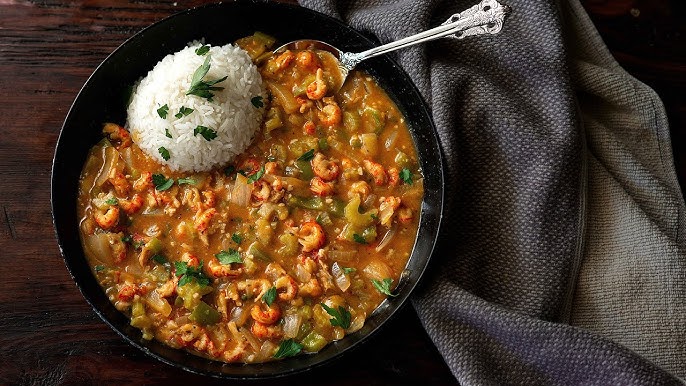
Cajun Crawfish Etouffee Recipe: Cajun Crawfish Étouffée isn’t just a dish—it’s a tradition, a celebration of flavor, and a piece of Southern soul served over a bed of rice. Whether you’ve tasted it in the heart of Louisiana or are just hearing about it for the first time, this dish is a culinary experience worth diving into. With roots deep in Cajun and Creole heritage, Crawfish Étouffée is a staple comfort food that brings people together over the dinner table.
“Étouffée” literally means “smothered” in French, and that’s exactly what happens here—crawfish tails are smothered in a rich, savory sauce made with a buttery roux, the “Holy Trinity” of Cajun veggies (onion, bell pepper, and celery), and bold seasonings that ignite your taste buds. The sauce is then ladled generously over rice to soak up every drop of flavor. You don’t need to travel to the bayou to experience it; with this guide, you can cook it right in your own kitchen.
Why You’ll Love This Recipe
Let’s be honest—this dish is an absolute flavor bomb. You get that deep, buttery roux taste, the slow-cooked vegetables melting into every bite, and that beautiful kick from the Cajun spices that keeps your mouth watering for more.
And don’t worry—this recipe is totally doable, even if you’re not a seasoned chef. All you need is a bit of patience and the right ingredients, and you’ll have a restaurant-worthy dish on your hands. It’s perfect for family dinners, parties, or when you just need a bit of comfort food that feels like a warm hug from the South.
Plus, it’s highly customizable! You can adjust the spice levels, swap out the protein, or play with herbs until it suits your palate perfectly.
Ingredients You’ll Need
Here’s your complete grocery list to make authentic Cajun Crawfish Étouffée from scratch:
Main Ingredients:
- 1 lb crawfish tails, peeled and cleaned (preferably Louisiana crawfish)
- 1 stick (1/2 cup) unsalted butter
- 1 medium onion, finely chopped
- 1 green bell pepper, finely chopped
- 2 stalks celery, finely chopped
- 4 cloves garlic, minced
- 2 tablespoons all-purpose flour (for the roux)
- 2 cups seafood stock (or chicken stock)
- 1 teaspoon Cajun seasoning
- 1/2 teaspoon paprika
- 1/4 teaspoon cayenne pepper (adjust to taste)
- 1/2 teaspoon dried thyme
- 1 bay leaf
- Salt and black pepper, to taste
- 1 teaspoon Worcestershire sauce
- 2 green onions, chopped
- Fresh parsley, for garnish
- Cooked white rice, for serving
Optional Add-ins:
- A splash of hot sauce
- A squeeze of lemon juice
- A dash of tomato paste for a slightly Creole twist
Choosing the Best Crawfish
If you’re lucky enough to live where fresh crawfish are available, grab them! But don’t worry—frozen crawfish tails (especially those labeled “Louisiana Crawfish”) work just as well. Be sure to look for peeled, deveined, and fat-included tails—that “crawfish fat” is liquid gold for flavor.
If using fresh whole crawfish, you’ll need to boil, peel, and clean them. It’s a labor of love, but totally worth it.
Frozen crawfish should be thawed in the fridge overnight. Once thawed, drain off any excess liquid, but don’t rinse them—you’ll lose valuable flavor!
The Cajun Holy Trinity
The backbone of all great Cajun cooking? The Holy Trinity: onions, bell pepper, and celery.
These three ingredients create a depth of flavor that’s earthy, aromatic, and savory. When sautéed together, they build the flavor foundation for nearly every traditional Louisiana dish—gumbo, jambalaya, and yes, crawfish étouffée. Don’t skip or substitute them—this trio is what gives the dish its unmistakable Southern flair.
Pro tip: Dice the veggies uniformly so they cook evenly and melt beautifully into your roux.
Understanding the Roux
Think of roux as the soul of your étouffée. It’s a mixture of fat (butter) and flour cooked together to create a rich, thick sauce base.
There are three types of roux in Southern cooking—light, medium, and dark. For crawfish étouffée, we go for a light-to-medium roux. It adds depth without overpowering the delicate crawfish flavor.
- Cook your butter and flour over medium heat, whisking constantly until it turns a golden peanut-butter color.
- Don’t rush it. Burnt roux is bitter. If it smells scorched, toss it and start again. It’s better to take your time and get it right.
Essential Seasonings in Cajun Cooking
Cajun cuisine is all about bold, earthy, and spicy flavors, and the right seasoning blend is what sets an authentic crawfish étouffée apart from a bland one. If you’ve ever wondered why Cajun food hits so hard with flavor, it’s because of the perfect balance of spices that awaken every corner of your taste buds.
Here’s a breakdown of the must-have spices for your étouffée:
- Cajun Seasoning: This is a blend that typically includes paprika, garlic powder, onion powder, cayenne pepper, oregano, thyme, and black pepper. You can use a store-bought version or make your own.
- Paprika: Adds warmth and a slightly sweet, smoky flavor. Essential for color, too!
- Cayenne Pepper: The heat booster. Adjust based on your spice tolerance. A little goes a long way.
- Garlic Powder & Onion Powder: These add depth and aroma without overpowering the fresh garlic and onion.
- Dried Thyme: Gives the dish that signature Southern herby tone.
- Bay Leaf: Don’t skip it—it infuses a subtle earthy flavor that enhances the sauce as it simmers.
When cooking Cajun food, the goal is to build layers of flavor. You don’t just throw everything in at once. The roux, sautéed veggies, garlic, and spices each contribute their part to the symphony of taste that makes étouffée unforgettable.
Want to really level up the dish? Add a splash of Worcestershire sauce or hot sauce toward the end of cooking. It gives a punchy umami kick that balances the richness.
Kitchen Tools You’ll Need
Good news—you don’t need a fancy kitchen to make étouffée. But having the right tools definitely makes the process smoother.
Here’s a short checklist:
- Heavy-bottomed skillet or Dutch oven – For even heat distribution and perfect roux making.
- Whisk – Crucial for stirring the roux to avoid lumps.
- Cutting board & sharp knife – To chop your trinity and garlic with ease.
- Wooden spoon or heat-proof spatula – For stirring without scratching your pan.
- Measuring spoons & cups – Because precision matters, especially with spices.
- Rice cooker or pot – To cook up a fluffy bed of rice for serving.
Optional but helpful:
- Thermometer (if you’re a perfectionist) – Ensures your roux doesn’t overcook.
- Fine mesh strainer – In case your broth or stock needs clarification.
Once you have your tools and ingredients lined up, you’re ready to bring Louisiana right into your kitchen.
Step-by-Step Guide to Making Cajun Crawfish Étouffée
Now, let’s get into the heart of this recipe. Follow these steps carefully, and you’ll have a pot full of deliciousness that’s sure to impress.
Step 1: Make the Roux
Start by melting 1 stick (1/2 cup) of unsalted butter in your heavy-bottomed pan over medium heat.
Once the butter is melted, gradually whisk in 2 tablespoons of all-purpose flour, stirring constantly to avoid clumps. Keep whisking until the mixture becomes smooth and begins to take on a golden color—like peanut butter. This takes about 5-7 minutes.
Keep your heat steady and don’t walk away—the roux can burn quickly!
Step 2: Sauté the Vegetables
As soon as your roux hits that golden stage, immediately add your diced onion, bell pepper, and celery (aka the Holy Trinity). Sauté for about 5 minutes until the veggies start to soften.
Then, toss in your minced garlic and cook for another 30 seconds until fragrant.
This combo right here is where the magic starts. The roux wraps around those veggies and starts to smell like the heart of Louisiana.
Step 3: Add the Crawfish Tails
Stir in the crawfish tails, making sure they’re coated well with the buttery roux-veggie mix. Cook them for about 2–3 minutes to let the flavors start mingling.
If you’re using frozen crawfish tails, make sure they’re completely thawed and drained. That liquid gold from the package? Don’t waste it—add it to your pan!
Step 4: Simmer with Seasonings
Time to bring it all together.
Pour in your 2 cups of seafood stock (or chicken stock if that’s what you’ve got). Stir well to combine everything.
Now, season it up:
- 1 teaspoon Cajun seasoning
- 1/2 teaspoon paprika
- 1/4 teaspoon cayenne (or to taste)
- 1/2 teaspoon dried thyme
- 1 bay leaf
- Salt & black pepper to taste
- 1 teaspoon Worcestershire sauce
Bring the mixture to a low simmer and let it bubble gently for 15–20 minutes. Stir occasionally.
During this stage, the sauce will thicken and deepen in flavor. If it’s getting too thick, add a splash more stock or a bit of water.
Step 5: Adjust Thickness and Flavor
After simmering, your étouffée should be rich and velvety. Taste and tweak:
- Too thick? Add a little more stock.
- Too spicy? Add a splash of cream or a pinch of sugar.
- Needs more kick? Dash in some hot sauce.
Stir in the chopped green onions and parsley just before turning off the heat.
Step 6: Serve Over Rice
This dish is traditionally served over white rice—simple, fluffy, and perfect for soaking up the sauce.
Spoon the étouffée generously over a bowl of rice and top with a little extra parsley or green onion if you’re feeling fancy.
Pair with cornbread or crusty bread on the side and a glass of sweet tea or cold beer. Chef’s kiss.
Tips for Perfect Crawfish Étouffée
Making a great étouffée isn’t just about following the recipe—it’s about understanding the little things that make a big difference. Whether you’re cooking it for the first time or the hundredth, here are some pro tips to help you take your Cajun Crawfish Étouffée from good to unforgettable:
1. Don’t Rush the Roux
Your roux is the flavor base of this dish. Be patient with it—keep the heat on medium and stir constantly. If it starts to smell burnt or turns too dark, start over. A perfect roux should be smooth and peanut butter-colored, not too dark like a gumbo roux.
2. Use Quality Crawfish
If you can find Louisiana crawfish tails with the fat included—use them! The fat adds a depth of flavor that’s hard to replicate. If you’re using frozen, thaw completely and add the juices to your pot.
3. Balance Your Seasonings
Cajun food is bold but not overbearing. Taste as you go and remember: you can always add spice, but you can’t take it away. If you’re serving people with different spice tolerances, keep the heat moderate and offer hot sauce on the side.
4. Simmer Low and Slow
Once all your ingredients are in the pot, keep the simmer gentle. High heat can toughen crawfish tails and overcook the vegetables. Let the flavors meld slowly.
5. Let It Rest
Like most Cajun dishes, étouffée tastes even better after it sits for a while. If you can, let it rest off the heat for 10-15 minutes before serving. The flavors will deepen and the sauce will thicken just a bit more.
Cooking with love and patience is the key. And don’t forget: you’re not just making dinner—you’re making a memory.
Serving Suggestions
So you’ve made a pot of soul-warming crawfish étouffée—what do you serve with it to round out the meal?
1. White Rice
This is the classic pairing. Simple long-grain white rice works best because it soaks up the sauce without overpowering the dish. Make sure it’s fluffy and not overcooked.
2. Cornbread or French Bread
Some buttery cornbread or a crusty French baguette on the side is perfect for mopping up every last bit of the sauce.
3. Southern Green Beans or Collard Greens
Add a green side for balance. Slow-cooked green beans or garlicky collard greens add freshness and cut through the richness of the étouffée.
4. Coleslaw
A cool, creamy coleslaw brings a refreshing crunch and helps mellow the spice.
5. Drinks
- Sweet iced tea is the Southern go-to.
- Want something boozy? Try an ice-cold Abita beer or a classic Sazerac cocktail.
Planning a dinner party? Étouffée is a great main course. Serve with starters like fried green tomatoes or hush puppies and finish with a slice of pecan pie or bread pudding. Boom—perfect Cajun meal.
Storing and Reheating Leftovers
Got leftovers? Lucky you—étouffée tastes even better the next day!
Storing:
- Let the dish cool completely.
- Store in an airtight container in the refrigerator for up to 3-4 days.
- You can also freeze it for up to 3 months, but avoid freezing the rice—do that fresh each time.
Reheating:
- Reheat gently in a saucepan over low to medium heat.
- Stir frequently and add a splash of broth or water if it’s too thick.
- Microwave works too—just cover the dish and heat in 1-minute bursts, stirring in between.
The flavors will have had time to deepen overnight, and you might find yourself loving the leftovers even more than the original meal.
Variations of Crawfish Étouffée
Want to change it up or accommodate different tastes? No problem. Étouffée is incredibly adaptable!
1. Shrimp Étouffée
Can’t find crawfish? Use peeled, deveined shrimp instead! Cook them only until pink and tender—overcooked shrimp can get rubbery fast. Add them toward the end of cooking and simmer for about 5 minutes.
2. Chicken Étouffée
Not a seafood fan? Use boneless, skinless chicken thighs. Sear them first, remove from the pan, then shred and return them to the sauce near the end. Adds a deliciously hearty, comforting twist.
3. Vegetarian Étouffée
Skip the seafood and add hearty veggies like mushrooms, zucchini, or okra. Use vegetable broth and double up on the Holy Trinity. You’ll be surprised how satisfying a meatless version can be!
4. Creole Étouffée
Add a tablespoon of tomato paste or diced tomatoes for a tangier, slightly sweeter flavor. This leans more into Creole-style cooking, which blends French and Spanish influences.
No matter which variation you try, the base technique remains the same—roux, veggies, stock, and seasoning. Once you master the method, the possibilities are endless.
FAQs about Cajun Crawfish Etouffee Recipe
1. Can I use shrimp instead of crawfish?
Yes! Shrimp is a great substitute if you can’t find crawfish. Just make sure to add the shrimp near the end of cooking so they don’t overcook and turn rubbery.
2. What’s the difference between étouffée and gumbo?
While both are Cajun dishes made with a roux, étouffée is thicker and typically served over rice, while gumbo is more like a stew or soup with rice cooked in. Étouffée also uses a lighter roux compared to the dark roux in gumbo.
3. Can I make this ahead of time?
Absolutely. In fact, many people think étouffée tastes better the next day! Just refrigerate and reheat gently on the stove.
4. Is étouffée spicy?
It can be, but you control the heat. Adjust cayenne and Cajun seasoning to your taste. It’s all about balance.
5. What does étouffée mean?
“Étouffée” is French for “smothered.” The dish gets its name because the seafood is smothered in a rich, flavorful sauce.
Conclusion
Cajun Crawfish Étouffée is more than just a recipe—it’s a taste of Louisiana’s vibrant culture and rich culinary history. From the buttery roux to the spice-kissed crawfish tails, every bite tells a story of tradition, flavor, and love.
Even if you’re miles away from the bayou, you can bring the warmth of Southern hospitality into your home with this dish. It’s not complicated—it just takes patience, good ingredients, and a bit of heart.
So gather your ingredients, fire up your stove, and get ready to impress your family and friends with a bowl of bold, comforting, and downright delicious crawfish étouffée. And remember—don’t be afraid to make it your own.
Laissez les bons temps rouler! (Let the good times roll!)