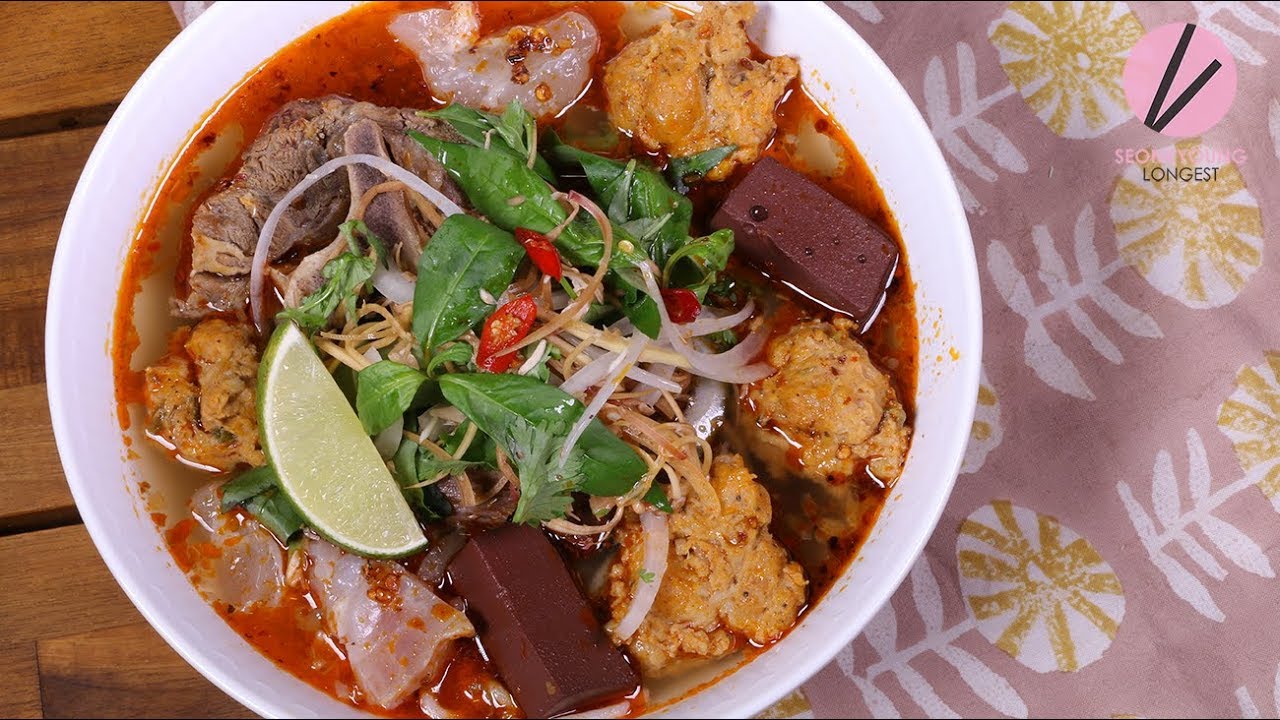
Bún Bò Huế Recipe: If you’re a fan of bold, spicy, and deeply aromatic noodle soups, then Bún Bò Huế is about to become your new obsession. This fiery Vietnamese classic isn’t just a dish—it’s an experience. Originating from the imperial city of Huế in central Vietnam, Bún Bò Huế is a delicious bowl of rice vermicelli noodles served in a robust beef and pork broth infused with lemongrass, shrimp paste, and a punchy chili oil.
While phở is the Vietnamese noodle soup that has taken the world by storm, Bún Bò Huế is its spicier, funkier cousin that deserves just as much love and fame. With layers of flavor, chewy noodles, tender meats, and fresh herbs, each spoonful is a ride through Vietnam’s culinary soul. And guess what? You don’t need to book a flight to Huế to enjoy it—just follow this step-by-step recipe guide and bring the heat home.
List of Ingredients You’ll Need
Creating a bowl of authentic Bún Bò Huế requires attention to detail and respect for traditional ingredients. It might look like a long list, but don’t worry—we’re breaking everything down to make it simple.
Main Ingredients
- Beef bones – Around 2 lbs, ideally marrow bones or knuckle bones. These form the rich, collagen-packed base of your broth.
- Beef shank or brisket – 1.5 to 2 lbs. This adds flavor to the broth and will be sliced thin for serving.
- Pork hock (giò heo) – 1 lb, chopped into thick slices. It provides extra richness and texture.
- Lemongrass – 4-5 stalks, bruised and cut into sections. This is the defining aroma of Bún Bò Huế.
- Fermented shrimp paste (mắm ruốc Huế) – 1 tbsp. Adds a deep umami flavor that’s hard to replicate.
- Chili oil (sa tế) – Homemade or store-bought, gives the soup its fiery kick.
- Fish sauce – For seasoning.
- Sugar or rock sugar – To balance the savory and salty notes.
- Salt – Essential for broth depth.
- Rice vermicelli noodles (bún) – The thick, round kind specific to this dish.
Garnishes and Sides
- Fresh herbs – Cilantro, mint, Thai basil. These brighten each bite.
- Bean sprouts – Adds crunch and freshness.
- Lime wedges – A squeeze wakes up the flavor.
- Shredded banana blossom and cabbage – Optional, but traditional and adds a nice crunch.
- Thinly sliced red onions and scallions – For garnish and bite.
- Fresh chili slices or chili sauce – For the brave.
Step-by-Step Guide to Make Bún Bò Huế
Step 1: Prepare and Clean the Bones
Rinse beef and pork bones thoroughly. Parboil them for 5–7 minutes to remove impurities, then discard the water and rinse again. This ensures a clean, clear broth.
Step 2: Make the Broth Base
Place the cleaned bones in a large pot, cover with fresh water, and bring to a gentle boil. Reduce to a simmer and let it cook slowly to extract deep flavor.
Step 3: Simmer the Proteins (Beef and Pork)
Add beef shank and pork hock to the pot. Simmer until tender but not falling apart. Remove the meats once cooked, let them cool, then set aside for slicing later.
Step 4: Add Lemongrass and Shrimp Paste
Bruise lemongrass stalks and add them to the broth. Dissolve shrimp paste in a little broth and stir it in carefully. This gives Bún Bò Huế its bold, signature aroma.
Step 5: Cook and Prepare the Noodles
Cook thick rice noodles according to package instructions. Rinse under cold water to stop cooking and keep them springy. Drain well and portion into bowls.
Step 6: Make the Signature Chili Oil (Sa Tế)
Heat oil in a pan and sauté chili flakes, minced garlic, and lemongrass until fragrant. Add annatto or chili oil for color. Set aside—this adds heat and richness.
Step 7: Skim the Broth and Adjust Seasoning
Skim off excess fat and foam. Season with fish sauce, salt, and a touch of sugar. Add some chili oil to the broth for spice and color.
Step 8: Prepare the Garnishes and Sides
Slice onions, chop herbs, and prepare lime wedges, bean sprouts, and cabbage. These fresh elements balance the rich broth.
Step 9: Slice the Meat and Organize the Bowl
Thinly slice the beef and pork. Arrange neatly over the noodles along with any optional toppings.
Step 10: Assemble and Serve
Ladle the hot broth over the noodles and meat. Top with chili oil and serve immediately with fresh herbs and sides.
Tips for the Perfect Bún Bò Huế
Getting Bún Bò Huế just right takes more than just following steps—it’s about mastering the little things that make a big difference in taste and texture. Here are some tried-and-true tips that will elevate your bowl from good to unforgettable:
- Use the right bones: Don’t skip the beef knuckle or pork hock. The collagen and marrow they release create that gelatinous, rich texture that gives the broth its signature mouthfeel.
- Simmer, don’t boil: A rolling boil makes the broth cloudy and rough. A gentle simmer brings out flavor slowly and clearly.
- Don’t overdo the shrimp paste: While it adds that umami funk, too much can overpower the dish. Always dissolve and strain it before adding to the pot.
- Balance is everything: The beauty of Bún Bò Huế is in the harmony of salty, spicy, sweet, and savory. Keep tasting and adjusting.
- Make chili oil separately: Adding raw chili directly to the broth dulls the flavor and can make the soup bitter. A good chili oil adds color, aroma, and heat in one drizzle.
Take your time with each step—rushing the process will compromise the deep, layered flavor this dish is known for.
Variations of Bún Bò Huế
While the traditional version is loaded with beef and pork, there are plenty of ways to tweak Bún Bò Huế to suit your diet, preferences, or pantry.
Bún Bò Huế Chay (Vegetarian Version)
- Replace the meat with mushrooms (shiitake, king oyster), tofu, and vegetable broth.
- Use soy sauce instead of fish sauce and miso paste to substitute shrimp paste.
- You can still use lemongrass, annatto oil, and chili oil to keep the signature flavors alive.
With Tendon, Blood Cake, or Pork Snout
- In Vietnam, many enjoy their bowl with extras like beef tendon, congealed pork blood (huyết), or slices of pork snout for added texture.
- These ingredients can be boiled separately and added just before serving.
Regional Twists
- Northern versions are less spicy.
- Southern Vietnam might add more sugar or serve it with a heavier hand of fresh herbs.
Bún Bò Huế can be as traditional or as creative as you want—as long as you don’t lose the soul of the dish: that fragrant, spicy, citrusy broth.
Storing and Reheating Leftovers
You made a big batch—now what?
- Broth: Strain it and let it cool completely. Store in airtight containers or freezer-safe bags. It’ll keep for up to 5 days in the fridge or 3 months in the freezer.
- Noodles: Store separately in the fridge in a sealed container. Reheat by briefly dipping in hot water.
- Meats: Store sliced meat in a separate airtight container. Reheat in broth or microwave gently.
Pro Tip: When reheating, always heat the broth on the stovetop and assemble the bowl fresh. This keeps everything tasting like it was just made.
Health Benefits of Bún Bò Huế Ingredients
Aside from being insanely delicious, Bún Bò Huế actually has some solid health benefits:
- Lemongrass: Known for its anti-inflammatory and antibacterial properties. It also aids digestion.
- Beef and Pork: High in protein and iron, supporting muscle growth and energy.
- Fresh Herbs: Basil, mint, and cilantro are rich in antioxidants and vitamins.
- Bone Broth: Packed with collagen, which can help support joints and skin health.
Sure, the dish is indulgent, but it’s also nourishing in all the right ways.
Common Mistakes to Avoid
Cooking Bún Bò Huế for the first time? Don’t worry—we’ve all made mistakes. Avoid these common pitfalls to make your bowl restaurant-quality from the start:
- Boiling instead of simmering: It makes the broth cloudy and greasy.
- Adding shrimp paste directly: Always dissolve and strain before adding to avoid lumps or overpowering taste.
- Skipping lemongrass: You just can’t call it Bún Bò Huế without it.
- Using the wrong noodles: Thin noodles will get mushy. Go for round, thick rice vermicelli made specifically for Bún Bò Huế.
- Underseasoning the broth: Don’t rely on just salt or fish sauce—balance it out with a bit of sugar, and keep tasting!
FAQs about Bún Bò Huế Recipe
1. Can I make Bún Bò Huế without shrimp paste?
Yes, but the flavor won’t be the same. If you’re avoiding it due to allergies or dietary reasons, try using miso paste for umami or anchovy paste for a milder substitute.
2. How long should I simmer the broth for best flavor?
At least 3 to 4 hours is ideal. For maximum flavor, some simmer it for up to 6 hours on low heat.
3. What’s the difference between Bún Bò Huế and Phở?
Phở uses flat rice noodles and a clear, mild broth. Bún Bò Huế has a spicier, more robust broth and thick round noodles, with a noticeable lemongrass aroma.
4. Is Bún Bò Huế spicy?
Yes, but the spice can be adjusted. Use less chili oil if you prefer it milder.
5. Can I freeze Bún Bò Huế?
Absolutely. Just freeze the broth separately from the noodles and meats. Reheat on the stovetop for best results.
Conclusion
There you have it—a full guide to crafting an unforgettable bowl of Bún Bò Huế. It’s more than just a spicy noodle soup; it’s a celebration of Vietnamese culture, flavor, and tradition. From the lemongrass-scented broth to the tender slices of beef and pork, every element in this dish plays a key role.
Yes, it takes time. Yes, there are many ingredients. But once you take that first spicy, savory, herb-filled bite—you’ll know it was all worth it.
So go ahead, gather your ingredients, fire up your stockpot, and dive into one of Vietnam’s most treasured dishes. Whether you’re impressing guests or just treating yourself, Bún Bò Huế never disappoints.