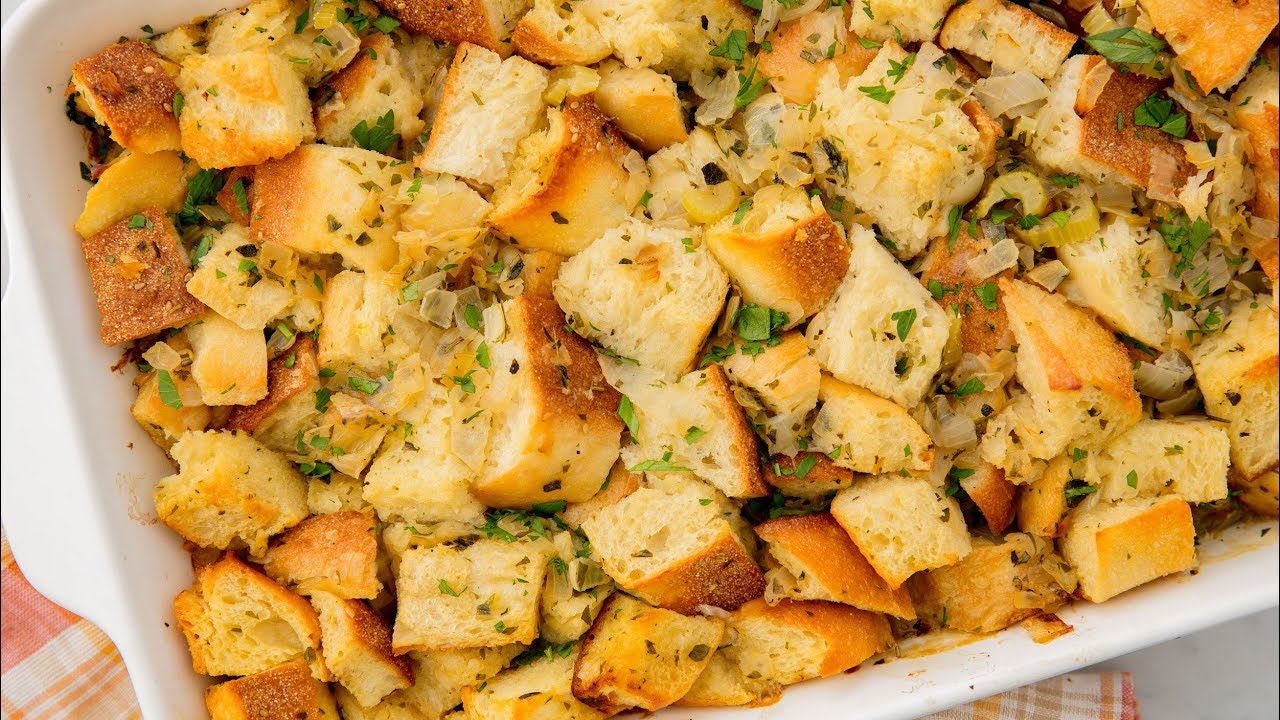
Bread Stuffing Recipe: Bread stuffing is one of those side dishes that instantly makes a meal feel like a celebration. Whether it’s Thanksgiving, Christmas, or simply a Sunday family dinner, the savory mix of bread, herbs, vegetables, and broth is a comforting classic.
This dish is incredibly versatile—you can make it with whatever bread you have, add meats like sausage or turkey, or keep it simple and vegetarian.
What is Bread Stuffing?
Bread stuffing, sometimes called dressing (depending on the region), is essentially a seasoned bread mixture that’s baked either inside a turkey or separately in a dish. The foundation is bread cubes that absorb a flavorful broth, combined with sautéed vegetables like onions and celery, plus fresh or dried herbs for depth.
A Brief History of Stuffing
Stuffing dates back thousands of years, with variations found in ancient Roman, Middle Eastern, and European cooking. Traditionally, it was a way to stretch ingredients and make meats more flavorful and moist. Over time, bread became the most common base, particularly in Western cooking.
Why Homemade Stuffing Beats Store-Bought
While boxed stuffing mixes are convenient, nothing compares to the flavor and texture of homemade stuffing. You control the seasoning, the bread type, and the level of moisture. Plus, the aroma of freshly baked stuffing filling the kitchen is a holiday memory in itself.
Essential Ingredients for Bread Stuffing
Getting the ingredients right is crucial for perfect stuffing. Let’s break it down.
Choosing the Right Bread
The bread is the star of the show, so choose wisely. French bread, sourdough, Italian bread, or even cornbread works beautifully. Avoid overly soft sandwich bread—it can turn mushy. The key is to use slightly stale bread or dry it in the oven for a firmer texture.
Vegetables and Aromatics
The classic base is onions and celery, which add both flavor and moisture. Garlic is optional but can bring a warm, savory depth. Carrots or leeks can be used for a twist. Always sauté these ingredients to release their flavors before mixing with the bread.
Herbs and Spices
Traditional herbs include sage, thyme, rosemary, and parsley. These bring a fragrant, earthy note that pairs perfectly with roasted meats. A pinch of nutmeg can add subtle warmth, and black pepper is essential.
Broth and Liquids
Chicken or turkey broth is the most common choice, but vegetable broth works for vegetarian versions. You want just enough liquid to moisten the bread without drowning it—too much will make it soggy.
Tools and Equipment You’ll Need
You don’t need fancy gadgets for stuffing, but the right tools make the job easier.
Basic Kitchen Tools
- Cutting board and sharp knife for vegetables and bread.
- Large skillet or sauté pan for cooking the aromatics.
- Mixing bowls for combining ingredients.
- Baking dish or casserole dish for cooking the stuffing.
Optional Tools for Extra Flavor
- Cast iron skillet for baking—gives a crispy edge.
- Oven-safe thermometer to ensure even cooking.
- Food processor for quick bread cubing.
Preparing the Bread for Stuffing
The bread prep stage makes all the difference in texture.
How to Dry Bread for Stuffing
Cut your bread into ½- to 1-inch cubes, then spread them in a single layer on a baking sheet. Bake at 250°F (120°C) for 30–45 minutes, stirring occasionally, until completely dry but not browned.
Cutting Bread into Perfect Cubes
A serrated bread knife is your best friend here—it cuts cleanly without squishing the bread. Try to keep cubes uniform so they cook evenly.
Storing Prepared Bread Cubes
Once dried, store bread cubes in an airtight container at room temperature for up to a week, or freeze for longer storage.
Step-by-Step Cooking Instructions
This is where the magic happens.
Sautéing Vegetables
Heat butter in a large skillet, add chopped onions and celery, and cook until soft and translucent. Add garlic for the last minute of cooking. This process builds the base flavor for your stuffing.
Mixing the Ingredients
In a large bowl, combine bread cubes, sautéed vegetables, herbs, and seasoning. Slowly pour broth over the mixture, tossing gently until evenly moistened.
Baking the Stuffing
Transfer to a greased baking dish, cover with foil, and bake at 350°F (175°C) for about 30 minutes. Remove foil and bake another 15–20 minutes for a golden, crispy top.
Alternative Cooking Methods
You can cook stuffing inside poultry, in a slow cooker, or even in muffin tins for single servings.
Variations of Bread Stuffing Recipes
Bread stuffing is endlessly adaptable. You can change flavors, textures, and even cooking styles to suit your preferences or the season.
Classic Thanksgiving Stuffing
This is the version most people picture—traditional bread cubes, sautéed onions and celery, fresh herbs like sage and thyme, and turkey broth. Sometimes, chopped hard-boiled eggs or a touch of poultry seasoning are added for extra richness. Baking it in a casserole dish gives it a crispy top and moist center.
Herb and Garlic Stuffing
If you want a bolder flavor, use roasted garlic and fresh herbs like parsley, rosemary, and oregano. This variation pairs beautifully with roasted chicken or lamb and works as a hearty vegetarian side.
Sausage and Apple Stuffing
Adding browned sausage brings a savory, meaty punch, while diced apples add a hint of sweetness. This is great for pork roasts or autumn meals where you want a sweet-savory balance.
Vegetarian and Vegan Options
Skip the meat and use vegetable broth. Add mushrooms, dried cranberries, or nuts for texture. Vegan versions can use olive oil or plant-based butter instead of dairy butter.
Tips for Perfect Bread Stuffing Every Time
Even a simple recipe can go wrong without a few golden rules.
Avoiding Soggy Stuffing
Too much liquid is the number one cause of soggy stuffing. Always add broth gradually, letting the bread absorb it before adding more.
Balancing Flavors
Taste your mixture before baking (without raw eggs if used). Adjust salt, pepper, and herbs to ensure a well-rounded flavor.
Getting the Perfect Texture
For a balance of crispy edges and a soft interior, bake covered for most of the cooking time, then uncover to brown the top.
Storing and Reheating Stuffing
Stuffing is just as delicious the next day—sometimes even better.
Refrigeration and Freezing
Cool leftovers quickly, store in airtight containers, and refrigerate for up to 4 days. For longer storage, freeze in freezer-safe bags for up to 2 months.
Best Reheating Methods
Reheat in the oven at 325°F (163°C) covered with foil to retain moisture. If reheating from frozen, thaw overnight in the fridge first.
Common Mistakes to Avoid
Using Fresh Bread Without Drying
Fresh bread turns mushy when mixed with liquid. Always dry it out first.
Over- or Under-seasoning
Stuffing can taste bland without enough seasoning, but too much salt can overpower it—especially with salty broths.
Overcooking or Undercooking
Overbaking can make stuffing dry, while underbaking leaves the middle soggy. Aim for an internal temperature of 165°F (74°C).
Serving Suggestions and Pairings
Stuffing isn’t just for turkey—it’s a versatile side dish.
Pairing with Main Dishes
- Roast turkey, chicken, or duck
- Pork tenderloin or chops
- Beef roasts
Stuffing as a Standalone Dish
Serve with a green salad or roasted vegetables for a light vegetarian meal.
Nutritional Information
Stuffing is delicious, but it’s important to know what you’re eating—especially if you’re watching calories or dietary needs.
Calories and Macronutrients
A typical serving of bread stuffing (about 1 cup) contains around 200–300 calories, depending on ingredients. Most of the calories come from carbohydrates in the bread and fats from butter or oil. Protein content is usually modest unless meat or nuts are added.
Average nutritional breakdown per serving:
| Nutrient | Amount (approx.) |
|---|---|
| Calories | 220–300 kcal |
| Carbohydrates | 30–35g |
| Protein | 5–8g |
| Fat | 8–12g |
| Fiber | 2–4g |
| Sodium | 500–700mg |
Healthier Alternatives
- Whole-grain bread: Adds fiber and reduces refined carbs.
- Low-sodium broth: Helps control salt intake.
- Less butter: Use olive oil or a blend of butter and broth.
- Add vegetables: Increases vitamins and minerals while reducing calorie density.
FAQs about Bread Stuffing Recipe
1. Can I make stuffing ahead of time?
Yes, you can prepare the mixture up to a day in advance and refrigerate it. Just bake it before serving for the freshest taste.
2. How do I make stuffing gluten-free?
Use gluten-free bread and check that your broth and seasonings are gluten-free.
3. Can I stuff the turkey directly?
Yes, but make sure the stuffing reaches 165°F (74°C) to ensure food safety.
4. How long does stuffing last in the fridge?
Stored properly, it will keep for up to 4 days.
5. What’s the difference between dressing and stuffing?
Stuffing is cooked inside poultry, while dressing is baked separately in a dish—though the terms are often used interchangeably.
Conclusion
Bread stuffing is more than just a side dish—it’s a tradition, a comfort food, and a recipe that invites creativity. Whether you stick to the classic version or experiment with bold flavors, the key is balancing moisture, texture, and seasoning. With the tips, techniques, and variations shared in this guide, you’re equipped to make stuffing that will steal the show at any meal.
So next holiday—or any time you want to serve something special—reach for your bread cubes, fresh herbs, and a splash of broth. You might just find that your homemade stuffing becomes the most requested dish at your table.