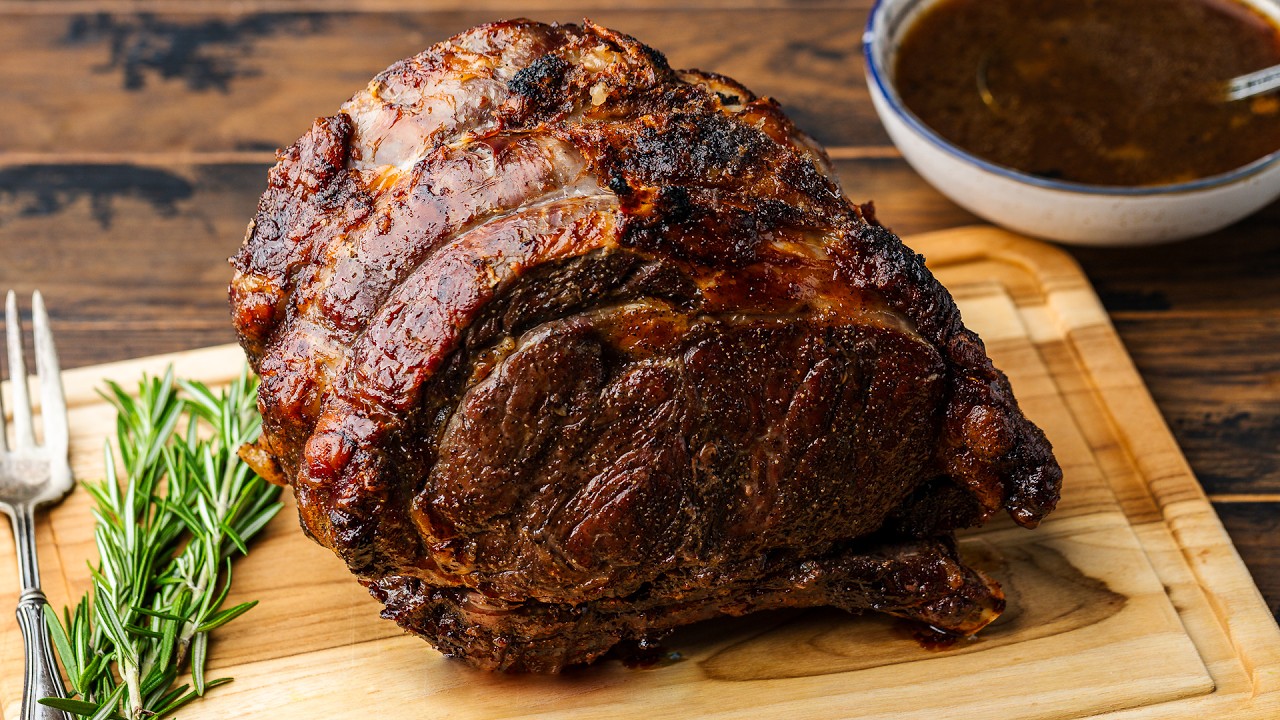
Boneless Rib Roast Recipe: A boneless rib roast is one of those showstopper dishes that instantly transforms an ordinary dinner into a memorable feast. Known for its rich marbling, tender texture, and luxurious flavor, this cut of beef is a favorite centerpiece for holidays, celebrations, and special gatherings. Unlike bone-in roasts, a boneless rib roast is easier to carve, requires less cooking time, and offers a more consistent texture throughout the meat.
If you’ve never cooked one before, you might feel a little intimidated — after all, it’s not an inexpensive cut, and no one wants to ruin such a beautiful piece of meat. But here’s the good news: cooking a perfect boneless rib roast doesn’t require chef-level skills, just the right preparation, timing, and attention to detail. When done right, the result is a juicy, melt-in-your-mouth roast with a golden-brown crust and savory aroma that fills the entire kitchen.
Choosing boneless also has its practical perks. Without the bones, you get more meat per pound, making it easier to estimate portion sizes and feed a crowd. Plus, slicing is a breeze — you can cut perfect, uniform slices without worrying about working around bones. Whether you’re serving it alongside creamy mashed potatoes, roasted vegetables, or Yorkshire pudding, this roast is the star of the show.
This guide will walk you through everything: from selecting the right cut, prepping and seasoning, choosing your cooking method, and finally serving it to perfection. We’ll also cover tips for making flavorful au jus, the best sides to pair, and how to store leftovers without losing that delicious tenderness. By the end, you’ll have the confidence to prepare a boneless rib roast that rivals any steakhouse offering — right in your own kitchen.
Selecting the Perfect Cut of Boneless Rib Roast
Selecting the right cut is the first and most important step to making a perfect boneless rib roast. Start with understanding beef grades: Prime, Choice, and Select. Prime-grade beef is the highest quality, with abundant marbling that results in superior tenderness and flavor. It’s often found in high-end butchers or specialty markets. Choice-grade is still excellent, with slightly less marbling, and it’s more widely available in supermarkets. Select-grade has the least marbling, making it leaner but also less tender — not the best choice for such a centerpiece dish.
When it comes to size, you’ll want to estimate about ½ to ¾ pound per person for a boneless roast. For example, if you’re hosting 8 guests, a 4- to 6-pound roast should be perfect. Keep in mind that leftovers are never a bad thing — leftover rib roast can be transformed into sandwiches, stir-fries, or beef hash.
If you can, purchase from a trusted butcher rather than a prepackaged option from the grocery store. A butcher can trim the roast to your liking, advise on cooking times, and even recommend the freshest cuts available. You’ll want a roast with a bright, cherry-red color and creamy white marbling throughout. Avoid cuts with excessive surface moisture or darkened edges, as these can indicate age or improper storage.
Another tip: ask your butcher for a center-cut rib roast for the most uniform cooking. The ends tend to cook faster, so the center cut ensures even doneness from edge to edge. Whether you choose Prime or Choice, remember — the better the quality of the meat, the less you have to do to make it shine.
Essential Tools and Ingredients
Before you begin cooking, gather all the necessary tools and ingredients. The right equipment makes preparation easier and ensures a perfect roast.
Essential Tools:
- Roasting Pan with Rack – Allows heat to circulate evenly around the roast.
- Meat Thermometer – The single most important tool for achieving perfect doneness.
- Sharp Carving Knife – For smooth, even slices.
- Cutting Board – Preferably with grooves to catch juices.
- Tongs – To handle the roast without piercing it and losing juices.
Key Ingredients:
- Boneless Rib Roast (size depending on guests)
- Kosher Salt & Freshly Ground Black Pepper – The foundation of seasoning.
- Garlic – Fresh cloves for aromatic depth.
- Olive Oil or Unsalted Butter – Helps create a rich crust.
- Fresh Herbs – Rosemary, thyme, and parsley add fragrance.
Optional Add-ons for Extra Flavor:
- Mustard rub for a tangy crust.
- Smoked paprika for depth.
- Crushed red pepper for a subtle kick.
Having everything ready before you start means you can focus entirely on cooking without last-minute scrambles. A rib roast is too valuable to risk on a disorganized kitchen.
Preparing the Boneless Rib Roast
Preparation begins with trimming. Even if your butcher has prepped it, you may want to trim excess fat, leaving about ¼ inch to baste the meat naturally during roasting. For an evenly shaped roast, you can also tie it with kitchen twine at 2-inch intervals — this helps maintain a uniform shape for even cooking.
Next, seasoning. For the best results, season generously with kosher salt and black pepper at least 12 to 24 hours before cooking. This dry-brining process allows salt to penetrate deeply, enhancing flavor and tenderness. If you want to add garlic and herbs, mix them with olive oil or butter to create a paste, then rub it all over the roast.
Before cooking, let the roast come to room temperature for at least 1–2 hours. This ensures more even cooking, preventing the outer layer from overcooking while the inside remains cold.
Some chefs prefer a marinade with wine, Worcestershire sauce, or soy sauce for added complexity, but with a premium cut like rib roast, simplicity often wins. The natural flavor is the star — seasoning should enhance, not overpower, the meat.
Cooking Methods for Boneless Rib Roast
When it comes to cooking, you have two primary options: traditional oven roasting or the reverse sear method.
Traditional Oven Roasting involves starting at a high temperature (around 450°F) for 15–20 minutes to develop a crust, then lowering the heat to 325°F until the desired doneness is reached.
Reverse Sear flips the process: cook the roast low and slow at 225–250°F until it’s just shy of the target temperature, then finish with a high-heat sear in the oven or on a skillet for a crisp exterior. This method gives you more control over doneness and often results in a more even pink center.
No matter which method you choose, a meat thermometer is essential. Internal temperatures to remember:
- Rare: 120–125°F
- Medium-Rare: 130–135°F
- Medium: 140–145°F
Always remember — the roast continues to cook slightly during resting, so remove it about 5°F before your target temperature.
Step-by-Step Boneless Rib Roast Recipe
Making a boneless rib roast might sound like a daunting culinary adventure, but with the right instructions, it’s a surprisingly manageable process. This step-by-step guide will walk you through every stage — from prep to carving — ensuring your roast turns out juicy, flavorful, and downright impressive.
Step 1 – Season the Roast:
Start by patting the roast dry with paper towels. This helps the seasoning stick and promotes browning. Rub the meat all over with olive oil or softened butter. Sprinkle generously with kosher salt and freshly ground black pepper, making sure to coat all sides. If you’re using garlic and herbs, rub them in now. For best results, cover the seasoned roast loosely with plastic wrap and refrigerate for at least 12 hours, preferably overnight.
Step 2 – Preheat the Oven:
About two hours before cooking, take the roast out of the refrigerator to come to room temperature. Preheat your oven to 450°F (232°C) for the initial sear.
Step 3 – Roast the Meat:
Place the roast fat-side up on a rack inside a roasting pan. Slide it into the oven and roast at high heat for 15–20 minutes to form a crust. Then, lower the oven temperature to 325°F (163°C) and continue cooking until your desired internal temperature is reached. Use a meat thermometer to monitor — this is crucial for accuracy.
Step 4 – Rest the Roast:
Once the roast is 5°F below your target doneness, remove it from the oven. Tent loosely with foil and let it rest for at least 20–30 minutes. This allows the juices to redistribute, keeping the meat tender and moist.
Step 5 – Carve and Serve:
Using a sharp carving knife, slice the roast into ½–¾ inch thick slices. Serve immediately with your choice of sides and sauces.
Cooking Time Guide by Weight:
| Roast Weight | Rare (120–125°F) | Medium Rare (130–135°F) | Medium (140–145°F) |
|---|---|---|---|
| 4 lbs | 1 hr 15 min | 1 hr 25 min | 1 hr 35 min |
| 6 lbs | 1 hr 40 min | 1 hr 55 min | 2 hr 10 min |
| 8 lbs | 2 hr 05 min | 2 hr 25 min | 2 hr 45 min |
This timetable is approximate; always rely on your thermometer for precision.
Making the Perfect Au Jus or Gravy
A great rib roast deserves an equally amazing sauce, and nothing pairs better than a rich, savory au jus or creamy gravy. Both options are made from the pan drippings left behind after roasting — those browned bits are pure flavor gold.
For Classic Au Jus:
- Remove the roast from the pan and pour off most of the fat, leaving about 1–2 tablespoons.
- Place the roasting pan over medium heat on the stove.
- Add 1 cup of beef stock or broth, scraping up any browned bits.
- Simmer for 5–7 minutes until slightly reduced.
- Taste and adjust seasoning with salt and pepper. Serve warm alongside the roast.
For Creamy Gravy:
- Follow the same initial steps as au jus, but sprinkle in 2 tablespoons of flour after removing the fat. Stir to create a roux.
- Gradually whisk in 1 cup of beef stock and continue cooking until thickened.
- For extra richness, stir in a splash of heavy cream before serving.
Both options can be made in advance and gently reheated before serving, but au jus is best fresh for maximum flavor.
Resting and Carving Your Rib Roast
Resting isn’t just a suggestion — it’s the key to juicy meat. When a roast comes out of the oven, the juices are concentrated toward the center. If you slice into it immediately, all that liquid will run out, leaving the meat drier than you’d like. Allowing the roast to rest for 20–30 minutes lets those juices redistribute evenly.
To carve, remove any kitchen twine, then slice against the grain into even portions. For a showstopping presentation, fan the slices slightly on a platter and garnish with fresh rosemary or thyme sprigs. You can also drizzle a little au jus over the top for an inviting sheen.
Best Side Dishes to Pair with Boneless Rib Roast
A rib roast is rich and flavorful, so you’ll want sides that complement — not overpower — it.
Classic Potato Sides:
- Creamy mashed potatoes with roasted garlic
- Crispy roasted potatoes with rosemary
- Potato gratin with a golden cheese crust
Vegetable Pairings:
- Honey-glazed carrots
- Garlic sautéed green beans
- Roasted Brussels sprouts with balsamic glaze
Bread and Salads:
- Warm dinner rolls or crusty French bread
- Caesar salad with homemade dressing
- Simple arugula salad with lemon vinaigrette
A well-rounded plate with a tender roast, flavorful sides, and a rich sauce is the ultimate comfort meal for any celebration.
Storage and Reheating Tips
When you’ve invested time (and money) into making the perfect boneless rib roast, the last thing you want is for the leftovers to go to waste. With proper storage and reheating, your roast can taste nearly as good the next day — or even several days later.
Storing Leftovers:
- Refrigeration: Wrap leftover slices tightly in foil or plastic wrap, or place them in an airtight container. Store in the refrigerator for up to 4 days.
- Freezing: For longer storage, wrap slices in foil, then place them in a freezer-safe bag. Remove as much air as possible before sealing. Frozen rib roast can last up to 3 months without losing quality.
Reheating Without Drying Out:
- Oven Method: Preheat your oven to 250°F (120°C). Place slices in a baking dish with a few tablespoons of beef broth or au jus. Cover with foil and warm until heated through (about 20–30 minutes).
- Stovetop Method: Heat a skillet over low heat with a splash of broth, place the slices in, cover, and gently warm for a few minutes per side.
- Avoid the Microwave: While quick, microwaving often makes beef rubbery and unevenly heated. Use it only for very small portions and at low power.
Creative Uses for Leftovers:
- Steak Sandwiches: Layer slices on crusty bread with horseradish sauce.
- Beef Stir-Fry: Thinly slice and toss into a vegetable stir-fry.
- Breakfast Hash: Chop and mix with potatoes, onions, and peppers for a hearty breakfast.
By handling leftovers carefully, you can enjoy the fruits of your labor all over again — without sacrificing flavor or texture.
Nutritional Information
A boneless rib roast is a decadent dish, but it’s also a rich source of protein, vitamins, and minerals. The exact nutritional profile will vary depending on portion size, preparation, and fat content, but here’s a general guide per 3-ounce cooked serving:
- Calories: ~280–320
- Protein: 22–24g
- Fat: 20–24g (including ~8–10g saturated fat)
- Carbohydrates: 0g
- Iron: ~15% of the daily recommended intake
- Vitamin B12: ~70% of daily needs
Health Benefits:
- High-Quality Protein: Supports muscle repair and immune function.
- Iron & Zinc: Important for energy production and overall health.
- Vitamin B12: Essential for nerve function and red blood cell formation.
Considerations: While rib roast is nutrient-dense, it’s also high in saturated fat, so it’s best enjoyed as part of a balanced diet. Pairing it with fiber-rich vegetables and lighter sides can help balance the meal.
FAQs about Boneless Rib Roast
1. Can I Cook It Ahead of Time?
Yes. You can cook the roast earlier in the day, let it rest, and then reheat it gently before serving. Just keep in mind that reheating can slightly affect juiciness.
2. How Do I Keep It Moist?
The key is to avoid overcooking and to let it rest properly. Using a meat thermometer and covering it loosely with foil during resting helps lock in moisture.
3. Can I Freeze Cooked Rib Roast?
Absolutely. Wrap slices tightly and store in a freezer-safe bag for up to 3 months. Thaw in the refrigerator overnight before reheating.
4. Do I Need to Marinate It?
Not necessarily. With a high-quality cut like rib roast, simple seasoning with salt, pepper, garlic, and herbs is often enough.
5. What’s the Difference Between Rib Roast and Prime Rib?
They’re essentially the same cut of meat — “prime rib” often refers to a bone-in roast, while “boneless rib roast” is simply without the bones.
Conclusion
A boneless rib roast is more than just a meal — it’s an experience. From the first slice revealing its rosy, tender center to the last bite paired with rich au jus, this dish delivers on both flavor and presentation. While it may seem like a special-occasion indulgence, mastering the preparation means you can enjoy it any time you want to impress your guests (or just treat yourself).
With the right cut, proper seasoning, careful cooking, and patience during resting, you’ll end up with a roast that rivals any fine dining experience. And with so many delicious ways to enjoy leftovers, it’s a gift that keeps on giving.
So, the next time you want to make a meal truly memorable, follow this guide — your taste buds and your guests will thank you.