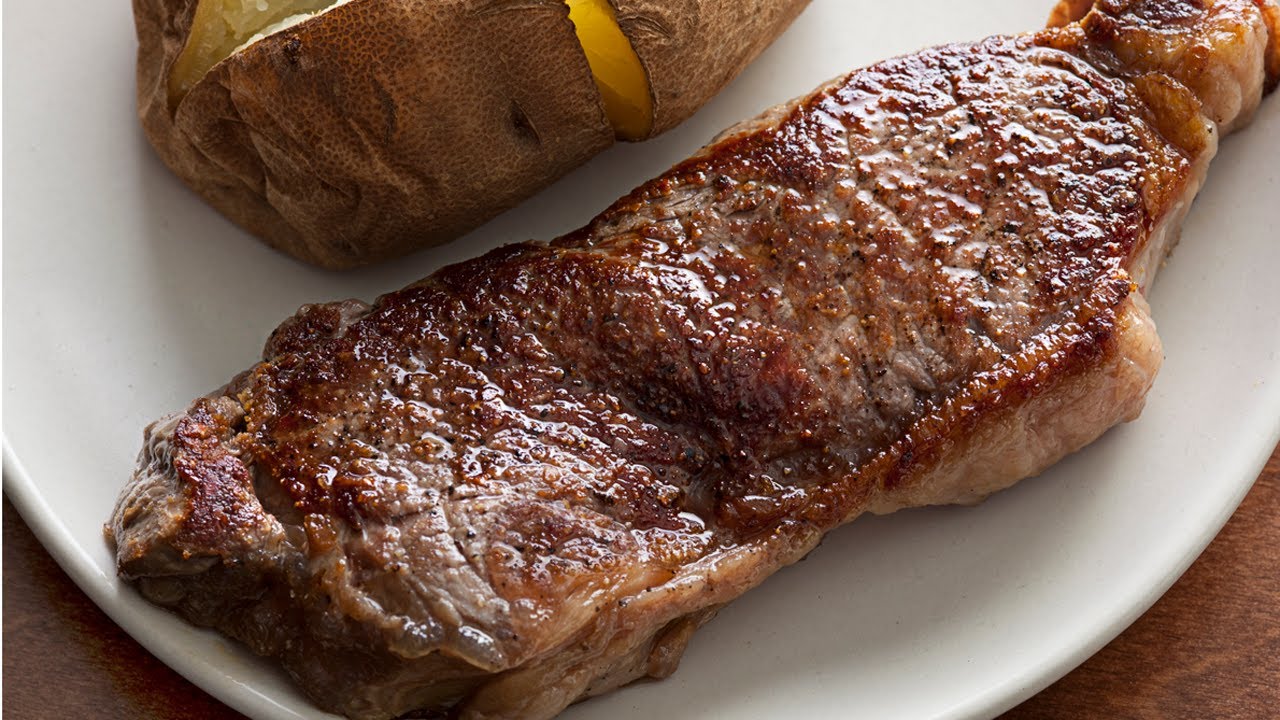
Beef Strip Steak Recipe: There’s something magical about a perfectly cooked beef strip steak. That sizzling sound when it hits the pan? Pure music. The golden crust? A masterpiece. The juicy center? Absolute heaven.
If you’ve ever wondered how restaurants achieve that deep, caramelized crust with a tender interior, you’re in the right place. This guide walks you through everything — from choosing the right cut to mastering the perfect sear.
Ready to cook steak like a pro? Let’s dive in.
What Is Beef Strip Steak?
Beef strip steak, often called New York strip, comes from the short loin section of the cow. This area doesn’t do much work, which means the meat stays tender.
It’s known for:
- Excellent marbling
- Bold beefy flavor
- Firm yet tender texture
It’s the sweet spot between ribeye (fattier) and filet mignon (leaner).
Why Strip Steak Is a Premium Cut
Strip steak offers the perfect balance of flavor and texture. It’s rich but not overwhelming. Tender but still meaty. Think of it as the confident middle child — not too flashy, not too subtle.
It’s a favorite in steakhouses because it cooks evenly and delivers consistent results.
Choosing the Best Strip Steak
When shopping, look for:
- Bright red color
- Even marbling (thin white streaks of fat)
- At least 1 to 1.5 inches thick
Avoid steaks that look gray or have large chunks of fat.
Thickness matters. A thin steak cooks too fast and dries out.
Understanding Steak Grades
Beef is graded based on marbling:
- Prime – Highest quality, most marbling
- Choice – Great balance of quality and price
- Select – Leaner and less tender
For best results, go with Prime or Choice.
Ingredients You’ll Need
Here’s everything required for a classic beef strip steak:
Main Ingredients
- 2 beef strip steaks (1–1.5 inches thick)
- 2 tablespoons olive oil or high-smoke-point oil
- 2 teaspoons kosher salt
- 1 teaspoon freshly ground black pepper
Optional Flavor Boosters
- 2 tablespoons unsalted butter
- 3 garlic cloves, smashed
- 2 sprigs fresh rosemary or thyme
Simple ingredients. Big flavor.
Essential Kitchen Tools
- Cast iron skillet (highly recommended)
- Tongs
- Meat thermometer
- Paper towels
- Cutting board
- Sharp knife
Cast iron retains heat beautifully — that’s how you get that crust.
Preparing Your Steak Properly
Before cooking:
- Remove steak from fridge 30–45 minutes early.
- Pat dry thoroughly with paper towels.
- Season generously with salt and pepper.
Dry surface = better crust.
Cold steak = uneven cooking.
Think of prep like warming up before a workout.
Step-by-Step Guide to Cooking Beef Strip Steak
Step 1 – Bring to Room Temperature
Remove the strip steak from the refrigerator 30–45 minutes before cooking. This helps it cook evenly. Pat it dry thoroughly with paper towels to ensure a good sear.
Step 2 – Season Generously
Season both sides with salt and freshly ground black pepper. Keep it simple to let the natural flavor of the steak shine. You may add a touch of garlic powder if desired.
Step 3 – Preheat the Pan or Grill
Heat a heavy skillet (preferably cast iron) or grill over medium-high to high heat. Add a small amount of oil with a high smoke point. The surface should be very hot before placing the steak on it.
Step 4 – Sear the Steak
Place the steak on the hot surface and cook without moving it for about 3–4 minutes. Flip and cook for another 3–4 minutes for medium-rare. Adjust time depending on thickness and desired doneness.
Step 5 – Check Doneness
Use a meat thermometer for accuracy: 130–135°F for medium-rare, 140–145°F for medium. Avoid overcooking, as strip steak can lose juiciness.
Step 6 – Rest the Steak
Transfer the steak to a plate and loosely tent with foil. Let it rest for 5–10 minutes to allow juices to redistribute.
Step 7 – Slice and Serve
Slice against the grain for maximum tenderness. Serve immediately with your favorite sides and enjoy.
Grilled Strip Steak Method
- Preheat grill to high (450–500°F).
- Oil grates.
- Grill 4–5 minutes per side.
- Rest before slicing.
Charcoal adds smoky depth. Gas grill offers control.
Oven-Finished Strip Steak Method
Perfect for thick steaks.
- Sear 2–3 minutes per side.
- Transfer skillet to 400°F oven.
- Cook until desired temperature.
How to Achieve the Perfect Doneness
Touch test trick:
- Soft like cheek = Rare
- Slight resistance = Medium rare
- Firm like forehead = Well done
Thermometer is still best.
Resting and Slicing the Steak
Always slice against the grain.
This shortens muscle fibers and improves tenderness.
Think of cutting rope into smaller pieces.
Best Sauces and Toppings
- Garlic herb butter
- Chimichurri
- Peppercorn sauce
- Blue cheese crumble
But honestly? A great steak barely needs anything.
Side Dishes That Pair Perfectly
- Garlic mashed potatoes
- Roasted asparagus
- Creamed spinach
- Caesar salad
Balance richness with freshness.
Storage and Reheating Tips
Store leftovers in airtight container for up to 3 days.
Reheat gently in skillet over low heat.
Avoid microwave — it toughens meat.
Common Mistakes to Avoid
- Cooking cold steak
- Flipping too often
- Overcooking
- Skipping resting
Steak rewards patience.
Pro Chef Tips for Restaurant-Quality Results
- Use high heat
- Season generously
- Don’t overcrowd pan
- Invest in thermometer
Precision beats guesswork.
FAQs about Beef Strip Steak Recipe
1. How long should I cook a strip steak for medium rare?
For a 1-inch thick strip steak, cook about 4–5 minutes per side over high heat. This typically brings the internal temperature to 130–135°F, which is ideal for medium-rare. Always use a meat thermometer for the most accurate results.
2. Should I marinate strip steak?
Marinating is not necessary. Strip steak is naturally flavorful and tender, especially when properly cooked. Simple seasoning with salt and black pepper is often all you need to highlight its rich beef taste.
3. Why is my steak tough?
Toughness usually results from overcooking or slicing incorrectly. Cooking beyond medium can dry out the meat. Also, always slice against the grain to shorten muscle fibers and improve tenderness.
4. Can I cook strip steak from frozen?
It is possible to cook a steak from frozen, but the results are generally better when fully thawed. Thawing ensures even cooking and better texture. For best results, thaw the steak in the refrigerator before cooking.
5. What oil is best for searing steak?
Choose oils with a high smoke point, such as avocado oil or canola oil. These oils can handle high heat without burning, helping you achieve a perfect, golden-brown crust.
Conclusion
Cooking beef strip steak isn’t complicated — but it does require attention.
The difference between average and unforgettable comes down to heat, timing, and patience.
Master these fundamentals, and you’ll never fear cooking steak again. Whether pan-seared, grilled, or oven-finished, strip steak delivers bold flavor and satisfying texture every single time.
Now grab your skillet and make magic happen.