Beef Brisket Smoker Recipe: If grilling burgers is like riding a bicycle, smoking brisket is like flying a plane. It takes patience, precision, and a little bit of courage. But once you master it? You’ll never look at BBQ the same way again.
Why Brisket Is the King of BBQ
Brisket isn’t just meat. It’s a statement. It’s the centerpiece at Texas cookouts. It’s what pitmasters wake up at 3 a.m. for. When done right, it’s tender, smoky, juicy, and so flavorful it practically melts in your mouth.
What Makes Smoked Brisket Special
Low and slow cooking transforms a tough cut of meat into something magical. The smoke penetrates deep. The fat renders slowly. The bark forms on the outside like a savory crust. It’s a process. And trust me, it’s worth it.
Understanding Beef Brisket
Before we fire up the smoker, let’s talk meat.
The Two Main Cuts – Flat vs Point
A whole brisket (also called a “packer brisket”) has two parts:
- Flat (First Cut): Leaner, slices beautifully.
- Point (Second Cut): Fattier, more marbled, perfect for burnt ends.
For best results, buy a whole packer brisket.
Choosing the Right Brisket
Look for:
- Good marbling (thin white lines of fat inside)
- Flexible feel when you lift it
- Even thickness
USDA Grades Explained
- Select: Lean, less marbling
- Choice: Great balance (recommended)
- Prime: Maximum marbling, premium quality
Go with Choice or Prime for best results.
How Much Brisket Per Person?
Plan for about ½ pound per person (raw weight). Brisket shrinks during cooking.
Ingredients You’ll Need
Keep it simple. Brisket doesn’t need fancy tricks.
The Brisket
- 10–14 lb whole packer brisket
Simple Texas-Style Rub
- 2 tbsp coarse black pepper
- 2 tbsp kosher salt
- 1 tbsp garlic powder
- 1 tbsp onion powder
- 1 tsp paprika (optional)
That’s it. Simple wins.
Optional Additions
- Brown sugar (for sweetness)
- Cayenne pepper (for heat)
Spritz Ingredients
- Apple cider vinegar
- Water or beef broth
Tools and Equipment Required
Choosing the Right Smoker
You can use:
- Offset smoker
- Pellet smoker
- Charcoal smoker
- Electric smoker
Each works. Consistency is what matters.
Essential Accessories
- Meat thermometer (mandatory)
- Butcher paper or foil
- Sharp slicing knife
- Spray bottle
- Heat-resistant gloves
Step-by-Step Guide to Smoking Beef Brisket
Now we get serious.
Step 1 – Trimming the Brisket
Start with a whole brisket (packer cut). Trim excess hard fat, leaving about ¼ inch of fat cap. Remove any silver skin and uneven edges. Proper trimming helps the brisket cook evenly and allows seasoning to penetrate.
Step 2 – Applying the Rub
Pat the brisket dry. Generously apply a simple rub of kosher salt and coarse black pepper (classic Texas style), or add garlic powder and paprika for extra depth. Coat all sides evenly and press the seasoning into the meat. Let it sit at room temperature for 30–60 minutes.
Step 3 – Preheating the Smoker
Preheat your smoker to 225–250°F (107–121°C). Use hardwood like oak, hickory, or mesquite for rich flavor. Maintain steady heat before placing the brisket inside.
Step 4 – Placing the Brisket in the Smoker
Place the brisket fat-side up (or down depending on heat source) on the smoker grate. Insert a meat thermometer probe into the thickest part of the flat.
Step 5 – Managing Temperature
Keep the smoker temperature consistent. Avoid opening the lid frequently, as this causes heat loss. Low and slow is key—expect about 1 to 1.5 hours per pound.
Step 6 – The Stall Explained
Around 150–170°F internal temperature, the brisket may “stall,” where the temperature stops rising. This happens due to moisture evaporation cooling the meat. Be patient—this stage is normal.
Step 7 – Wrapping the Brisket
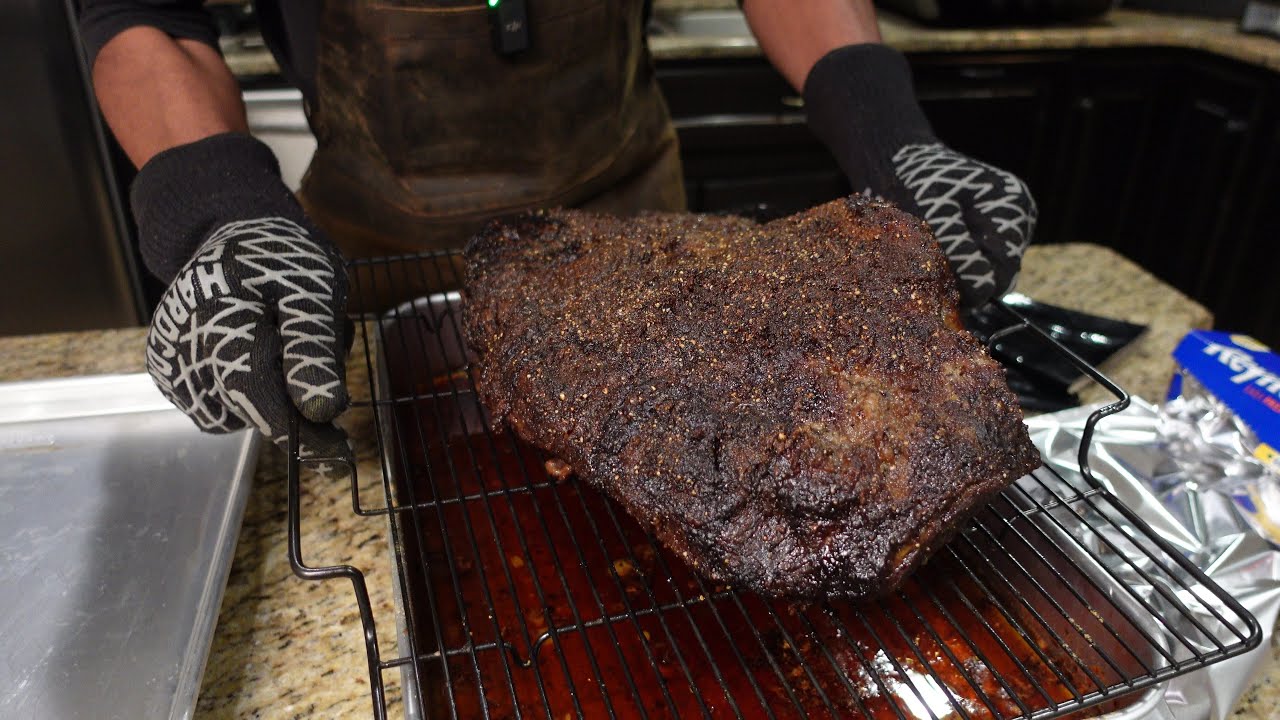
Once the bark (outer crust) forms and the brisket reaches the stall, wrap it tightly in butcher paper or foil. This helps push through the stall and retain moisture.
Step 8 – Cooking to Final Temperature
Continue smoking until the internal temperature reaches 195–205°F. The brisket should feel probe-tender, like soft butter.
Step 9 – Resting the Brisket
Remove from the smoker and let it rest, wrapped, for at least 1 hour. Resting redistributes juices and improves tenderness.
Step 10 – Slicing Properly
Slice against the grain using a sharp knife. Cut thin slices for tender, juicy bites and serve immediately.
Best Wood for Smoking Brisket
Oak
Balanced, classic Texas flavor.
Hickory
Stronger smoke, bold taste.
Mesquite
Intense and earthy.
Fruit Woods
Mild and slightly sweet.
Internal Temperature Guide
- 165°F – Wrap
- 195°F – Start checking tenderness
- 203°F – Often perfect
How Long Does It Take to Smoke Brisket?
Plan for 1 to 1.5 hours per pound.
A 12-pound brisket? 12–18 hours.
Start early.
Common Mistakes to Avoid
- Cooking too hot
- Skipping rest time
- Slicing wrong direction
- Using no thermometer
Serving Suggestions
Serve with:
- Coleslaw
- Baked beans
- Cornbread
- Pickles
- BBQ sauce (optional)
Storing and Reheating Smoked Brisket
Wrap tightly. Refrigerate up to 4 days.
Reheat slowly at 275°F with a splash of broth.
Never microwave dry brisket.
FAQs about Beef Brisket Smoker Recipe
1. Can I smoke brisket at 275°F instead of 225°F?
Yes, you can smoke brisket at 275°F. It will cook faster, which can be helpful if you’re short on time. However, higher temperatures may result in slightly less smoke absorption and a softer bark. The key is maintaining steady heat and monitoring the internal temperature closely.
2. Should brisket be fat side up or down?
It depends on your smoker’s heat source. If the heat comes primarily from below, placing the fat side down can help protect the meat from direct heat. In some offset smokers, fat side up may help baste the brisket as it renders. Most modern smokers perform well with fat side down.
3. Why is my brisket dry?
Dry brisket is usually the result of overcooking or not allowing enough resting time. Cooking beyond the ideal internal temperature can squeeze out moisture. Additionally, skipping or shortening the resting period prevents juices from redistributing properly.
4. Can I smoke brisket overnight?
Yes, overnight smoking is common, especially with pellet smokers or well-regulated setups. Use a reliable meat thermometer with temperature alarms to monitor both smoker and meat temperatures for safety and consistency.
5. What’s better—foil or butcher paper?
Both have benefits. Butcher paper allows some airflow, helping preserve the bark’s texture while still retaining moisture. Foil traps more moisture and cooks slightly faster but can soften the bark. Your choice depends on the texture you prefer.
Conclusion
Smoking beef brisket isn’t fast. It isn’t easy. But it’s incredibly rewarding.
When you slice into that smoky, juicy masterpiece and see the pink smoke ring… you’ll understand why people obsess over it.
Patience. Temperature control. Resting time.
Master those three things, and you’re not just cooking—you’re creating barbecue art.