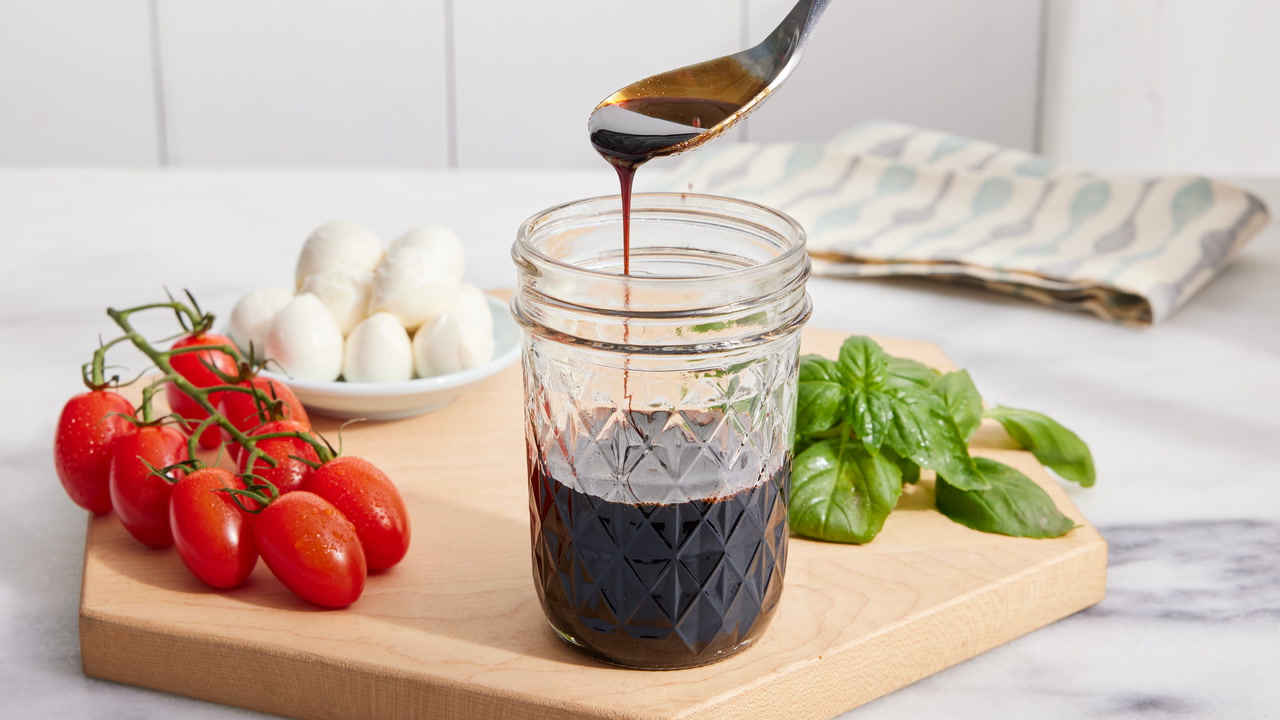
Balsamic Vinegar Reduction Recipe: Have you ever drizzled that glossy, dark syrup over a salad or steak and wondered how something so simple tastes so luxurious? That rich, tangy-sweet drizzle is balsamic vinegar reduction.
It’s basically balsamic vinegar simmered down until it thickens into a glaze. Think of it as vinegar’s glow-up moment. The sharpness softens. The sweetness deepens. The flavor becomes bold, complex, and irresistible.
And the best part? You only need one main ingredient.
Let’s break it down step by step.
Ingredients You’ll Need
Core Ingredient
- 1 to 2 cups high-quality balsamic vinegar
That’s it. Seriously.
Optional Add-Ins
You can elevate the flavor with:
Sweeteners
- 1–2 tablespoons honey
- Brown sugar
- Maple syrup
Flavor Enhancers
- Crushed garlic
- Fresh rosemary
- Black pepper
- A splash of vanilla extract (for dessert use)
Simple ingredients. Big transformation.
Kitchen Tools Required
Essential Equipment
- Small saucepan
- Wooden spoon or silicone spatula
- Measuring cup
Optional Helpful Tools
- Fine mesh strainer
- Glass storage jar
- Spoon for consistency testing
No fancy gadgets needed. Just patience and a stovetop.
Choosing the Right Balsamic Vinegar
Not all balsamic vinegar is created equal.
Traditional vs Commercial Balsamic
Traditional balsamic vinegar from Modena is aged for years and naturally thick. It’s expensive and doesn’t need reduction.
Commercial balsamic vinegar is more affordable and perfect for reducing.
How Quality Affects Flavor
Check the label:
- Fewer ingredients is better.
- Look for grape must as a primary ingredient.
- Avoid artificial caramel coloring if possible.
Good vinegar makes a great reduction. Bad vinegar? You’ll taste it.
Step-by-Step Guide to Making Balsamic Reduction
Step 1 – Choose the Right Balsamic Vinegar
Start with a good-quality balsamic vinegar. While traditional aged balsamic offers deeper sweetness and complexity, a standard balsamic vinegar works perfectly for reduction. The better the vinegar, the richer the final flavor.
Step 2 – Pour and Heat
Measure about 1 cup of balsamic vinegar and pour it into a small saucepan. Place the saucepan over medium heat. Allow it to warm gradually—avoid starting on high heat, which can cause burning.
Step 3 – Simmer Gently
Once the vinegar begins to bubble lightly, reduce the heat to low. Maintain a gentle simmer rather than a rolling boil. Slow reduction allows the flavor to concentrate evenly without becoming bitter.
Step 4 – Stir Occasionally
Stir every few minutes to prevent sticking and scorching at the bottom of the pan. You don’t need to stir constantly, but keep a close eye on the liquid as it reduces.
Step 5 – Watch for Thickening
After about 10–20 minutes, the vinegar will reduce by roughly half and begin to thicken. The aroma will deepen, and the color will become slightly darker and glossier.
Step 6 – Test for Perfect Consistency
Dip a spoon into the reduction and run your finger across the back. If it leaves a clear line and lightly coats the spoon, it’s ready. Remember, it will thicken further as it cools.
Step 7 – Cool and Store
Remove from heat and let it cool completely. Transfer to a sealed container and store in the refrigerator for up to two weeks. Use it to drizzle over salads, roasted vegetables, meats, fruits, or even desserts for a bold, sweet-tangy finish.
How to Know When It’s Ready
It should:
- Coat the back of a spoon
- Drizzle slowly, not run like water
- Have a syrup-like texture
If it becomes too thick, add a teaspoon of warm water and stir.
Common Mistakes to Avoid
- Boiling too hard – It burns quickly.
- Walking away – It can thicken fast.
- Over-reducing – It turns sticky like candy.
- Using low-quality vinegar – Flavor matters.
Cooking is chemistry. Control the heat, and you control the outcome.
How to Store Balsamic Reduction
Store in an airtight glass container.
Keep at room temperature for up to 2 weeks.
For longer storage, refrigerate up to 1 month.
If refrigerated, let it sit out before using—it thickens in cold temperatures.
Delicious Ways to Use Balsamic Reduction
This glaze is like a finishing touch on a painting.
On Salads
Drizzle over Caprese salad with mozzarella and tomatoes.
On Vegetables
Roasted Brussels sprouts? Game-changer.
On Meats
Steak, chicken, pork chops—adds elegance instantly.
On Fruits and Desserts
Strawberries with balsamic glaze? Unexpected. Delicious.
Vanilla ice cream? Even better.
Health Benefits of Balsamic Vinegar
Balsamic vinegar contains antioxidants.
It may support:
- Heart health
- Blood sugar control
- Digestive health
Plus, it’s low in calories compared to heavy sauces.
Flavor without guilt? Yes, please.
Flavor Variations to Try
Honey Balsamic Reduction
Add honey for smoother sweetness.
Perfect for salads and chicken.
Garlic Infused Version
Simmer crushed garlic, then strain.
Bold and savory.
Berry Balsamic Glaze
Add mashed strawberries while reducing.
Strain before storing.
Incredible on cheesecake.
FAQs about Balsamic Vinegar Reduction Recipe
1. Can I make balsamic reduction without sugar?
Yes. Pure balsamic vinegar naturally becomes sweeter as it reduces. The evaporation process concentrates the natural sugars already present in the vinegar, creating a rich glaze without adding extra sweeteners.
2. How long does balsamic reduction last?
When stored properly, balsamic reduction can last up to 2 weeks at room temperature in a sealed container. For longer freshness, store it in the refrigerator, where it can last up to 1 month.
3. Why did my reduction become too thick?
If your reduction turns overly thick or sticky, it was likely cooked too long. To fix it, gently warm the glaze and stir in a small amount of warm water until it reaches your desired consistency.
4. Can I use white balsamic vinegar?
Yes, white balsamic vinegar works well. However, the flavor will be lighter and slightly less intense compared to traditional dark balsamic reduction.
5. Can I freeze balsamic reduction?
Freezing is not recommended. The texture can change after thawing, potentially becoming grainy or uneven. It’s best stored refrigerated for optimal quality.
Conclusion
Balsamic vinegar reduction is proof that simple ingredients can create extraordinary flavor. With just one bottle of balsamic vinegar and a little patience, you transform sharp acidity into a rich, velvety glaze that elevates everything it touches. It’s like turning a basic outfit into a designer look with one perfect accessory.
Now that you know the step-by-step method, you can make it anytime. Drizzle it. Glaze it. Experiment with it. Once you start using homemade balsamic reduction, store-bought versions won’t even compare.
Cooking isn’t about complexity—it’s about confidence. And this recipe? It’s your new secret weapon.