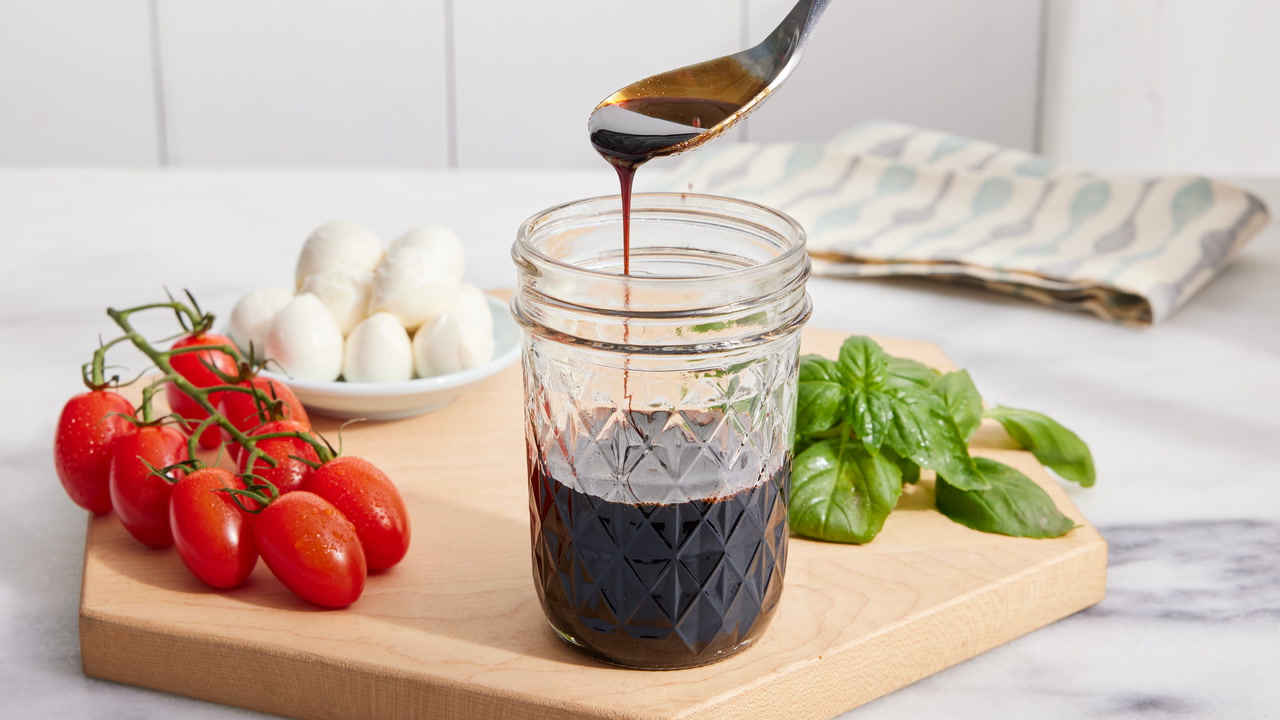
Balsamic Glaze Recipe: Balsamic glaze is a deliciously sweet, tangy, and versatile condiment that can elevate almost any dish. Whether you’re drizzling it over salads, roasted vegetables, or even desserts, this glossy reduction adds a gourmet touch to your meals. While store-bought versions are available, making balsamic glaze at home is not only cost-effective but also gives you control over the flavor and thickness.
This guide will take you step-by-step through the process of creating your very own balsamic glaze.
What is Balsamic Glaze?
Balsamic glaze, also called balsamic reduction, is made by simmering balsamic vinegar until it thickens into a syrup-like consistency. It’s a concentrated version of balsamic vinegar that intensifies its sweet and tangy flavors. Often, sugar, honey, or other sweeteners are added to balance the acidity and enhance the glaze’s richness.
Why Make Your Own Balsamic Glaze?
Cost-Effective
Store-bought balsamic glazes can be expensive and may contain preservatives or unnecessary additives. Making it at home ensures you get more for less.
Fresh and Flavorful
A homemade balsamic glaze has a more natural and fresh flavor. You can customize it to your preference by controlling the sweetness and thickness.
Ingredients You’ll Need
Simple. Minimal. Powerful.
Core Ingredients
- 1 cup high-quality balsamic vinegar
- 2–3 tablespoons honey or brown sugar (optional, for sweetness)
That’s it.
Optional Flavor Enhancers
- Fresh garlic (for savory depth)
- Fresh rosemary or thyme
- A pinch of chili flakes
- Orange zest
- Black pepper
Think of these like accessories — optional but transformative.
Kitchen Tools Required
You don’t need fancy equipment.
Essential Tools
- Small saucepan
- Wooden spoon or silicone spatula
- Measuring cups
- Stove
Optional Helpful Tools
- Fine mesh strainer
- Squeeze bottle for serving
- Candy thermometer
Step-by-Step Guide to Making Balsamic Glaze
Let’s break it down clearly.
Step 1 – Choose the Right Balsamic Vinegar
Select a good-quality balsamic vinegar for the best flavor. Traditional balsamic vinegar offers deeper sweetness and complexity, but regular balsamic works well for everyday use.
Step 2 – Measure Your Ingredients
Measure about 1 cup of balsamic vinegar. If you prefer a sweeter glaze, prepare 1–2 tablespoons of honey or brown sugar to add during cooking.
Step 3 – Combine Ingredients in a Saucepan
Pour the balsamic vinegar into a small saucepan. Add honey or sugar if using. Stir gently to combine before heating.
Step 4 – Bring to a Gentle Boil
Place the saucepan over medium heat. Bring the mixture to a gentle boil, stirring occasionally to prevent sticking.
Step 5 – Reduce to a Simmer
Once it begins to boil, reduce the heat to low. Allow the vinegar to simmer gently. This slow reduction concentrates the flavor and thickens the glaze.
Step 6 – Stir Occasionally
Stir every few minutes to prevent burning. Avoid constant stirring, but keep an eye on the liquid as it reduces.
Step 7 – Watch for Thickening
After about 10–15 minutes, the vinegar will begin to thicken. The volume should reduce by roughly half.
Step 8 – Test the Consistency
Dip a spoon into the glaze. It should coat the back of the spoon lightly. Remember, it will thicken further as it cools.
Step 9 – Remove from Heat
Once the desired thickness is reached, remove the saucepan from the heat to prevent over-reduction.
Step 10 – Cool and Store
Allow the glaze to cool completely. Transfer to a jar or bottle and store in the refrigerator for up to two weeks. Use to drizzle over salads, roasted vegetables, meats, or fresh fruit.
How to Know When It’s Perfect
Texture Test
It should coat the spoon like warm honey.
Spoon Test
It should cling, not drip quickly.
Drizzle Test
Drizzle over a plate. It should form clean lines, not puddles.
Common Mistakes to Avoid
- Cooking on high heat
- Walking away and forgetting it
- Reducing too long
- Using low-quality vinegar
- Adding too much sugar
Over-reduction turns it into candy.
You want glaze, not glue.
Variations of Balsamic Glaze
Honey Balsamic Glaze
Adds smooth sweetness. Perfect for roasted carrots or salmon.
Garlic Balsamic Glaze
Simmer crushed garlic in vinegar. Strain before cooling.
Savory and bold.
Citrus Balsamic Reduction
Add orange zest while simmering.
Bright. Fresh. Elegant.
Spicy Balsamic Glaze
Add chili flakes.
Great for grilled chicken or steak.
What to Serve with Balsamic Glaze
The real question is — what doesn’t it go with?
Vegetables
Drizzle over:
- Roasted Brussels sprouts
- Grilled zucchini
- Asparagus
- Mushrooms
Instant upgrade.
Meats
Perfect for:
- Grilled chicken
- Steak
- Pork chops
- Salmon
Adds gourmet touch.
Salads
Especially caprese:
Tomatoes + mozzarella + basil + balsamic glaze = perfection.
Fruits and Desserts
Try it over:
- Strawberries
- Vanilla ice cream
- Peaches
Sweet meets tangy.
Magic.
Storage and Shelf Life
How to Store Properly
Store in airtight container.
Keep in refrigerator.
Lasts up to 1 month.
Can You Freeze It?
Yes, but texture may change slightly.
Reheat gently if needed.
Nutritional Information
Approximate per tablespoon:
- Calories: 30–40
- Carbohydrates: 7–9g
- Sugar: 6–8g
Low fat. No cholesterol.
Why Homemade Is Better Than Store-Bought
1. You control sweetness.
2. You control thickness.
3. You avoid additives.
4. And you save money.
5. It’s like brewing your own coffee instead of buying an overpriced cup.
Ways to Use Balsamic Glaze
Salad Dressings
Drizzle over leafy greens, tomatoes, and mozzarella for a refreshing Caprese salad.
Drizzling on Meats and Fish
Use it as a glaze for grilled chicken, steak, or salmon for added flavor.
Topping for Vegetables
Enhance roasted or grilled vegetables like asparagus, Brussels sprouts, or carrots.
Perfect for Fruits and Desserts
Pair with strawberries, peaches, or vanilla ice cream for a sweet and tangy treat.
Pro Tips for Restaurant-Quality Results
- Always use medium-low heat
- Remove slightly before desired thickness
- Use aged balsamic for deeper flavor
- Strain for ultra-smooth finish
- Store in squeeze bottle for elegant presentation
Presentation matters.
A clean drizzle elevates your dish visually.
FAQs about Balsamic Glaze Recipe
1. Can I make balsamic glaze without sugar?
Yes, you can. Simply simmer and reduce balsamic vinegar on its own. As it cooks down, the natural sugars concentrate, creating a sweet and flavorful glaze without the need for added sugar.
2. How long does it take to reduce?
It usually takes about 10–20 minutes to reduce balsamic vinegar into a glaze. The exact time depends on the heat level and the amount you’re reducing. Keep an eye on it as it thickens.
3. Why did my glaze become too thick?
If your glaze becomes too thick, it was likely over-reduced. To fix it, add a small splash of warm water and stir gently over low heat until it reaches your desired consistency.
4. Can I use white balsamic vinegar?
Yes, white balsamic vinegar works well. It produces a lighter-colored glaze with a slightly milder and less intense flavor, making it great for lighter dishes.
5. Is balsamic glaze healthy?
In moderation, yes. Balsamic glaze is low in fat and adds rich flavor without heavy, creamy sauces. Just be mindful of added sugars if you choose to sweeten it.
Conclusion
Balsamic glaze is one of those small things that makes a massive difference. It turns simple food into something that looks and tastes gourmet. And the truth is, it couldn’t be easier to make.
With just one ingredient and a little patience, you create a thick, glossy, flavor-packed drizzle that upgrades vegetables, meats, salads, and even desserts.
Once you make it at home, you’ll never go back to store-bought again.