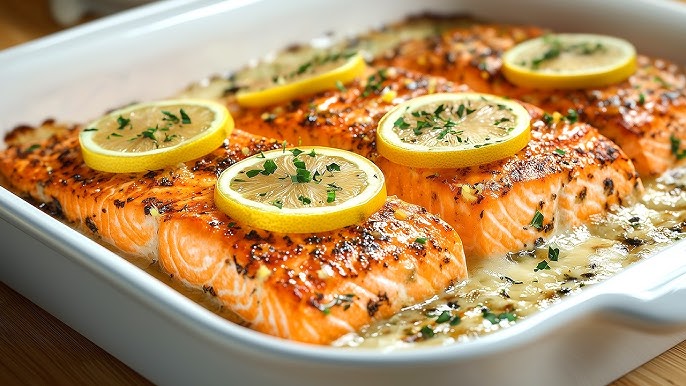
Baked Salmon Fish Recipe: Baked salmon is one of those dishes that feels fancy but is surprisingly simple. You know that meal that looks like it came straight from a restaurant kitchen but only took you 20 minutes? That’s baked salmon.
It’s tender, juicy, flavorful, and incredibly versatile. Whether you’re cooking for your family on a busy weekday or hosting guests, baked salmon never disappoints.
Why Baked Salmon Is So Popular
Because it checks all the boxes.
✔ Healthy
✔ Quick
✔ Easy
✔ Delicious
Unlike frying, baking locks in moisture without adding excess oil. It’s clean cooking. No splattering. No mess. Just pure flavor.
What Makes This Recipe Special
This isn’t just another salmon recipe. This is your go-to, foolproof, step-by-step guide that guarantees perfectly baked salmon every single time.
Health Benefits of Salmon
Let’s talk nutrition for a second.
Omega-3 Fatty Acids
Salmon is loaded with omega-3s. Think of omega-3 as oil for your body’s engine. It supports heart health, brain function, and reduces inflammation.
Protein Power
One serving gives you high-quality protein that keeps you full and energized.
Vitamins and Minerals
Salmon is rich in:
- Vitamin B12
- Vitamin D
- Selenium
- Potassium
It’s basically a superfood wearing a chef’s jacket.
Types of Salmon You Can Use
Not all salmon is the same.
Atlantic Salmon
Mild flavor, widely available, tender texture.
Sockeye Salmon
Deeper red color, richer flavor.
Coho Salmon
Milder and slightly firmer.
Wild vs Farmed Salmon
Wild salmon tends to have:
- Stronger flavor
- Leaner texture
Farmed salmon is:
- More affordable
- Softer and fattier
Both work beautifully for baking.
Ingredients You’ll Need
Main Ingredients
- 4 salmon fillets (skin-on or skinless)
- 2 tablespoons olive oil
- 3 cloves garlic (minced)
- 1 lemon (sliced + juice)
- Salt (to taste)
- Black pepper (to taste)
Optional Flavor Boosters
- Fresh dill
- Parsley
- Paprika
- Butter
- Honey
- Dijon mustard
Simple ingredients. Big flavor.
Kitchen Tools Required
Basic Tools
- Baking sheet
- Aluminum foil or parchment paper
- Mixing bowl
- Knife
- Measuring spoons
Optional Equipment
- Meat thermometer
- Brush for glazing
How to Choose Fresh Salmon
Fresh salmon makes all the difference.
What to Look For
- Bright pink or orange color
- Fresh ocean smell (not fishy)
- Firm flesh
What to Avoid
- Dull or grey appearance
- Strong fishy odor
- Slimy texture
Trust your senses.
Step-by-Step Guide to Making Baked Salmon
Now let’s get into the heart of this guide.
Step 1 – Preheat the Oven
Preheat your oven to 400°F (200°C). A properly heated oven ensures even cooking and helps keep the salmon moist and flaky.
Step 2 – Prepare the Salmon
Pat the salmon fillets dry with paper towels. Check for any remaining pin bones and remove them with tweezers if needed. Allow the salmon to sit at room temperature for about 10–15 minutes before baking for more even cooking.
Step 3 – Season the Fish
Drizzle the salmon lightly with olive oil. Season with salt, black pepper, and a squeeze of fresh lemon juice. You can also add garlic, fresh herbs like dill or parsley, or a sprinkle of paprika for extra flavor.
Step 4 – Prepare the Baking Tray
Line a baking sheet with parchment paper or foil for easy cleanup. Place the salmon skin-side down on the tray, leaving space between fillets to allow heat to circulate.
Step 5 – Bake to Perfection
Bake the salmon for 12–15 minutes, depending on thickness. Thicker fillets may need a few extra minutes. Avoid overcooking, as salmon can dry out quickly.
Step 6 – Check for Doneness
The salmon is done when it flakes easily with a fork and appears opaque in the center. The internal temperature should reach about 145°F (63°C).
Step 7 – Rest and Serve
Remove the salmon from the oven and let it rest for a few minutes. This allows the juices to settle. Serve warm with additional lemon wedges, fresh herbs, or your favorite side dishes.
Best Seasoning Combinations
Lemon Garlic Butter
Melt butter with garlic and lemon. Brush before baking.
Honey Mustard Glaze
Mix honey + Dijon mustard. Sweet meets savory.
Herb Crusted
Combine parsley, dill, and breadcrumbs for texture.
How Long to Bake Salmon
Baking Time Chart
- ½ inch thick: 8–10 minutes
- 1 inch thick: 12–15 minutes
- 1½ inches thick: 15–18 minutes
Thickness Matters
Thicker salmon = longer cooking time.
Common Mistakes to Avoid
- Overcooking
- Using too much salt
- Skipping oven preheat
- Not drying the fish
Small details make big differences.
How to Store and Reheat Baked Salmon
Store in an airtight container for up to 3 days.
To reheat:
- Use oven at 300°F
- Cover with foil
- Heat gently for 10 minutes
Avoid microwave if possible.
Perfect Side Dishes for Baked Salmon
- Roasted vegetables
- Garlic mashed potatoes
- Steamed rice
- Quinoa salad
- Fresh green salad
Variations of Baked Salmon
- Creamy garlic salmon
- Teriyaki baked salmon
- Mediterranean style with olives
- Spicy Cajun baked salmon
The possibilities are endless.
FAQs about Baked Salmon Fish Recipe
1. Should I bake salmon covered or uncovered?
Bake salmon uncovered for the best texture. Leaving it uncovered allows the surface to cook evenly and prevents the fish from steaming. Covering is mainly recommended when reheating to keep it from drying out.
2. What temperature is best for baked salmon?
400°F (200°C) is ideal. This temperature cooks the salmon quickly while keeping it moist and tender without over-drying.
3. Can I bake frozen salmon?
Yes, you can bake salmon straight from frozen. Simply add 5–7 extra minutes to the cooking time. For even seasoning, you can bake it for a few minutes first, then remove and season before continuing to cook.
4. How do I know if salmon is fully cooked?
Salmon is done when it flakes easily with a fork and reaches an internal temperature of about 125–130°F (52–54°C) for a moist result. If you prefer it more well-done, cook slightly longer.
5. Can I meal prep baked salmon?
Absolutely. Baked salmon stores well in the refrigerator for up to 3–4 days. Reheat gently to maintain moisture, making it perfect for meal prep and quick lunches.
Conclusion
Baked salmon is simple, elegant, and incredibly healthy. With just a few ingredients and the right technique, you can create a meal that tastes restaurant-quality at home. The key is proper seasoning, correct temperature, and avoiding overcooking. Follow this step-by-step guide and you’ll never struggle with dry salmon again. Whether it’s a weeknight dinner or a special occasion, baked salmon is always a winning choice. Now it’s your turn—preheat that oven and make magic happen.