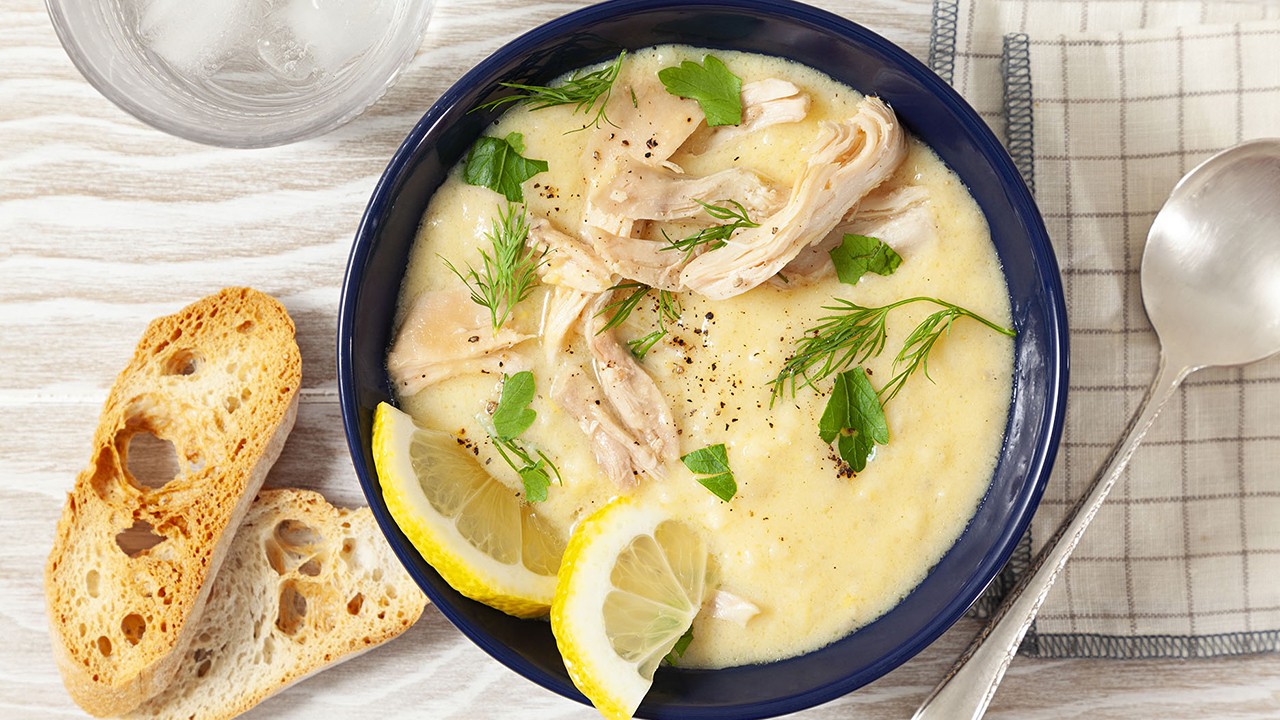
Avgolemono Soup Greek Recipe: If there’s one dish that captures the warmth of a Greek grandmother’s kitchen, it’s Avgolemono soup. This creamy, lemony, and comforting bowl of goodness is not just another chicken soup—it’s the soul of Greek comfort food.
Whether you’re battling a cold, craving a cozy dinner, or exploring Mediterranean flavors, this soup delivers big-time.
Let’s walk through this recipe, step by step, so you can master it at home—even if you’re not a seasoned chef!
What Is Avgolemono Soup?
Avgolemono (pronounced ahv-go-LEH-mo-no) is a traditional Greek soup that literally means egg-lemon. At its core, it’s a chicken broth-based soup thickened with a delicate mixture of eggs and fresh lemon juice. Unlike creamy soups that use cream or flour for thickening, Avgolemono relies on eggs, creating a silky texture that’s light yet luxurious.
This dish is often served during Easter or special family gatherings, but it’s simple enough for a weeknight meal. It’s like chicken soup, but dressed up for a celebration—with a tangy twist. The star ingredients? Chicken, rice or orzo, eggs, and lemon juice. That’s it! Simplicity meets elegance.
History and Cultural Significance of Avgolemono
The roots of Avgolemono go way back. While most of us associate it with Greek cuisine, the technique of thickening soups with eggs and citrus dates back to ancient Mediterranean cooking, and some sources trace its origins to Sephardic Jewish cuisine.
Over time, the Greeks embraced and perfected it, especially as a way to make humble ingredients feel luxurious. In Greece, this soup is often served at the beginning of a festive meal, symbolizing warmth, family, and togetherness. In many households, it’s also a go-to dish for sick days, thanks to its nourishing qualities.
Why You’ll Love This Greek Soup
There are plenty of reasons to fall in love with Avgolemono. Here’s why this dish deserves a spot in your weekly meal rotation:
- Simple ingredients: You probably have most of the ingredients already.
- Incredibly comforting: It’s like a hug in a bowl.
- Naturally gluten-free (if you use rice).
- High in protein and nutrients.
- Endlessly customizable: Add veggies or swap the grain.
It’s also one of those meals that gets better the next day—if there are any leftovers, that is!
List of Ingredients You’ll Need
Alright, let’s break down what you’ll need to whip up this Greek classic. You don’t need a trip to a specialty market—most of this is pantry-friendly!
Chicken Base
- 1 whole chicken or 2–3 chicken breasts/thighs (bone-in preferred for better broth flavor)
- 8 cups of water or chicken stock
Rice or Orzo
- ½ cup white rice (short grain preferred) or ⅓ cup orzo pasta
Eggs
- 3 large eggs (room temperature)
Lemon Juice
- Juice of 2–3 lemons (about ½ cup, freshly squeezed)
Aromatics & Herbs
- 1 small onion (optional, for broth)
- 1–2 garlic cloves
- Salt and black pepper (to taste)
- Fresh dill or parsley for garnish (optional)
Tools & Equipment You’ll Need
Making Avgolemono soup doesn’t require fancy gadgets, but having the right tools helps ensure your egg-lemon mixture comes out smooth, not scrambled.
- Large soup pot or Dutch oven
- Whisk
- Medium mixing bowl
- Ladle
- Fine-mesh strainer (optional, for broth)
- Cutting board and knife
Having everything prepped and within reach makes the cooking process smoother—this soup moves fast once the eggs get involved!
Step-by-Step Guide to Making Avgolemono Soup
Now let’s get into the heart of it: how to actually make this comforting Greek dish from scratch. Follow these steps closely, and you’ll be rewarded with a restaurant-quality bowl of Avgolemono.
Step 1: Preparing the Chicken Broth
Begin by placing chicken pieces (or a whole chicken) in a large pot with water, onion, garlic, bay leaf, salt, and pepper. Bring to a gentle boil, then reduce to a simmer. Cook until the chicken is tender and flavorful. Remove the chicken, shred the meat, and strain the broth to keep it clear and smooth.
Step 2: Cooking the Rice or Orzo
Return the strained broth to the pot and bring it back to a simmer. Add rice or orzo and cook until tender but not mushy, stirring occasionally. This step thickens the soup slightly and gives it a comforting texture.
Step 3: Tempering the Eggs
In a bowl, whisk eggs with fresh lemon juice until smooth and pale. Slowly ladle in hot broth while whisking continuously. This gentle warming process prevents the eggs from scrambling and creates the soup’s signature creamy consistency.
Step 4: Combining Everything Together
Lower the heat and slowly pour the tempered egg-lemon mixture back into the pot, stirring gently. Add the shredded chicken and continue stirring until the soup looks silky and unified.
Step 5: Final Simmer and Adjusting Seasoning
Warm the soup over very low heat for a few minutes—do not boil. Taste and adjust salt, pepper, and lemon juice as needed. Serve hot, garnished with fresh herbs if desired, for a bright, comforting bowl of Greek-style goodness.
Chef’s Tips for Perfect Avgolemono
Getting Avgolemono soup just right isn’t hard, but a few smart tips can make the difference between a good soup and an unforgettable one.
- Use room-temperature eggs: Cold eggs are more likely to curdle when you temper them. Let them sit out for 15–20 minutes before whisking.
- Whisk constantly while tempering: This is non-negotiable. The moment you stop whisking, the eggs can start cooking too fast.
- Add broth slowly: When tempering the eggs, add the hot broth gradually. Don’t rush this step. Think of it like introducing a hot new friend—you don’t want them to overwhelm the room.
- Don’t boil after eggs are added: Boiling will ruin the creamy texture. Keep the soup just below a simmer.
- Use fresh lemon juice: Bottled lemon juice lacks the brightness of fresh juice and can make your soup taste flat.
- Rest before serving: Let the soup sit for a few minutes before serving—it helps the flavors settle and the texture thicken a bit more.
These are the little secrets that Greek yiayiás (grandmas) pass down through generations—and now you know them too!
Common Mistakes to Avoid
Even with the best intentions, a few missteps can ruin your Avgolemono. Let’s dodge those landmines:
- Scrambled eggs in the soup: This usually happens from adding eggs directly to boiling soup. Always temper, and never add the egg mixture to boiling broth.
- Overcooking the rice: Mushy rice breaks down and makes the soup too thick. Check the rice frequently as it cooks.
- Using low-quality broth: Since broth is the base of the soup, weak or store-bought broth without much flavor can leave your soup tasting bland. Homemade or high-quality store-bought is the way to go.
- Not seasoning enough: Lemon brings brightness, but salt and pepper bring balance. Don’t be shy—taste and adjust!
- Not stirring enough after adding eggs: Stirring helps prevent curdling and distributes the creamy texture evenly.
Learn from these common blunders, and you’ll be serving a smooth, velvety Avgolemono every time.
How to Store and Reheat Leftovers
Avgolemono soup stores well, but the egg-based thickening can be a bit sensitive to reheating. Here’s how to store and warm it up without ruining that silky texture.
Storage:
- Store in an airtight container in the refrigerator for up to 3–4 days.
- If possible, store the chicken separately and add it during reheating to prevent it from getting too soft.
Reheating:
- Reheat gently on the stovetop over low heat.
- Stir constantly to prevent the eggs from curdling.
- Avoid boiling—again, that’s a surefire way to scramble your soup.
If the soup thickens in the fridge (which it will), add a splash of warm broth or water to loosen it up while reheating.
Serving Suggestions and Pairings
Avgolemono is delicious on its own, but pairing it with the right sides can turn it into a Mediterranean feast.
Serve With:
- Crusty bread or warm pita for dipping
- Greek salad with tomatoes, cucumbers, olives, and feta
- Dolmades (stuffed grape leaves)
- Grilled vegetables like zucchini or eggplant
- A side of olives or hummus for some savory contrast
Want to turn it into a full dinner? Start with a mezze platter and finish with baklava for dessert. Yum.
Variations of Avgolemono Soup
Want to make it your own? Here are a few popular variations of Avgolemono that you can try depending on your mood or dietary needs:
Vegetarian Version
- Use vegetable broth instead of chicken.
- Skip the shredded chicken entirely, or replace it with chickpeas or tofu.
- Add sautéed vegetables like carrots, celery, and leeks for more body.
With Shredded Chicken
- This is a classic upgrade that turns Avgolemono into a more filling meal.
- Simply shred the cooked chicken and add it back in after the egg-lemon mixture is added.
Eggless Option
- Not traditional, but if you can’t eat eggs, you can simulate a similar texture using cornstarch mixed with lemon juice. It won’t be quite the same, but still tasty!
Avgolemono is flexible—don’t be afraid to play around with the recipe and make it your own.
Health Benefits of Avgolemono Soup
It may taste indulgent, but Avgolemono soup is actually quite healthy. Let’s break down the benefits:
- High in protein: Especially if you add shredded chicken, this soup becomes a protein-packed meal.
- Rich in vitamin C: Thanks to the lemon juice, it helps boost your immune system—especially helpful during cold and flu season.
- Low in fat: Since there’s no cream or butter, it’s lighter than it tastes.
- Good for digestion: Warm broth and rice are easy on the stomach, making this great for when you’re feeling under the weather.
- Naturally gluten-free (with rice): Great option for people avoiding gluten.
So, whether you’re sipping it to warm up, to recover, or just because it tastes amazing—you’re also doing your body a favor.
FAQs about Avgolemono Soup Greek Recipe
1. Can I freeze Avgolemono soup?
It’s not ideal. The egg-lemon mixture can break when thawed and reheated. If you must freeze, do so before adding the egg mixture. Add it fresh when you reheat.
2. Can I make Avgolemono soup without rice or orzo?
You can, but the soup will be thinner. Consider adding finely chopped potatoes or another grain like quinoa for texture.
3. What if my soup curdles?
It happens! If the eggs cook too fast, you’ll get a grainy texture. While it won’t look perfect, it’s still safe to eat—and still tastes good.
4. How much lemon should I add?
Start with the juice of 2 lemons, then taste and adjust. Some like it more tart, some less. It’s all about your personal preference.
5. Is this soup good for kids?
Absolutely. It’s mild, creamy, and full of nutrients. Just go easy on the lemon for picky eaters and season lightly.
Conclusion
Avgolemono soup is more than just a meal—it’s a bowl full of Greek tradition, love, and comfort. With its bright citrus flavor, creamy texture, and nourishing ingredients, it’s no wonder this dish has stood the test of time. Whether you’re new to Greek cuisine or grew up with a yiayiá who made this every Sunday, now you’ve got all the tools and steps to recreate it in your own kitchen.
Don’t be afraid of the egg-tempering process—it’s simpler than it sounds, and the results are totally worth it. One bite of that lemony, velvety broth and you’ll understand why Avgolemono has become a Mediterranean staple.
So, what are you waiting for? Grab some lemons, crack a few eggs, and make yourself a bowl of comfort today!