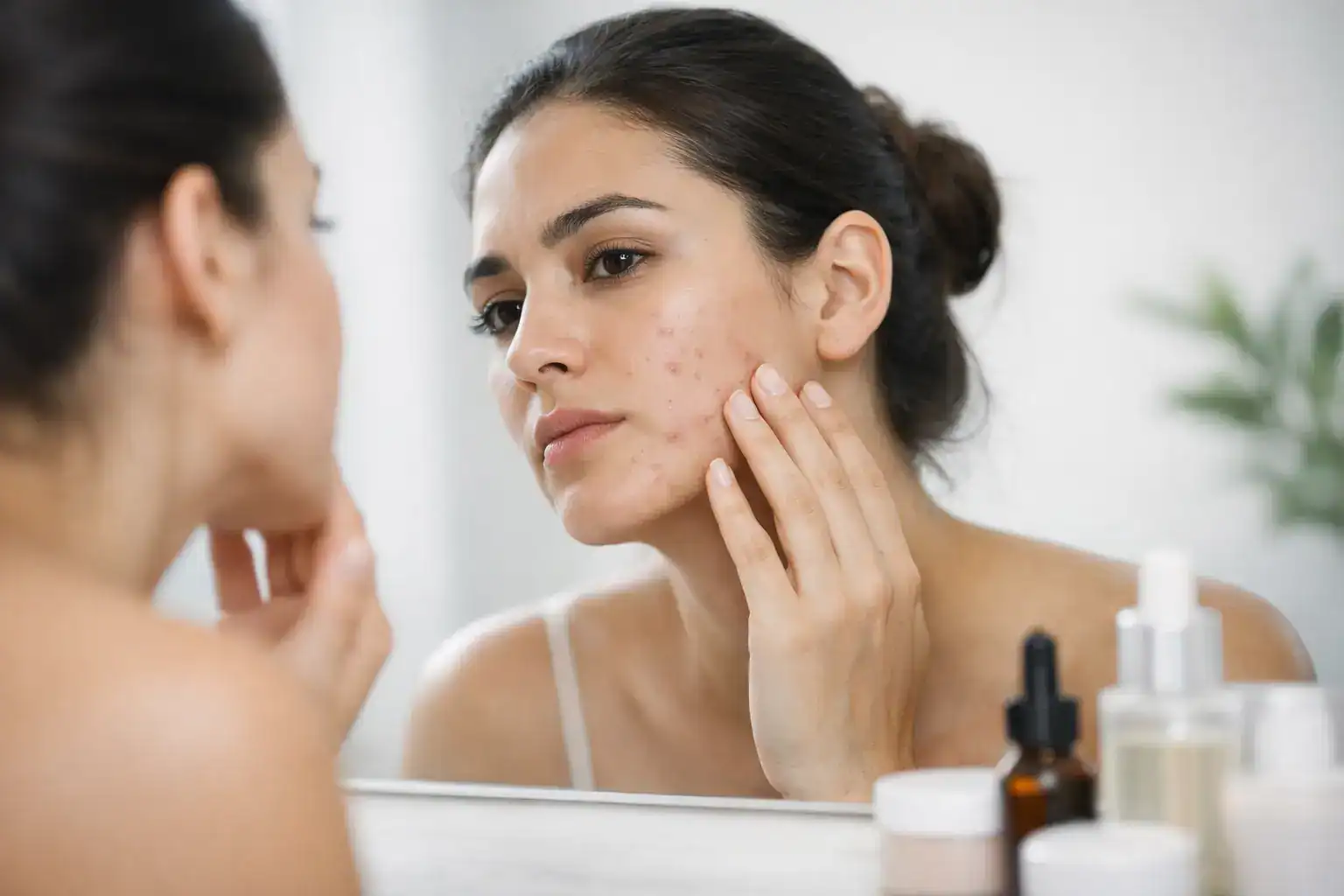
Acne scar treatment for sensitive skin requires a careful balance between improving the appearance of scars and avoiding irritation. Strong exfoliants, frequent product changes, and aggressive procedures can leave reactive skin uncomfortable without delivering better results.
We recommend beginning with an accurate assessment of the concern: flat discoloration, depressed scars, and raised scars need different treatments. A product that helps fade a brown mark will not necessarily improve a deep indentation. Likewise, a procedure suitable for one scar pattern may be inappropriate for another.
The most effective approach combines a tolerable skincare routine, control of ongoing acne, and professional treatment when changes in skin texture require it.
Understanding Acne Scars Before Choosing Treatment
The term “acne scars” often describes several different concerns. Identifying them correctly helps us set realistic expectations and avoid unnecessary products.
Common Types of Acne Scars and Post-Acne Marks
- Ice pick scars: Narrow, deep indentations that extend beneath the skin’s surface.
- Boxcar scars: Depressions with relatively defined edges.
- Rolling scars: Broader indentations that create an uneven or wavy appearance.
- Raised scars: Firm areas of excess scar tissue, including hypertrophic scars and keloids.
- Post-acne marks: Flat areas of brown, grey, red, or pink discoloration following inflammation.
A dermatologist examines the scar pattern, skin tone, and history of reactions before recommending treatment. Scar depth and shape matter as much as skin sensitivity when selecting a procedure.
We should also distinguish persistent sensitivity from an untreated skin condition. Recurrent burning, itching, scaling, or flushing deserves assessment before introducing another active ingredient.
Start With Gentle Skincare for Sensitive Skin
A complicated routine can make it difficult to identify which product causes a reaction. We recommend establishing a simple foundation before adding treatment for discoloration or texture.
Essential Steps in a Gentle Skincare Routine
- Cleanse gently: Use a mild cleanser and avoid scrubbing or rubbing the skin.
- Moisturize consistently: Choose a moisturizer that feels comfortable and does not trigger breakouts.
- Protect against sunlight: Apply a broad-spectrum sunscreen with SPF 30 or higher.
- Introduce products individually: Allow time to assess tolerance before adding another treatment.
- Avoid picking: Squeezing acne or removing healing crusts can interfere with recovery.
Products labelled fragrance-free are useful starting points for reactive skin, although no label guarantees that a formula will suit everyone. If a product burns or stings, continuing to use it can perpetuate irritation and contribute to discoloration.
We should judge a routine by how well the skin tolerates it over time. Persistent discomfort is a reason to reassess treatment, rather than evidence that a product is working.
Azelaic Acid for Acne and Post-Acne Discoloration
Azelaic acid is an option worth discussing when acne occurs alongside lingering dark marks. It has anti-inflammatory effects and can help address acne and excess pigmentation.
Its role is different from that of a procedure that lifts depressed scars. We should expect potential improvements in breakouts and discoloration, rather than assume that an azelaic acid cream will fill deep pits.
Considerations for Sensitive Skin
- Select the formulation and strength with professional guidance when reactions are frequent.
- Introduce it cautiously rather than alongside several other new active ingredients.
- Monitor for burning, itching, redness, or scaling.
- Stop using it and seek advice if irritation is pronounced or persistent.
Azelaic acid can still irritate sensitive skin. DermNet notes that people with eczema or particularly sensitive skin may find it difficult to tolerate. Its suitability depends on the individual, the formula, and how it is used. DermNet
Retinoids for Mild Scarring and Uneven Skin Texture
Topical retinoids can help treat acne and improve certain mild changes in pigmentation and texture. However, they require particular care when skin is dry, inflamed, or easily irritated.
We recommend discussing retinoids with a dermatologist when sensitivity is persistent or scarring is moderate to severe. The choice of ingredient, formulation, and application frequency can affect tolerability.
Introducing Retinoids Carefully
A dermatologist may recommend starting with a less intensive formulation and using it less frequently before gradually increasing application. Moisturizer can help reduce dryness, and daily sun protection remains essential.
Avoid starting a retinoid while simultaneously introducing exfoliating acids or multiple acne treatments without guidance. This makes reactions harder to interpret and may increase irritation.
Retinoids should not be used during pregnancy. People who are pregnant or planning pregnancy should discuss suitable alternatives with their clinician.
Professional Treatments for Depressed Acne Scars
Deep or established indentations often require an office procedure. Sensitive skin does not automatically exclude professional treatment, but it makes individualized planning especially valuable.
Microneedling for Selected Acne Scars
Professional microneedling creates controlled punctures that stimulate collagen production. It may improve the appearance of certain depressed scars.
We should avoid assuming that every scar responds equally. Deep, narrow scars may need a different approach, while a combination of procedures may be appropriate for mixed scarring.
Laser Treatment for Uneven Texture
Laser resurfacing can reduce the visibility of acne scars through changes in skin texture and collagen production. The dermatologist selects the device and treatment approach according to the scar pattern and the patient’s skin.
Chemical Peels for Selected Concerns
Chemical peels vary considerably in strength. A dermatologist determines whether a peel is appropriate and provides preparation and recovery instructions.
Fillers and Scar Surgery
Some depressed scars benefit from treatments that add volume or physically lift the scar. These options address structural changes that topical skincare cannot reliably correct.
Before committing to any procedure, we recommend asking about expected improvement, potential complications, recovery time, and the number of sessions likely to be needed.
Daily Sunscreen for Post-Acne Marks
Sun protection is a central part of managing post-inflammatory hyperpigmentation. Continued exposure can make discoloration more difficult to manage, even when the rest of the routine is appropriate.
We recommend choosing a sunscreen that is comfortable enough to apply consistently. For sensitive skin, formulations containing zinc oxide or titanium dioxide may be useful options. For people with darker skin and persistent pigmentation, a tinted sunscreen containing iron oxides can also help protect against visible light.
Practical Sun Protection Habits
- Apply sunscreen to exposed skin.
- Reapply according to the product directions, including after swimming or sweating.
- Use shade and protective clothing during prolonged outdoor exposure.
- Follow any additional sun-protection instructions after a procedure.
Sunscreen supports treatment and helps prevent further discoloration. It does not remove established indentations or raised scar tissue.
Aftercare Following Acne Scar Treatment
Sensitive skin needs clear recovery instructions after a procedure. We recommend following the treating dermatologist’s advice instead of immediately returning to the usual skincare routine.
Depending on the treatment, aftercare may include gentle cleansing, specific moisturizers, sun protection, and temporarily avoiding certain products. The timing for restarting retinoids, exfoliants, or acne medication should come from the clinician who performed the procedure.
Questions to Ask About Recovery
- Which cleanser and moisturizer should we use?
- When can makeup and usual skincare products resume?
- What degree of redness or discomfort is expected?
- Which symptoms require contacting the clinic?
- When should the next appointment take place?
Picking, scratching, and ignoring aftercare instructions can undermine healing. Care after treatment is part of the treatment itself. aad.org
Choosing a Dermatologist for Sensitive Skin Acne Scars
We recommend selecting a qualified dermatologist who can explain the proposed treatment in relation to the actual scar pattern and sensitivity history.
Bring a list of current skincare products, medications, previous acne treatments, and past reactions. Photographs of earlier reactions can also help make the consultation more specific.
What to Discuss Before Starting Treatment
- Whether the main concern is pigmentation, redness, indentation, or raised tissue.
- Whether ongoing acne needs treatment first.
- Experience treating similar skin tones and scar patterns.
- The full course of treatment and associated costs.
- A realistic improvement goal and recovery schedule.
We should assess progress through consistent photographs and scheduled reviews. Daily comparisons in changing lighting can make improvements—or temporary irritation—difficult to judge.
FAQs about Dermatologist Recommended Acne Scar Treatment for Sensitive Skin
What acne scar treatment do dermatologists recommend for sensitive skin?
Dermatologists often recommend gentle, customized treatments based on the type and depth of acne scars. Options may include microneedling, light chemical peels, fractional laser treatments, subcision, and carefully selected topical products.
Is microneedling safe for sensitive skin?
Microneedling can be suitable for sensitive skin when performed by a qualified dermatologist. Treatment intensity can be adjusted to reduce irritation while encouraging collagen production and smoother skin texture.
Can sensitive skin use chemical peels for acne scars?
Yes, but dermatologists generally choose milder chemical peels such as low-strength glycolic, lactic, or salicylic acid formulations. Stronger peels may increase redness and irritation in sensitive skin.
What ingredients help acne scars without irritating sensitive skin?
Helpful ingredients may include niacinamide, azelaic acid, gentle retinoids, hyaluronic acid, and vitamin C. Products should be introduced gradually and selected according to individual skin tolerance.
Are laser treatments suitable for sensitive skin?
Certain fractional laser treatments may improve acne scars, but sensitive skin requires careful assessment. A dermatologist can select appropriate settings to reduce the risk of prolonged redness or pigmentation changes.
How can we prevent irritation during acne scar treatment?
We recommend using a gentle cleanser, fragrance-free moisturizer, and broad-spectrum SPF 30 or higher while avoiding unnecessary exfoliation or harsh skincare products.
When should we see a dermatologist?
We should consult a dermatologist when acne scars are deep, persistent, worsening, or accompanied by active acne. Professional evaluation helps determine the safest and most effective acne scar treatment for sensitive skin.
Conclusion
Dermatologist recommended acne scar treatment for sensitive skin begins with identifying the concern and choosing an approach the skin can tolerate. Gentle skincare and sun protection provide the foundation. Azelaic acid or carefully selected retinoids may help with acne and some lingering marks, while depressed or raised scars often require professional treatment.
We recommend a gradual, individualized plan with clear expectations and appropriate aftercare. The goal is meaningful improvement in skin appearance while keeping irritation under control.