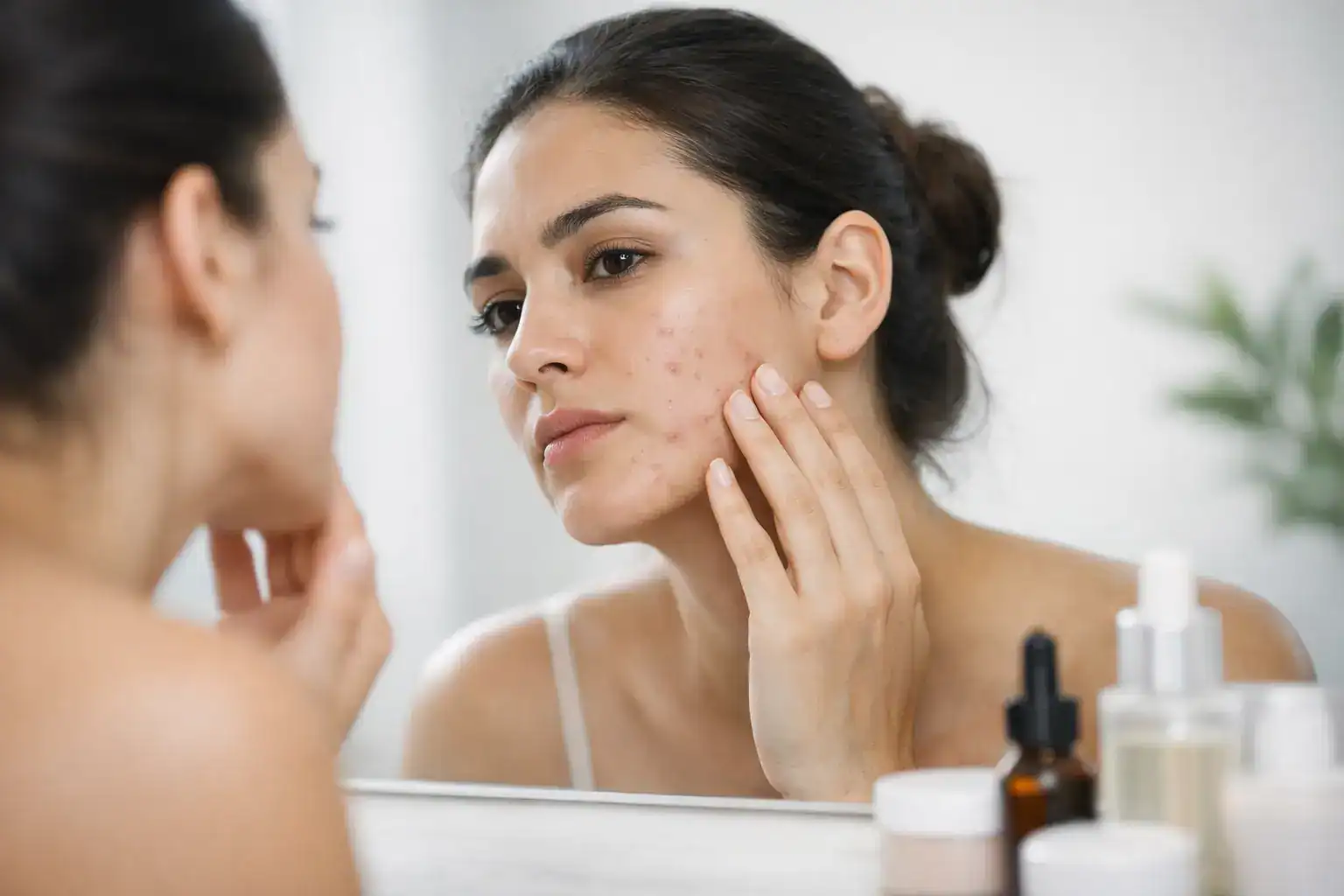
The best acne scar treatment for boxcar scars depends on the depth of the depressions, the shape of their edges, and the surrounding skin. Shallow scars may improve with resurfacing, while deeper scars may require a procedure that raises or removes the depressed tissue. We recommend choosing treatment after a dermatologist assesses the individual scars, rather than selecting a procedure based on popularity alone.
Boxcar scars can occur alongside rolling scars, ice-pick scars, and lingering discoloration. A carefully planned combination of treatments may therefore address different concerns more effectively than repeating one procedure across the entire face. The goal is meaningful improvement in skin texture and scar visibility, with realistic expectations about recovery and results.
Recognising Boxcar Acne Scars Before Choosing Treatment
Boxcar scars are round or oval depressions with clearly defined edges. Their relatively broad bases and abrupt sides give the skin a pitted appearance. Some are shallow, while others extend deeper into the skin.
We distinguish these indentations from flat brown or red marks left after acne. Discoloration changes skin colour; a boxcar scar changes its contour. Both can exist in the same area, but fading a dark mark does not necessarily improve the depression beneath it.
This distinction matters when comparing products and procedures. A treatment plan should identify whether the main concern is scar depth, uneven texture, pigmentation, or a combination of these features.
Best Treatment Options for Boxcar Acne Scars
The following options address different aspects of depressed acne scarring. Their suitability depends on a clinical assessment, particularly when scars are deep or skin is prone to pigmentation changes.
1. Fractional Laser Resurfacing
Fractional laser resurfacing treats small zones of skin while leaving surrounding tissue available to support healing. It can improve texture through controlled injury and subsequent skin remodelling.
Ablative fractional lasers, including fractional CO₂ and erbium:YAG devices, remove microscopic areas of tissue. Non-ablative fractional lasers heat targeted tissue without the same degree of surface removal. The choice affects the intensity of treatment, recovery, and potential complications.
We recommend discussing the specific device and proposed settings rather than treating every “laser facial” as equivalent. Skin tone, scar depth, previous procedures, and pigmentation history should influence the plan. Multiple sessions may be needed, and recovery varies considerably between devices and treatment intensities.
2. Punch Elevation or Punch Excision
Punch techniques may be considered for selected, well-defined boxcar scars, particularly when a depression needs more targeted correction than general resurfacing can provide.
Punch elevation raises the depressed scar base toward the surrounding skin level. Punch excision removes the scar, after which the small wound is managed to heal with a less conspicuous contour.
These procedures involve a trade-off: correcting an existing depression creates a new healing site. We recommend asking how the dermatologist expects that site to look after healing and whether additional resurfacing may be useful. DermNet includes punch elevation and excision among surgical options for acne scarring.
3. Professional Microneedling
Microneedling uses fine needles to create controlled punctures in the skin and stimulate repair. Dermatologists use it to improve acne scars and uneven texture.
It generally requires a course of treatment rather than a single appointment. Visible improvement develops gradually, and the response depends on the scarring being treated.
We recommend professional assessment before purchasing a treatment package. Home devices do not provide the same clinical evaluation, controlled technique, or sterile treatment environment. Improper use can cause infection, additional scarring, or unwanted pigmentation.
4. Radiofrequency Microneedling
Radiofrequency microneedling combines needle penetration with energy delivered into the skin. It aims to encourage collagen and elastin production and reduce the visibility of depressed scars.
The treatment’s suitability depends on the device, settings, clinician’s experience, and the patient’s skin. We recommend asking how it compares with conventional microneedling or laser treatment for the particular scars being assessed.
It should not be presented as a guaranteed solution or a procedure without risk. A consultation should explain expected benefits, recovery, possible complications, and whether another treatment is needed for individual depressions.
5. TCA CROSS for Selected Scars
TCA CROSS involves applying trichloroacetic acid precisely to individual scars to trigger a local repair response. It differs from a general chemical peel applied across a wider area.
DermNet identifies boxcar scars among the types that may be treated with this technique. However, suitability depends on scar characteristics and clinician judgement, and complete correction is unlikely with TCA CROSS alone.
Potential complications include pigmentation changes and worsening scarring. We recommend having this procedure performed by an appropriately trained medical professional. Concentrated acids should not be used for home scar treatment.
Shallow Versus Deep Boxcar Scars: How Treatment Priorities Change
Shallow boxcar scars may be more suitable for resurfacing that smooths transitions between the scar and surrounding skin. Deeper depressions can be harder to correct through surface treatment alone.
We recommend asking the dermatologist to identify which scars are likely to respond to the proposed procedure and which may remain noticeable. This makes the treatment plan more specific and helps avoid unrealistic expectations.
Laser resurfacing can reduce acne scar visibility, but very deep scars cannot necessarily be completely removed. Potential complications include prolonged redness, pigmentation changes, infection, and additional scarring. The intensity of treatment should reflect both the desired improvement and the individual’s risk profile.
Choosing Boxcar Scar Treatment for Darker Skin
For darker skin, post-inflammatory hyperpigmentation deserves particular attention. A successful plan must consider the possibility that treatment may improve texture while temporarily or persistently changing skin colour.
We recommend choosing a dermatologist experienced in treating comparable skin tones. During consultation, ask how pigmentation risk affects the proposed procedure, settings, preparation, and follow-up care.
Questions to Ask Before Booking Treatment
- Which scars will this procedure target?
- Why is this option suitable for the scar depth and skin tone?
- What complications are possible, and how are they managed?
- How much visible recovery should we expect?
- Will treatment need to be staged or combined with another procedure?
- What happens if improvement is limited?
Clear answers help turn a general treatment recommendation into a practical plan.
Preparing for Boxcar Acne Scar Treatment
Before treatment, we recommend preparing a concise record of the information the clinician needs. This should include current skincare products, medications, previous procedures, and any unexpected reactions.
Information to Bring to the Consultation
- Current acne activity: Whether breakouts are still developing.
- Treatment history: Previous lasers, peels, microneedling, or scar surgery.
- Medication history: Current and recently used acne medicines.
- Healing history: Previous pigmentation changes or raised scars.
- Practical constraints: Budget, available recovery time, and upcoming commitments.
Photographs taken in consistent lighting can also help communicate the areas of concern. Ask whether the clinic will take standardised photographs to assess progress.
Aftercare That Supports Recovery
Aftercare is part of acne scar treatment, not an optional addition. We recommend following the dermatologist’s instructions closely, particularly while the skin is sensitive.
Essential Aftercare Priorities
- Use the recommended cleansing and moisturising routine.
- Avoid picking, rubbing, or removing healing crusts.
- Resume makeup and active skincare ingredients only when advised.
- Protect treated skin from sunlight.
- Contact the clinic if healing seems unusual or symptoms worsen.
The American Academy of Dermatology recommends daily broad-spectrum, water-resistant sunscreen with SPF 30 or higher after acne scar treatment. Appropriate sun protection helps reduce darkening of treated skin. Specific wound care and product instructions should come from the treating dermatologist.
Comparing Treatment Costs and Expected Results
When comparing quotes, we recommend looking beyond the price of one appointment. Ask for the estimated cost of the proposed course, including consultations, anaesthesia, aftercare products, reviews, and any additional procedures.
A useful quotation should explain what is included and what remains uncertain. It should also distinguish between treating a few individual scars and improving texture across a broader area.
Before-and-after photographs are most useful when lighting, camera angle, and facial expression are consistent. Ask to see results involving similar scar patterns and skin tones, and discuss what level of improvement the clinician considers realistic.
FAQs about How to Choose Acne Scar Treatment for Rolling Scars
What is the best treatment for rolling acne scars?
The best treatment depends on the depth, severity, and extent of the rolling scars. Dermatologists may recommend treatments such as subcision, microneedling, laser resurfacing, radiofrequency microneedling, or dermal fillers. Combination therapy is often considered for more noticeable scars.
How do we know if we have rolling acne scars?
Rolling scars usually appear as broad, shallow depressions with smooth, sloping edges that create an uneven or wave-like skin texture. A dermatologist can confirm the scar type during a professional skin assessment.
Is subcision effective for rolling scars?
Subcision is commonly used for rolling scars because it helps release the fibrous bands pulling the skin downward. This may allow the skin surface to rise and appear smoother over time.
Can microneedling improve rolling acne scars?
Yes. Microneedling stimulates collagen production, which may gradually improve skin texture and reduce the appearance of mild to moderate rolling scars.
Should we choose laser treatment for rolling scars?
Laser resurfacing can improve collagen remodeling and skin texture, but suitability depends on skin type, scar severity, pigmentation risk, and recovery time. Professional assessment is important before choosing laser therapy.
How do we choose the right treatment?
We should consider scar depth, skin tone, treatment cost, downtime, expected results, and potential side effects. Consulting a qualified dermatologist helps determine the safest and most appropriate treatment plan.
Can rolling scars be completely removed?
Rolling scars may not disappear completely, but professional treatments can often make them significantly less noticeable and improve overall skin texture.
Conclusion
The best acne scar treatment for boxcar scars is a plan matched to the individual depressions, skin characteristics, and recovery needs. Fractional lasers, professional microneedling, targeted punch techniques, and TCA CROSS each have a role in selected cases.
We recommend starting with an assessment that explains which scars will be treated, why the proposed approach suits them, and what improvement is reasonably achievable. That clarity provides a stronger foundation for smoother skin than choosing a procedure by its name alone.