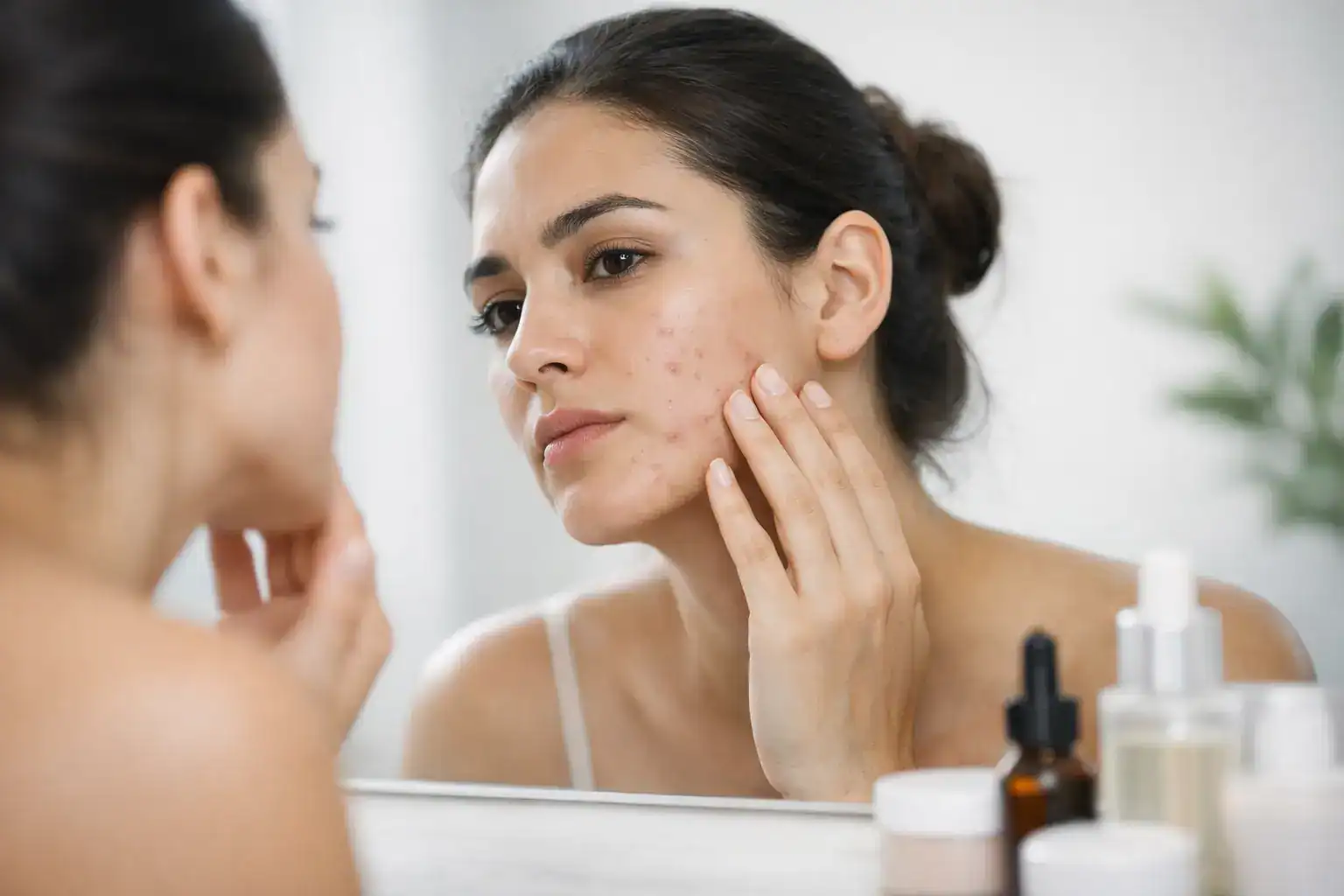
Choosing acne scar treatment for rolling scars starts with identifying what creates the uneven skin surface. Broad depressions may involve fibrous attachments beneath the skin, loss of supporting tissue, or both. A suitable treatment plan should address these features rather than rely on a procedure selected solely because it is popular.
We recommend approaching the decision through a professional assessment, a clear understanding of treatment options, and realistic expectations. The aim is to make scars less noticeable while balancing skin safety, recovery time, cost, and achievable improvement.
Recognise Rolling Scars Before Comparing Treatments
Rolling acne scars are broad, shallow-looking depressions with sloping edges that give the skin a wavy appearance. They differ from narrow, deep ice pick scars and the more sharply defined depressions of boxcar scars. Fibrous bands beneath rolling scars can pull the skin downward, creating an uneven contour.
This distinction matters when choosing treatment. A procedure that improves surface texture may leave underlying attachments in place. Similarly, treating a dark mark will not necessarily change a depressed scar.
We should also recognise that several scar types can appear on the same face. Before purchasing a treatment package, ask for an explanation of which areas are rolling scars, which have another scar pattern, and which are changes in colour.
Start With an Individual Acne Scar Assessment
A useful consultation should connect the proposed treatment to the specific findings on your skin. We recommend asking the clinician to explain the main problem being treated: tethering, volume loss, surface irregularity, or a combination.
Factors to Discuss Before Choosing Treatment
Bring information about:
- Previous procedures: Include the treatment names, approximate timing, results, and complications.
- Current skincare and medication: Mention prescription acne treatment, supplements, and recent isotretinoin use.
- Healing history: Explain whether wounds heal slowly or leave raised scars.
- Pigment changes: Describe any persistent darkening or lightening after irritation.
- Practical priorities: State your budget, available recovery time, and most noticeable scars.
We recommend deciding what improvement would be meaningful before the appointment. For example, reducing the deepest cheek depressions may matter more to you than treating every small irregularity. A clear priority helps make the consultation more focused.
Compare Treatments According to the Problem They Address
The best treatment for rolling acne scars is not automatically the strongest procedure or the most expensive device. We should compare options by their intended role, then ask whether that role matches the assessment.
Subcision for Tethered Rolling Scars
Subcision involves passing a specialised instrument beneath the skin to release fibrous bands that hold a depressed scar down. It is particularly relevant when tethering contributes to the rolling appearance. Possible complications include bruising, bleeding, infection, lumps, pigment changes, and injury to nearby structures.
When discussing subcision, ask which scars require release and how the clinician will assess the response. We should not assume that every depression needs the same technique or that one session will resolve all unevenness.
It is also useful to ask whether another procedure is being proposed immediately or only after healing. Understanding the sequence makes the treatment plan easier to evaluate.
Microneedling for Collagen Remodelling
Professional microneedling creates controlled punctures that stimulate collagen production and can improve acne scar appearance. Results develop gradually, and a series of sessions may be needed. Suitability depends on factors such as active inflammation, infection, healing ability, and medical history.
We recommend asking whether microneedling is intended to improve general texture or treat particular depressions. If the assessment identifies significant tethering, ask how the proposed plan addresses those attachments.
Avoid treating a session count as a guaranteed outcome. Instead, request an initial plan with a review point, so further sessions depend on your response.
Fractional Laser Resurfacing for Texture Improvement
Laser resurfacing can reduce the visibility of acne scars through changes in skin texture and collagen remodelling. Different lasers involve different treatment schedules and recovery requirements. Fillers offer another approach by adding volume to selected depressed scars; their duration varies by product.
For laser treatment, ask for the device name, the reason it suits your skin, and the expected healing process. “Laser for acne scars” is too broad a description to support an informed decision.
For fillers, ask which product is proposed, whether it is temporary or permanent, and how complications would be managed. We should also request an explanation of why adding volume is appropriate for the particular scars being treated.
Consider Combination Treatment Without Assuming More Is Better
A combination plan may be reasonable when different procedures address different features. However, a long list of treatments does not demonstrate that each one is necessary.
We recommend asking the clinician to describe the purpose of every component in plain language. If several procedures are suggested, establish which is the priority, what improvement it should deliver, and what finding would justify the next step.
Questions About a Combined Treatment Plan
Before agreeing, ask:
- What specific problem does each procedure address?
- Why is this treatment order appropriate?
- Will the procedures be performed together or in separate sessions?
- When will the results be reviewed?
- Could the plan change if the first treatment works well?
These questions help distinguish an individual plan from a fixed package offered to every patient.
Choose a Clinician With Relevant Scar Treatment Experience
We recommend verifying professional registration, recognised specialist qualifications, and experience with the proposed procedures. Ask whether the clinician regularly treats rolling scars and patients with a skin tone and healing history similar to yours.
Before-and-after photographs can support the discussion, but their presentation matters. Request examples photographed under comparable lighting, at similar angles, and after sufficient healing. Early swelling, makeup, filters, and changes in lighting can make comparisons misleading.
A consultation should leave you understanding the expected benefit, the limitations, and the follow-up arrangements. If the explanation remains unclear, another specialist opinion can help before committing to an invasive procedure.
Include Skin Tone and Pigmentation in the Decision
When choosing rolling scar treatment for dark skin, we recommend making pigment risk part of the consultation. DermNet identifies pigment changes among potential complications of scar procedures, including subcision.
Ask how the clinician will adapt the treatment to your skin and what preparation is required. Previous reactions to peels, lasers, or even minor irritation are useful information.
We should also separate goals for scar depth from goals for uneven colour. Ask which part of the plan targets each concern and how progress will be measured. This avoids expecting one procedure to produce identical improvement in every visible feature.
Control Active Acne Before Scar Procedures
Ongoing breakouts can create additional scarring. The American Academy of Dermatology advises that acne scar treatment generally follows control of active acne, with measures to prevent further breakouts.
We recommend discussing acne control and scar correction as connected parts of the same plan. Share every acne medication you use, including products bought without a prescription.
Do not stop prescribed treatment simply to prepare for a cosmetic appointment. Ask the treating clinician whether any adjustments are needed and obtain clear instructions about when to stop or restart specific products.
Compare Total Cost and Recovery Requirements
A low advertised price may cover only one session or a limited treatment area. We recommend requesting a written estimate for the proposed course before comparing clinics.
Costs and Practical Details to Confirm
Ask whether the quote includes:
- Consultation and assessment
- Anaesthesia and procedure fees
- The planned number of sessions
- Aftercare products and follow-up appointments
- Possible maintenance or additional treatment
Also clarify when you can return to work, exercise, makeup, and your usual skincare routine. Plan around the recovery information given for your actual procedure, rather than a general online estimate.
If the full plan exceeds your budget, ask whether treatment can be staged around the scars that concern you most.
Set Realistic Expectations and Review Progress
We recommend evaluating success through consistent photographs and agreed goals. Ask when the clinician expects a fair assessment of the result; improvement should not be judged solely from photographs taken immediately after treatment.
For microneedling, collagen-related changes develop over weeks to months. Home devices also carry risks such as infection, scarring, and colour changes, so they should not be treated as an equivalent substitute for professional care.
A useful review should answer three questions: what improved, what remains, and whether another procedure offers enough likely benefit to justify its cost and recovery.
FAQs about How to Choose Acne Scar Treatment for Rolling Scars
What is the best treatment for rolling acne scars?
The best treatment depends on the depth, severity, and extent of the rolling scars. Dermatologists may recommend treatments such as subcision, microneedling, laser resurfacing, radiofrequency microneedling, or dermal fillers. Combination therapy is often considered for more noticeable scars.
How do we know if we have rolling acne scars?
Rolling scars usually appear as broad, shallow depressions with smooth, sloping edges that create an uneven or wave-like skin texture. A dermatologist can confirm the scar type during a professional skin assessment.
Is subcision effective for rolling scars?
Subcision is commonly used for rolling scars because it helps release the fibrous bands pulling the skin downward. This may allow the skin surface to rise and appear smoother over time.
Can microneedling improve rolling acne scars?
Yes. Microneedling stimulates collagen production, which may gradually improve skin texture and reduce the appearance of mild to moderate rolling scars.
Should we choose laser treatment for rolling scars?
Laser resurfacing can improve collagen remodeling and skin texture, but suitability depends on skin type, scar severity, pigmentation risk, and recovery time. Professional assessment is important before choosing laser therapy.
How do we choose the right treatment?
We should consider scar depth, skin tone, treatment cost, downtime, expected results, and potential side effects. Consulting a qualified dermatologist helps determine the safest and most appropriate treatment plan.
Can rolling scars be completely removed?
Rolling scars may not disappear completely, but professional treatments can often make them significantly less noticeable and improve overall skin texture.
Conclusion
Knowing how to choose acne scar treatment for rolling scars means connecting the procedure to the underlying scar features. We recommend prioritising a careful assessment, relevant clinician experience, a clear treatment sequence, and transparent costs.
Before proceeding, make sure you understand the purpose of the treatment, the expected recovery, the possible complications, and how the result will be reviewed. A considered plan gives you a stronger basis for pursuing smoother skin and deciding which improvements matter most.