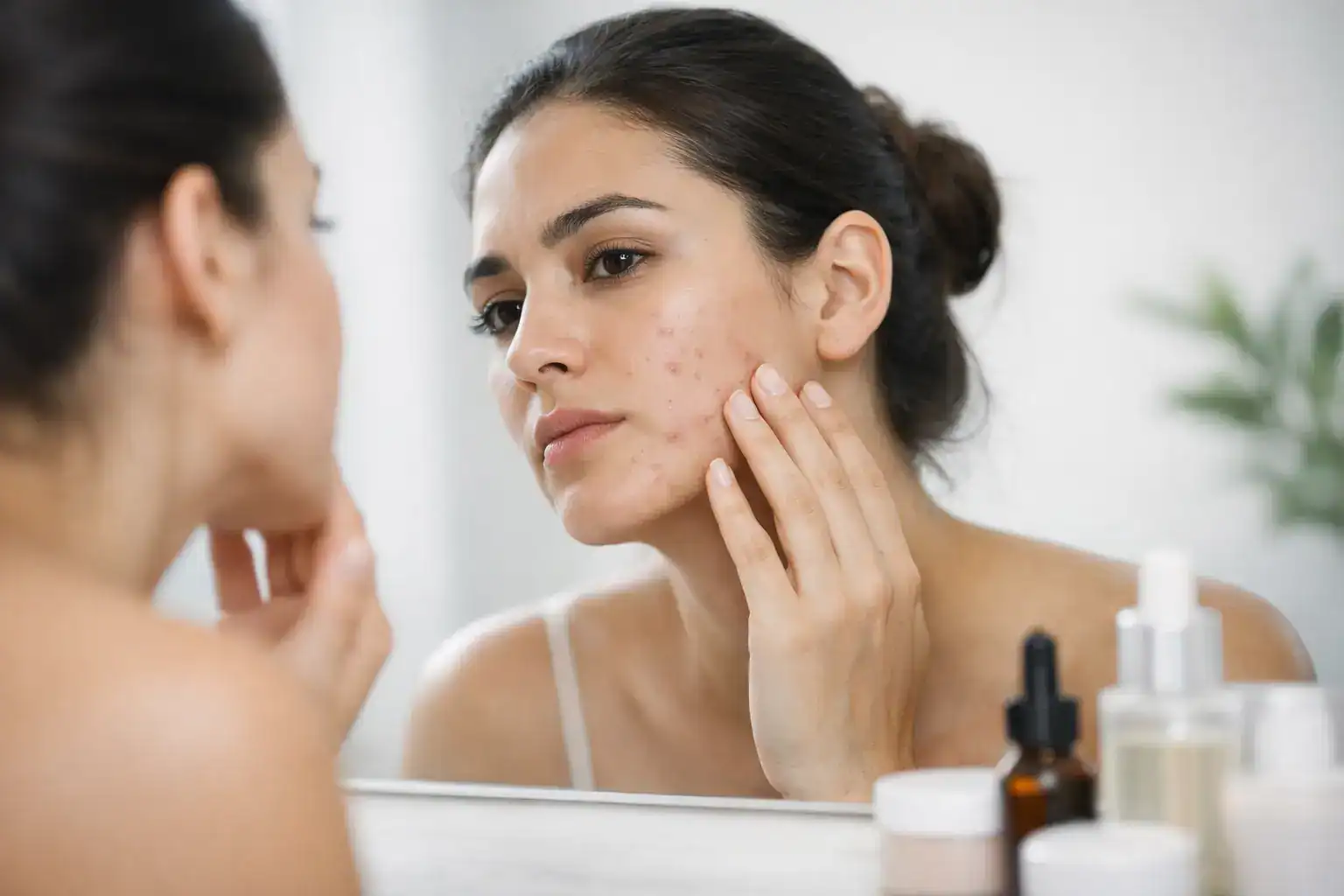
Deep acne scars can be among the most persistent forms of post-acne skin damage because they often extend beneath the surface of the skin and involve significant changes in collagen structure. For this reason, dermatologist recommended acne scar treatment for deep scars typically involves professional procedures rather than relying exclusively on creams, serums, or home remedies.
We approach deep acne scarring by first identifying the type, depth, distribution, skin tone, active acne status, and underlying scar structure. Ice-pick scars, rolling scars, and deep boxcar scars do not behave in the same way, so they may require different treatments. The American Academy of Dermatology notes that dermatologists frequently develop individualized plans and may combine several procedures when treating depressed acne scars.
Understanding Deep Acne Scars Before Treatment
Most depressed acne scars develop when inflammation damages collagen and the skin does not replace enough of that collagen during healing. These scars are generally classified as ice-pick, boxcar, or rolling scars.
Ice-pick scars are narrow but extend deeply into the skin. Their small opening can make them look like tiny punctures.
Boxcar scars are wider depressions with relatively defined edges. They may be shallow or deep, and deeper boxcar scars can be particularly noticeable under directional lighting.
Rolling scars have smoother edges but may be tethered to deeper tissue, creating waves or uneven depressions across the skin.
Because these scar types have different structures, choosing treatment based only on how severe the scarring looks can lead to disappointing results.
Dermatologist Recommended Treatments for Deep Acne Scars
1. Subcision for Deep Rolling and Tethered Acne Scars
Subcision is often considered when depressed scars are being pulled downward by fibrous bands beneath the skin.
During the procedure, a dermatologist introduces a specialized needle or similar instrument beneath the scar and releases the fibrous attachments. Once these bands are loosened, the depressed area may rise closer to the surrounding skin.
Subcision can be particularly useful for:
- Rolling acne scars
- Tethered scars that become less visible when the surrounding skin is stretched
- Broad depressed scars
- Scars associated with underlying fibrosis
Subcision may also be combined with fillers, microneedling, laser resurfacing, or other scar treatments when several scar types are present.
Systematic reviews have found improvement with subcision, although outcomes vary considerably depending on scar characteristics, technique, and the treatment combination used.
2. TCA CROSS for Deep Ice-Pick Scars
TCA CROSS, or Chemical Reconstruction of Skin Scars using trichloroacetic acid, is a targeted chemical procedure that may be recommended for certain deep, narrow scars.
Instead of applying a chemical peel across the entire face, a clinician carefully places a concentrated amount of TCA inside individual scars. The controlled injury stimulates healing and collagen remodeling within the treated scar.
TCA CROSS can be used for ice-pick scars and selected boxcar or rolling scars. DermNet notes that the treatment is intended to encourage new collagen formation, although complete disappearance of scars should not be expected from TCA CROSS alone.
Multiple sessions may be necessary.
Because concentrated TCA can cause burns, pigment changes, or additional scarring when incorrectly applied, TCA CROSS should be performed by an appropriately trained medical professional rather than attempted as a home treatment.
3. Laser Resurfacing for Deep Acne Scars
Laser resurfacing is another dermatologist-administered option for acne scarring. Lasers create controlled thermal injury in the skin, stimulating remodeling and the production of collagen as the treated area heals.
Depending on the patient and scar pattern, dermatologists may consider different laser technologies.
Ablative Fractional Lasers
Ablative lasers remove microscopic columns of damaged skin while stimulating deeper remodeling. They may offer meaningful improvement for selected moderate-to-severe acne scars but generally involve more redness, swelling, and recovery time.
Non-Ablative Fractional Lasers
Non-ablative lasers deliver energy beneath the skin without removing as much of the surface layer. Recovery may be shorter, although several sessions can be needed.
Skin tone matters when selecting laser parameters. People who develop post-inflammatory hyperpigmentation easily require careful treatment planning to reduce the chance of prolonged discoloration.
A recent systematic review and network meta-analysis has continued to evaluate lasers, microneedling, radiofrequency techniques, subcision, chemical reconstruction, fillers, and combination therapies for moderate-to-severe atrophic acne scarring, reflecting how individualized modern scar management has become.
4. Microneedling for Atrophic Acne Scars
Microneedling creates controlled microscopic punctures in the skin, stimulating repair processes and new collagen production.
The American Academy of Dermatology identifies microneedling as an option for depressed acne scars and notes that it can be used across skin tones.
Microneedling may be considered for:
- Rolling scars
- Some boxcar scars
- General uneven acne-scar texture
- Patients requiring a treatment with relatively limited downtime
However, very deep ice-pick scars may require more targeted procedures because conventional microneedling alone may not adequately reach or remodel the deepest portion of the scar.
5. Radiofrequency Microneedling
Radiofrequency microneedling combines needle penetration with radiofrequency energy delivered beneath the skin.
The treatment is designed to stimulate collagen and elastin remodeling at controlled depths while limiting some of the surface injury associated with more aggressive resurfacing techniques.
The American Academy of Dermatology describes both radiofrequency and radiofrequency microneedling as options used to make acne scars less noticeable and notes their suitability across skin tones.
For patients with deeper scars, dermatologists may combine radiofrequency microneedling with subcision, TCA CROSS, fillers, or other procedures according to scar morphology.
6. Dermal Fillers for Depressed Acne Scars
Some deep acne scars lose visible volume because the skin is depressed below the surrounding surface. Dermal fillers can be injected beneath selected scars to elevate the depression.
The American Academy of Dermatology notes that fillers may also be incorporated into a broader scar-treatment plan, including after procedures that release depressed scars from underlying tissue.
Different fillers last for different lengths of time. Some treatments require maintenance because the material is gradually absorbed.
Fillers may be particularly useful for certain rolling or broad depressed scars, but they are usually less suitable as a stand-alone treatment for narrow, sharply defined ice-pick scars.
7. Punch Excision and Acne Scar Surgery
Extremely deep individual scars may respond poorly to surface treatments because the scar extends too far into the skin.
In these situations, a dermatologist may consider minor acne scar surgery.
One approach involves surgically removing an individual scar and closing the resulting opening. Other techniques may elevate depressed scar tissue or release it from underlying attachments.
According to the American Academy of Dermatology, acne scar surgery can involve removing a scar and closing the area or surgically freeing depressed tissue so that the skin can rise. Additional resurfacing procedures may then be used to refine the final texture.
This approach can be valuable when a small number of deep scars are responsible for much of the visible texture irregularity.
8. Chemical Peels for Selected Acne Scars
Chemical peels intentionally exfoliate controlled layers of skin and may encourage collagen and elastin production during healing.
Dermatologists use different peeling agents and strengths according to the patient’s scar pattern, skin characteristics, and treatment goals. Mild or medium peels may require repeated sessions.
Chemical peels can sometimes improve:
- Mild depressed scars
- Surface irregularity
- Post-acne discoloration
- Overall texture
However, deep scars frequently require a more targeted or combination approach rather than conventional full-face peeling alone.
Why Combination Therapy Is Often Recommended for Deep Acne Scars
Different Scars Require Different Treatments
Many patients do not have a single acne-scar type. One area of the face may contain ice-pick scars while another contains rolling and boxcar scars.
For this reason, we may achieve a more comprehensive approach by treating each structural problem separately.
A treatment plan could involve:
- Subcision to release tethered rolling scars.
- TCA CROSS for deep ice-pick scars.
- Microneedling or laser resurfacing for broader textural irregularities.
- Dermal filler for selected persistent depressions.
- Ongoing acne treatment to help prevent additional scars.
The AAD specifically notes that dermatologists may use more than one treatment to obtain better improvement in depressed acne scars.
Choosing Treatment According to Acne Scar Type
Deep Ice-Pick Scars
These narrow scars may be considered for TCA CROSS, punch techniques, or carefully selected resurfacing procedures.
Deep Boxcar Scars
Treatment may involve laser resurfacing, microneedling, radiofrequency microneedling, chemical techniques, fillers, or surgical approaches, depending on scar depth and edges.
Rolling Scars
Because rolling scars are commonly associated with fibrous tethering, subcision may form an important part of treatment. Resurfacing or fillers may then be used when appropriate.
Correctly identifying the scar type is therefore one of the most important steps before choosing treatment.
Treat Active Acne Before Aggressive Scar Procedures
Professional scar treatment should generally be coordinated with effective control of active acne.
Continuing inflammatory breakouts can create additional scars even while existing scars are being treated. The American Academy of Dermatology notes that acne-scar treatment plans often begin by bringing ongoing acne under control to reduce inflammation and help prevent additional scarring.
Patients should also tell their dermatologist about current and previous acne medicines before undergoing procedures because medication history can affect treatment planning.
Dermatologist Recommended Acne Scar Treatment for Darker Skin Tones
Deep acne scars can be treated in darker skin, but treatment selection and energy settings require particular care because inflammation can trigger post-inflammatory hyperpigmentation or hypopigmentation.
This does not mean darker skin cannot undergo professional scar treatment. Instead, the procedure should be selected according to skin tone, scar characteristics, previous pigmentation problems, and the clinician’s experience.
The AAD identifies microneedling and radiofrequency microneedling as treatments that can be used across skin tones.
Before treatment, dermatologists may also recommend appropriate sun protection and, in some cases, a carefully selected skincare regimen to help manage pigmentation risk.
How Many Treatments Are Needed for Deep Acne Scars?
There is no universal number of sessions because treatment requirements depend on:
- Scar type
- Scar depth
- Number of scars
- Skin tone
- Treatment selected
- Previous procedures
- Healing response
- Desired degree of improvement
Some procedures are performed as a series, while surgical techniques may target individual scars during fewer sessions.
We should also distinguish improvement from complete removal. Deep scars can frequently be made less noticeable, but no responsible treatment plan should automatically promise perfectly smooth, scar-free skin.
DermNet similarly notes that complete resolution should not be expected from TCA CROSS alone, and the broader literature shows considerable variation in treatment response.
What to Expect After Professional Acne Scar Treatment
Recovery varies considerably between procedures.
Temporary effects can include:
- Redness
- Swelling
- Tenderness
- Dryness
- Peeling or crusting
- Temporary darkening or lightening of treated skin
More intensive resurfacing typically involves greater downtime than minimally invasive procedures.
Sun protection is especially important during recovery because recently treated skin can be more vulnerable to discoloration.
Patients should follow their dermatologist’s instructions regarding cleansing, moisturizers, sunscreen, topical medication, makeup, exercise, and when normal skincare products can be restarted.
Can Creams Remove Deep Acne Scars?
Topical skincare can improve certain surface concerns, but creams are generally unable to physically release deep tethering or completely reconstruct severe tissue loss beneath deep scars.
The AAD notes that topical retinoids or salicylic acid may make mild acne scarring less noticeable. Deep depressed scars, however, frequently require procedures targeting the underlying structure.
Retinoids, sunscreen, appropriate exfoliating products, and acne medication may still play valuable supporting roles by improving texture, limiting breakouts, and managing discoloration.
How to Choose the Best Dermatologist Recommended Treatment
Before choosing an acne scar procedure, we recommend considering several important factors:
- The exact scar type: Ice-pick, rolling, and boxcar scars require different approaches.
- Scar depth: Deep scars may require surgical or targeted treatments.
- Active acne: Ongoing inflammatory acne should be managed to reduce additional scarring.
- Skin tone: The likelihood of pigmentation changes should influence treatment selection.
- Downtime: Aggressive procedures may require longer recovery.
- Previous treatments: Earlier procedures and medications can affect the next treatment choice.
- Expected results: Scar improvement usually occurs gradually as collagen remodels.
- Combination therapy: Several complementary treatments may provide a more complete approach than repeatedly using one procedure.
A detailed dermatologic examination is more useful than selecting treatment based solely on online before-and-after photographs.
Preventing New Deep Acne Scars
Treating existing scars is only part of long-term acne management.
Deep inflammatory lesions, particularly nodules and cysts, are more likely to lead to scarring. Picking, squeezing, or scratching acne can also increase inflammation and the likelihood of scar formation.
We therefore recommend addressing persistent inflammatory acne early rather than waiting for permanent scars to accumulate.
Useful preventive measures include controlling active acne, avoiding picking or squeezing breakouts, using appropriate skincare, and seeking professional treatment when acne is deep, painful, recurrent, or already beginning to scar.
When to See a Dermatologist for Deep Acne Scars
Professional evaluation is particularly worthwhile when scars are deep, widespread, worsening, accompanied by active cystic acne, causing significant pigmentation problems, or failing to improve with basic skincare.
A dermatologist can determine whether the visible marks are genuine scars, post-inflammatory pigmentation, redness, or a mixture of these concerns.
This distinction matters because pigmentation left after acne is treated differently from a true depression caused by permanent structural changes in the skin.
Finding the Right Treatment Plan for Deep Acne Scars
The most effective approach to dermatologist recommended acne scar treatment for deep scars begins with scar classification rather than choosing one popular procedure for every patient.
Deep ice-pick scars may benefit from targeted chemical or surgical techniques. Rolling scars may require subcision to release underlying tethering. Boxcar scars may respond to resurfacing, collagen-induction techniques, or selected surgical procedures. When several scar types occur together, combination therapy is often incorporated into dermatologist-directed care.
By treating the actual structure responsible for each scar, controlling ongoing acne, protecting the skin during recovery, and allowing sufficient time for collagen remodeling, we can pursue gradual improvement in texture while minimizing unnecessary procedures and complications.
FAQs about Dermatologist Recommended Acne Scar Treatment for Deep Scars
What is the best dermatologist-recommended treatment for deep acne scars?
The best treatment depends on the type and depth of the scars. Dermatologists may recommend treatments such as microneedling, fractional laser therapy, subcision, chemical peels, dermal fillers, or punch excision. A combination of treatments is often used for deeper scars.
Can deep acne scars be completely removed?
Deep acne scars may not always disappear completely, but professional treatment can significantly improve their depth, texture, and overall appearance. Results vary depending on the scar type, skin condition, and treatment plan.
Is microneedling effective for deep acne scars?
Yes. Microneedling can stimulate collagen production and improve certain types of depressed acne scars. Deeper scars may require multiple sessions or combination therapy for better results.
How do dermatologists treat ice pick scars?
Dermatologists may use treatments such as TCA CROSS, punch excision, laser resurfacing, or combination procedures to improve deep ice pick scars.
How many sessions are needed for deep acne scars?
The number of sessions varies. Some patients may notice improvement after a few treatments, while deeper scars may require multiple sessions over several months.
Are acne scar treatments safe for darker skin tones?
Many treatments can be safely performed on darker skin, but careful selection is important to reduce the risk of post-inflammatory hyperpigmentation. A qualified dermatologist can recommend suitable options.
When should we see a dermatologist for acne scars?
We recommend consulting a dermatologist when scars are deep, persistent, or affecting confidence, especially if over-the-counter products have not provided noticeable improvement.
Conclusion
Deep acne scars require a more precise approach than ordinary post-acne marks. The most appropriate treatment may involve subcision, TCA CROSS, fractional laser resurfacing, microneedling, radiofrequency microneedling, dermal fillers, chemical peels, acne scar surgery, or carefully planned combinations of these treatments.
Rather than looking for a single procedure that promises to erase every scar, we recommend choosing treatment according to scar type, scar depth, skin tone, active acne, medical history, recovery preferences, and realistic treatment goals. A dermatologist experienced in acne-scar management can assess these factors and develop a personalized plan designed to make deep scars progressively less noticeable while protecting the surrounding skin.