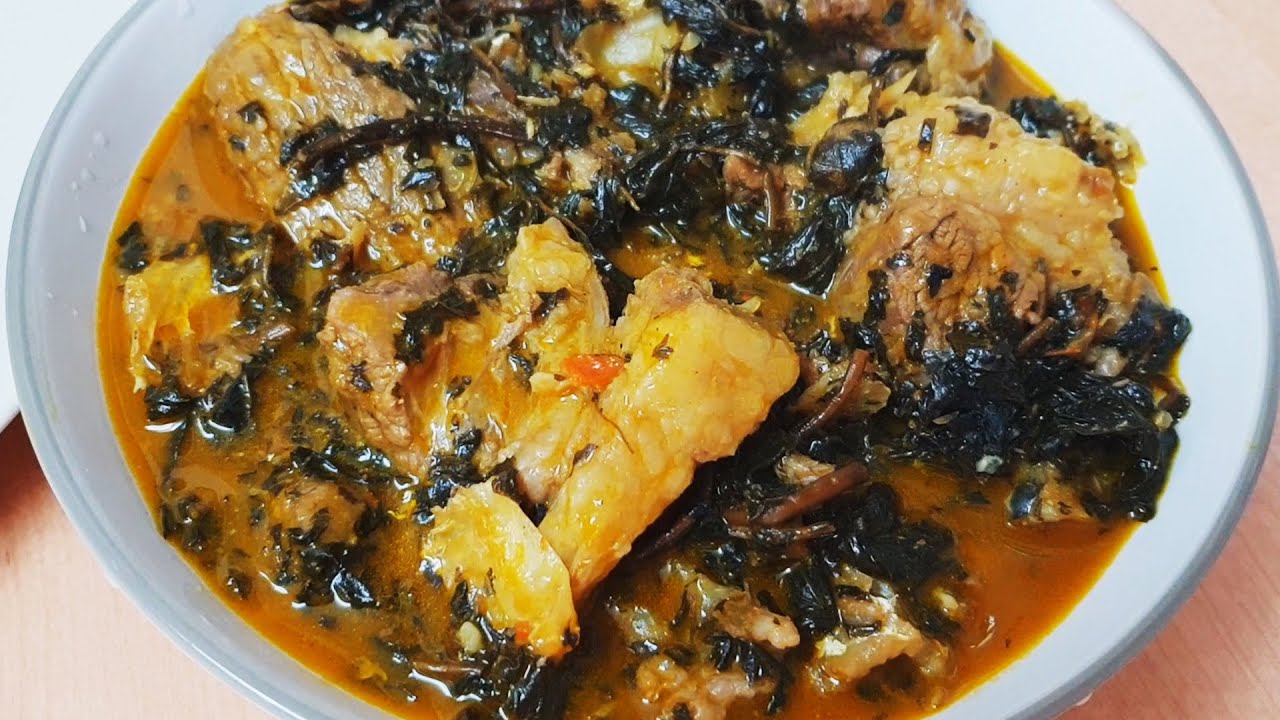
Bitterleaf Soup, traditionally known as Ofe Onugbu, is one of Nigeria’s most flavourful and satisfying traditional soups. Popular particularly among the Igbo people of southeastern Nigeria, this rich soup combines properly washed bitter leaves with assorted meats, stockfish, dried fish, palm oil, traditional seasonings, and a suitable thickener to create a deeply savoury meal.
Despite its name, a properly prepared Nigerian Bitterleaf Soup should not be overwhelmingly bitter. The bitter leaves are washed several times to reduce their natural bitterness while retaining the distinctive flavour that makes the soup unique. When we balance the leaves with rich meat stock, palm oil, traditional spices, and a thickening ingredient, we achieve a delicious soup with remarkable depth and aroma.
Bitterleaf Soup is commonly enjoyed with pounded yam, fufu, eba, semolina, wheat meal, or other Nigerian swallows. Below, we explain how we can prepare an authentic and delicious pot of Bitterleaf Soup at home.
What Is Bitterleaf Soup?
Bitterleaf Soup is a traditional Nigerian soup prepared with the leaves of the bitter leaf plant (Vernonia amygdalina). In Igbo cuisine, the dish is widely called Ofe Onugbu.
Although bitter leaf naturally has a strong bitter taste, we wash and squeeze the leaves repeatedly before cooking. This process removes much of the bitterness while preserving a mild distinctive flavour.
The exact method of preparing the soup can vary between households and communities. Some recipes use cocoyam paste as a thickener, while others may use achi, ofor, or another traditional soup thickener.
For an authentic Ofe Onugbu experience, cocoyam remains one of the most popular options because it gives the soup a smooth, rich consistency without overpowering the other ingredients.
Ingredients for Bitterleaf Soup
Before we begin cooking, we should prepare all the ingredients. Good-quality ingredients significantly improve the flavour of the finished soup.
Main Ingredients
- 2–3 cups washed bitter leaves
- 700 g–1 kg assorted meat
- 1 medium stockfish
- 1–2 pieces dried fish
- 6–8 small cocoyams
- 1–1½ cups red palm oil
- 2–3 tablespoons ground crayfish
- 1–2 tablespoons ground pepper
- 1 teaspoon traditional seasoning such as ogiri Igbo, optional
- 2–3 seasoning cubes
- Salt to taste
- Water or meat stock as required
We can adjust the quantities depending on the number of people we intend to serve and how thick we prefer the soup.
Preparing the Bitter Leaves Properly
One of the most important parts of this Bitterleaf Soup recipe is preparing the leaves correctly.
If we are using fresh bitter leaves, we should remove the leaves from the stems and wash them thoroughly. We rub and squeeze the leaves between our palms in clean water, discard the dark liquid, add fresh water, and repeat the process.
We continue washing until most of the intense bitterness has disappeared.
However, we should avoid removing every trace of bitterness. A slight bitter note contributes to the characteristic taste of authentic Ofe Onugbu.
If we are using already washed bitter leaves purchased from a Nigerian or African food market, we should rinse them and taste a small piece. If they remain excessively bitter, we can wash them a few more times before cooking.
How to Prepare the Cocoyam Thickener
Traditional Ofe Onugbu is often thickened with cocoyam.
We begin by washing the cocoyams thoroughly without peeling them. Place them in a pot, cover them with water, and boil until they become completely soft.
Drain the water and allow the cocoyams to cool slightly before peeling off their skins.
Next, we pound the cooked cocoyams in a mortar until we obtain a smooth, stretchy paste. If a mortar is unavailable, we can process them carefully using another suitable kitchen tool.
The smoother the cocoyam paste, the smoother the finished soup will become.
Once prepared, we set the paste aside until it is time to thicken the soup.
How to Make Bitterleaf Soup Step by Step
Making Bitterleaf Soup is simple when the ingredients are properly prepared. This traditional Nigerian soup is rich, flavorful, and commonly enjoyed with pounded yam, fufu, eba, or semolina.
Step 1: Prepare the Bitter Leaves
Wash the bitter leaves thoroughly with clean water to reduce excessive bitterness. If using dried leaves, soak them in warm water until soft, then rinse and drain.
Step 2: Cook the Meat
Place your beef, goat meat, or assorted meat in a pot. Add chopped onions, seasoning cubes, and salt. Add a little water and cook until tender.
Step 3: Add Stockfish and Dry Fish
Wash the stockfish and dry fish properly and add them to the cooked meat. Allow everything to simmer until the fish becomes tender.
Step 4: Add Palm Oil
Pour in enough palm oil and allow it to cook with the meat stock for a few minutes.
Step 5: Add the Thickener
Add your prepared cocoyam paste gradually. Cover the pot and allow the cocoyam to dissolve naturally into the soup, creating a rich and creamy consistency.
Step 6: Season the Soup
Add ground crayfish, pepper, ogiri (optional), seasoning cubes, and salt to taste. Stir thoroughly and allow the soup to simmer.
Step 7: Add the Bitter Leaves
Finally, add the washed bitter leaves. Stir well and cook for about 5–10 minutes until the leaves are tender and the flavors are fully combined.
How to Achieve the Perfect Bitterleaf Soup Consistency
An excellent Bitterleaf Soup should have a rich but balanced consistency.
We do not want the soup to become so thick that it feels heavy, nor should it be excessively watery.
Cocoyam thickens gradually, meaning we should give it enough time to dissolve before adding more. Adding too much thickener at once can produce a soup that is unnecessarily dense.
If the soup becomes too thick, warm meat stock is preferable to plain water because it helps maintain the depth of flavour.
When the consistency is correct, the soup should comfortably coat the meat while still containing enough liquid for dipping our chosen swallow.
Best Meat for Nigerian Bitterleaf Soup
One advantage of this traditional Nigerian soup is its versatility.
We can prepare Bitterleaf Soup using:
- Goat meat
- Beef
- Cow foot
- Shaki or tripe
- Cow skin
- Stockfish
- Dried fish
A combination of different meats usually produces the richest flavour.
Goat meat gives the soup a distinctive aroma, while beef offers a familiar savoury taste. Stockfish and dried fish add another layer of complexity to the broth.
Whatever protein combination we select, we should cook it until tender before completing the soup.
What to Eat With Bitterleaf Soup
Bitterleaf Soup pairs beautifully with many Nigerian swallow foods.
Popular Swallow Options
We can serve it with:
- Pounded yam
- Garri or eba
- Fufu
- Semolina
- Wheat meal
- Oat swallow
- Cassava-based swallow
Pounded yam and Bitterleaf Soup remain a particularly satisfying combination. The smooth texture and mild taste of pounded yam complement the bold flavours of Ofe Onugbu exceptionally well.
Serve the soup hot with generous portions of meat and fish.
Common Bitterleaf Soup Mistakes to Avoid
Even though this recipe is relatively straightforward, a few mistakes can affect the final result.
Leaving the Leaves Too Bitter
The leaves should retain only a pleasant hint of bitterness. If they are extremely bitter, they can dominate every other flavour in the soup.
We should therefore taste the washed leaves before adding them.
Over-Washing the Bitter Leaves
While excessive bitterness is undesirable, washing the leaves until absolutely no characteristic flavour remains can also affect the authenticity of the soup.
A slight bitter note is desirable.
Using Too Much Cocoyam
Adding excessive cocoyam can make the soup overly thick and mask its other ingredients.
We should add the thickener gradually and observe the consistency.
Using Weak Meat Stock
The flavour of the stock has a major influence on the finished soup.
We should allow the meat, stockfish, and dried fish to create a sufficiently flavourful broth before adding the remaining ingredients.
Adding Too Much Water
Adding large quantities of water toward the end of cooking can dilute the soup.
Where extra liquid is necessary, we should add it gradually and allow the soup to simmer again.
Tips for Making Delicious Ofe Onugbu
Several simple techniques can help us prepare a better pot of Bitterleaf Soup.
First, we should use fresh, good-quality palm oil because its flavour and appearance contribute significantly to the soup.
Second, we should give tougher meats sufficient time to become tender. Soft, well-seasoned meat makes the finished dish much more enjoyable.
Third, we should clean dried fish and stockfish carefully. Small pieces of sand or unwanted particles can ruin the eating experience.
Finally, we should taste throughout the cooking process. This allows us to balance the salt, pepper, bitterness, seasoning, and thickness before serving.
Can We Make Bitterleaf Soup Without Cocoyam?
Yes. Although cocoyam is a traditional and popular thickener for Ofe Onugbu, we can prepare Bitterleaf Soup using alternative Nigerian soup thickeners.
Depending on availability and personal preference, options may include achi or ofor.
However, different thickeners produce slightly different textures and flavours. Cocoyam creates a smooth consistency that complements the soup particularly well, which is why it remains a preferred option in many traditional recipes.
How to Store Bitterleaf Soup
If we have leftovers, we should allow the soup to cool before transferring it into a clean, airtight container.
It can then be refrigerated for short-term storage or frozen for longer preservation.
When reheating, we should transfer only the amount required into a pot and warm it thoroughly over medium heat. If refrigeration causes the soup to become thicker, a small quantity of water or stock can be added during reheating.
Repeatedly heating and cooling the entire batch should be avoided where possible.
Why This Traditional Bitterleaf Soup Recipe Works
A great Nigerian Bitterleaf Soup recipe depends on balance. We combine the mild remaining bitterness of the leaves with savoury meat stock, seafood flavours from crayfish and stockfish, richness from palm oil, and smooth thickness from cocoyam.
No single ingredient should completely overpower the others.
By properly preparing the bitter leaves, developing a rich stock, gradually adding the thickener, and carefully adjusting the seasonings, we can produce a pot of Ofe Onugbu that is deeply flavourful, aromatic, and satisfying.
FAQs about Bitterleaf Soup Recipe
Is Bitterleaf Soup Supposed to Taste Bitter?
Bitterleaf Soup should have a noticeable but mild bitter undertone. It should not be so bitter that the flavour becomes unpleasant. Proper washing helps us achieve the right balance.
What Is Bitterleaf Soup Called in Igbo?
Bitterleaf Soup is traditionally called Ofe Onugbu in Igbo cuisine.
What Thickener Is Used for Bitterleaf Soup?
Cooked and pounded cocoyam is one of the most traditional thickeners used for Ofe Onugbu. Achi or ofor may also be used in some recipes.
Can We Use Frozen Bitter Leaves?
Yes. Frozen bitter leaves can work very well. We should thaw, rinse, and taste them before cooking to determine whether further washing is necessary.
Can Bitterleaf Soup Be Prepared With Goat Meat?
Yes. Goat meat works exceptionally well because its rich flavour complements the bitter leaves, palm oil, crayfish, and traditional seasonings.
Can We Cook Bitterleaf Soup Without Ogiri?
Yes. Ogiri adds an authentic traditional flavour, but the soup can still be delicious without it if the other ingredients are properly seasoned.
Conclusion
Bitterleaf Soup, or Ofe Onugbu, remains one of the most distinctive dishes in Nigerian cuisine. With washed bitter leaves, assorted meats, stockfish, dried fish, crayfish, palm oil, cocoyam, pepper, and traditional seasoning, we can create a rich soup suitable for everyday meals, family gatherings, and special occasions.
The key is to maintain balance: the leaves should be mildly bitter rather than overpowering, the cocoyam should provide thickness without making the soup heavy, and the meat stock should be rich enough to carry the different flavours.
Once prepared correctly, we can serve our homemade Nigerian Bitterleaf Soup hot with pounded yam, eba, fufu, semolina, or any preferred swallow for a satisfying traditional Nigerian meal.