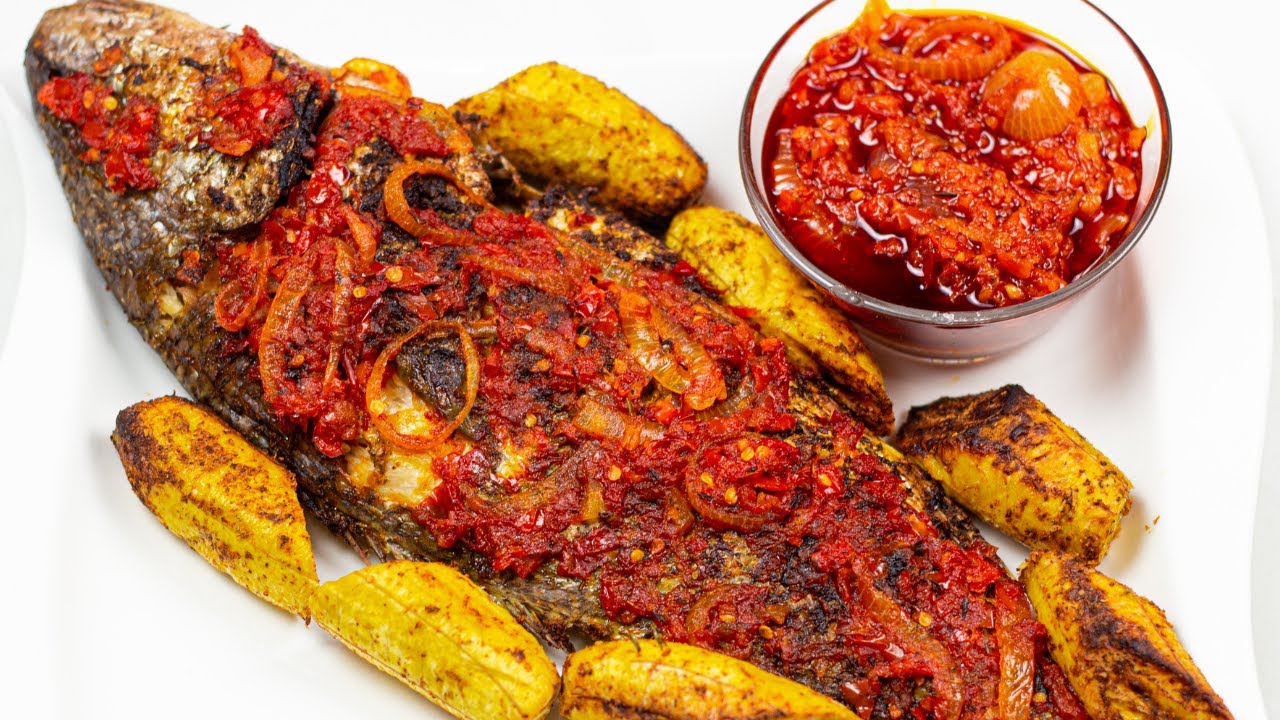
Bole and fish is a popular Nigerian street food made with roasted plantain and well-seasoned grilled fish, usually served with a rich, spicy pepper sauce. The meal is especially associated with Port Harcourt and other parts of Southern Nigeria, where it is prepared over hot charcoal for a distinctive smoky flavour.
A good Nigerian Bole and Fish recipe combines tender roasted plantain, juicy fish, aromatic spices, and a bold pepper sauce. Depending on personal preference, we can use ripe or unripe plantains, while fish options such as tilapia, croaker, or mackerel work beautifully.
With the right ingredients and preparation method, we can recreate the irresistible taste of Port Harcourt Bole and Fish at home.
Ingredients Needed for Bole and Fish
Before preparing the meal, we gather all the ingredients needed for the plantain, grilled fish, and spicy sauce. Fresh ingredients produce the best flavour and help us achieve the authentic taste associated with Nigerian Bole.
Ingredients for the Roasted Plantain
- 4 large ripe or semi-ripe plantains
- A small amount of vegetable oil for brushing, if desired
Ripe plantains give us a sweeter and softer result, while unripe plantains provide a firmer texture and more savoury flavour. We can also combine both varieties.
Ingredients for the Fish
- 1 large tilapia, croaker, or mackerel
- 1 tablespoon vegetable oil
- 1 teaspoon ground pepper
- 1 teaspoon paprika
- 1 teaspoon thyme
- 1 teaspoon curry powder
- 1 teaspoon garlic powder or fresh garlic
- 1 teaspoon ginger
- 1 seasoning cube
- Salt to taste
- 1 small onion
We can increase or reduce the seasoning depending on the size of the fish.
Ingredients for Bole Pepper Sauce
- 5 fresh tomatoes
- 5 red bell peppers
- 4–6 fresh chilli peppers
- 1 large onion
- 2 cloves garlic
- 1 teaspoon ginger
- 2 tablespoons vegetable or palm oil
- 1 seasoning cube
- Salt to taste
- Ground crayfish, optional
The amount of chilli pepper can be adjusted according to the desired heat level.
How to Prepare the Fish for Bole
The fish is one of the most important parts of an authentic Bole and Fish recipe, so proper seasoning helps us achieve a rich flavour throughout the flesh.
We begin by cleaning the fish thoroughly. Remove the scales, gills, and internal organs where necessary, then rinse it carefully with clean water. Pat the fish dry with a clean kitchen towel.
Next, make several shallow diagonal cuts on both sides of the fish. These cuts allow the seasoning to penetrate deeper while also helping the fish cook evenly.
Combine pepper, paprika, thyme, curry powder, garlic, ginger, seasoning cube, salt, and vegetable oil in a small bowl. Mix everything until we have a thick marinade.
Rub the mixture generously over the entire fish, including inside the cavity and into the cuts.
For deeper flavour, allow the seasoned fish to rest before grilling. Keeping it covered during this period prevents it from drying out.
How to Prepare Plantain for Nigerian Bole
Preparing plantain for Bole is straightforward.
First, cut off both ends of each plantain. Make a shallow cut along the skin and gently remove the peel without damaging the plantain.
We can leave smaller plantains whole. Very large plantains can be divided into two pieces if necessary.
When using an outdoor charcoal grill, place the plantains directly over moderate heat. The charcoal should be hot enough to roast them gradually without immediately burning the outside.
Turn the plantains regularly so that every side cooks evenly.
The outside will gradually become dark, slightly charred, and smoky, while the inside becomes tender.
When using ripe plantain, we must be particularly careful because its natural sugar causes it to caramelise and brown faster than unripe plantain.
How to Make Bole and Fish Step by Step
Bole and fish is a popular Nigerian street food, especially associated with Port Harcourt. It combines roasted plantain, grilled fish, and spicy pepper sauce for a smoky, flavourful meal.
Step 1: Prepare the Plantain
Peel ripe or semi-ripe plantains and make a few shallow cuts along the sides. Lightly rub them with oil and arrange them on a charcoal grill, oven rack, or barbecue.
Step 2: Roast the Plantain
Roast the plantains over medium heat, turning regularly until they are golden brown, tender, and slightly charred. Set aside and keep warm.
Step 3: Clean and Season the Fish
Clean your preferred fish, such as mackerel or croaker, and make small cuts on both sides. Season with salt, seasoning cubes, garlic, ginger, pepper, onions, and a little oil. Allow it to marinate briefly.
Step 4: Grill the Fish
Place the seasoned fish on the grill and cook over medium heat. Turn carefully so both sides become well browned and properly cooked. Brush with additional pepper mixture while grilling for extra flavour.
Step 5: Prepare the Pepper Sauce
Blend or roughly crush fresh peppers, tomatoes, and onions. Heat some palm oil, add sliced onions, then add the pepper mixture. Season with salt and seasoning cubes. Cook until the sauce becomes thick and aromatic.
Step 6: Serve Your Bole and Fish
Place the roasted plantain and grilled fish on a serving plate. Spoon the spicy pepper sauce generously over or beside them. Serve immediately while hot for the best taste.
How to Make Bole Without a Charcoal Grill
Although charcoal gives Nigerian Bole its signature smoky aroma, we can still prepare excellent Bole and Fish at home without charcoal.
An oven is one of the easiest alternatives.
Preheat the oven to approximately 200°C. Arrange the peeled plantains on a lined baking tray and roast them, turning occasionally, until browned and tender.
The seasoned fish can also be baked or grilled in the oven.
Place the fish on a lined baking tray or oven rack and cook until properly done. Using the grill or broiler setting during the final few minutes can help create a slightly charred exterior.
An air fryer can also work for smaller portions of plantain and fish.
While these methods may not provide exactly the same smoky flavour as charcoal grilling, they make it easier to enjoy homemade Bole whenever we want.
Best Fish to Use for Bole and Fish
The choice of fish can significantly affect the final flavour and texture.
Tilapia is one of the most popular options because it has firm flesh and absorbs marinades beautifully. Its size also makes it suitable for serving whole.
Croaker fish is another excellent choice. It has tender flesh and develops a delicious flavour when seasoned and grilled.
Mackerel provides a richer, oilier taste and works particularly well for those who enjoy strong fish flavour.
Whichever fish we choose, freshness is important. The fish should have firm flesh and a clean aroma before preparation.
Ripe or Unripe Plantain for Bole?
Both ripe and unripe plantains can be used successfully.
Ripe plantain becomes soft, naturally sweet, and caramelised during roasting. It creates a satisfying contrast with the spicy pepper sauce and savoury grilled fish.
Unripe plantain has a firmer, less sweet texture and pairs exceptionally well with heavily seasoned fish and spicy sauce.
Semi-ripe plantain offers a balance between both.
We can even serve a combination of ripe and unripe plantains on the same plate, making the meal more interesting.
Tips for Making the Best Nigerian Bole and Fish
A few preparation techniques can improve both the taste and appearance of homemade Bole.
First, we should avoid grilling the fish over extremely high heat. Intense heat can burn the seasoning outside while leaving the centre undercooked.
We should also allow the marinade to reach the cuts made in the fish rather than coating only the surface. This gives the flesh more flavour.
The pepper sauce should be properly reduced. A watery sauce will not provide the thick, concentrated taste expected from a good Port Harcourt-style Bole and Fish recipe.
When roasting plantain, regular turning is equally important. This prevents excessive burning while creating an evenly roasted exterior.
Finally, Bole tastes best when served hot. Preparing the pepper sauce before the plantain and fish finish grilling makes it easier to serve everything immediately.
What to Serve With Bole and Fish
Traditional Bole is already satisfying as a complete meal, but additional sides can make it even more enjoyable.
We can serve it with:
- Spicy roasted pepper sauce
- Sliced onions
- Fresh vegetables
- Roasted yam
- Roasted sweet potatoes
- Avocado
- Extra grilled fish
- Fresh tomato and onion garnish
In some variations, roasted yam or potatoes are served alongside the plantain. These additions absorb the spicy sauce beautifully.
How to Store Leftover Bole and Fish
If we have leftovers, the plantain, fish, and pepper sauce should preferably be stored separately in airtight containers.
Keep them refrigerated and reheat only the portion needed.
The roasted plantain can be warmed in an oven or air fryer to restore some of its roasted texture. The fish should be reheated gently to prevent the flesh from becoming excessively dry.
The pepper sauce can be reheated separately in a saucepan over low to medium heat.
Freshly prepared Bole remains the best option because the contrast between hot roasted plantain, smoky fish, and spicy sauce is a major part of the experience.
How to Achieve Authentic Port Harcourt Bole Flavour
The distinctive character of Port Harcourt Bole comes from the combination of charcoal-roasted food and intensely seasoned pepper sauce.
For a more authentic result, we should use charcoal whenever possible. The smoke produced during grilling adds a depth of flavour that an ordinary oven cannot completely reproduce.
We should also avoid making the pepper sauce too mild. Authentic Bole sauce usually has a noticeable pepper kick balanced by tomatoes, onions, spices, and oil.
Freshly grilled fish is equally important. Allowing parts of the fish skin to develop slight charring creates the smoky taste many people associate with Nigerian street-style Bole.
Common Mistakes to Avoid When Making Bole and Fish
Overcooking the plantain is one of the easiest mistakes to make, particularly when using very ripe plantains. The goal is a tender interior with a roasted exterior rather than plantain that becomes overly soft or burnt.
Another mistake is turning the fish too frequently. Fish can easily break apart on the grill, so we allow one side to become firm before carefully turning it.
Using an overly watery pepper sauce can also weaken the dish. The sauce needs enough cooking time for the tomatoes and peppers to reduce properly.
Finally, insufficient seasoning can make grilled fish taste bland. Seasoning both the exterior and inner sections of the fish produces a much richer result.
FAQs about African Salad Recipe
1. What is African Salad?
African Salad, popularly called Abacha, is a traditional Nigerian dish made mainly from dried, shredded cassava. It is especially popular among the Igbo people of southeastern Nigeria.
2. What are the main ingredients in African Salad?
The common ingredients include abacha, palm oil, ugba (oil bean), potash, crayfish, pepper, onions, seasoning, salt, garden eggs, and utazi leaves. Fish or ponmo may also be added.
3. Do I need to cook Abacha before preparing African Salad?
No. Abacha is usually soaked or rinsed in warm water until it becomes soft, then drained thoroughly before mixing with the other ingredients.
4. What does potash do in African Salad?
Potash helps the palm oil thicken and turn into a smooth, creamy sauce. Only a small quantity should be used.
5. Can I make African Salad without potash?
Yes. African Salad can be prepared without potash. However, the texture and appearance of the palm oil mixture may be slightly different.
6. What can I serve with African Salad?
African Salad can be served with fried or smoked fish, ponmo, garden eggs, onions, and fresh vegetables. It can be enjoyed as a snack, appetizer, or main meal.
7. How long can African Salad be stored?
For the best taste and texture, we recommend eating African Salad freshly prepared. Leftovers should be refrigerated in an airtight container and consumed promptly.
8. Is African Salad spicy?
It can be. The level of heat depends on the amount of fresh or ground pepper added, so we can easily adjust it to taste.
Conclusion
This Bole and Fish recipe gives us everything needed to prepare one of Nigeria’s most loved roasted meals at home. With properly roasted plantain, juicy grilled fish, and rich homemade pepper sauce, we can create a dish packed with smoky, spicy, and savoury flavours.
Whether we prepare our Bole over traditional charcoal or use an oven for convenience, careful seasoning and proper grilling make the biggest difference. Choosing fresh fish, allowing the marinade to penetrate deeply, turning the plantains carefully, and reducing the pepper sauce properly will produce a satisfying result.
For the classic experience, we serve the roasted plantain and fish immediately with plenty of spicy pepper sauce. The sweetness of ripe plantain, smokiness of the grilled fish, and heat of the sauce combine to create the bold flavour that makes Nigerian Bole and Fish such an unforgettable meal.