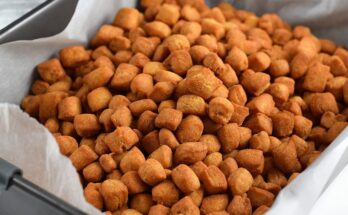
Nkwobi is a rich, spicy Nigerian delicacy made with tender cow foot coated in a thick, flavourful palm oil sauce. Popular in restaurants, bars, celebrations, and homes across Nigeria, this traditional dish is especially associated with the Igbo people of southeastern Nigeria. Its distinctive combination of palm oil, potash, ground crayfish, pepper, seasoning, and traditional spices creates a creamy sauce that clings beautifully to every piece of meat.
With the right ingredients and preparation method, we can make an authentic Nigerian Nkwobi recipe at home without complicated techniques. The most important steps are cooking the cow foot until completely tender and preparing the palm oil sauce correctly so that it becomes thick, smooth, and evenly coats the meat.
What Is Nkwobi?
Nkwobi is a traditional Nigerian dish prepared primarily with cow foot, although similar recipes can occasionally be prepared with other meats. The cooked cow foot is mixed with a seasoned palm oil sauce and traditionally served in a small wooden bowl.
One of the most important characteristics of authentic Nkwobi is its creamy orange-coloured sauce. This texture is created by carefully combining palm oil with dissolved potash, locally known as akanwu. The reaction thickens and changes the appearance of the palm oil, creating the signature base of the dish.
We then season the sauce with ingredients such as ground crayfish, pepper, seasoning cubes, ehuru or calabash nutmeg, and other traditional seasonings.
Ingredients for Nkwobi
Before we begin cooking, we should prepare all our ingredients. Having everything ready makes the cooking process easier and helps us achieve the proper balance of flavours.
Main Ingredients
- 1.5 kg cow foot, cleaned and cut into pieces
- ½ cup palm oil
- 1–2 teaspoons potash (akanwu)
- ½ cup warm water for dissolving the potash
- 2 tablespoons ground crayfish
- 1–2 teaspoons ground ehuru (calabash nutmeg)
- 1–2 fresh peppers or ground chilli pepper
- 1–2 seasoning cubes
- 1 small onion
- Salt to taste
- Ugba (oil bean), optional
- Utazi leaves for garnishing
- Sliced onion rings for serving
The quantity of pepper can be adjusted according to preference. Nkwobi is traditionally spicy, but we can reduce the heat while maintaining its characteristic flavour.
How to Prepare Cow Foot for Nkwobi
Cow foot requires sufficient cooking time because it contains tough connective tissues. Properly cooked cow foot should be very tender without completely falling apart.
We begin by washing the cow foot thoroughly. We place it in a large pot and add the chopped onion, seasoning cube, salt, and enough water to cook it.
We bring the mixture to a boil and continue cooking until the meat becomes tender. Depending on the toughness and size of the pieces, this can take a considerable amount of time.
A pressure cooker can significantly reduce the cooking time.
As the meat cooks, we should avoid adding excessive water at once. We can add more water gradually whenever necessary. By the time the cow foot is completely tender, only a small quantity of concentrated stock should remain.
This stock adds extra flavour to our Nkwobi sauce.
How to Prepare the Potash Mixture
Potash is responsible for transforming palm oil into the thick sauce traditionally associated with Nkwobi.
We place the potash in a small bowl and pour warm water over it. We stir thoroughly and allow the mixture to settle.
Once the particles have settled at the bottom, we carefully take the clear liquid from the top without including the sediment.
We should add the potash liquid gradually rather than pouring everything into the palm oil at once.
Too much potash can affect the taste of the dish, so moderation is important.
How to Make Nkwobi Sauce
In a clean bowl or pot, we pour in the palm oil. We gradually add small amounts of the dissolved potash liquid while stirring continuously.
As we stir, the palm oil begins to change colour and texture. It becomes thicker and develops a creamy orange appearance.
We continue stirring until the sauce becomes smooth and properly thickened.
Next, we add the ground crayfish, pepper, ground ehuru, seasoning cube, and a small amount of salt.
We mix everything thoroughly until the seasonings are evenly distributed throughout the palm oil sauce.
At this point, we should taste carefully and adjust the seasoning where necessary.
How to Make Nkwobi Step by Step
Once the cow foot and sauce are ready, assembling our Nkwobi becomes straightforward.
Step 1: Cook the Cow Foot
We place the cleaned cow foot in a pot with onions, seasoning, salt, and water. We cook until completely tender.
Step 2: Reduce the Stock
When the cow foot becomes tender, we allow most of the liquid to reduce. We retain only a small quantity of concentrated stock.
Step 3: Prepare the Potash Water
We dissolve potash in warm water, allow the sediment to settle, and carefully use only the clear liquid.
Step 4: Thicken the Palm Oil
We gradually add the potash liquid to the palm oil while stirring continuously until the oil becomes thick and creamy.
Step 5: Season the Sauce
We add crayfish, pepper, ehuru, seasoning, and salt to the thickened palm oil and mix thoroughly.
Step 6: Add the Cow Foot
We transfer the cooked cow foot into the prepared sauce.
We stir thoroughly so that every piece is generously coated with the spicy palm oil mixture.
Step 7: Warm the Nkwobi
We place the mixture over low heat for a few minutes while stirring gently.
We should avoid prolonged cooking at this stage. The purpose is simply to warm the ingredients together and allow the flavours to combine.
Step 8: Garnish and Serve
We transfer the finished Nkwobi into a serving bowl and garnish it with thinly sliced onions and utazi leaves.
Our homemade Nigerian Nkwobi is now ready to serve.
How to Get the Perfect Nkwobi Sauce
The sauce is one of the defining features of this dish. If the palm oil remains completely liquid, the Nkwobi will not have its traditional creamy consistency.
We should therefore add the potash solution gradually while stirring constantly. Small additions give us better control over the texture.
The quality of palm oil also matters. Fresh red palm oil produces a richer colour and more authentic flavour.
We should also avoid overheating the prepared palm oil mixture. Gentle heat is sufficient after the cow foot has been incorporated.
Traditional Spices That Give Nkwobi Its Authentic Flavour
Several ingredients work together to create the distinctive taste of authentic Nkwobi.
Ehuru, also called calabash nutmeg, adds a warm and slightly smoky aroma. Ground crayfish contributes savoury depth, while fresh pepper provides the characteristic spicy kick.
Utazi leaves have a slightly bitter taste that contrasts beautifully with the rich palm oil sauce. They are normally sliced thinly and added as a garnish rather than used in large quantities.
Ugba can also be included for additional texture and traditional flavour.
When these ingredients are properly balanced, we achieve the rich, spicy and aromatic taste associated with classic Nigerian Nkwobi.
Common Mistakes to Avoid When Making Nkwobi
One common mistake is undercooking the cow foot. Tough cow foot makes Nkwobi difficult to enjoy, so we should cook it until it is properly tender.
Another mistake is using too much potash. We only need enough to create the desired creamy consistency. Excessive quantities can negatively affect both the taste and texture.
We should also avoid adding too much leftover meat stock to the sauce. Excess liquid can make the finished Nkwobi watery.
Finally, we should introduce salt carefully. Since the cow foot, seasoning cubes, crayfish, and sauce all contribute flavour, it is better to taste before adding additional salt.
What to Serve With Nkwobi
Nkwobi is commonly enjoyed as a standalone delicacy rather than as a main meal accompanied by rice or swallow.
It can be served at parties, restaurants, family gatherings, or during relaxed evenings with friends. It pairs well with chilled non-alcoholic drinks and other Nigerian small chops or traditional delicacies.
For the most authentic presentation, we can serve Nkwobi in a traditional wooden bowl and finish it with fresh onion rings and thinly sliced utazi leaves.
How to Store Leftover Nkwobi
If we have leftover Nkwobi, we should allow it to cool before transferring it into an airtight food container.
We can refrigerate it and reheat only the portion required for serving. When reheating, gentle heat works best because excessive heat can alter the texture of the palm oil sauce.
If the sauce becomes too thick after refrigeration, we can add a very small quantity of warm water or stock while reheating and stir gently until the desired consistency returns.
Tips for Making the Best Nigerian Nkwobi
For consistently delicious Nkwobi, we should focus on a few essential details.
First, we must cook the cow foot until tender. Secondly, we should use fresh, good-quality palm oil because it forms the foundation of the sauce. Thirdly, the potash solution should always be added gradually.
Freshly ground crayfish and aromatic ehuru also make a noticeable difference in flavour.
Most importantly, we should taste the sauce before combining it with the meat. This allows us to balance the pepper, seasoning and salt before serving.
Why Homemade Nkwobi Tastes Better
Preparing Nkwobi at home gives us complete control over the ingredients, spice level, meat tenderness, and quantity of sauce.
We can make the cow foot as tender as we prefer, adjust the pepper according to taste, and use generous amounts of crayfish and traditional spices.
Homemade Nkwobi also allows us to prepare larger portions for family gatherings and celebrations while maintaining the authentic taste associated with Nigerian restaurants and local joints.
FAQs about Nkwobi Recipe
What is Nkwobi?
Nkwobi is a popular Nigerian delicacy made with tender cow foot cooked in a rich, spicy palm oil sauce. It is especially common among the Igbo people of southeastern Nigeria and is often served in restaurants and bars.
What are the main ingredients for Nkwobi?
The main ingredients include cow foot, palm oil, potash, ground crayfish, pepper, seasoning cubes, onions, salt, and traditional spices. Utazi leaves are commonly added as a garnish.
How long does it take to cook Nkwobi?
Cow foot can take about 1–2 hours to become tender, depending on the cooking method. Using a pressure cooker can significantly reduce the cooking time.
What does potash do in Nkwobi?
Potash helps the palm oil thicken and change into the creamy orange sauce traditionally associated with Nkwobi. Only a small quantity is required.
Can I make Nkwobi without potash?
Yes. You can prepare Nkwobi without potash by using alternatives such as baking soda, although the texture and traditional flavour may differ slightly.
Is Nkwobi very spicy?
Nkwobi is traditionally spicy, but you can easily control the heat by reducing or increasing the amount of fresh pepper used.
What can I serve with Nkwobi?
Nkwobi is usually enjoyed on its own as an appetizer or side dish. It pairs well with chilled drinks, palm wine, or other Nigerian dishes.
How should leftover Nkwobi be stored?
Keep leftover Nkwobi in an airtight container in the refrigerator and reheat thoroughly before serving.
Conclusion
This Nkwobi recipe gives us a simple method for preparing one of Nigeria’s most popular traditional delicacies at home. By cooking the cow foot until tender, correctly thickening the palm oil with potash, and seasoning the sauce with crayfish, pepper, ehuru, seasoning, onions, and utazi, we can create an authentic dish packed with rich Nigerian flavours.
The secret to delicious Nkwobi lies in patience and balance. The meat needs to be tender, the palm oil sauce should be creamy rather than watery, and the spices should complement one another without overpowering the dish.
Once everything is properly combined and finished with fresh onion rings and sliced utazi leaves, we have a delicious, aromatic, and satisfying Nigerian Nkwobi that is perfect for entertaining guests, celebrating special occasions, or simply enjoying a traditional Nigerian delicacy at home.