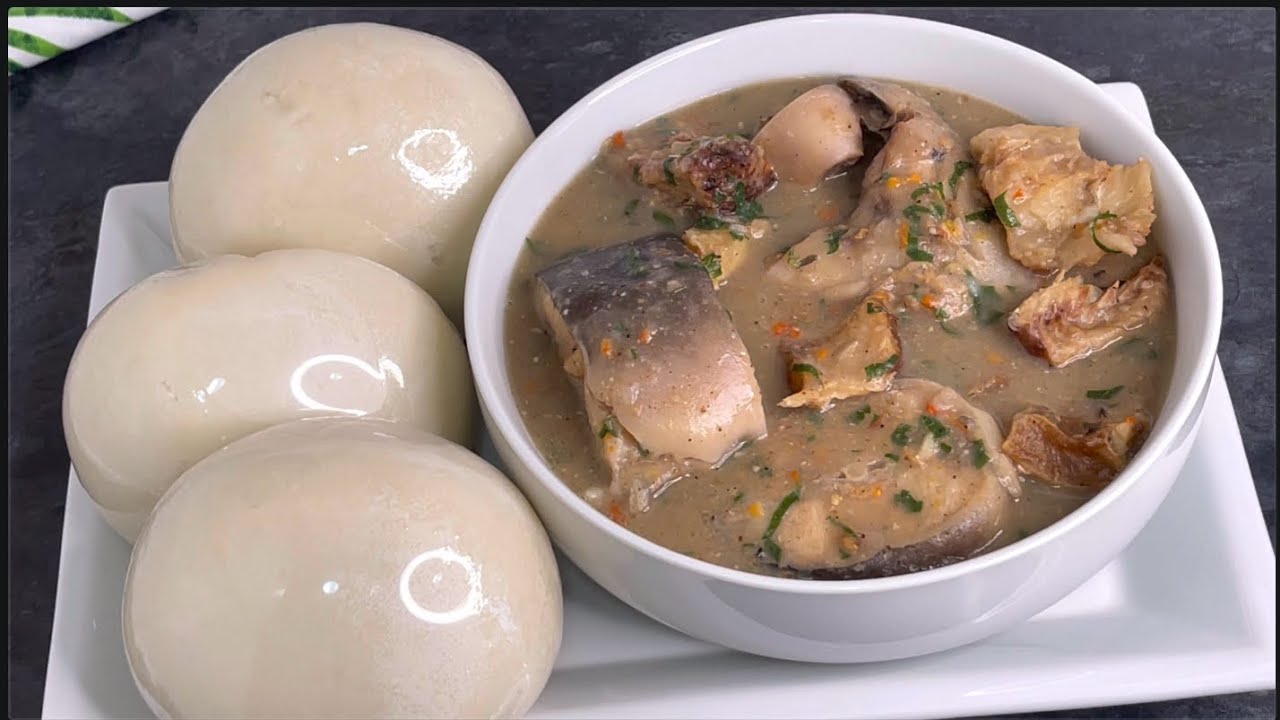
Nsala Soup, popularly known as White Soup or Ofe Nsala, is a rich and aromatic Nigerian soup celebrated for its distinctive flavour, light appearance, and satisfying consistency. Unlike many traditional Nigerian soups, Nsala Soup is prepared without palm oil, which explains why it is commonly called White Soup.
This traditional delicacy is closely associated with Igbo cuisine, particularly communities in southeastern Nigeria. It is commonly prepared with fresh fish, especially catfish, although chicken, goat meat, assorted meat, or other preferred proteins can also be used. The combination of fresh fish, yam thickener, traditional spices, pepper, and aromatic leaves creates a deeply savoury soup that pairs beautifully with pounded yam, fufu, semolina, eba, or other Nigerian swallows.
When we prepare an authentic Nsala Soup recipe, the secret is not an excessive number of ingredients. Instead, we focus on a carefully balanced blend of fresh protein, natural thickener, traditional seasonings, and aromatic herbs.
What Is Nsala Soup?
Nsala Soup is a traditional Nigerian soup known for its pale appearance and spicy, aromatic taste. The name “White Soup” comes from the absence of red palm oil, rather than from the soup being completely white.
A properly prepared bowl of Ofe Nsala usually has a slightly thick yet smooth broth. Yam serves as one of the most popular natural thickeners, while ingredients such as uziza, uda, pepper, crayfish, and seasoning help create its characteristic flavour.
Fresh catfish is particularly popular because its tender flesh absorbs the spices while releasing additional flavour into the broth.
The result is a warming soup with a bold traditional Nigerian character.
Ingredients for Nsala Soup
Before cooking, we gather all our ingredients and prepare them properly. Using fresh ingredients significantly improves the final flavour.
Main Ingredients
For a flavourful pot of Nigerian White Soup, we can use:
- 1 medium fresh catfish, cleaned and cut into portions
- 4–6 pieces of yam, peeled
- 2 tablespoons ground crayfish
- Fresh pepper, according to taste
- 1 teaspoon ground uziza seeds, optional but recommended
- A small quantity of uda, preferably crushed
- Fresh uziza leaves, sliced
- Seasoning cubes or powder, according to taste
- Salt, to taste
- Water, as required
We may also include ogiri or another traditional fermented seasoning when available. It adds a deeper, more traditional flavour, although it should be used moderately because of its powerful aroma.
Best Protein for Nsala Soup
Fresh catfish is one of the most popular choices for Ofe Nsala because it produces a delicate yet flavourful broth. However, the recipe is flexible enough to accommodate several proteins.
We can prepare Nsala Soup with:
- Catfish
- Chicken
- Goat meat
- Beef
- Assorted meat
- Stockfish
- Smoked fish
When using tougher proteins such as goat meat or beef, we should cook the meat until tender before adding the remaining ingredients.
Fresh fish requires gentler handling. Excessive stirring can cause the fish pieces to break apart inside the soup.
How to Clean Catfish for White Soup
Properly cleaning catfish is important because its skin can be naturally slimy.
We place the catfish pieces in a bowl and carefully wash them with warm water. Salt, lemon, or lime can also help remove the slippery coating. We should avoid using extremely hot water because it can begin cooking the delicate fish.
After cleaning, we rinse the fish thoroughly with clean water and set it aside.
Handling the fish gently throughout the process helps us maintain attractive whole portions when the soup is served.
How to Make Nsala Soup Step by Step
Preparing this Nsala Soup recipe is straightforward once the ingredients are ready.
Step 1: Cook the Yam
We peel the yam, wash it thoroughly, and place it in a small pot with enough water to cook.
The yam should cook until completely soft. Once tender, we remove it from the water and pound or mash it into a smooth paste.
This yam paste will become our natural Nsala Soup thickener.
We should ensure that the paste is smooth because large yam lumps take longer to dissolve inside the soup.
Step 2: Prepare the Catfish Broth
We place the cleaned catfish portions carefully inside a suitable pot.
Next, we add enough water to create the quantity of soup required. We season lightly with salt and seasoning cubes, keeping in mind that more seasoning can be adjusted later.
We then add the ground crayfish, pepper, crushed uda, and ground uziza seeds.
The pot is covered and allowed to simmer gently.
Fresh catfish cooks relatively quickly, so we do not need prolonged cooking.
Step 3: Add the Yam Thickener
Once the broth has developed flavour, we add small portions of the mashed yam into the pot.
Instead of adding one large lump, we distribute several smaller balls of yam paste around the soup. This allows the thickener to dissolve gradually and evenly.
We cover the pot and allow the soup to simmer.
As the yam dissolves, the broth becomes slightly thicker.
If the soup becomes too thick, we add a small amount of warm water. If it remains too watery, we can add another small portion of mashed yam.
Step 4: Add the Traditional Seasonings
We taste the broth and adjust the salt, pepper, crayfish, and seasoning as necessary.
If we are using ogiri, this is an appropriate stage to introduce a small quantity.
The traditional seasonings should complement one another rather than overwhelm the flavour of the fish.
Step 5: Add the Uziza Leaves
Toward the end of cooking, we add the sliced fresh uziza leaves.
Uziza has a distinctive peppery aroma that gives Ofe Nsala additional depth. We add it close to the end so that its fresh fragrance remains noticeable.
After adding the leaves, we allow the soup to simmer briefly.
Our Nigerian Nsala Soup is then ready to serve.
How to Thicken Nsala Soup Properly
Yam is one of the most traditional and reliable ingredients for thickening White Soup.
The important point is moderation.
Nsala Soup should have enough body to coat the swallow lightly, but it should not become extremely heavy or paste-like. We therefore add the mashed yam gradually and allow each portion enough time to dissolve before deciding whether more is necessary.
Where fresh yam is unavailable, some cooks use yam flour or other suitable traditional thickeners, but cooked yam provides an especially smooth texture and natural flavour.
How to Make Nsala Soup With Chicken
Catfish is not compulsory.
For Chicken Nsala Soup, we begin by seasoning and cooking the chicken with water until it becomes tender. Because chicken generally takes longer to cook than fresh fish, it should be given sufficient time before we introduce the remaining ingredients.
Once the chicken is tender, we add:
Pepper, crayfish, uda, uziza seed, seasoning, and the yam thickener.
We allow everything to simmer until the yam dissolves and the broth reaches our preferred consistency.
Fresh uziza leaves are added shortly before removing the soup from the heat.
This variation produces a rich, meaty White Soup that is especially satisfying with pounded yam.
Important Tips for Making the Best Ofe Nsala
Although the recipe is simple, a few details make a significant difference.
Use Fresh Fish Whenever Possible
Fresh catfish gives Nsala Soup a cleaner flavour and softer texture. The freshness of the fish is particularly noticeable because palm oil and heavy ingredients do not mask its natural taste.
Do Not Over-Thicken the Soup
White Soup should remain smooth and spoonable. Excessive yam can make it too heavy.
We therefore add the thickener gradually.
Control the Pepper
Nsala Soup is traditionally enjoyed with noticeable heat, but pepper should not overpower every other ingredient.
We adjust the quantity according to personal preference.
Handle the Fish Carefully
Once catfish begins cooking, frequent stirring can break the pieces.
Rather than aggressively stirring the pot, we can gently shake or rotate it when necessary.
Add Uziza Leaves Near the End
Long cooking can reduce the fresh fragrance of uziza leaves. Adding them during the final stage preserves more of their distinctive flavour.
Season Gradually
Crayfish, fermented seasoning, stockfish, seasoning cubes, and salt can all contribute saltiness or strong flavours.
We taste the broth before adding additional seasoning.
What to Serve With Nsala Soup
Nsala Soup is traditionally eaten with Nigerian swallow foods. Its smooth, spicy broth works especially well with soft, stretchy swallows.
Popular choices include:
- Pounded yam
- Fufu
- Eba
- Semolina
- Wheat swallow
- Oat swallow
Among these options, pounded yam remains one of the most satisfying accompaniments because its smooth texture complements the rich White Soup perfectly.
We serve the soup hot, placing generous portions of fish or meat into each bowl.
Common Mistakes to Avoid When Cooking White Soup
Even a simple Nsala Soup recipe can produce disappointing results when a few important details are overlooked.
One common mistake is adding too much yam thickener at once. The soup continues thickening as the yam dissolves, so adding excessive amounts early can result in an overly thick consistency.
Another mistake is overcooking fresh catfish. Catfish is delicate and does not require the same cooking time as goat meat or beef.
We should also avoid excessive stirring after adding the fish.
Using too much uda or fermented seasoning can also make the soup unnecessarily bitter or overpowering. Traditional spices should support the overall flavour rather than dominate it.
Finally, Nsala Soup should not contain palm oil when we are preparing the classic White Soup style. Its distinctive appearance comes from cooking without palm oil.
How to Store Leftover Nsala Soup
If we have leftover soup, we allow it to cool before transferring it into a clean, airtight food container.
The soup can be refrigerated for short-term storage. For longer storage, freezing is more suitable.
When reheating, we warm only the quantity we intend to eat and add a little water if the soup has become thicker during storage.
Fish-based Nsala Soup should always be stored promptly because seafood is highly perishable.
Why Yam Works So Well in Ofe Nsala
Cooked yam contributes more than thickness.
As it dissolves into the broth, it creates a smooth consistency without introducing the colour that palm oil would provide. It also has a mild flavour, meaning the fish, crayfish, pepper, uda, and uziza remain the dominant flavours.
This explains why yam remains one of the most effective ingredients for achieving the classic texture associated with White Soup.
The amount required depends on the volume of liquid. We therefore rely on gradual addition rather than a rigid quantity.
How to Get the Authentic Nsala Soup Flavour
Authentic flavour comes from balance.
We begin with a good protein base, preferably fresh catfish or properly seasoned meat. We then build the broth with crayfish, pepper, traditional spices, and a modest amount of seasoning.
The yam provides body while uziza leaves and seeds introduce their characteristic warm, peppery aroma.
No single ingredient should dominate.
When each element is used carefully, the finished soup develops several layers of flavour: the savouriness of the fish, sweetness of crayfish, heat from pepper, fragrance of traditional spices, and subtle freshness of uziza.
Simple Ways to Improve Your Nsala Soup
For an even richer result, we can prepare the broth with a combination of fresh fish and a small amount of stockfish. The stockfish adds depth, while fresh catfish maintains the tender texture associated with traditional Ofe Nsala.
Freshly ground pepper and crayfish can also provide a more pronounced aroma than ingredients that have been stored for a long time.
Most importantly, we should allow the soup enough time to develop flavour without overcooking the fish or aromatic leaves.
FAQs about Nsala Soup (White Soup) Recipe
1. What is Nsala Soup?
Nsala Soup, also known as White Soup, is a traditional Nigerian soup popular among the Igbo people. It is typically prepared without palm oil, giving it its distinctive light appearance.
2. Why is Nsala Soup called White Soup?
It is called White Soup because palm oil is not traditionally used in its preparation. The soup gets its colour mainly from the meat or fish stock and thickener.
3. What is used to thicken Nsala Soup?
Traditionally, boiled yam is pounded into a smooth paste and added to thicken the soup. Yam flour can also serve as a convenient alternative.
4. What meat is best for Nsala Soup?
Nsala Soup can be prepared with goat meat, chicken, beef, catfish, or assorted meat. Catfish and goat meat are particularly popular choices.
5. What spices are used in Nsala Soup?
Common seasonings include uziza seeds, uda, ehuru, pepper, crayfish, seasoning cubes, and salt. Ingredients may vary according to regional and personal preferences.
6. Can I prepare Nsala Soup without yam?
Yes. If fresh yam is unavailable, yam flour or another suitable soup thickener may be used, although the flavour and texture may differ slightly.
7. What can I eat with Nsala Soup?
Nsala Soup pairs perfectly with pounded yam, fufu, eba, semolina, or wheat swallow.
8. How do I prevent Nsala Soup from becoming too thick?
Add the yam thickener gradually while stirring. If the soup becomes too thick, add a little meat or fish stock until the desired consistency is achieved.
9. Can Nsala Soup be stored?
Yes. Allow it to cool completely before refrigerating in an airtight container. Reheat thoroughly before serving.
Conclusion
A well-prepared Nsala Soup (White Soup) recipe combines simplicity with bold traditional Nigerian flavour. With fresh catfish, cooked yam, crayfish, pepper, uziza, uda, seasoning, and carefully controlled cooking, we can prepare a smooth and deeply satisfying soup without using palm oil.
The key is maintaining the correct balance: enough yam to create a lightly thickened broth, enough pepper and traditional spices to provide warmth, and gentle cooking to preserve the texture of the fish.
Whether we serve our Ofe Nsala with pounded yam, fufu, eba, semolina, or another favourite swallow, the result is a comforting Nigerian meal rich in flavour, aroma, and traditional character. For anyone searching for an authentic and straightforward way to make Nigerian White Soup at home, this Nsala Soup recipe provides everything required for a delicious pot from start to finish.