Sushi Vinegar Recipe: Sushi vinegar is one of the most important ingredients for making flavorful, balanced, and restaurant-quality sushi rice at home. It is the seasoned vinegar mixture that gives sushi rice its signature mild tang, gentle sweetness, and delicate savory finish. Without the right sushi vinegar, even perfectly cooked rice can taste plain, heavy, or incomplete.
When we prepare sushi vinegar properly, we create the foundation for many popular Japanese-style dishes, including sushi rolls, nigiri, temaki hand rolls, poke bowls, onigiri, chirashi sushi, and sushi rice bowls. The recipe is simple, but the balance matters. A good sushi vinegar recipe should never taste harsh, overly sweet, or too salty. It should blend smoothly into warm rice and enhance the rice without overpowering the fillings.
This step-by-step guide explains how we make homemade sushi vinegar using only a few pantry ingredients: rice vinegar, sugar, and salt. With the right ratio and technique, we can prepare a clean, balanced sushi vinegar that tastes fresh, authentic, and reliable every time.
What Is Sushi Vinegar?
Sushi vinegar is a seasoned rice vinegar mixture used to flavor cooked short-grain Japanese rice. It is usually made from rice vinegar, sugar, and salt. Some versions may include kombu, a type of dried kelp, for extra umami depth, but the basic recipe remains very simple.
The purpose of sushi vinegar is to season the rice after cooking. Once the rice is warm and tender, we gently fold the vinegar mixture into it. The warm rice absorbs the seasoning, creating glossy, lightly tangy, and flavorful sushi rice.
Sushi vinegar should not be confused with plain rice vinegar. Rice vinegar is the base ingredient, while sushi vinegar is the finished seasoned mixture. Plain rice vinegar tastes sharp and acidic on its own, but when sugar and salt are added, it becomes rounded, smooth, and ideal for sushi rice.
Ingredients You’ll Need
To make a classic homemade sushi vinegar recipe, we need only a few simple ingredients.
Main Ingredients
- ½ cup rice vinegar
- ¼ cup granulated sugar
- 1 tablespoon salt
Optional Ingredient
- 1 small piece kombu, about 2 inches long, for added umami flavor
These measurements make enough sushi vinegar for approximately 4 to 5 cups of cooked sushi rice, depending on how strongly seasoned we want the rice to taste.
Best Rice Vinegar for Sushi Vinegar
For the best result, we should use unseasoned rice vinegar. This gives us full control over the sweetness and saltiness of the final mixture. Many stores sell bottled “seasoned rice vinegar,” but that already contains sugar and salt, which can make it harder to adjust the flavor.
The best vinegar for this recipe is:
- Japanese rice vinegar
- Unseasoned rice vinegar
- Mild, pale, clean-tasting vinegar
- Vinegar with a gentle acidity
Avoid using strong vinegars like white vinegar, apple cider vinegar, malt vinegar, or balsamic vinegar. These have bold flavors that can overpower sushi rice and change the traditional taste completely.
Step-by-Step Guide to Making Sushi Vinegar
Step 1: Measure the Rice Vinegar
We begin by measuring ½ cup of rice vinegar into a small saucepan. Rice vinegar forms the base of the sushi vinegar and provides the bright, tangy flavor that balances the richness of sushi fillings.
The vinegar should smell mild and slightly sweet, not harsh or overpowering. Using good-quality rice vinegar gives the finished sushi rice a clean and balanced taste.
Step 2: Add the Sugar
Next, we add ¼ cup of granulated sugar to the saucepan. Sugar softens the acidity of the vinegar and gives sushi rice its gentle sweetness.
The sugar should not dominate the mixture. Instead, it should round out the vinegar and create a smooth flavor. When mixed into rice, the sweetness should be subtle and pleasant.
Step 3: Add the Salt
We then add 1 tablespoon of salt. Salt is essential because it gives depth to the sushi vinegar and prevents the rice from tasting flat.
The salt also helps balance the sweetness and acidity. Without salt, sushi rice may taste overly sweet or weak. With the right amount, the rice becomes more flavorful and satisfying.
Step 4: Warm the Mixture Gently
Place the saucepan over low heat. Stir the mixture gently until the sugar and salt fully dissolve.
We do not need to boil the vinegar. In fact, boiling is not recommended because it can make the vinegar aroma too strong and reduce the delicate flavor. The goal is only to warm the mixture enough to dissolve the sugar and salt smoothly.
This usually takes 2 to 3 minutes.
Step 5: Add Kombu for Extra Flavor
For a deeper, more traditional flavor, we can add a small piece of kombu while the vinegar mixture warms. Kombu gives the sushi vinegar a gentle savory taste without making it heavy.
After the sugar and salt dissolve, remove the saucepan from the heat and allow the kombu to steep for about 10 to 15 minutes. Then remove the kombu before using or storing the vinegar.
This step is optional, but it adds a subtle restaurant-style flavor to homemade sushi rice.
Step 6: Cool the Sushi Vinegar
Once the mixture is fully dissolved, remove it from the heat and let it cool to room temperature.
Cooling the vinegar helps preserve the clean flavor. We can use it immediately once it cools slightly, or we can transfer it to a clean jar for later use.
Step 7: Store in a Clean Jar
Pour the cooled sushi vinegar into a clean glass jar or bottle. Seal it tightly and store it in the refrigerator.
Homemade sushi vinegar can usually be stored for several weeks when kept refrigerated in a clean container. Always use a clean spoon when measuring it out to keep the mixture fresh.
How to Use Sushi Vinegar for Sushi Rice
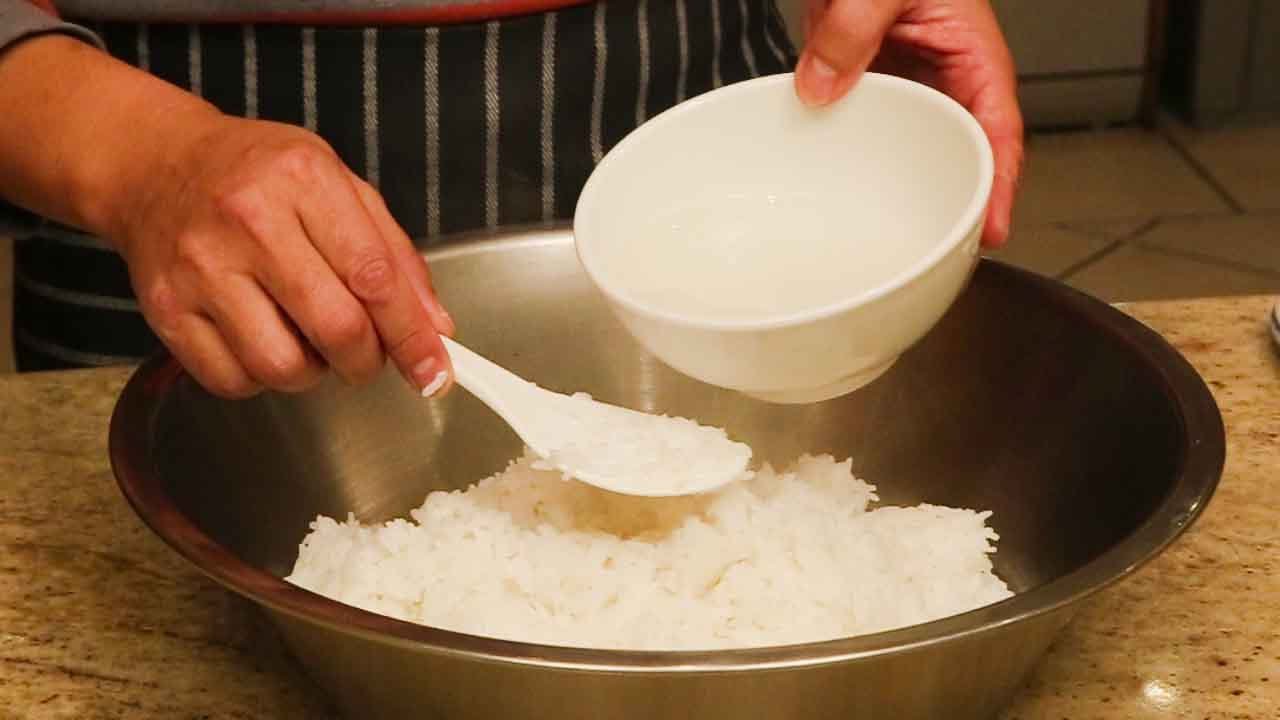
To use sushi vinegar properly, we need freshly cooked short-grain Japanese rice or sushi rice. The vinegar should be added while the rice is still warm, not cold.
A good starting ratio is:
- 2 tablespoons sushi vinegar for every 1 cup of cooked sushi rice
For a fuller flavor, we can increase the amount slightly. The rice should taste seasoned but not wet, sour, or overly sweet.
After adding the vinegar, gently fold the rice using a rice paddle or wooden spoon. Avoid mashing the grains. The goal is to coat the rice evenly while keeping each grain soft and intact.
Tips for Perfect Sushi Vinegar
Use Unseasoned Rice Vinegar
Unseasoned rice vinegar gives us the best control over the recipe. Seasoned vinegar can be useful in a hurry, but homemade sushi vinegar tastes fresher and more balanced.
Do Not Boil the Mixture
Sushi vinegar should be warmed gently, not boiled. Boiling can make the vinegar sharper and reduce its delicate aroma.
Dissolve the Sugar and Salt Completely
The sugar and salt must fully dissolve before the vinegar is used. Undissolved grains can create uneven flavor in the sushi rice.
Adjust to Taste
Some people prefer sweeter sushi rice, while others prefer a more tangy taste. We can adjust the sugar slightly depending on preference. For a sweeter version, add 1 extra tablespoon of sugar. For a sharper version, reduce the sugar slightly.
Use Warm Rice
Sushi vinegar blends best into warm rice. Cold rice will not absorb the seasoning as evenly.
Common Mistakes to Avoid
Using the Wrong Vinegar
Strong vinegars can ruin the delicate flavor of sushi rice. Always use mild rice vinegar for the best result.
Adding Too Much Vinegar to Rice
Too much sushi vinegar can make rice soggy and sour. Start with a smaller amount, mix gently, then taste before adding more.
Stirring the Rice Too Roughly
Sushi rice should be folded, not stirred aggressively. Rough mixing can break the rice grains and make the texture sticky in the wrong way.
Skipping the Salt
Salt may seem like a small ingredient, but it is very important. It balances the sweetness and acidity and gives the rice a complete flavor.
Using Hot Vinegar Directly on Rice
Warm vinegar is fine, but very hot vinegar can affect the rice texture. Let the mixture cool slightly before using.
Sushi Vinegar Ratio Guide
A balanced homemade sushi vinegar ratio is:
- 2 parts rice vinegar
- 1 part sugar
- ⅓ part salt
This ratio gives a clean, classic flavor that works well for most sushi rice recipes. We can scale the recipe up or down depending on how much rice we are making.
For a small batch:
- 4 tablespoons rice vinegar
- 2 tablespoons sugar
- 2 teaspoons salt
For a larger batch:
- 1 cup rice vinegar
- ½ cup sugar
- 2 tablespoons salt
This makes it easy to prepare sushi vinegar for small family meals or larger gatherings.
How to Store Homemade Sushi Vinegar
Homemade sushi vinegar should be stored in a clean, airtight container. A glass jar or bottle is best because it does not absorb odor or flavor.
Keep it in the refrigerator for the best freshness. Before using, give the jar a gentle shake to make sure the mixture is evenly blended.
If the vinegar smells unpleasant, looks cloudy in an unusual way, or develops any strange texture, discard it and make a fresh batch.
Can We Make Sushi Vinegar Without Sugar?
Yes, we can make sushi vinegar with less sugar or a sugar substitute, but the flavor will be different. Sugar is part of the traditional balance because it softens the acidity of the vinegar.
For a less sweet version, reduce the sugar from ¼ cup to 2 tablespoons. The result will be sharper and lighter.
For a sugar-free version, we can use a suitable sweetener, but we should add it gradually and taste carefully because many sweeteners are stronger than sugar.
Can We Use Sushi Vinegar for Other Recipes?
Yes, sushi vinegar is useful beyond sushi rice. It can add bright flavor to many dishes.
We can use it for:
- Cucumber salad
- Pickled vegetables
- Rice bowls
- Cold noodle salads
- Seaweed salad
- Poke bowls
- Marinades
- Japanese-style dressings
Because it is sweet, salty, and tangy, sushi vinegar works well when we want a light and balanced seasoning.
Homemade Sushi Vinegar vs Store-Bought Sushi Vinegar
Store-bought sushi vinegar is convenient, but homemade sushi vinegar gives us better control over flavor. We can adjust the sweetness, saltiness, and acidity to match our preference.
Homemade sushi vinegar also tastes fresher because it does not need extra preservatives or flavor stabilizers. With only three basic ingredients, we can make a clean and reliable seasoning at home anytime.
Best Rice to Pair with Sushi Vinegar
The best rice for sushi vinegar is short-grain Japanese rice. This rice has the right amount of starch to become sticky while still holding its shape.
Avoid long-grain rice because it is too dry and separate for traditional sushi. Jasmine rice and basmati rice have strong aromas and different textures, so they are not ideal for sushi rice.
For the best result, rinse the rice several times until the water runs mostly clear, then cook it properly before seasoning with sushi vinegar.
FAQs about Sushi Vinegar Recipe
1. What is sushi vinegar made of?
Sushi vinegar is usually made with rice vinegar, sugar, and salt. These three ingredients create the sweet, tangy, and lightly salty flavor used to season sushi rice.
2. Can we use regular vinegar instead of rice vinegar?
Rice vinegar is best because it has a mild and slightly sweet taste. Regular white vinegar can be too sharp, but it may be used in small amounts if diluted and balanced with sugar.
3. What is the best ratio for sushi vinegar?
A common ratio is 5 tablespoons rice vinegar, 2 tablespoons sugar, and 1 teaspoon salt for about 3 cups of cooked sushi rice. We can adjust the sweetness or saltiness based on taste.
4. Do we need to heat sushi vinegar?
Yes, it is helpful to gently warm the vinegar with sugar and salt until they dissolve. We should not boil it, because boiling can make the flavor too strong.
5. Can sushi vinegar be made ahead of time?
Yes. We can prepare sushi vinegar ahead and store it in a clean bottle or jar. Keep it in the refrigerator for best freshness.
6. How long does homemade sushi vinegar last?
Homemade sushi vinegar can last for about 2 to 4 weeks in the refrigerator if stored properly in an airtight container.
7. Is sushi vinegar the same as rice vinegar?
No. Rice vinegar is plain vinegar, while sushi vinegar is rice vinegar mixed with sugar and salt.
8. Can we use sushi vinegar for other recipes?
Yes. Sushi vinegar can be used in salad dressings, pickled vegetables, marinades, rice bowls, and Asian-style sauces.
Final Thoughts
A good sushi vinegar recipe is simple, balanced, and dependable. With rice vinegar, sugar, and salt, we can create the essential seasoning that turns plain rice into flavorful sushi rice. The key is to warm the mixture gently, dissolve the ingredients completely, and fold it carefully into warm rice.
Once we master homemade sushi vinegar, we can make better sushi rolls, rice bowls, hand rolls, and Japanese-inspired dishes with confidence. This recipe is easy to prepare, easy to store, and flexible enough for different tastes.