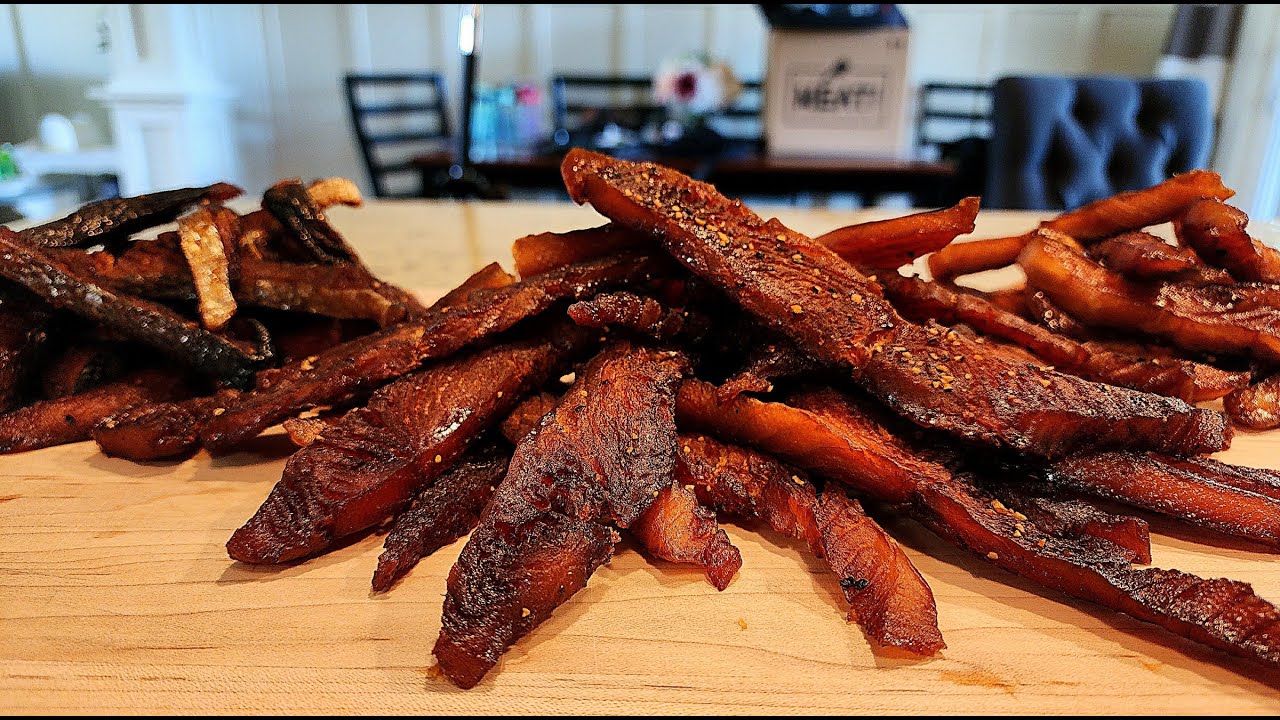
Salmon Jerky Recipe: Salmon Jerky is a flavorful, protein-rich snack made by marinating thin strips of salmon and slowly drying them until they develop a chewy texture and concentrated smoky taste. Unlike traditional beef jerky, salmon jerky delivers a lighter texture with rich omega-3 fatty acids and deep savory flavor. It is perfect for healthy snacking, meal prep, outdoor adventures, and high-protein diets.
Homemade salmon jerky allows us to control the ingredients, seasoning level, sweetness, sodium content, and texture. The result is a fresher and more delicious jerky than most store-bought varieties.
Ingredients You’ll Need
Before we begin, let us gather all the ingredients required for this delicious recipe.
Main Ingredients
- 2 pounds fresh salmon fillets
- 1/4 cup soy sauce
- 2 tablespoons brown sugar
- 1 tablespoon honey
- 1 tablespoon lemon juice
- 1 teaspoon garlic powder
- 1 teaspoon onion powder
- 1 teaspoon black pepper
- 1/2 teaspoon smoked paprika
- 1/2 teaspoon red pepper flakes (optional)
- 1 teaspoon sea salt
Optional Flavor Enhancers
- Maple syrup
- Liquid smoke
- Crushed ginger
- Sesame oil
- Cayenne pepper
- Worcestershire sauce
Best Salmon for Jerky
Choose High-Quality Salmon
For the best results, we should select fresh, firm salmon fillets with vibrant color and minimal odor. Excellent options include:
- Sockeye salmon
- Atlantic salmon
- Coho salmon
- King salmon
Wild-caught salmon often provides a richer flavor and firmer texture, while farm-raised salmon tends to be fattier and softer.
Essential Equipment
Tools Needed for Perfect Salmon Jerky
To make professional-quality salmon jerky at home, we need:
- Sharp knife
- Cutting board
- Mixing bowls
- Ziplock bags or airtight container
- Paper towels
- Food dehydrator or oven
- Wire rack
- Parchment paper
A dehydrator provides the most consistent results, but an oven works extremely well when properly monitored.
How to Cook Salmon Jerky – Step-by-Step Guide
1. Prepare the Salmon
Start with fresh salmon fillets. Remove the skin and bones, then slice the fish into thin strips. Thin slices dry faster and create the perfect jerky texture. Pat the strips dry with paper towels before seasoning.
2. Marinate the Salmon
Place the salmon strips in a bowl and add soy sauce, brown sugar, black pepper, garlic powder, and a little smoked paprika. Mix well so every strip is coated evenly. Cover and refrigerate for 4–8 hours to absorb the flavors.
3. Preheat and Arrange
Preheat your oven or dehydrator to a low temperature, around 160–170°F (70–75°C). Arrange the salmon strips on a wire rack or dehydrator tray, leaving space between each piece for airflow.
4. Dry the Salmon Slowly
Cook the salmon for 3–5 hours, depending on thickness. Turn the pieces halfway through for even drying. The jerky is ready when it feels dry but still slightly chewy. Avoid overcooking, or it may become too hard.
5. Cool and Store Properly
Allow the salmon jerky to cool completely before storing. Place it in an airtight container or zip bag. Keep refrigerated for freshness and enjoy as a healthy, protein-rich snack anytime.
How to Know When Salmon Jerky Is Done
Perfect Texture Indicators
Proper salmon jerky should have:
- Dry exterior
- Flexible center
- Slight chewiness
- No wet spots
- Rich concentrated aroma
Avoid over-drying, as it can make the jerky brittle and tough.
Flavor Variations for Salmon Jerky
Sweet Maple Salmon Jerky
Add:
- Maple syrup
- Cracked black pepper
- A touch of cinnamon
This creates a sweet smoky finish with deep caramelized flavor.
Spicy Salmon Jerky
Add:
- Cayenne pepper
- Hot sauce
- Chili flakes
Perfect for those who enjoy bold heat.
Asian-Inspired Salmon Jerky
Combine:
- Soy sauce
- Sesame oil
- Ginger
- Garlic
- Honey
This variation delivers a savory umami flavor profile.
Storage Tips
How to Store Homemade Salmon Jerky
Proper storage helps maintain freshness and safety.
Short-Term Storage
Store in an airtight container:
- Room temperature: up to 3 days
- Refrigerator: up to 2 weeks
Long-Term Storage
Vacuum-sealed salmon jerky can last:
- Freezer: up to 3 months
Always keep jerky away from moisture and direct sunlight.
Nutritional Benefits of Salmon Jerky
Healthy High-Protein Snack
Salmon jerky contains:
- High-quality protein
- Omega-3 fatty acids
- Vitamin D
- B vitamins
- Selenium
- Potassium
It supports muscle recovery, heart health, and sustained energy levels.
Common Mistakes to Avoid
Using Thick Salmon Slices
Uneven or thick slices cause inconsistent drying and may leave moisture inside the jerky.
Skipping Proper Drying
Improper dehydration can reduce shelf life and compromise food safety.
Over-Marinating
Excessive marination may overpower the natural salmon flavor and create overly salty jerky.
Best Ways to Serve Salmon Jerky
Snack Ideas
Serve salmon jerky:
- On hiking trips
- As a protein snack
- In lunch boxes
- With cheese boards
- Alongside crackers
- With nuts and dried fruits
Its savory flavor pairs beautifully with refreshing beverages and light side dishes.
Why Homemade Salmon Jerky Tastes Better
Homemade salmon jerky offers superior freshness, customizable seasoning, and cleaner ingredients compared to commercial versions. We can adjust sweetness, saltiness, spice level, and smokiness to create a completely personalized recipe.
The slow dehydration process intensifies the natural flavor of the salmon while preserving nutrients and creating an irresistible chewy texture.
FAQs about Salmon Jerky Recipe
1. What is salmon jerky?
Salmon jerky is a dried, seasoned salmon snack made by marinating thin salmon strips and dehydrating them until chewy, flavorful, and preserved.
2. What type of salmon is best for jerky?
We recommend using fresh, firm salmon fillets such as Atlantic, sockeye, or king salmon. Skinless fillets work best because they are easier to slice and season evenly.
3. How long should salmon be marinated?
For the best flavor, salmon should be marinated for 4 to 8 hours. This allows the seasoning to absorb deeply without making the fish too salty.
4. Can we make salmon jerky without a dehydrator?
Yes. We can make salmon jerky in an oven set to a low temperature, usually around 160°F to 175°F, until the salmon becomes dry and chewy.
5. How should salmon jerky be stored?
Store salmon jerky in an airtight container in the refrigerator. For longer storage, keep it in the freezer to maintain freshness and flavor.
Final Thoughts
Making homemade salmon jerky is simple, rewarding, and incredibly delicious. With fresh salmon, a balanced marinade, and proper dehydration, we can create a healthy gourmet snack packed with bold flavor and satisfying texture.
Whether prepared sweet, smoky, spicy, or savory, salmon jerky remains one of the best high-protein snacks for anyone seeking nutritious homemade food with premium taste.