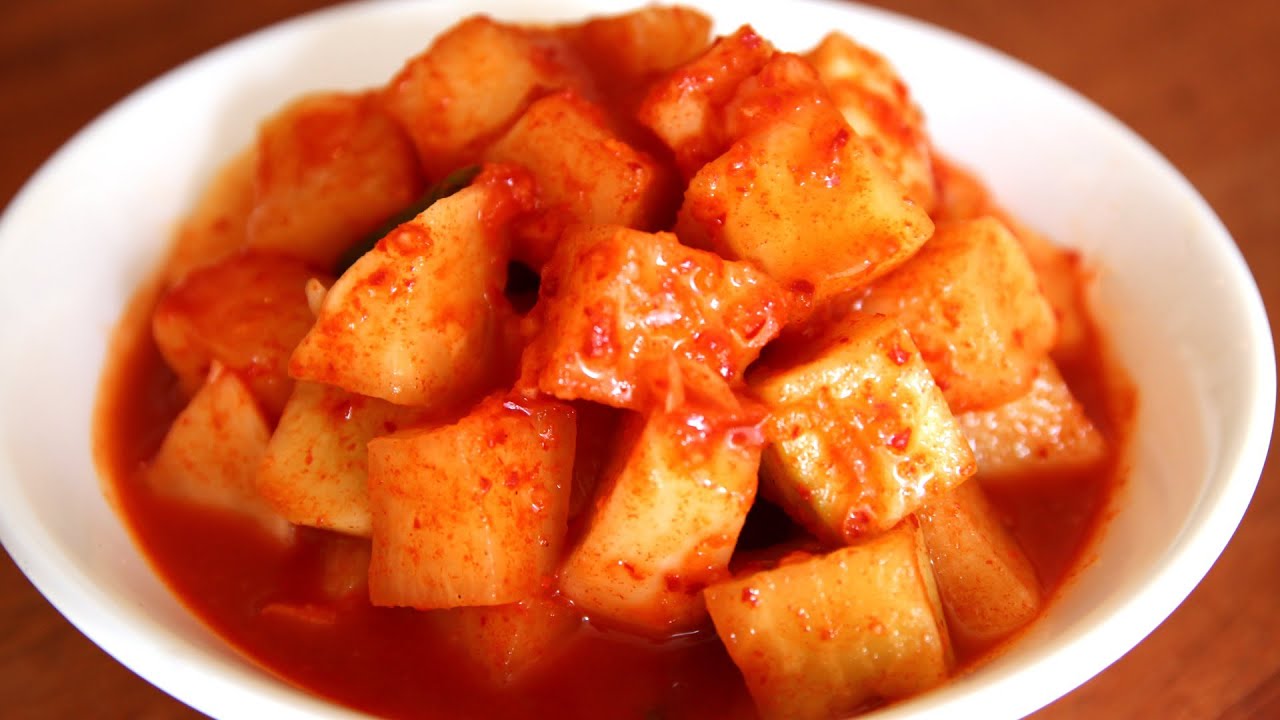
Radish Kimchi Recipe: Radish kimchi is one of the most flavorful and refreshing Korean side dishes we can prepare at home. Known for its crunchy texture, spicy seasoning, and deep fermented flavor, this classic dish delivers a perfect balance of heat, tanginess, sweetness, and umami. Whether served alongside rice, noodles, grilled meats, or soups, homemade radish kimchi adds authentic Korean flavor to every meal.
This traditional recipe uses crisp Korean radish, Korean chili flakes, garlic, ginger, fish sauce, and aromatic seasonings to create a rich and satisfying fermented dish. With proper preparation and fermentation, the result is a bold and intensely delicious kimchi that tastes even better over time.
Ingredients You’ll Need for Radish Kimchi
To prepare the perfect Radish Kimchi recipe, we only need a few fresh ingredients and kitchen essentials.
Main Ingredients
- 2 large Korean radishes
- 3 tablespoons sea salt
- 2 tablespoons sugar
- 4 green onions, chopped
- 1 tablespoon minced ginger
- 6 cloves garlic, minced
- 3 tablespoons fish sauce
- 2 tablespoons salted shrimp (optional)
- 4 tablespoons Korean red pepper flakes (gochugaru)
Optional Flavor Enhancers
- 1 tablespoon rice flour paste
- 1 teaspoon sesame seeds
- 1 small carrot, julienned
- 1 teaspoon soy sauce
- 1 teaspoon honey
Choosing the Best Radish for Kimchi
The quality of the radish determines the final texture and flavor of the kimchi. Korean radish, often called “mu,” is the ideal choice because of its firm texture and mild sweetness. Fresh radishes should feel heavy, smooth, and crisp with no soft spots.
A good radish should have:
- Bright white flesh
- Crisp texture
- Mild peppery aroma
- Firm skin
- Juicy interior
Avoid radishes that appear wrinkled, soft, or overly dry because they can affect fermentation and texture.
How to Prepare the Radish Properly
Step 1 – Wash and Peel the Radish
Rinse the radishes thoroughly under cold water to remove dirt. Peel the outer skin using a vegetable peeler.
Step 2 – Cut into Cubes
Slice the radish into evenly sized cubes approximately 1 inch thick. Uniform cubes help ensure consistent fermentation and flavor absorption.
Step 3 – Salt the Radish
Place the cubed radish into a large mixing bowl. Sprinkle sea salt and sugar evenly over the cubes. Toss thoroughly to coat.
Allow the radish to sit for 45 minutes to 1 hour. During this process, the radish releases excess moisture while maintaining a crunchy texture.
Step 4 – Drain Excess Liquid
After salting, drain the liquid and lightly rinse the radish cubes once under cold water. Drain thoroughly.
Preparing the Kimchi Seasoning Paste
Step 1 – Combine Aromatics
In a large bowl, mix:
- Minced garlic
- Ginger
- Fish sauce
- Salted shrimp
- Gochugaru
The mixture should become thick, vibrant red, and aromatic.
Step 2 – Add Green Onions
Add chopped green onions and optional julienned carrots for extra texture and color.
Step 3 – Mix Thoroughly
Wear food-safe gloves and combine all ingredients until evenly coated.
How to Make Radish Kimchi Step by Step
Step 1 – Coat the Radish
Add the salted radish cubes into the seasoning mixture. Toss carefully until every cube is fully coated with the spicy paste.
Step 2 – Transfer to Container
Place the seasoned radish kimchi into a clean airtight glass jar or fermentation container.
Press down gently to remove air pockets while leaving a small amount of space at the top.
Step 3 – Ferment at Room Temperature
Leave the container at room temperature for 1 to 2 days depending on the desired fermentation level.
During fermentation:
- Bubbles may appear
- The aroma becomes tangier
- The flavor deepens
- The texture remains crunchy
Step 4 – Refrigerate
After fermentation, transfer the kimchi to the refrigerator. Cold storage slows fermentation and enhances flavor development over time.
How Fermentation Improves Flavor
Fermentation transforms simple radish cubes into a deeply savory dish packed with complexity. As beneficial bacteria develop naturally, the kimchi gains its signature tangy flavor and aromatic depth.
Fresh kimchi tastes crisp, mildly spicy, and refreshing. After several days, the flavor becomes:
- More sour
- Richer
- Deeper
- Slightly fizzy
- Intensely savory
Many people prefer aged kimchi because of its stronger fermented taste.
Best Tips for Perfect Radish Kimchi
Use Korean Chili Flakes
Authentic Korean chili flakes provide balanced heat, smokiness, and vibrant red color.
Maintain Clean Equipment
Always use sterilized jars and clean utensils to prevent contamination during fermentation.
Do Not Over-Rinse
Rinsing too much removes necessary salt and reduces flavor intensity.
Leave Space in the Jar
Fermentation creates gases and liquid expansion. Leaving space prevents overflow.
Taste During Fermentation
Flavor changes daily. Refrigerate once the desired tanginess develops.
How to Store Homemade Radish Kimchi
Proper storage keeps kimchi fresh and flavorful for weeks.
Refrigeration
Store kimchi in airtight containers inside the refrigerator. Properly fermented kimchi can last for several weeks or even months.
Avoid Frequent Air Exposure
Repeated opening introduces oxygen and may affect flavor consistency.
Use Clean Utensils
Always use clean spoons or chopsticks to preserve freshness.
Serving Ideas for Radish Kimchi
Radish kimchi pairs perfectly with many Korean and Asian dishes.
Best Foods to Serve with Kimchi
- Steamed rice
- Korean barbecue
- Fried rice
- Ramen
- Bibimbap
- Grilled chicken
- Tofu dishes
- Dumplings
- Noodle soups
The crunchy texture and spicy tang make it an excellent contrast to savory meals.
Health Benefits of Radish Kimchi
Homemade radish kimchi contains beneficial nutrients and natural probiotics created during fermentation.
Rich in Probiotics
Fermented foods support digestive health and beneficial gut bacteria.
Low in Calories
Radish kimchi is light, flavorful, and satisfying without excessive calories.
Packed with Vitamins
Radishes contain vitamin C, antioxidants, and essential minerals.
Supports Digestion
Fermented vegetables may help improve digestion and nutrient absorption.
Common Mistakes to Avoid
Using Too Much Salt
Excessive salt can overpower the flavor and slow fermentation.
Under-Fermenting
Fresh kimchi tastes good, but proper fermentation creates the classic tangy depth.
Using Warm Storage Too Long
Over-fermentation can make kimchi overly sour and soft.
Improper Sealing
Loose lids may expose kimchi to excess oxygen and reduce freshness.
FAQs about Radish Kimchi Recipe
1. What is radish kimchi?
Radish kimchi is a Korean fermented side dish made with radish, chili pepper, garlic, ginger, scallions, and seasoning paste. It is crunchy, spicy, slightly sweet, and tangy.
2. What type of radish is best for kimchi?
The best option is Korean radish, also called mu. It has a firm texture and mild sweetness. If unavailable, daikon radish can also be used.
3. How long does radish kimchi take to ferment?
Radish kimchi usually ferments at room temperature for 1 to 2 days, depending on the weather. After that, we store it in the refrigerator to slow fermentation.
4. Why is my radish kimchi too salty?
It may be too salty if the radish was salted for too long or not rinsed properly. We can balance it by adding a little sugar, more radish, or chopped green onions.
5. How long can radish kimchi last?
Radish kimchi can last for several weeks to a few months in the refrigerator. The flavor becomes stronger and more sour as it continues to ferment.
Final Thoughts
Homemade radish kimchi delivers authentic Korean flavor with incredible freshness, crunch, and fermentation depth. By using quality ingredients, proper seasoning, and careful fermentation, we can create restaurant-quality kimchi directly in our kitchen.
This traditional dish continues to grow richer and more flavorful over time, making it one of the most rewarding fermented recipes to prepare at home. Whether enjoyed fresh or aged, radish kimchi remains a timeless Korean favorite packed with bold flavor and irresistible texture.