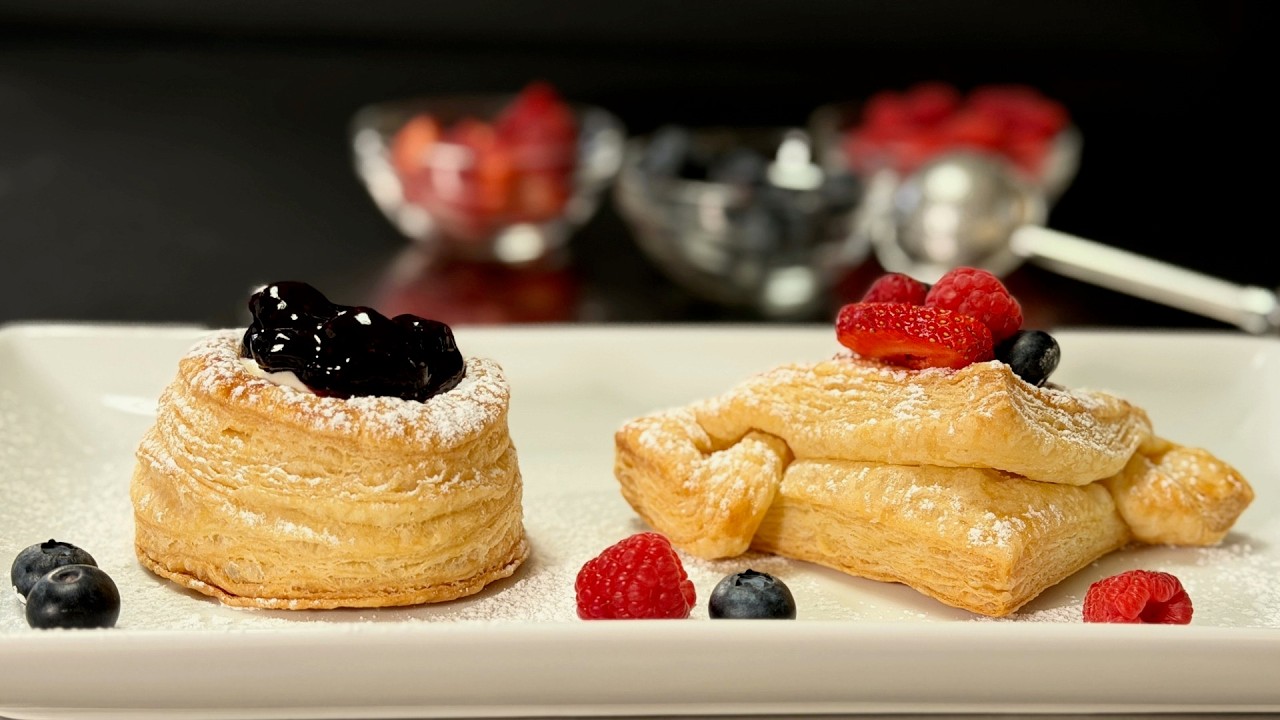
Creating homemade puff pastry dough is one of the most rewarding baking skills we can master in the kitchen. The delicate buttery layers, crisp flaky texture, and rich golden finish make puff pastry the foundation of countless elegant pastries, savory pies, turnovers, tarts, and desserts. While store-bought pastry may seem convenient, nothing compares to the flavor and texture of freshly prepared puff pastry dough made from scratch.
This complete guide walks through every detail necessary to prepare professional-quality puff pastry dough with perfectly laminated layers and irresistible buttery flavor.
What Is Puff Pastry Dough?
Puff pastry dough is a laminated dough created by repeatedly folding butter into dough to produce hundreds of thin layers. During baking, the water in the butter turns into steam, causing the layers to puff dramatically and create the signature airy texture.
The dough is commonly used for:
- Croissants
- Danish pastries
- Apple turnovers
- Sausage rolls
- Napoleons
- Mille-feuille
- Savory pies
- Fruit tarts
- Cheese pastries
The secret to perfect puff pastry lies in maintaining cold temperatures and performing precise folds.
Ingredients You’ll Need
For the Dough Base
- 2 ½ cups all-purpose flour
- 1 teaspoon salt
- 1 tablespoon granulated sugar
- 1 cup cold water
- 2 tablespoons unsalted butter, melted
For the Butter Layer
- 1 ¼ cups unsalted butter, cold but pliable
- 2 tablespoons flour
Essential Kitchen Tools
To achieve bakery-quality puff pastry dough, we recommend using:
- Rolling pin
- Pastry scraper
- Mixing bowls
- Plastic wrap
- Sharp knife
- Measuring cups
- Clean work surface
- Baking parchment
Keeping all tools cool helps preserve the butter layers during lamination.
How to Make Puff Pastry Dough – Step by Step
Making puff pastry dough from scratch may seem complex, but with patience and precision, we can achieve perfectly flaky layers.
Step 1: Prepare the Dough (Detrempe)
In a bowl, mix flour and salt, then add cold water to form a smooth dough. Knead lightly until just combined. Shape into a rectangle, wrap, and refrigerate for 30 minutes.
Step 2: Prepare the Butter Block
Place cold butter between parchment paper and flatten into a rectangle. Chill until firm but pliable. This butter layer is essential for creating the signature flaky texture.
Step 3: Enclose the Butter
Roll the chilled dough into a larger rectangle. Place the butter block in the center and fold the dough over it like an envelope, sealing the edges completely.
Step 4: Roll and Fold (Lamination)
Roll the dough into a long rectangle, then fold it into thirds (like a letter). This is called a single fold. Wrap and chill for 30 minutes. Repeat this process 4–6 times, chilling between each turn. These folds create the delicate layers.
Step 5: Final Chill and Use
After the final fold, refrigerate the dough for at least 1 hour before using. Roll it out as needed for pastries, pies, or desserts.
With proper chilling and careful folding, we create a light, crispy, and buttery puff pastry perfect for both sweet and savory recipes.
How to Roll Puff Pastry Correctly
Proper rolling technique is essential for successful puff pastry.
Always:
- Use a lightly floured surface
- Roll evenly from center outward
- Avoid pressing too hard
- Keep edges straight
- Maintain a rectangular shape
Uneven rolling may cause inconsistent rising during baking.
Best Temperature for Puff Pastry Dough
Temperature control determines the quality of puff pastry.
The butter must stay cold enough to remain distinct between dough layers.
Ideal dough temperature:
- 60°F to 68°F
If the kitchen becomes too warm:
- Refrigerate frequently
- Work quickly
- Chill tools if necessary
Warm butter melts into the dough and destroys the flaky layers.
How Many Layers Does Puff Pastry Have?
Traditional puff pastry develops hundreds of layers.
After six folds, the dough can contain over 700 layers of butter and dough.
These ultra-thin layers create the dramatic puff during baking.
Common Puff Pastry Mistakes to Avoid
Using Warm Butter
Soft butter blends into the dough instead of forming layers.
Always keep butter cold and firm.
Skipping Chill Time
Resting periods are critical.
Without chilling:
- Dough shrinks
- Butter melts
- Layers collapse
Over-Flouring the Surface
Too much flour toughens the pastry.
Brush away excess flour after every fold.
Rolling Too Aggressively
Heavy pressure compresses layers and prevents proper rise.
Use gentle, even strokes.
How to Bake Puff Pastry Perfectly
Oven Temperature
Bake puff pastry at:
- 400°F to 425°F
High heat creates rapid steam expansion, which lifts the layers.
Egg Wash Tips
For a glossy golden finish:
Mix:
- 1 egg
- 1 tablespoon milk
Brush lightly over the surface before baking.
Avoid dripping egg wash onto edges because it can seal layers and reduce puffing.
Delicious Ways to Use Puff Pastry Dough
Homemade puff pastry is incredibly versatile.
Sweet Recipes
- Apple turnovers
- Fruit tarts
- Cream horns
- Cinnamon twists
- Chocolate pastries
- Berry galettes
Savory Recipes
- Chicken pot pie
- Beef Wellington
- Sausage rolls
- Cheese straws
- Spinach pastries
- Puff pastry pizza
The flaky buttery texture elevates both sweet and savory dishes.
How to Store Puff Pastry Dough
Refrigerator Storage
Wrap tightly in plastic wrap.
Store for:
- Up to 3 days
Freezer Storage
Freeze wrapped dough for:
- Up to 3 months
Before using:
- Thaw overnight in refrigerator
Never thaw at room temperature because the butter may melt unevenly.
Tips for Extra Flaky Puff Pastry
For bakery-style results:
- Use European-style butter with higher fat content
- Chill dough between every fold
- Avoid humid environments
- Bake on a preheated tray
- Do not open oven door early
These small details significantly improve texture and rise.
Why Homemade Puff Pastry Is Better
Freshly prepared puff pastry delivers:
- Richer butter flavor
- Better rise
- Crispier texture
- More control over ingredients
- Superior freshness
The layers become lighter, crispier, and far more delicate than frozen alternatives.
FAQs about Puff Pastry Dough Recipe
1. What is puff pastry dough made of?
Puff pastry dough is made with flour, cold butter, salt, and water. The butter is folded into the dough several times to create thin layers that puff up during baking.
2. Why must the butter be cold?
The butter must stay cold and firm so it creates layers instead of melting into the dough. Cold butter helps the pastry rise properly and gives it a flaky texture.
3. Can we make puff pastry dough ahead of time?
Yes. We can prepare puff pastry dough ahead and keep it in the refrigerator for 2 to 3 days. It can also be frozen for longer storage.
4. Why is my puff pastry not rising?
Puff pastry may not rise if the dough becomes too warm, the butter melts, or the layers are pressed too hard. Always chill the dough and use a hot oven.
5. What can we use puff pastry dough for?
We can use puff pastry dough for pies, tarts, turnovers, sausage rolls, pastries, appetizers, and desserts.
Final Thoughts
Mastering homemade puff pastry dough transforms ordinary baking into professional-quality pastry craftsmanship. The delicate buttery layers, dramatic rise, and crisp flaky texture make every recipe feel luxurious and impressive.
With proper folding, chilling, and rolling techniques, we can consistently create puff pastry that rivals the finest bakeries. Whether preparing elegant desserts or savory comfort foods, homemade puff pastry provides unmatched flavor, texture, and versatility.