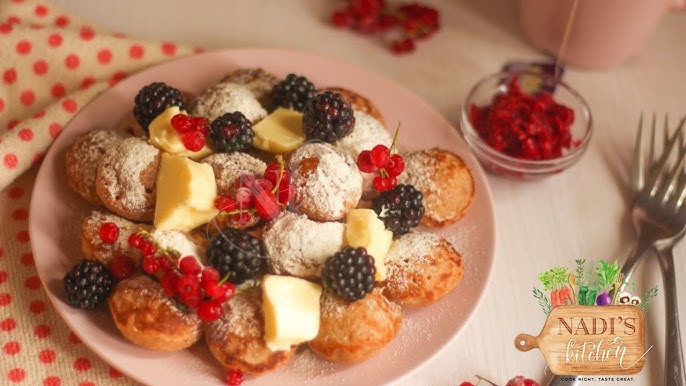
Poffertjes Recipe: Poffertjes are small, fluffy Dutch pancakes with a soft, airy center and lightly golden edges. They are traditionally served warm with butter, powdered sugar, and sometimes syrup, fruit, chocolate sauce, or whipped cream. Unlike regular pancakes, poffertjes are tiny, tender, and slightly puffy, making them perfect for breakfast, brunch, dessert, parties, or a cozy homemade treat.
This poffertjes recipe gives us a simple, reliable way to make authentic-style Dutch mini pancakes at home using basic ingredients. With the right batter consistency, proper resting time, and gentle cooking technique, we can create beautifully soft poffertjes that taste rich, buttery, and delicious.
Ingredients You’ll Need for Poffertjes
To make soft and fluffy poffertjes, we need simple pantry ingredients that work together to create a light, slightly elastic batter.
Main Ingredients
- 1 cup all-purpose flour
- ½ cup buckwheat flour or extra all-purpose flour
- 1 tablespoon granulated sugar
- 1 teaspoon instant yeast
- ¼ teaspoon salt
- 1 cup warm milk
- 1 large egg
- 2 tablespoons melted butter
- ½ teaspoon vanilla extract
- Extra butter for greasing the pan
For Serving
- Powdered sugar
- Soft butter
- Maple syrup or golden syrup
- Fresh strawberries, bananas, or berries
- Chocolate sauce
- Whipped cream
- Honey or caramel sauce
Buckwheat flour gives poffertjes a more traditional Dutch flavor, but we can still make delicious poffertjes using only all-purpose flour. The yeast helps create the classic light texture, while warm milk activates the batter and gives the pancakes their soft interior.
Best Equipment for Making Poffertjes
A traditional poffertjes pan is the best tool for this recipe. It has small round cavities that help the batter form perfect mini pancakes. However, we can still make poffertjes without one by using a non-stick frying pan and spooning small rounds of batter onto the surface.
For the best result, we need:
- Poffertjes pan or non-stick skillet
- Mixing bowl
- Whisk
- Measuring cups and spoons
- Small spoon, squeeze bottle, or piping bag
- Skewer, fork, or small spatula for flipping
A squeeze bottle makes it easier to pour the batter neatly into each cavity, especially when using a poffertjes pan.
How to Make Poffertjes Batter
The batter is the foundation of perfect poffertjes. It should be smooth, pourable, and slightly thicker than crepe batter but thinner than regular pancake batter.
In a large mixing bowl, combine all-purpose flour, buckwheat flour, sugar, instant yeast, and salt. Whisk the dry ingredients together until evenly mixed.
In a separate bowl, combine the warm milk, egg, melted butter, and vanilla extract. The milk should be warm, not hot. If the milk is too hot, it can weaken the yeast and affect the rise of the batter.
Gradually pour the wet ingredients into the dry ingredients while whisking continuously. Mix until the batter becomes smooth and free from large lumps. A few tiny lumps are acceptable, but the batter should not be thick or dry.
Once mixed, cover the bowl with a clean towel or plastic wrap and let the batter rest in a warm place for about 45 minutes to 1 hour. During this time, the yeast activates and the batter becomes lighter, slightly bubbly, and ready for cooking.
Step-by-Step Guide to Making Poffertjes
Step 1: Prepare the Batter
Start by mixing the flour, sugar, yeast, and salt in a large bowl. Add the warm milk, egg, melted butter, and vanilla extract. Whisk until the batter is smooth and pourable. Cover the bowl and allow it to rest until slightly risen and bubbly.
This resting stage is important because it gives the poffertjes their soft, fluffy texture. The batter should look alive and airy when ready.
Step 2: Heat the Poffertjes Pan
Place the poffertjes pan over medium heat. Allow it to heat properly before adding the batter. If the pan is not hot enough, the poffertjes may stick or cook unevenly. If it is too hot, they may brown too quickly before the center cooks.
Brush each cavity with a little butter. The butter adds flavor and helps create golden edges.
Step 3: Fill Each Cavity
Pour or squeeze a small amount of batter into each cavity, filling each one about three-quarters full. Avoid overfilling because the batter will expand slightly as it cooks.
A squeeze bottle gives us the cleanest result, but a teaspoon also works well.
Step 4: Cook Until Bubbles Appear
Let the poffertjes cook for about 1 to 2 minutes. Small bubbles will begin to appear on the surface, and the edges will start to look set. The bottom should become lightly golden.
Do not rush the process. Poffertjes need gentle heat so the inside stays soft while the outside becomes lightly browned.
Step 5: Flip the Poffertjes
Use a skewer, fork, or small spatula to gently turn each poffertje. Traditional poffertjes are often flipped with a skewer by lifting one edge and rolling them over.
Cook the second side for another 1 minute until golden and cooked through.
Step 6: Serve Warm
Transfer the cooked poffertjes to a plate. Add a generous amount of soft butter and dust heavily with powdered sugar. Serve immediately while warm.
The best poffertjes are fresh from the pan, soft in the center, slightly crisp around the edges, and coated with melting butter and sugar.
How to Make Poffertjes Without a Poffertjes Pan
We can still enjoy homemade poffertjes even without the traditional pan. Use a large non-stick skillet or griddle and heat it over medium-low heat. Brush the surface lightly with butter.
Spoon small rounds of batter onto the pan, making each one about 1½ inches wide. Cook until bubbles appear and the edges begin to set, then flip gently and cook the other side.
They may not be perfectly round and puffy like traditional poffertjes, but they will still taste delicious. The key is to keep them small, cook them gently, and serve them warm.
Tips for Soft and Fluffy Poffertjes
For the best texture, we should avoid making the batter too thick. A thick batter will produce heavy poffertjes instead of soft, airy ones. If the batter feels too dense after resting, add one or two tablespoons of warm milk and stir gently.
The pan temperature also matters. Medium heat is usually best. If the poffertjes brown too quickly, reduce the heat. If they stay pale and flat, increase the heat slightly.
Do not skip the resting time. Since this recipe uses yeast, the batter needs time to rise and develop flavor. Resting helps create the classic fluffy Dutch pancake texture.
Use enough butter when greasing the pan. Butter improves the flavor and helps create golden, tender edges. However, avoid adding too much butter, or the poffertjes may fry instead of gently cook.
Best Toppings for Poffertjes
Traditional poffertjes are served with butter and powdered sugar, but we can make them even more special with different toppings.
For a classic version, use melted butter and a generous dusting of powdered sugar. For a richer dessert, add chocolate sauce, caramel, or whipped cream. For a fresh breakfast version, serve them with strawberries, blueberries, bananas, or raspberries.
Other delicious topping ideas include:
- Nutella and sliced banana
- Honey and crushed nuts
- Maple syrup and butter
- Cinnamon sugar
- Lemon zest and powdered sugar
- Vanilla cream and berries
- Caramel sauce and sea salt
Poffertjes are flexible, so they can be served as a simple snack or dressed up as a beautiful dessert.
How to Store Poffertjes
Fresh poffertjes taste best immediately after cooking, but leftovers can be stored for later. Allow them to cool completely, then place them in an airtight container.
Store them in the refrigerator for up to 3 days. To reheat, warm them in a skillet over low heat, in the microwave for a few seconds, or in the oven until soft and warm again.
For longer storage, freeze the poffertjes in a single layer on a tray, then transfer them to a freezer bag. They can be frozen for up to 2 months. Reheat from frozen in the oven or microwave.
Common Mistakes to Avoid
One common mistake is using milk that is too hot. Warm milk helps activate the yeast, but hot milk can damage it. The milk should feel comfortably warm to the touch.
Another mistake is cooking on high heat. Poffertjes are small, so they cook quickly. High heat can burn the outside while leaving the inside undercooked. Medium or medium-low heat gives better control.
Overmixing the batter after resting can also reduce fluffiness. Once the batter has risen, stir it gently only if necessary.
Using too much batter in each cavity can make the poffertjes overflow and lose their neat shape. Fill each cavity only three-quarters full.
Serving Ideas for Homemade Poffertjes
Poffertjes are excellent for breakfast, brunch, birthdays, dessert tables, and holiday gatherings. They can be served on a large platter with different toppings so everyone can customize their plate.
For a breakfast spread, serve poffertjes with fresh fruit, yogurt, honey, and coffee. For dessert, pair them with chocolate sauce, whipped cream, and berries. For a festive treat, dust them with powdered sugar and add cinnamon or a drizzle of caramel.
They are also perfect for children because of their small size and soft texture. We can make a large batch and serve them as bite-sized pancakes for family mornings or special occasions.
Poffertjes Recipe Variations
For a richer flavor, add a little more vanilla extract or a pinch of cinnamon to the batter. For a citrus version, add lemon zest or orange zest. For chocolate poffertjes, mix one tablespoon of cocoa powder into the dry ingredients and serve with chocolate sauce.
For a dairy-free version, replace milk with almond milk, oat milk, or soy milk, and use plant-based butter. For a slightly sweeter version, increase the sugar by one tablespoon.
We can also make savory poffertjes by reducing the sugar and vanilla, then serving them with cheese, herbs, smoked salmon, or sour cream.
FAQs about Poffertjes Recipe
1. What are poffertjes?
Poffertjes are small, fluffy Dutch pancakes traditionally made with yeast and often cooked in a special poffertjes pan with shallow round holes. They are usually served warm with butter, powdered sugar, and sometimes syrup, fruit, or chocolate sauce.
2. Do I need a special pan to make poffertjes?
A special poffertjes pan gives the best round shape and even cooking. However, if you do not have one, you can use a non-stick frying pan and pour small spoonfuls of batter. The shape may not be perfect, but the taste will still be delicious.
3. Why are my poffertjes not fluffy?
Poffertjes may turn out flat if the batter does not rest properly, the yeast is inactive, or the pan is not hot enough. For fluffy results, allow the batter to rest until slightly bubbly, use fresh yeast or baking powder, and cook them over medium heat.
4. Can I make poffertjes without yeast?
Yes, you can make poffertjes without yeast by using baking powder as a quick alternative. Yeast gives a more traditional flavor and texture, while baking powder makes the recipe faster and easier for everyday cooking.
5. How should poffertjes be served?
Poffertjes are best served hot with melted butter and a generous dusting of powdered sugar. You can also add honey, maple syrup, Nutella, whipped cream, strawberries, bananas, or caramel sauce for a sweeter treat.
Final Thoughts
Homemade poffertjes are simple, charming, and full of comforting flavor. With a light yeast batter, warm pan, and careful flipping, we can make soft Dutch mini pancakes that taste just as delicious as the ones served at markets and fairs.
The beauty of this poffertjes recipe is that it works for both traditional and simple home cooking. Whether we use a real poffertjes pan or a regular skillet, the result is a plate of warm, fluffy mini pancakes ready to be finished with butter, powdered sugar, and our favorite toppings.