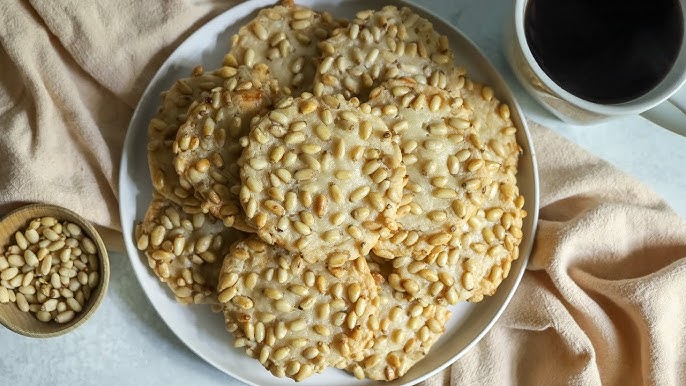
Pignoli Cookies Recipe: Pignoli cookies are classic Italian almond cookies known for their rich flavor, chewy center, crisp golden edges, and beautiful coating of toasted pine nuts. These cookies are especially popular during holidays, weddings, family gatherings, and festive dessert tables because they look elegant while delivering a deeply satisfying almond taste.
Made with almond paste, sugar, egg whites, and pine nuts, pignoli cookies have a naturally luxurious texture without needing flour, butter, or complicated techniques. The outside bakes into a delicate golden crust, while the inside remains soft, moist, and slightly chewy. Every bite gives us the warm sweetness of almond and the buttery crunch of toasted pine nuts.
This pignoli cookies recipe is simple, traditional, and reliable. With the right ingredients and careful shaping, we can create bakery-style Italian pignoli cookies at home with excellent flavor and texture.
List of Ingredients You’ll Need
To make rich, soft, and chewy Italian pignoli cookies, we need a few quality ingredients. Since this recipe uses simple components, each ingredient plays an important role in the final result.
Main Ingredients
- 8 ounces almond paste, broken into small pieces
- ¾ cup granulated sugar
- ½ cup powdered sugar
- 2 large egg whites
- 1 teaspoon pure vanilla extract
- ½ teaspoon almond extract
- ¼ teaspoon salt
- 1 cup pine nuts
- Powdered sugar, for dusting after baking
Optional Ingredients for Extra Flavor
- ½ teaspoon lemon zest for a light citrus aroma
- ¼ teaspoon orange zest for a festive Italian bakery flavor
- A few drops of honey for added moisture and depth
- Extra almond extract for a stronger almond taste
Best Ingredients for Perfect Pignoli Cookies
The most important ingredient in this recipe is almond paste. Almond paste gives pignoli cookies their signature chewy texture and rich almond flavor. We should not confuse almond paste with marzipan. Marzipan is sweeter and firmer, while almond paste has a more natural almond taste and softer structure.
Pine nuts should be fresh, pale, and fragrant. Since pine nuts contain natural oils, they can become stale if stored for too long. Fresh pine nuts create a buttery, nutty coating that turns lightly golden in the oven.
For the best flavor, we should use pure vanilla extract and real almond extract. These two extracts help deepen the aroma of the cookies without overpowering the almond paste.
Kitchen Tools Needed
Before we begin, it is helpful to prepare everything we need for a smooth baking process.
- Mixing bowl
- Food processor or hand mixer
- Rubber spatula
- Baking sheet
- Parchment paper
- Small cookie scoop or spoon
- Cooling rack
- Shallow bowl for pine nuts
A food processor makes the dough smoother and easier to prepare, especially because almond paste can be dense. However, a strong hand mixer can also work if the almond paste is softened and broken into small pieces first.
Step-by-Step Guide to Making Pignoli Cookies
Step 1: Prepare the Baking Sheet
We begin by preheating the oven to 325°F. This moderate temperature helps the cookies bake slowly and evenly, allowing the outside to become golden while the inside stays soft and chewy.
Line a baking sheet with parchment paper. Pignoli cookie dough is sticky, so parchment paper helps prevent sticking and makes cleanup easier. Avoid greasing the tray directly because excess oil can cause the cookies to spread too much.
Step 2: Break the Almond Paste into Small Pieces
Place the almond paste into a food processor or mixing bowl. Break it into small chunks so it blends smoothly with the sugar. This step is important because large pieces of almond paste can create uneven dough.
The almond paste should become crumbly before we add the wet ingredients. A smooth almond base gives the cookies their classic bakery-style texture.
Step 3: Mix Almond Paste with Sugars
Add the granulated sugar and powdered sugar to the almond paste. Pulse or mix until the mixture becomes sandy and evenly combined.
The combination of granulated sugar and powdered sugar helps create the right balance of structure and softness. Granulated sugar gives the cookies body, while powdered sugar helps create a tender finish.
Step 4: Add Egg Whites Gradually
Add the egg whites slowly while mixing. The dough will begin to soften and come together. We should add the egg whites gradually because the dough needs to be thick, sticky, and scoopable rather than runny.
If the dough becomes too loose, the cookies may spread too much during baking. The ideal pignoli cookie dough should hold its shape when scooped but still feel moist and slightly sticky.
Step 5: Add Vanilla, Almond Extract, and Salt
Add the vanilla extract, almond extract, and salt. Mix until everything is fully combined.
The salt may seem small, but it is essential because it balances the sweetness and enhances the almond flavor. The almond extract strengthens the cookie’s signature taste, while vanilla adds warmth and roundness.
Step 6: Prepare the Pine Nuts
Pour the pine nuts into a shallow bowl. This makes it easier to coat each cookie evenly.
Pine nuts do not need to be toasted before baking because they will toast naturally in the oven. If they are toasted beforehand, they may become too dark or bitter during baking.
Step 7: Shape the Cookie Dough
Using a small cookie scoop or spoon, scoop portions of dough about 1 tablespoon each. Lightly dampen your hands with water to prevent sticking, then roll each portion gently into a ball.
The dough should be soft and sticky, so we should handle it gently. Do not add flour to the dough because traditional pignoli cookies are naturally flourless.
Step 8: Coat Each Cookie with Pine Nuts
Press each dough ball into the bowl of pine nuts. Gently roll or press until the outside is coated. The pine nuts should stick to the surface of the dough.
We do not need to completely bury the cookie in pine nuts, but a generous coating gives the cookies their classic look and texture. Press lightly so the pine nuts stay attached during baking.
Step 9: Arrange the Cookies on the Baking Sheet
Place the coated dough balls on the prepared baking sheet, leaving about 2 inches of space between each cookie. Pignoli cookies spread slightly as they bake, so spacing helps them maintain a neat shape.
For a bakery-style appearance, gently press the tops of the cookies just enough to flatten them slightly. This helps them bake evenly while still keeping a soft center.
Step 10: Bake Until Lightly Golden
Bake the cookies for 18 to 22 minutes, or until the edges are lightly golden and the pine nuts are toasted.
The centers should still look slightly soft when removed from the oven. Pignoli cookies continue to firm as they cool, so overbaking can make them dry. The goal is a delicate golden exterior with a moist, chewy almond center.
Step 11: Cool the Cookies Properly
Let the cookies rest on the baking sheet for about 10 minutes before moving them. Freshly baked pignoli cookies are delicate and can break if lifted too soon.
After they firm up slightly, transfer them to a cooling rack. Once completely cooled, dust lightly with powdered sugar for a classic finish.
How to Know When Pignoli Cookies Are Done
Perfect pignoli cookies should have lightly golden edges, toasted pine nuts, and a soft center. They should not be dark brown or hard. The cookies may appear slightly underbaked in the middle when they first come out of the oven, but they will set as they cool.
A properly baked pignoli cookie has three key textures: a crisp outer edge, a tender chewy center, and a buttery pine nut coating.
Tips for Soft and Chewy Pignoli Cookies
For the best result, use high-quality almond paste with a strong almond flavor. If the almond paste is too dry, the dough may become crumbly. If this happens, add a small amount of egg white, one teaspoon at a time, until the dough becomes sticky and scoopable.
Do not overbake the cookies. Pignoli cookies should remain moist inside. Removing them from the oven when the edges are just golden helps preserve their chewy texture.
It is also helpful to use parchment paper instead of a bare baking sheet. The sticky almond dough releases more easily from parchment, and the bottoms bake more evenly.
Common Mistakes to Avoid
One common mistake is using marzipan instead of almond paste. Marzipan is sweeter and firmer, which can change the texture of the cookies. For authentic pignoli cookies, almond paste is the better choice.
Another mistake is adding flour to make the dough easier to handle. Traditional pignoli cookies do not need flour. If the dough is sticky, damp hands are enough to shape it.
Overbaking is also a major issue. These cookies should be soft and chewy, not dry and crunchy. Keep a close eye on the cookies during the final minutes of baking.
How to Store Pignoli Cookies
Store cooled pignoli cookies in an airtight container at room temperature for up to 5 days. Place parchment paper between layers to prevent sticking.
For longer storage, we can refrigerate them for up to 1 week. Before serving, allow the cookies to come to room temperature so the almond flavor and chewy texture return fully.
Can We Freeze Pignoli Cookies?
Yes, pignoli cookies freeze well. After baking and cooling completely, place them in a freezer-safe container with parchment paper between each layer. Freeze for up to 2 months.
To serve, thaw the cookies at room temperature. Avoid microwaving them because heat can make the pine nuts oily and the texture uneven.
We can also freeze unbaked dough balls before coating them with pine nuts. When ready to bake, thaw slightly, roll in pine nuts, and bake as directed.
Serving Suggestions for Pignoli Cookies
Pignoli cookies are perfect with espresso, cappuccino, tea, or hot chocolate. Their almond-rich flavor pairs beautifully with coffee and other warm drinks.
They also make an elegant addition to holiday cookie trays, Italian dessert platters, wedding dessert tables, and homemade gift boxes. Their golden pine nut coating gives them a refined appearance without requiring decoration.
For a festive presentation, arrange them with biscotti, amaretti cookies, butter cookies, and chocolate-dipped treats.
Flavor Variations
For a brighter flavor, add lemon zest or orange zest to the dough. Citrus pairs beautifully with almond and gives the cookies a fresh Italian bakery aroma.
For a richer flavor, add a tiny touch of honey. This gives the cookies extra moisture and a deeper sweetness.
For a more intense almond taste, slightly increase the almond extract, but use caution. Almond extract is powerful, and too much can make the cookies taste sharp.
Why This Pignoli Cookies Recipe Works
This recipe works because it keeps the ingredients simple and balanced. The almond paste creates structure and chewiness, the egg whites bind the dough, the sugars provide sweetness and tenderness, and the pine nuts create a toasted, buttery coating.
Baking at a moderate temperature allows the cookies to develop golden edges without drying out. Cooling them on the baking sheet helps them set properly while keeping the centers soft.
The result is a classic Italian cookie with a beautiful appearance, rich almond flavor, and bakery-quality texture.
Pignoli Cookies Recipe Card
Ingredients
- 8 ounces almond paste
- ¾ cup granulated sugar
- ½ cup powdered sugar
- 2 large egg whites
- 1 teaspoon vanilla extract
- ½ teaspoon almond extract
- ¼ teaspoon salt
- 1 cup pine nuts
- Powdered sugar for dusting
Instructions
- Preheat oven to 325°F and line a baking sheet with parchment paper.
- Break almond paste into small pieces.
- Mix almond paste with granulated sugar and powdered sugar until crumbly.
- Add egg whites gradually and mix until a sticky dough forms.
- Add vanilla extract, almond extract, and salt.
- Scoop dough into small portions and roll gently into balls.
- Coat each dough ball with pine nuts.
- Place cookies on the baking sheet, spacing them apart.
- Bake for 18 to 22 minutes until edges are lightly golden.
- Cool on the baking sheet before transferring to a rack.
- Dust with powdered sugar and serve.
FAQs about Pignoli Cookies Recipe
1. What are pignoli cookies?
Pignoli cookies are classic Italian cookies made with almond paste, sugar, egg whites, and pine nuts. They are known for their chewy center, lightly crisp edges, and rich almond flavor. The pine nuts on the outside give them a delicate crunch and a beautiful golden appearance.
2. What ingredients do we need for pignoli cookies?
To make pignoli cookies, we usually need almond paste, granulated sugar, egg whites, pine nuts, vanilla extract, and a small pinch of salt. Some recipes also include a little almond extract for a stronger almond flavor.
3. Why are my pignoli cookies too flat?
Pignoli cookies may become too flat if the dough is too warm, too wet, or not mixed properly. To prevent this, we should use firm almond paste, avoid overmixing the egg whites, and chill the dough before baking if it feels too soft.
4. How do we know when pignoli cookies are done?
Pignoli cookies are done when the edges are lightly golden and the tops look set. They should still feel slightly soft in the center because they will firm up as they cool. Overbaking can make them dry instead of chewy.
5. How should we store pignoli cookies?
We can store pignoli cookies in an airtight container at room temperature for about 4 to 5 days. For longer storage, they can be frozen in a sealed container. Let them thaw at room temperature before serving.
Final Thoughts
Homemade pignoli cookies are rich, elegant, and deeply satisfying. With their soft almond center, golden pine nut crust, and naturally beautiful appearance, they bring the taste of an Italian bakery into our own kitchen. By using quality almond paste, fresh pine nuts, and careful baking, we can make cookies that are chewy, fragrant, and perfect for any special occasion.