Neapolitan Pizza Dough Recipe: Neapolitan pizza dough is celebrated worldwide for its soft center, airy cornicione, delicate chew, and balanced flavor. When prepared correctly, it creates the classic pizza base associated with traditional wood-fired pizza. The beauty of authentic dough lies in its simplicity: a few ingredients, careful fermentation, and proper technique.
This complete guide covers every stage of making Neapolitan pizza dough, from selecting flour to shaping and baking, so we achieve a professional-quality crust at home.
Ingredients You’ll Need
To make approximately 4 medium Neapolitan pizzas, gather the following:
Core Ingredients
- 1 kg Italian “00” flour (or high-quality bread flour)
- 650 g cold water (65% hydration)
- 30 g fine sea salt
- 2 g fresh yeast or 1 g instant dry yeast
- Extra flour for dusting
Optional for Home Oven Success
- Semolina flour for stretching
- Pizza stone or steel
- Infrared thermometer
- Fine olive oil for handling dough containers
Why “00” Flour Is Best for Neapolitan Pizza Dough
Italian 00 flour is finely milled and ideal for elastic dough with a tender bite. It helps produce the classic structure of Neapolitan pizza: thin center, puffed edges, soft interior, and charred bubbles.
If unavailable, strong bread flour with medium protein content works well.
Step-by-Step Guide to Making Neapolitan Pizza Dough
Step 1: Mix Water and Yeast
Pour the cold water into a large mixing bowl. Add yeast and stir until dissolved.
Using cold water slows fermentation slightly, allowing more controlled dough development and richer flavor.
Step 2: Add Flour Gradually
Add around 10% of the flour first and stir into the water. Then continue adding the remaining flour gradually while mixing by hand or with a dough hook.
Once the mixture begins to come together, add the salt.
Continue mixing until all flour is absorbed and a rough dough forms.
Step 3: Knead Until Smooth and Elastic
Transfer the dough to a clean surface and knead for 15–20 minutes by hand or 8–10 minutes in a mixer.
The dough should become:
- Smooth
- Elastic
- Soft
- Slightly tacky but not sticky
Proper kneading builds gluten strength, allowing the dough to trap gas during fermentation.
Step 4: Rest the Dough
Shape into a large ball and place in a lightly oiled container. Cover tightly.
Let the dough rest at room temperature for 2 hours.
This first rise activates fermentation and relaxes the gluten.
Step 5: Divide Into Dough Balls
After resting, divide into equal portions:
- 250 g balls for 10–12 inch pizzas
- 270–280 g balls for larger pizzas
Shape each portion into a tight, smooth ball by folding edges inward and rotating on the counter.
Place dough balls in covered proofing boxes or containers.
Step 6: Cold Fermentation for Superior Flavor
Refrigerate dough balls for 24 to 72 hours.
Long fermentation improves:
- Aroma
- Digestibility
- Texture
- Browning
- Air pockets in crust
For best results, many pizza makers prefer 48 hours.
Step 7: Bring Dough to Room Temperature
Remove dough balls from the refrigerator 2–4 hours before baking.
They should relax, expand slightly, and become soft enough to stretch.
Cold dough is difficult to shape and can tear easily.
How to Shape Neapolitan Pizza Dough Properly
Use Hands Only
Never use a rolling pin. Pressing with a rolling pin removes valuable gas bubbles.
Instead:
- Dust work surface lightly with flour
- Place dough ball in flour
- Press center gently with fingertips
- Push air outward toward the rim
- Leave a 1-inch border untouched
- Lift and stretch carefully over knuckles
The center should remain thin while the edge stays inflated.
Ideal Dough Size
Stretch to approximately:
- 10 inches for thicker crust
- 12 inches for classic Neapolitan style
Avoid overstretching.
Best Toppings for Authentic Neapolitan Pizza
Neapolitan pizza uses minimal toppings so the dough remains the star.
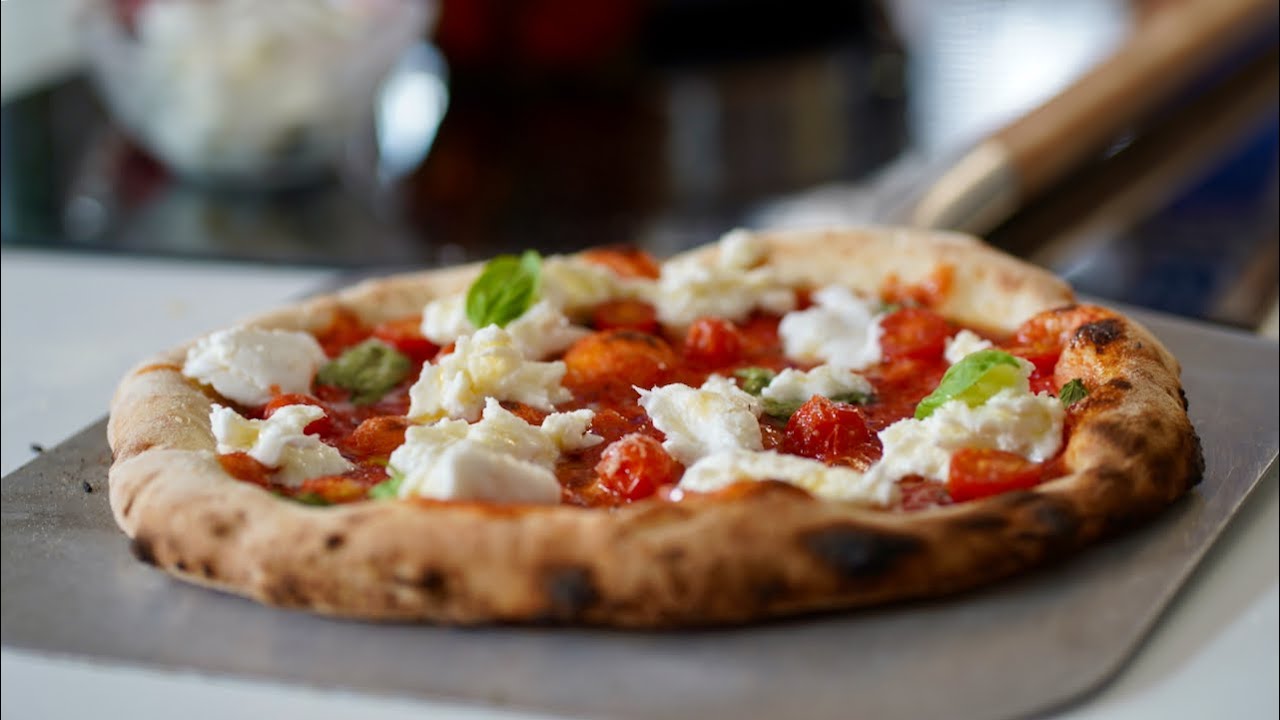
Classic Margherita
- Crushed San Marzano tomatoes
- Fresh mozzarella
- Basil leaves
- Olive oil
Marinara
- Tomato sauce
- Garlic
- Oregano
- Olive oil
Bianca
- Mozzarella
- Ricotta
- Parmesan
- Olive oil
Use toppings sparingly to prevent sogginess.
How to Bake Neapolitan Pizza at Home
Using a Pizza Oven
Preheat to 430°C to 485°C (800°F to 905°F).
Bake pizza for 60 to 90 seconds while rotating regularly.
This delivers the classic leopard spotting and airy crust.
Using a Home Oven
Preheat oven with pizza stone or steel for at least 45 minutes at maximum temperature.
Usually:
- 250°C to 300°C (480°F to 570°F)
Bake for 5 to 8 minutes.
For extra char:
- Finish under broiler for 1 minute.
Signs of Perfect Neapolitan Pizza Dough
The finished crust should have:
- Puffy outer rim
- Soft foldable center
- Light chew
- Irregular air pockets
- Slight char marks
- Rich wheat aroma
The base should not be cracker-thin or overly crunchy.
Common Mistakes to Avoid
Using Too Much Flour While Stretching
Excess flour burns in the oven and creates bitterness.
Use only enough to prevent sticking.
Overproofing the Dough
If dough collapses or feels weak, it may be over-fermented.
Reduce room temperature time or shorten fridge proof.
Underkneading
Weak dough tears easily and lacks oven spring.
Knead until smooth and elastic.
Too Many Toppings
Heavy toppings weigh down the dough and trap moisture.
Keep toppings light and balanced.
Neapolitan Pizza Dough Recipe Measurements (Quick Reference)
For 4 Pizzas
- 1000 g flour
- 650 g water
- 30 g salt
- 2 g fresh yeast
For 2 Pizzas
- 500 g flour
- 325 g water
- 15 g salt
- 1 g fresh yeast
How to Store Pizza Dough
Refrigerator
Store dough balls in airtight containers for up to 3 days.
Freezer
Freeze individual dough balls after initial fermentation.
To use:
- Thaw overnight in refrigerator
- Bring to room temperature 3 hours before baking
Why Long Fermentation Makes Better Dough
Extended fermentation transforms basic dough into premium pizza dough by improving:
- Texture
- Flavor depth
- Browning
- Gas retention
- Soft crumb structure
This is one reason artisan pizzerias produce exceptional crusts.
Professional Tips for Better Neapolitan Dough
Use a Scale
Accurate measurements produce consistent results.
Control Temperature
Warm kitchens accelerate fermentation. Adjust yeast amount if needed.
Use Covered Dough Boxes
They prevent skin formation and help maintain moisture.
Practice Stretching
Shaping improves rapidly with repetition.
FAQs about Neapolitan Pizza Dough Recipe
1. What is Neapolitan pizza dough?
Neapolitan pizza dough is a simple Italian-style dough made with flour, water, salt, and yeast. It is known for creating a soft, thin pizza base with a light, airy crust.
2. What type of flour is best?
“00” flour is the most popular choice because it gives the dough a smooth texture and tender crust. Bread flour can also work if “00” flour is not available.
3. How long should the dough rise?
Neapolitan pizza dough usually rises for 8 to 24 hours, depending on the recipe. A longer rise helps develop better flavor and texture.
4. Do I need to knead the dough a lot?
No, the dough only needs enough kneading to become smooth and elastic. Over-kneading is not necessary.
5. Why is my dough too sticky?
Neapolitan dough has a fairly soft texture, so some stickiness is normal. If it is too wet to handle, lightly dust your hands and work surface with flour.
6. Can I make the dough ahead of time?
Yes, you can prepare it in advance and store it in the refrigerator. Cold fermentation often improves the flavor.
7. What temperature is best for baking?
Neapolitan pizza is best baked at a very high temperature. Traditional pizza ovens are much hotter than home ovens, but using the highest oven setting can still give good results.
8. Why does the crust puff up?
The high heat causes air and steam inside the dough to expand quickly, creating the signature airy and slightly charred crust.
9. Can I freeze Neapolitan pizza dough?
Yes, you can freeze the dough after the first rise. Thaw it in the refrigerator and let it come to room temperature before shaping.
Final Thoughts
Mastering Neapolitan pizza dough recipe techniques gives us the ability to create restaurant-quality pizza at home with simple ingredients and careful fermentation. With the right flour, patient proofing, and high heat baking, the result is a crust that is light, flavorful, airy, and beautifully blistered.
The more often we prepare it, the better the dough becomes, and every batch moves closer to authentic Neapolitan perfection.
Please provide the exact closing text you want added at the end of every article.