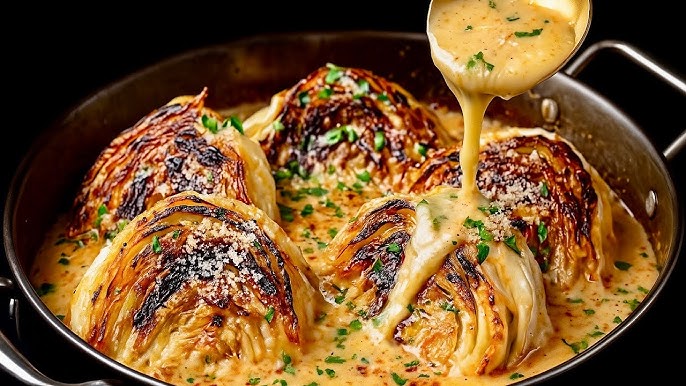
Melting Cabbage Recipe: When prepared correctly, cabbage transforms from a simple everyday vegetable into a deeply savory, buttery, caramelized dish with a soft texture that nearly melts on the tongue. This melting cabbage recipe delivers golden edges, tender layers, and bold flavor with minimal ingredients. It is ideal as a comforting side dish for weeknight dinners, holiday meals, or elegant family gatherings.
This complete guide covers everything needed to prepare the best oven-braised cabbage, including ingredients, preparation tips, cooking methods, serving ideas, and expert techniques for achieving perfectly tender results every time.
Why This Melting Cabbage Recipe Works
Traditional cabbage recipes often focus on boiling or sautéing, but roasting and braising create a far richer result. Slow cooking in butter and broth softens the leaves while developing sweet, nutty notes.
This method gives you:
- Tender, silky cabbage layers
- Golden caramelized edges
- Deep savory flavor
- Simple pantry-friendly ingredients
- A versatile side dish for many meals
The final texture is delicate, buttery, and satisfying.
Ingredients You’ll Need
To prepare this flavorful melting cabbage recipe, gather the following ingredients:
- 1 large green cabbage
- 4 tablespoons unsalted butter, melted
- 2 tablespoons olive oil
- 3 garlic cloves, finely minced
- 1 teaspoon salt
- ½ teaspoon black pepper
- 1 teaspoon paprika
- 1 teaspoon dried thyme or fresh thyme leaves
- 1 cup vegetable broth or chicken broth
- 1 tablespoon lemon juice
- 2 tablespoons fresh parsley, chopped
- Optional: grated parmesan cheese
- Optional: red pepper flakes for heat
These ingredients create balanced flavor while allowing cabbage to remain the star of the dish.
How to Choose the Best Cabbage
For the best result, select:
- A firm, heavy cabbage
- Tight outer leaves
- Bright green color
- No soft spots or browning
Green cabbage works best because it softens beautifully while maintaining structure during roasting. Savoy cabbage can also be used for a more delicate texture.
Step-by-Step Guide for Melting Cabbage
Step 1: Prepare the Oven
Preheat your oven to 400°F (200°C).
A hot oven helps caramelize the edges while the broth keeps the inside moist and tender.
Step 2: Cut the Cabbage into Wedges
Remove any damaged outer leaves. Slice the cabbage in half through the core, then cut each half into wedges.
Keep a small section of core attached to each wedge so the layers stay together while cooking.
You should have:
- 6 to 8 wedges from one large cabbage
Step 3: Make the Flavor Mixture
In a small bowl, combine:
- Melted butter
- Olive oil
- Minced garlic
- Salt
- Black pepper
- Paprika
- Thyme
Whisk until fully blended.
This mixture coats the cabbage and infuses it with rich flavor while roasting.
Step 4: Arrange in Baking Dish
Place cabbage wedges in a large baking dish or oven-safe skillet in a single layer.
Leave a little space between each wedge for even browning.
Step 5: Brush Generously
Brush the butter mixture over every cabbage wedge, making sure it reaches between layers.
This step is essential for achieving the signature melting texture.
Step 6: Add Broth
Pour broth carefully into the bottom of the baking dish.
Do not pour directly over the cabbage tops, or you may wash off the seasoning.
The broth creates steam during roasting, helping the cabbage soften beautifully.
Step 7: Cover and Bake
Cover the dish tightly with foil and bake for 35 minutes.
During this phase, the cabbage steams and begins to soften.
Step 8: Uncover and Roast
Remove foil and continue roasting for another 25 to 30 minutes.
Baste once or twice using the pan juices.
The edges should become golden brown, slightly crisp, and deeply flavorful.
Step 9: Finish with Brightness
Remove from oven and drizzle with lemon juice.
Top with:
- Fresh parsley
- Optional parmesan cheese
- Optional chili flakes
Serve immediately while hot.
Cooking Tips for Perfect Melting Cabbage
Use Enough Fat
Butter is key for richness and flavor. Olive oil adds balance and prevents burning.
Do Not Skip the Broth
Without liquid, the cabbage may dry out before becoming tender.
Roast Until Golden
Deep browning creates sweetness and complexity.
Keep the Core Attached
This prevents wedges from falling apart during cooking.
Flavor Variations
Garlic Parmesan Melting Cabbage
Add parmesan during the final 10 minutes of roasting.
Spicy Version
Use cayenne pepper or red pepper flakes.
Herb Butter Cabbage
Use rosemary, thyme, and parsley.
Smoky Style
Add smoked paprika and cracked black pepper.
Creamy Finish
Drizzle with a spoonful of cream before final roasting.
What to Serve with Melting Cabbage
This versatile dish pairs beautifully with:
- Roast chicken
- Grilled fish
- Steak
- Lamb chops
- Meatloaf
- Rice dishes
- Mashed potatoes
- Lentils
- Beans
It also works as a vegetarian centerpiece when served with grains and sauce.
How to Store Leftovers
Allow cabbage to cool completely, then refrigerate in an airtight container.
- Refrigerator: up to 4 days
- Freezer: up to 2 months
How to Reheat
Oven Method
Place in baking dish, cover with foil, and heat at 350°F (175°C) for 15 minutes.
Skillet Method
Reheat in a pan with a splash of broth until warm.
Microwave Method
Heat in short intervals until hot.
Nutritional Benefits of Cabbage
Cabbage is naturally rich in:
- Fiber
- Vitamin C
- Vitamin K
- Antioxidants
- Folate
This makes melting cabbage both comforting and nutritious.
Common Mistakes to Avoid
Overcrowding the Pan
Crowded wedges steam instead of roast.
Too Little Seasoning
Cabbage benefits from assertive seasoning.
Undercooking
Proper melting cabbage should be fully tender.
Skipping the Final Roast
The uncovered stage creates the best texture and flavor.
Best Occasion to Serve This Dish
This recipe works for:
- Family dinners
- Thanksgiving tables
- Christmas meals
- Sunday roasts
- Meal prep
- Vegetarian menus
- Budget-friendly cooking
FAQs about Melting Cabbage Recipe
1. What is melting cabbage?
Melting cabbage is a dish where cabbage wedges or slices are roasted or braised until they become tender, soft, and full of flavor.
2. Why is it called melting cabbage?
It is called melting cabbage because the cabbage becomes very soft and delicate, almost melting in your mouth after cooking.
3. What type of cabbage works best?
Green cabbage is the most common choice because it holds its shape well while becoming tender. Savoy cabbage can also be used.
4. How do I keep the cabbage from getting soggy?
Use high heat for roasting or avoid adding too much liquid when braising. This helps the cabbage caramelize instead of steaming too much.
5. What seasonings go well with melting cabbage?
Popular options include butter, olive oil, garlic, salt, pepper, thyme, paprika, or Parmesan cheese.
6. Can I make melting cabbage ahead of time?
Yes, you can cook it ahead and reheat gently before serving. It still keeps much of its flavor and texture.
7. What can I serve with melting cabbage?
It pairs well with roasted chicken, steak, pork, rice, potatoes, or other vegetables.
8. Is melting cabbage healthy?
Yes, cabbage is naturally low in calories and rich in fiber, vitamins, and antioxidants, making it a nutritious side dish.
Final Thoughts
This melting cabbage recipe proves that simple vegetables can become extraordinary with the right method. Slow roasting, butter, broth, and seasoning transform cabbage into a deeply flavorful side dish with tender layers and irresistible caramelized edges.
Once you try this recipe, cabbage may become one of the most requested dishes at your table. Prepare it fresh, serve it hot, and enjoy every rich, buttery bite.