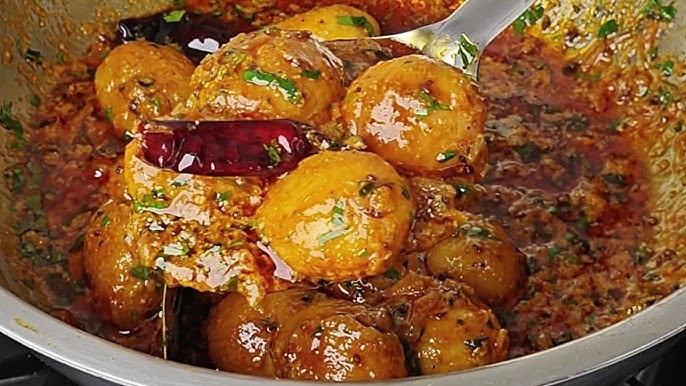
Dum Aloo Recipe: Dum Aloo is a rich, comforting, and deeply flavorful potato curry made by simmering baby potatoes in a spiced gravy over low heat. The word “dum” refers to the slow-cooking method, while “aloo” means potatoes. This classic dish is loved for its bold spices, creamy texture, and satisfying depth of flavor. It is widely prepared in different regional styles, with each version bringing its own character, aroma, and balance of heat.
Some versions are made with yogurt-based gravy, while others use tomatoes, onions, nuts, or cream for body and richness. What makes a good Dum Aloo recipe stand out is the perfect combination of tender potatoes, a smooth and spiced curry base, and a slow simmer that allows every ingredient to blend beautifully.
This dish pairs wonderfully with naan, roti, paratha, jeera rice, pulao, or steamed basmati rice. It is ideal for weeknight dinners, family meals, festive menus, and special occasions because it feels both simple and luxurious.
Ingredients You’ll Need
To prepare an authentic and delicious Dum Aloo recipe, we need a combination of fresh ingredients, whole spices, and ground seasonings that build layers of flavor.
For the Potatoes
- 500 grams baby potatoes
- 2 to 3 tablespoons oil for frying or roasting
- ½ teaspoon salt
For the Curry Base
- 2 medium onions, finely chopped
- 2 medium tomatoes, pureed or finely chopped
- 1 tablespoon ginger-garlic paste
- 1 green chili, finely chopped
- ½ cup thick yogurt, whisked
- 2 tablespoons oil or ghee
Whole Spices
- 1 bay leaf
- 1 inch cinnamon stick
- 2 to 3 green cardamoms
- 3 to 4 cloves
- 1 teaspoon cumin seeds
Ground Spices
- 1 teaspoon turmeric powder
- 1 teaspoon red chili powder
- 1 teaspoon coriander powder
- ½ teaspoon cumin powder
- ½ teaspoon garam masala
- 1 teaspoon Kashmiri red chili powder for color
- Salt to taste
Optional Ingredients for Richness
- 1 tablespoon cashew paste
- 1 tablespoon fresh cream
- 1 teaspoon kasuri methi
- Fresh coriander leaves for garnish
For Cooking
- 1 to 1½ cups water, depending on desired gravy consistency
How to Choose the Best Potatoes for Dum Aloo
The foundation of a strong Dum Aloo recipe is the potato. Small or baby potatoes are preferred because they cook evenly, absorb the masala well, and look attractive when served whole. Their size allows the gravy to coat them fully, and when lightly fried before simmering, they develop a beautiful outer layer that holds the flavor better.
If baby potatoes are not available, regular potatoes can be cut into large chunks. The goal is to use firm potatoes that do not break apart during simmering. Waxy potatoes usually work better than overly starchy ones for this recipe because they keep their shape and texture.
Preparing the Potatoes Properly
Before starting the curry, we need to prepare the potatoes the right way.
First, wash the baby potatoes thoroughly and boil them until they are just fork-tender. They should be cooked enough to soften inside but not so much that they start breaking. Once boiled, let them cool slightly, peel the skin, and prick them gently with a fork or toothpick. This step helps the spices enter the potatoes during cooking.
Next, heat a little oil and fry or roast the peeled potatoes until they become lightly golden on the outside. This adds texture, improves taste, and gives the potatoes a slightly crisp coating before they are simmered in the gravy. Set them aside once done.
Step-by-Step Guide to Make Dum Aloo
Step 1 – Boil and Peel the Potatoes
Add the baby potatoes to a pot of water and boil until tender. Drain the water, allow them to cool slightly, and peel the skin. Prick each potato lightly. This simple step makes a major difference because it allows the potatoes to absorb the curry more effectively.
Step 2 – Fry or Roast the Potatoes
Heat oil in a pan and add the peeled potatoes with a pinch of salt. Fry them on medium heat until they turn lightly golden. Do not over-fry them. We want a delicate crust, not a hard shell. Once ready, remove and keep aside.
Step 3 – Temper the Whole Spices
In the same pan, heat oil or ghee. Add cumin seeds, bay leaf, cinnamon, cardamom, and cloves. Let them sizzle for a few seconds until aromatic. This step builds the first layer of the dish and gives the curry its warm, deep base.
Step 4 – Cook the Onions Until Golden
Add the chopped onions and sauté patiently until they turn golden brown. This stage should not be rushed. Properly cooked onions create sweetness, body, and color in the gravy. If the onions remain undercooked, the final curry can taste sharp and flat.
Step 5 – Add Ginger, Garlic, and Green Chili
Stir in the ginger-garlic paste and chopped green chili. Cook until the raw smell disappears. The aroma should become rich and savory. This brings the essential sharpness and warmth that make the curry taste complete.
Step 6 – Add Tomatoes and Ground Spices
Now add the tomato puree or finely chopped tomatoes. Mix in turmeric, red chili powder, Kashmiri chili powder, coriander powder, cumin powder, and salt. Cook the masala until the tomatoes soften and the oil starts separating from the sides. This is one of the most important stages in the entire Dum Aloo recipe, because the curry base develops its true flavor here.
Step 7 – Lower the Heat and Add Yogurt
Reduce the heat completely before adding the whisked yogurt. Stir continuously to prevent curdling. Once mixed smoothly into the masala, cook for a few minutes until the gravy thickens. Yogurt adds a signature tang and creaminess that balances the spices beautifully.
Step 8 – Add Cashew Paste for Extra Richness
If a richer restaurant-style version is desired, mix in a little cashew paste at this point. It gives the curry a smoother texture and a luxurious finish without overpowering the spices.
Step 9 – Add the Potatoes and Simmer
Return the fried potatoes to the pan and coat them well in the masala. Add water according to the consistency you want. Cover the pan and let the curry cook on low heat for 10 to 15 minutes. This slow simmer is the true dum process. The potatoes absorb the spices, and the gravy thickens into a flavorful coating.
Step 10 – Finish with Garam Masala and Kasuri Methi
Sprinkle garam masala and crushed kasuri methi into the curry near the end. Stir gently and cook for another minute or two. Add fresh cream if you want a silkier, richer finish. Garnish with chopped coriander leaves before serving.
Why Slow Cooking Matters in Dum Aloo
The slow-cooking method is what transforms this dish from a basic potato curry into an unforgettable one. When the potatoes sit in the gravy over low heat, they soak in the spices from the inside out. The sauce becomes thicker, the aroma becomes deeper, and the final dish tastes more balanced and complete.
A rushed curry often tastes separate, with the potatoes and gravy feeling disconnected. In contrast, a well-simmered Dum Aloo recipe tastes unified, smooth, and properly layered. Every bite carries spice, richness, and warmth.
Tips for Making the Best Dum Aloo Recipe
A great result depends on getting the details right.
Use baby potatoes for the most authentic texture and appearance. Always prick the potatoes after boiling so they absorb the gravy better. Frying the potatoes before simmering gives them a firmer structure and better flavor.
Cook the onions slowly until golden, because this adds natural sweetness and body. Cook the tomato-spice mixture until the oil separates, since undercooked masala affects the final taste. Add the yogurt on low heat and stir well to keep the gravy smooth.
For deeper flavor, allow the finished dish to rest for a few minutes before serving. Like many spiced curries, Dum Aloo often tastes even better after the flavors settle.
Common Mistakes to Avoid
One common mistake is overboiling the potatoes. If they become too soft early on, they may break while simmering. Another mistake is skipping the frying or roasting step, which reduces the texture and overall depth of flavor.
Adding yogurt on high heat can cause splitting, which changes the texture of the gravy. Using too much water can also thin the curry excessively, while undercooking the onion-tomato masala leaves the sauce tasting raw. Strong spice balance is important, so each seasoning should support the dish rather than overpower it.
Serving Suggestions for Dum Aloo
This hearty dish can be served in many delicious ways. It goes especially well with:
- Butter naan
- Tandoori roti
- Lachha paratha
- Jeera rice
- Plain basmati rice
- Peas pulao
For a complete meal, serve it alongside raita, cucumber salad, pickled onions, papad, or a cooling mint yogurt dip. The richness of the curry pairs beautifully with fresh and light side dishes.
How to Store and Reheat Dum Aloo
Dum Aloo stores well, which makes it a practical recipe for meal prep and leftovers. Once cooled, transfer it to an airtight container and refrigerate for up to 3 days. The flavors usually deepen by the next day, making it even more enjoyable.
To reheat, place it on low heat in a pan and add a splash of water if the gravy has thickened too much. Stir gently to avoid breaking the potatoes. It can also be reheated in the microwave in short intervals.
Variations of Dum Aloo
There are many ways to adapt this recipe while keeping its core identity intact.
A restaurant-style Dum Aloo often includes cream, cashew paste, and a smoother gravy. A homestyle version may use fewer ingredients and a lighter texture while still delivering strong flavor. A spicier version can include extra green chilies and black pepper. Some regional styles rely more heavily on yogurt, while others use tomato and onion as the main base.
For a richer festive meal, a drizzle of cream and a sprinkle of coriander right before serving gives the curry a polished finish.
Why This Dum Aloo Recipe Works
This Dum Aloo recipe works because it focuses on method as much as ingredients. The potatoes are prepared to hold flavor. The masala is cooked in stages for proper depth. The yogurt is added carefully for balance and richness. Finally, the slow simmer ties everything together into one cohesive dish.
The result is a potato curry that tastes bold yet balanced, creamy yet spiced, and hearty enough to serve as the centerpiece of a meal. It is comforting, flavorful, and timeless.
FAQs about Dum Aloo Recipe
1. What is Dum Aloo?
Dum Aloo is a popular Indian potato curry made with small potatoes cooked in a rich, spiced gravy. The word “dum” refers to slow cooking, which helps the potatoes absorb the flavors deeply.
2. What type of potatoes are best for Dum Aloo?
Baby potatoes are the best choice because they hold their shape well and absorb the gravy nicely. If baby potatoes are not available, small regular potatoes can also be used.
3. Is Dum Aloo very spicy?
Dum Aloo can be mild or spicy depending on the recipe. The spice level can easily be adjusted by reducing or increasing the chilies and other hot spices.
4. Do we need to fry the potatoes first?
Many traditional recipes fry the potatoes first to give them a richer flavor and better texture. However, they can also be boiled or roasted for a lighter version.
5. What is the gravy made of?
The gravy is usually made with yogurt, tomatoes, onions, ginger, garlic, and a blend of spices. Some versions also use cream, nuts, or cashew paste for extra richness.
6. Can Dum Aloo be made ahead of time?
Yes, Dum Aloo is a great make-ahead dish. In fact, the flavor often becomes even better after it rests for a few hours.
7. What can we serve with Dum Aloo?
It pairs well with naan, roti, paratha, jeera rice, or plain steamed rice. It is a versatile dish that works for both everyday meals and special occasions.
8. How do we store leftovers?
Store leftovers in an airtight container in the refrigerator for up to 3 days. Reheat gently before serving.
Final Thoughts
A well-made Dum Aloo recipe is far more than potatoes in gravy. It is a layered dish built on careful cooking, warm spices, and patient simmering. Whether served for lunch, dinner, a festive table, or a family gathering, it delivers satisfying flavor in every bite.
When prepared correctly, the potatoes stay tender, the gravy turns rich and aromatic, and the entire dish feels complete and deeply comforting. With the right ingredients, a proper cooking method, and a slow finish, Dum Aloo becomes one of the most rewarding potato curries to make at home.