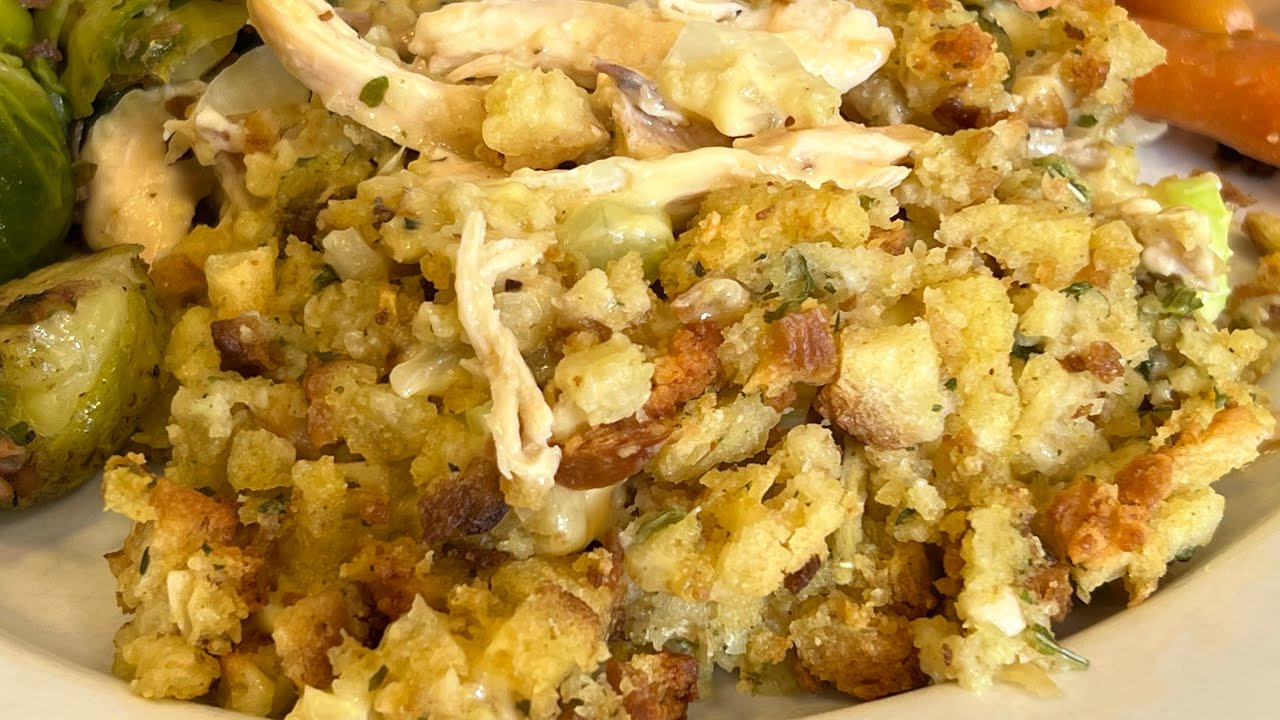
Chicken and Dressing Casserole Recipe: There is something deeply comforting about a casserole that brings together tender chicken, savory dressing, creamy sauce, and a golden baked finish in one dish.
Chicken and dressing casserole hits that sweet spot between a holiday-style side and an easy weeknight main course. It tastes like something that took all afternoon, yet the method is simple enough for a regular dinner rotation.
That balance is exactly why this recipe works so well. It gives you the rich, nostalgic flavor people usually associate with family gatherings, but it packages everything into one practical pan that is easy to prep, bake, serve, and store.
Ingredients You’ll Need
Main Ingredients
Here are the core ingredients you will need to make a classic chicken and dressing casserole:
- 3 cups cooked chicken, shredded or chopped
- 6 cups dry stuffing mix or dried cubed bread
- 1 can cream of chicken soup (10.5 ounces)
- 1 1/2 to 2 cups chicken broth
- 1/2 cup unsalted butter, melted
- 1 cup diced celery
- 1 cup diced onion
- 2 large eggs, lightly beaten
- 1/2 cup milk
- 1/2 teaspoon salt
- 1/2 teaspoon black pepper
These ingredients form the backbone of the casserole. The cooked chicken provides substance and savory flavor, while the stuffing or dried bread acts like a sponge that absorbs broth, butter, and seasoning. The soup, eggs, and milk create the creamy binder that keeps the casserole cohesive rather than crumbly. Celery and onion add that unmistakable homemade dressing flavor people expect the moment the pan comes out of the oven. Butter is not just there for richness. It helps the dressing brown, softens the vegetables, and rounds out the savory notes so the final dish tastes comforting instead of sharp or dry.
If you are using plain dried bread cubes instead of seasoned stuffing mix, that is perfectly fine, but you will need to lean a bit more on your seasonings. Stuffing mix already carries some flavor, while plain bread acts more like a blank canvas. Either way, the method remains the same. The goal is a moist, flavorful casserole that holds together without becoming overly dense.
Seasonings and Helpful Add-Ins
To make the casserole taste layered and balanced rather than one-note, these seasonings and optional add-ins are extremely helpful:
- 1 teaspoon poultry seasoning
- 1/2 teaspoon dried sage
- 1/2 teaspoon dried thyme
- 1/2 teaspoon garlic powder
- 2 tablespoons chopped fresh parsley or 1 tablespoon dried parsley
- Optional: 1/2 cup sour cream for extra creaminess
- Optional: 1/2 cup shredded cheddar cheese
- Optional: 1/4 teaspoon paprika for subtle warmth
- Optional: 1/2 teaspoon onion powder
- Optional: extra broth as needed to adjust moisture
These seasonings turn a basic casserole into one that tastes intentional. Poultry seasoning, sage, and thyme are the backbone of traditional dressing flavor. They give the casserole that holiday-table aroma even if you are making it on an ordinary Tuesday. Garlic powder and parsley support those herbs without overpowering them. Sour cream is a useful add-in when you want a silkier interior, especially if your chicken is on the lean side. Cheese is not necessary for a classic version, but a light layer can make the casserole feel a little more indulgent and kid-friendly.
The important thing is balance. Dressing should taste savory and well-seasoned, but it should not become so herb-heavy that it dominates the chicken. A casserole like this is a bit like an orchestra. The broth, bread, and chicken are the strings; the herbs are the brass section. You want them to be heard, not blasting over everything else. Use these seasonings with confidence, but always taste the mixture where possible before baking, especially if your stuffing mix is already salted.
Kitchen Tools That Make the Process Easier
The beauty of this recipe is that it does not demand specialty equipment. Most home cooks already have everything they need. That said, using the right tools can make the process smoother and help the casserole turn out more evenly baked. A sturdy 9×13-inch baking dish is the main requirement because it gives the mixture enough room to cook through without becoming too thick in the center. If you cram everything into a smaller dish, the middle can stay too wet while the edges overbake.
A large mixing bowl is another essential because the dressing mixture expands as it absorbs liquid. You want enough space to stir everything thoroughly without bread cubes flying over the counter. A medium skillet is useful for sautéing celery and onion in butter before they go into the casserole. Technically, you can mix them in raw, but cooking them first gives the flavor a softer, sweeter, more developed profile. It is a small move that makes the final dish taste more polished.
Other helpful tools include a whisk for blending the soup, milk, eggs, and broth into a smooth binder, a cutting board and sharp knife for chopping vegetables, and a measuring cup to keep your liquid balance under control. That matters more than people think. With casseroles, moisture is everything. Too little liquid and you get dry, crumbly dressing. Too much and the casserole turns heavy and pasty. A spoon or spatula is ideal for folding the bread mixture gently so you do not crush it into mush. These tools are simple, but together they help you move through the recipe with more confidence and fewer surprises.
How to Choose the Best Chicken for This Casserole
Chicken is the heart of this recipe, so choosing the right kind can make a noticeable difference. The good news is that chicken and dressing casserole is forgiving. You do not need a gourmet cut or a complicated cooking technique. What you do need is chicken that is tender, flavorful, and not too dry. Rotisserie chicken is one of the best options because it is convenient, well-seasoned, and easy to shred. It brings built-in flavor and saves time, which is a major win on busy days.
If you prefer to cook your own chicken, boneless skinless chicken breasts or thighs both work well. Breasts are leaner and cleaner in flavor, while thighs are juicier and a little richer. For casseroles, thighs often hold up better because they stay moist during baking. That does not mean breasts are a bad choice. It just means you should be extra careful not to overcook them before they go into the dish. Since the chicken will bake again inside the casserole, it only needs to be cooked until done the first time, not pushed beyond that point.
Leftover roast chicken is another excellent option. In fact, this recipe is one of the smartest ways to transform leftovers into a meal that feels completely new. Chop or shred the chicken into bite-sized pieces so it mixes evenly with the dressing and creamy binder. Large chunks can create uneven texture, while very fine shreds can disappear into the casserole too much. Aim for pieces that let the chicken stay noticeable in every scoop. You want people to taste both the savory dressing and the chicken together, not wonder where one of them went.
Bread and Stuffing Options for the Dressing Base
The dressing layer gives this casserole its identity. Without it, you would just have baked chicken in sauce. That is why the choice of bread or stuffing mix matters so much. For the easiest version, use a seasoned stuffing mix. It is convenient, pre-dried, and already built to absorb liquid while keeping some body. That shortcut is especially useful if you are aiming for a quick, reliable result with strong classic flavor. Many home cooks use it because it simplifies the process without sacrificing comfort-food appeal.
If you want a more homemade style, dried bread cubes are a fantastic choice. White bread, sandwich bread, French bread, or even day-old bakery loaves can all work. The key is dryness. Fresh bread absorbs liquid too fast and can become gluey. Slightly stale or oven-dried cubes soak up broth more evenly and hold their shape better in the casserole. Cornbread can also be used for a more Southern-style flavor profile, though it creates a softer, more crumbly dressing and adds a slightly sweeter note. Some people love that. Others prefer the firmer texture of classic bread stuffing.
Think of the bread as the foundation of a house. If it is too soft, everything sinks. If it is too dry without enough liquid, the structure feels brittle. What you are aiming for is a middle ground where the dressing bakes up moist, savory, and spoon-tender without turning gummy. A mix of bread types can also work beautifully. Combining cubed white bread with a little cornbread gives you the best of both worlds: body, softness, and flavor depth. Whichever route you take, just remember that the bread should support the casserole, not disappear into it.
Prep Work to Do Before You Start Cooking
A little prep before assembly makes this recipe easier, cleaner, and far more consistent. Casseroles are often described as simple, and they are, but simplicity works best when the ingredients are ready to go. Start by preheating your oven to 350°F (175°C) and lightly greasing a 9×13-inch baking dish. That one step prevents sticking and makes serving much easier later. Nobody wants the first scoop to weld itself to the pan.
Next, get your chicken fully cooked and chopped or shredded. Dice the celery and onion into small, even pieces so they soften evenly and blend nicely into the dressing. If you are using plain bread cubes instead of stuffing mix, make sure they are dry enough. You can spread them on a baking sheet and toast them lightly in the oven for several minutes if needed. Melt the butter, measure the broth, crack and beat the eggs, and gather the seasonings before you begin mixing. This kind of setup may seem basic, but it helps the entire recipe come together without second-guessing.
This stage is also where you control texture. Before any ingredients touch the baking dish, you should know whether your bread is dry, whether your chicken looks moist, and whether your broth is ready for adjustment. That gives you room to respond as you mix. Some stuffing blends absorb more liquid than others, and some cooked chicken is drier than expected. Doing the prep first makes it easier to notice those details. It is the difference between driving with a map and driving while still looking for your keys. Everything flows better when the groundwork is done.
Step-by-Step Guide for Chicken and Dressing Casserole
Step 1: Prepare or Cook the Chicken
Start with cooked chicken that is shredded or chopped into bite-sized pieces. You can use rotisserie chicken, baked chicken, or boiled chicken depending on what you have available. If you are cooking it from scratch, season it lightly so it adds flavor to the casserole without overpowering the dressing.
Step 2: Make the Dressing Mixture
In a large bowl, combine your crumbled cornbread or stuffing mix with broth and seasonings. Stir until the mixture is moist and evenly combined, but not overly wet. This dressing layer should feel soft and well-seasoned because it will bake into the casserole and absorb more flavor as it cooks.
Step 3: Prepare the Creamy Binding Mixture
In a separate bowl, whisk together the creamy ingredients such as soup, broth, or sour cream until smooth. Add chopped onion, celery, or any other flavorings your recipe uses, then mix in the cooked chicken. This step helps create a rich filling that holds the casserole together and keeps it from becoming dry.
Step 4: Assemble the Chicken and Dressing Casserole
Lightly grease your baking dish, then spread the chicken mixture evenly across the bottom. Spoon the dressing mixture over the top and gently spread it into an even layer. This keeps the casserole balanced so each serving has both creamy chicken and flavorful dressing.
Step 5: Bake Until Hot, Set, and Golden
Place the casserole in a preheated oven and bake until the top is lightly golden and the center is fully heated through. The edges should look bubbly and the dressing should feel set, not wet. Let it rest for a few minutes before serving so it slices and serves more neatly.
Tips for the Best Texture, Flavor, and Moisture
The difference between a decent casserole and a great one often comes down to texture and moisture control. The biggest mistake people make is assuming that all bread absorbs liquid the same way. It does not. Some stuffing mixes drink broth like a sponge, while others soften quickly with much less. That is why adding broth gradually is one of the smartest habits you can develop for this recipe. Once a casserole is too wet, it is hard to fix. Once it is too dry, it can still be rescued with a little extra broth before baking.
Flavor also benefits from restraint and layering. Use enough herbs to make the dressing aromatic, but do not let sage or poultry seasoning overpower the dish. Sautéing the onion and celery in butter is another non-negotiable move if you want more rounded flavor. It softens their sharp edges and gives the whole casserole a more cooked-from-scratch taste. Salt should be added carefully, especially if you are using canned soup, broth, and seasoned stuffing mix. Those ingredients already bring sodium, so season thoughtfully rather than automatically.
For the best final texture, avoid pressing the mixture too firmly into the baking dish. You want air pockets and softness, not compact density. Letting the casserole rest after baking is also essential. It is a little like letting lasagna settle. Resting gives the ingredients time to hold together and makes serving easier. And here is one last tip that saves a lot of disappointment: always taste your dressing mixture before it goes into the oven, provided your ingredients are safe to sample at that point. If it tastes balanced before baking, the casserole will usually deliver.
Easy Variations and Ingredient Substitutions
One reason this recipe stays popular is how easily it adapts to different kitchens, schedules, and preferences. You can make it more homemade, more convenient, richer, lighter, or more holiday-inspired depending on what you need. For a faster version, use rotisserie chicken, boxed stuffing mix, and canned soup exactly as written. For a more from-scratch version, use homemade shredded chicken, toasted bread cubes, sautéed vegetables, and a simple homemade cream sauce in place of condensed soup. Both can turn out delicious.
If you want to change the flavor profile slightly, add mushrooms, a touch of rosemary, or a handful of shredded cheese. For a Southern-style twist, replace part of the bread with crumbled cornbread. If you do not have cream of chicken soup, cream of celery or cream of mushroom can work, though the flavor will shift a bit. Turkey is also an easy substitute for chicken, making this casserole a brilliant leftover solution after a holiday meal. It is one of those dishes that welcomes improvisation without falling apart.
Need to adjust for what is in your pantry? Use finely chopped cooked carrots in place of some celery, or swap milk with half-and-half for a richer result. Even the herbs can be adjusted according to taste. The casserole is flexible, but its core remains the same: tender meat, savory bread, enough moisture, and good seasoning. That is the foundation. Once you understand that foundation, customizing the recipe becomes far less intimidating and a lot more fun.
What to Serve with Chicken and Dressing Casserole
Because chicken and dressing casserole is hearty, rich, and satisfying on its own, the best side dishes are usually the ones that balance it rather than compete with it. A crisp green vegetable works beautifully. Think green beans, steamed broccoli, or roasted Brussels sprouts. Their freshness cuts through the richness of the casserole and keeps the meal from feeling too heavy. A simple salad with a bright vinaigrette also does the trick if you want something cool and refreshing on the side.
If you are serving this for a holiday-style meal, classic sides like cranberry sauce, mashed potatoes, or glazed carrots can fit right in. The casserole already has a soft, savory texture, so adding one crisp or acidic component is especially helpful. Cranberry sauce may sound old-school, but its sweet-tart contrast actually works wonderfully with the savory dressing. It wakes up the whole plate. Dinner rolls are nice too, though they are definitely optional since the casserole already includes a bread component.
For drinks, iced tea, sparkling water with lemon, or even a light apple cider pairing can complement the cozy flavor profile. This is the sort of meal that feels best when the table has a little contrast: creamy meets crisp, savory meets bright, soft meets fresh. That balance keeps each bite interesting. Instead of overwhelming the plate with more heavy dishes, let the casserole be the star and support it with sides that bring freshness and color.
How to Store, Freeze, and Reheat Leftovers
This casserole stores extremely well, which is one more reason it belongs in a practical meal plan. Once cooled, cover the dish tightly or transfer leftovers to an airtight container and refrigerate for up to 4 days. The flavors often deepen by the next day, making leftovers especially satisfying. That is one of the quiet superpowers of casseroles. They settle overnight, the herbs mingle more fully, and the slices or spoonfuls often come out even better on round two.
To freeze, let the casserole cool completely, then wrap it tightly in a freezer-safe layer and store for up to 2 months. You can freeze it as a whole casserole or in individual portions for easier reheating. If freezing before baking, assemble it fully but leave off any optional cheese until just before baking later. Thaw overnight in the refrigerator when possible. That helps it heat more evenly and reduces the risk of a cold center.
For reheating, the oven is your best friend. Cover the casserole with foil and warm it at 325°F until heated through. Add a small splash of broth if it seems dry. The microwave works for single portions, but the oven does a better job preserving texture. Leftover casserole can lose moisture, so that small addition of broth makes a real difference. It is a bit like reviving bread with steam. The goal is not just heat, but comfort-food texture that still feels appealing.
FAQs about Chicken and Dressing Casserole Recipe
1. Can I use leftover chicken for chicken and dressing casserole?
Yes, leftover chicken works perfectly for this recipe. Shredded rotisserie chicken, baked chicken, or boiled chicken can all save time and still give the casserole plenty of flavor. It is a great way to turn extra chicken into a comforting meal.
2. What kind of dressing is best for this casserole?
Cornbread dressing is one of the most popular choices because it gives the casserole a rich, homemade Southern-style flavor. Stuffing mix can also work if you want something quicker and easier. The best option depends on the texture and taste you prefer.
3. How do I keep chicken and dressing casserole from drying out?
Make sure the dressing has enough broth or creamy mixture before baking. The casserole should look moist before it goes into the oven, not dry or crumbly. Covering it loosely with foil during part of the baking time can also help hold in moisture.
4. Can I make chicken and dressing casserole ahead of time?
Yes, this casserole is very good for make-ahead meals. You can assemble it in advance, cover it, and keep it in the refrigerator until you are ready to bake. This makes it especially useful for holidays, family dinners, or busy evenings.
5. Can I freeze chicken and dressing casserole?
Yes, you can freeze it either before or after baking. Wrap it well or store it in a freezer-safe container to protect it from freezer burn. When ready to use, thaw it in the refrigerator before reheating or baking.
6. What side dishes go well with chicken and dressing casserole?
This casserole pairs well with green beans, roasted vegetables, cranberry sauce, coleslaw, or a simple salad. Since it is rich and hearty, lighter sides often balance the meal nicely. It also works well as part of a holiday-style spread.
Conclusion
What makes this dish especially useful is its flexibility. It can be a weeknight dinner, a potluck contribution, a holiday leftover makeover, or a make-ahead freezer meal. It welcomes shortcuts when you need convenience and still rewards extra care when you want a more homemade result. That is rare. Some recipes are good only when you follow them to the letter. This one gives you room to breathe while still steering you toward success.
With the Ingredients You’ll Need clearly listed and the Step-by-Step Guide laid out in order, you now have everything required to make this casserole confidently. All that is left is to preheat the oven, gather your ingredients, and let the kitchen start smelling like comfort itself.