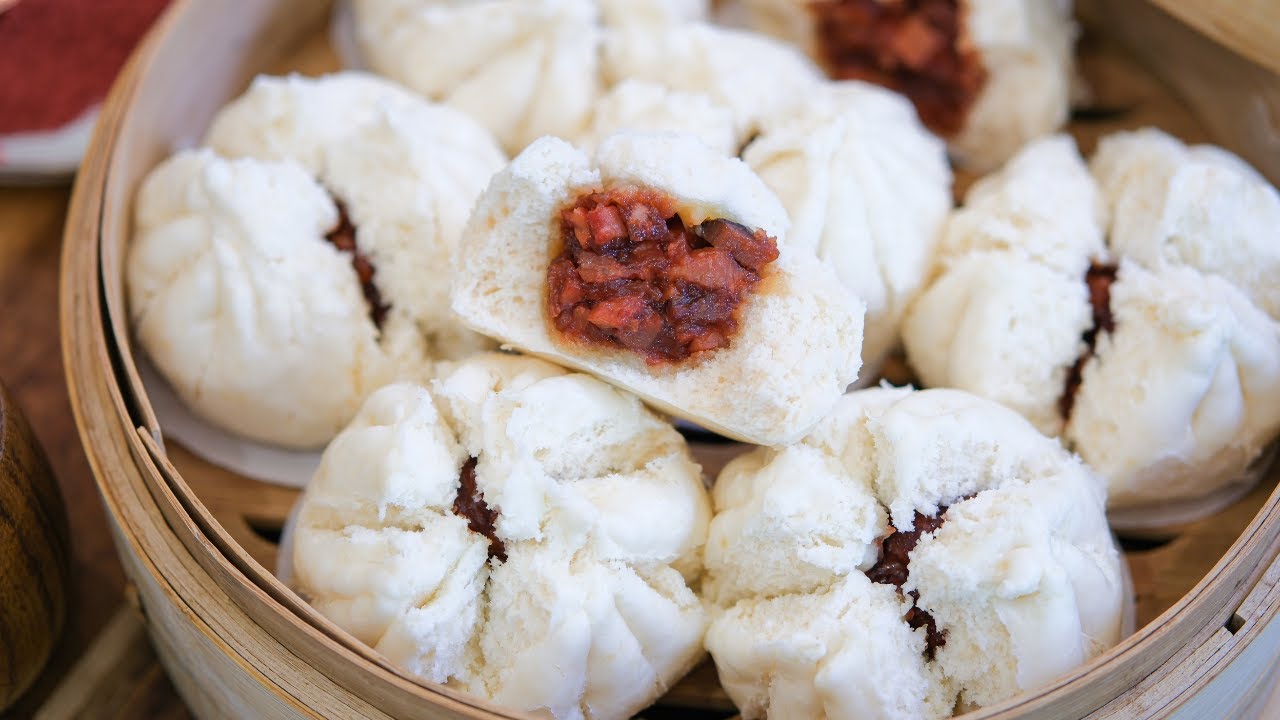
Char Siu Bao Recipe: If you’ve ever walked into a bustling dim sum restaurant and seen bamboo steamers stacked high like little towers of delicious promise, chances are you’ve encountered Char Siu Bao. These fluffy, cloud-like buns are filled with sweet and savory barbecue pork (char siu) and are one of the most beloved Cantonese dishes worldwide. Soft on the outside and rich on the inside, they’re the kind of comfort food that feels like a warm hug in edible form.
Char Siu Bao literally translates to “fork-roast pork bun.” The filling is made from char siu, a style of Cantonese barbecued pork known for its glossy red exterior, caramelized edges, and irresistible sweet-savory flavor. According to culinary historians, char siu dates back over a thousand years to ancient China, where seasoned pork was skewered with long forks and roasted over open fires. Over time, this flavorful meat found its way into pillowy buns, creating the iconic dim sum staple we know today.
Today, Char Siu Bao is served in restaurants across the globe, from Hong Kong tea houses to Chinatowns in New York and London. It’s also one of the top-ordered dim sum items worldwide. The combination of airy dough and sticky, umami-packed pork makes it unforgettable. And the good news? You don’t have to rely on takeout. With the right technique and patience, you can master this classic at home.
The History Behind This Cantonese Classic
Char Siu Bao has deep roots in Cantonese cuisine, which is known for balancing sweet, savory, and umami flavors with remarkable precision. Originating in Southern China, particularly Guangdong province, dim sum culture flourished along the Silk Road trade routes. Tea houses began serving small plates and buns to travelers, and Char Siu Bao quickly became a favorite due to its satisfying texture and rich flavor.
Historically, the pork was marinated in a mixture of honey, fermented bean curd, soy sauce, and spices before being roasted in large brick ovens. The bright red color often associated with char siu traditionally came from fermented red bean curd, though modern recipes sometimes use food coloring. Over centuries, the bun evolved into both steamed and baked versions, each offering a slightly different experience.
What makes this dish so enduring is its ability to combine humble ingredients into something extraordinary. It represents the heart of Cantonese cooking: simple techniques elevated through balance and care. When you bite into a freshly made Char Siu Bao, you’re tasting centuries of culinary tradition wrapped in soft dough.
Steamed vs. Baked Char Siu Bao
You might not realize there are two main types of Char Siu Bao: steamed (白切叉烧包) and baked (叉烧餐包). Both are delicious, but they deliver different textures and flavor experiences.
The steamed version is the most traditional and recognizable. It features a soft, white, fluffy exterior with a slight chew. The dough is slightly sweet and incredibly light, almost like biting into a warm cloud. Inside, the filling is juicy, glossy, and packed with sweet barbecue flavor. This is the version most commonly served in dim sum restaurants.
The baked version, on the other hand, has a golden-brown crust similar to a dinner roll. Sometimes it’s topped with a sweet crumb topping that adds a slight crunch. The filling is usually the same, but the contrast between crisp exterior and sticky interior gives it a different personality. Think of it as the pastry-style cousin of the steamed bun.
For this professional step-by-step guide, we’ll focus primarily on the steamed Char Siu Bao, as it highlights technique and authenticity. Once you master steaming, you can easily adapt the recipe for baking. Either way, you’re in for something truly special.
Why Make Char Siu Bao at Home?
You might be wondering, “Why go through all this effort when I can just buy them?” That’s a fair question. But here’s the thing: homemade Char Siu Bao is a completely different experience. When you make it from scratch, you control every detail — from the sweetness of the filling to the fluffiness of the dough.
Store-bought buns are often mass-produced, which can mean overly thick dough, bland filling, or too much sugar. When you make them yourself, you can adjust the seasoning, choose high-quality pork, and avoid unnecessary additives. The difference in taste is noticeable from the first bite.
There’s also something deeply satisfying about creating these buns with your own hands. Kneading the dough, folding each bun, and watching them puff up in the steamer feels almost magical. It’s cooking as craftsmanship. And once you’ve done it once, you’ll realize it’s not as intimidating as it seems.
Authentic Flavor vs. Store-Bought Versions
Authenticity matters, especially with traditional dishes. Many frozen or takeaway versions cut corners by using artificial coloring, excessive cornstarch, or overly sweet sauces. While convenient, they often lack depth.
When you prepare authentic char siu pork filling, you allow the flavors to develop naturally through marination and slow cooking. The caramelization creates layers of flavor — sweet, salty, smoky, and slightly tangy. Homemade dough also tends to be softer because it hasn’t been sitting in a freezer for weeks.
Professional chefs often emphasize that freshness is key in dim sum. According to Cantonese culinary experts, the best buns are eaten within minutes of steaming. That’s when the dough is at its peak softness and the filling is perfectly juicy.
Cost, Freshness, and Customization
Making Char Siu Bao at home can actually be more economical in the long run. A batch of 12 to 16 buns costs significantly less than ordering them individually at a restaurant. Plus, you can freeze extras for later, making them a convenient snack or breakfast option.
Customization is another huge advantage. Want less sugar? Go for it. Prefer a bit of heat? Add chili paste. Need a leaner option? Use pork tenderloin instead of pork shoulder. You’re in control.
Freshness, affordability, and personalization — that’s a winning combination. And once your kitchen fills with the aroma of freshly steamed buns, you’ll understand why so many home cooks fall in love with this recipe.
Ingredients You’ll Need
Below is a breakdown of everything required to create authentic, restaurant-quality steamed buns at home.
Ingredients for the Char Siu Pork Filling
To make traditional char siu pork filling, you’ll need:
- 1 pound pork shoulder or pork butt
- 2 tablespoons hoisin sauce
- 2 tablespoons light soy sauce
- 1 tablespoon dark soy sauce
- 2 tablespoons honey
- 1 tablespoon oyster sauce
- 1 teaspoon Chinese five-spice powder
- 2 cloves garlic (minced)
- 1 tablespoon sugar
- 1 tablespoon cornstarch (for thickening)
- ½ cup chicken stock
Pork shoulder is ideal because of its fat content. The fat keeps the filling juicy during steaming. Lean cuts can work, but they may result in slightly drier meat.
Ingredients for the Bao Dough
For soft, fluffy steamed buns:
- 3 cups all-purpose flour
- 2 teaspoons instant yeast
- 3 tablespoons sugar
- 1 cup warm water
- 2 tablespoons vegetable oil
- 1 teaspoon baking powder
- ¼ teaspoon salt
The combination of yeast and baking powder ensures a light texture. Sugar not only sweetens the dough slightly but also feeds the yeast, helping it rise properly.
Optional Add-Ins for Extra Flavor
If you want to elevate your buns, consider adding:
- A splash of sesame oil for nuttiness
- Finely chopped green onions for freshness
- A small amount of red fermented bean curd for authentic color and depth
These optional ingredients aren’t mandatory, but they can add complexity that makes your buns taste like they came straight from a professional dim sum kitchen.
Step-by-Step Guide to Making Char Siu Bao
Step 1 – Preparing Authentic Char Siu Pork
Start by making or using cooked char siu pork, then chop it into small pieces. The pork should be tender, flavorful, and slightly sweet. This is the heart of the filling, so good char siu makes a big difference.
Step 2 – Making the Savory-Sweet Filling Sauce
In a pan, cook a mixture of oyster sauce, soy sauce, sugar, sesame oil, and a little stock or water. Add a small amount of cornstarch slurry to thicken it, then stir in the chopped char siu pork. Cook until the filling becomes glossy and thick, then let it cool completely.
Step 3 – Preparing and Kneading the Bao Dough
In a bowl, combine flour, sugar, yeast, warm water or milk, and a little oil. Mix until a soft dough forms, then knead until smooth and elastic. Good kneading helps create soft and fluffy buns.
Step 4 – First Proofing: Letting the Dough Rise
Place the dough in a greased bowl, cover it, and let it rise in a warm place until doubled in size. This usually takes about an hour, depending on the temperature.
Step 5 – Shaping and Filling the Buns
Divide the dough into small portions and roll each one into a circle. Place a spoonful of the cooled filling in the center, then gather and pinch the edges to seal the bun.
Step 6 – Second Proofing for Fluffy Texture
Set the shaped buns on small parchment squares and let them rise again until slightly puffy. This second proof helps make the texture light and airy.
Step 7 – Steaming the Bao to Perfection
Steam the buns in a steamer until they become soft, fluffy, and fully cooked. Avoid overcrowding so they have room to expand.
Step 8 – Serving, Storing, and Reheating Tips
Serve the buns warm for the best texture and flavor. Store leftovers in an airtight container and reheat by steaming again for a soft finish.
Common Mistakes and Pro Tips for Perfect Bao
Making Char Siu Bao isn’t difficult, but small mistakes can affect texture and flavor. One common issue is dense dough. This usually happens due to inactive yeast or insufficient proofing time. Always check yeast freshness and allow proper rising.
Another mistake is watery filling. The sauce must be thick before cooling. Thin filling can leak and ruin the bun’s structure. Cook until glossy and cohesive.
Over-steaming can cause wrinkled buns. Maintain steady medium heat rather than high. Let buns rest briefly before opening the lid.
Professional tip? Weigh your dough portions for consistent size. Uniform buns steam evenly and look more polished. Also, resist the urge to overfill. Balanced proportions create the perfect bite.
FAQs about Char Siu Bao Recipe
1. What is char siu bao?
Char siu bao is a soft Chinese steamed bun filled with sweet and savory barbecue pork. It is popular for its fluffy dough and rich, flavorful filling.
2. Can I use store-bought char siu for the filling?
Yes, store-bought char siu pork works well and saves time. Just chop it into small pieces and mix it with the thickened sauce for the filling.
3. Why is my bao dough not fluffy?
This can happen if the yeast is not active, the dough was not kneaded enough, or it did not rise properly. Letting the dough proof in a warm place helps create a lighter texture.
4. Can I bake char siu bao instead of steaming it?
Yes, some versions are baked instead of steamed. Steamed bao are softer and more traditional, while baked ones have a slightly firmer and golden outside.
5. How do I store and reheat char siu bao?
Store them in an airtight container in the refrigerator for a few days or freeze them for longer storage. For the best texture, reheat them by steaming so they stay soft and moist.
Conclusion
Mastering Char Siu Bao at home is more than following a recipe—it’s about understanding texture, balance, and timing. From marinating the pork to patiently proofing the dough, each step builds toward that final, satisfying moment when you bite into a soft, fluffy bun filled with sweet-savory barbecue pork.
The beauty of this dish lies in its harmony. Nothing overpowers. The dough supports the filling, and the filling enhances the dough. When done right, it tastes authentic, comforting, and deeply satisfying.
Once you’ve made them from scratch, store-bought versions simply won’t compare. And the best part? You now have the skills to recreate this dim sum classic whenever the craving strikes.