Bulgur Wheat Recipe: Bulgur wheat is one of the most nutritious, versatile, and easy-to-cook whole grains you can add to your kitchen. Popular in Middle Eastern, Mediterranean, and Turkish cuisines, bulgur is known for its nutty flavor, quick cooking time, and impressive health benefits.
Whether you’re preparing a simple side dish, a hearty salad, or a base for a healthy bowl meal, bulgur wheat delivers both flavor and nutrition. It’s rich in fiber, packed with vitamins and minerals, and cooks much faster than most whole grains because it is partially pre-cooked.
In this comprehensive guide, you will learn everything about cooking bulgur wheat—from choosing the right type to preparing it perfectly every time. Even if you have never cooked bulgur before, this guide will walk you through every step.
Ingredients You’ll Need
The beauty of bulgur wheat lies in its simplicity. You don’t need many ingredients to prepare a delicious dish. However, small additions like herbs, spices, and vegetables can elevate the flavor significantly.
Below are the basic ingredients required for a classic bulgur wheat recipe.
Basic Ingredients
- 1 cup bulgur wheat
- 2 cups water or vegetable broth
- 1 tablespoon olive oil or butter
- ½ teaspoon salt
- ¼ teaspoon black pepper
These ingredients create a simple, flavorful base that can be enjoyed as a side dish or used in many other recipes.
Optional Flavor Enhancers
You can enhance your bulgur wheat with the following ingredients:
- 1 small onion (finely chopped)
- 2 cloves garlic (minced)
- 1 small tomato (diced)
- ½ teaspoon paprika
- ½ teaspoon cumin
- 1 tablespoon lemon juice
- Fresh parsley (chopped)
- Fresh mint (optional)
These additions create a Mediterranean-style bulgur dish that is both aromatic and refreshing.
Vegetable Add-Ins
Bulgur pairs well with many vegetables. Some popular choices include:
- Bell peppers
- Carrots
- Zucchini
- Spinach
- Mushrooms
- Peas
- Chickpeas
Vegetables not only add flavor but also increase the nutritional value of your meal.
Protein Options
If you want to make your bulgur dish more filling, you can add protein such as:
- Grilled chicken
- Ground beef or lamb
- Roasted chickpeas
- Lentils
- Tofu
These ingredients transform bulgur wheat into a complete and satisfying meal.
Understanding Bulgur Wheat
Before cooking bulgur wheat, it helps to understand what it is and why it is different from other grains.
What Is Bulgur Wheat?
Bulgur wheat is made from whole wheat kernels that have been:
- Parboiled
- Dried
- Cracked into smaller pieces
Because it is partially cooked during processing, bulgur cooks much faster than raw wheat grains.
Types of Bulgur Wheat
Bulgur wheat comes in different grind sizes.
Fine Bulgur
- Used for tabbouleh and salads
- Often requires soaking instead of cooking
Medium Bulgur
- Ideal for pilafs and side dishes
- Cooks quickly and absorbs flavors well
Coarse Bulgur
- Used in hearty dishes
- Requires longer cooking time
Choosing the right type depends on the dish you want to prepare.
Why Bulgur Wheat Is Healthy
Bulgur wheat is considered a superfood grain because of its nutritional value.
Rich in Fiber
Bulgur contains large amounts of dietary fiber, which supports digestion and gut health.
High in Protein
Although not a complete protein, bulgur provides plant-based protein that helps build and repair tissues.
Packed With Nutrients
It contains essential vitamins and minerals such as:
- Iron
- Magnesium
- Vitamin B6
- Potassium
- Folate
Low in Fat
Bulgur wheat is naturally low in fat, making it perfect for healthy meal plans.
Step-by-Step Guide to Cooking Bulgur Wheat
Now let’s move into the most important part—the cooking process. Follow these steps carefully to make perfectly fluffy bulgur wheat.
Step 1 – Measure the Bulgur Wheat
Start by measuring the amount of bulgur wheat you want to cook. A common portion is 1 cup of bulgur wheat, which typically yields about 2–3 cups when cooked.
Step 2 – Rinse the Bulgur
Place the bulgur wheat in a fine strainer and rinse it under cold running water. This removes dust or excess starch and helps improve the texture.
Step 3 – Boil the Water or Broth
In a medium saucepan, bring 2 cups of water or vegetable broth to a boil. Using broth instead of water can add extra flavor to the bulgur.
Step 4 – Add the Bulgur Wheat
Once the liquid is boiling, stir in the rinsed bulgur wheat and add a small pinch of salt if desired.
Step 5 – Simmer the Bulgur
Reduce the heat to low, cover the saucepan with a lid, and let the bulgur simmer for about 10–15 minutes until the grains absorb the liquid and become tender.
Step 6 – Let It Rest
Remove the pot from the heat and allow the bulgur to rest for about 5 minutes. This helps the grains fully absorb any remaining moisture.
Step 7 – Fluff and Serve
Use a fork to fluff the bulgur wheat, separating the grains. You can add olive oil, herbs, lemon juice, or vegetables for extra flavor.
Serve bulgur wheat as a side dish, salad base, or ingredient in dishes like tabbouleh or grain bowls. 🌾🍲
Delicious Variations of Bulgur Wheat
Once you master the basic recipe, you can experiment with different variations.
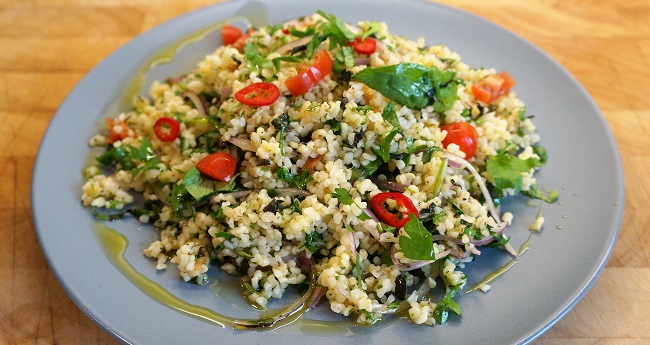
Mediterranean Bulgur Salad
Add:
- Cucumbers
- Tomatoes
- Red onions
- Lemon juice
- Olive oil
- Parsley
This creates a refreshing dish similar to tabbouleh.
Vegetable Bulgur Pilaf
Cook bulgur with:
- Sautéed carrots
- Bell peppers
- Zucchini
- Garlic
This version is colorful, nutritious, and satisfying.
Spicy Bulgur Dish
Add:
- Chili flakes
- Paprika
- Tomato paste
- Garlic
This creates a bold and warming flavor.
Tips for Cooking Perfect Bulgur Wheat
Follow these tips to achieve the best results every time.
Use the Correct Water Ratio
Too much water makes bulgur mushy.
Too little water makes it undercooked.
The ideal ratio remains 1:2.
Use Broth Instead of Water
Vegetable or chicken broth significantly enhances flavor.
Do Not Overcook
Overcooked bulgur becomes sticky and loses texture.
Always check cooking time based on grind size.
Let It Rest
Resting allows the grains to absorb moisture and become fluffy.
Skipping this step can result in uneven texture.
How to Store Bulgur Wheat
Proper storage keeps bulgur fresh for longer.
Storing Uncooked Bulgur
Store in:
- Airtight container
- Cool dry pantry
Shelf life: 6–12 months
Storing Cooked Bulgur
Place cooked bulgur in an airtight container and refrigerate.
It stays fresh for 3–4 days.
Freezing Bulgur
Cooked bulgur can also be frozen.
Store in freezer-safe containers for up to 3 months.
Health Benefits of Bulgur Wheat
Bulgur is not just delicious—it is incredibly healthy.
Supports Digestive Health
The high fiber content promotes healthy digestion and prevents constipation.
Helps With Weight Management
Bulgur keeps you full longer due to its fiber and protein content.
Supports Heart Health
Whole grains like bulgur help reduce cholesterol levels.
Stabilizes Blood Sugar
Bulgur has a relatively low glycemic index compared to refined grains.
Common Mistakes to Avoid
Even simple recipes can go wrong. Avoid these common mistakes.
Skipping the Toasting Step
Toasting improves flavor significantly.
Using Too Much Water
Excess water leads to mushy grains.
Cooking Without Seasoning
Bulgur absorbs flavor well, so seasoning is essential.
Creative Ways to Use Bulgur Wheat
Bulgur is incredibly versatile and works in many dishes.
Bulgur Breakfast Bowl
Serve bulgur with:
- Honey
- Yogurt
- Fruits
- Nuts
Bulgur Stuffed Vegetables
Use bulgur as filling for:
- Peppers
- Tomatoes
- Zucchini
Bulgur Grain Bowls
Top bulgur with:
- Roasted vegetables
- Avocado
- Grilled chicken
- Tahini sauce
FAQs About Bulgur Wheat Recipe
1. What is bulgur wheat?
Bulgur wheat is a whole grain made from cracked wheat that has been partially cooked and dried. It is commonly used in Middle Eastern and Mediterranean dishes such as tabbouleh and pilafs. Bulgur is known for its nutty flavor and quick cooking time.
2. Do I need to soak bulgur wheat before cooking it?
Not always. Fine bulgur can simply be soaked in hot water for about 10–15 minutes until it softens. Medium or coarse bulgur usually needs to be simmered in water or broth to cook properly.
3. What is the water-to-bulgur ratio for cooking?
A common ratio is 1 cup of bulgur wheat to 2 cups of water or broth. This allows the grains to absorb enough liquid and become tender while maintaining their slightly chewy texture.
4. Is bulgur wheat healthy?
Yes, bulgur wheat is considered very nutritious. It is high in fiber, low in fat, and a good source of vitamins and minerals. It also contains plant-based protein and can support digestion and heart health.
5. Can I use bulgur wheat instead of rice or quinoa?
Yes, bulgur wheat can be used as a substitute for rice, couscous, or quinoa in many dishes. It cooks quickly and works well in salads, soups, grain bowls, and side dishes.
6. How should I store cooked bulgur wheat?
Cooked bulgur wheat should be stored in an airtight container in the refrigerator for up to 4–5 days. It can also be frozen for longer storage and reheated when needed. 🌾
Final Thoughts
Bulgur wheat is one of the easiest and healthiest grains you can cook. Its quick cooking time, mild nutty flavor, and versatility make it a favorite ingredient in kitchens around the world.
With just a few ingredients and simple steps, you can create a delicious dish that works as a side, salad base, or full meal.
By following the step-by-step guide in this article, you will be able to prepare perfectly fluffy bulgur wheat every time.
Whether you’re cooking a Mediterranean pilaf, a fresh salad, or a hearty bowl meal, bulgur wheat is a nutritious ingredient that deserves a place in your kitchen.