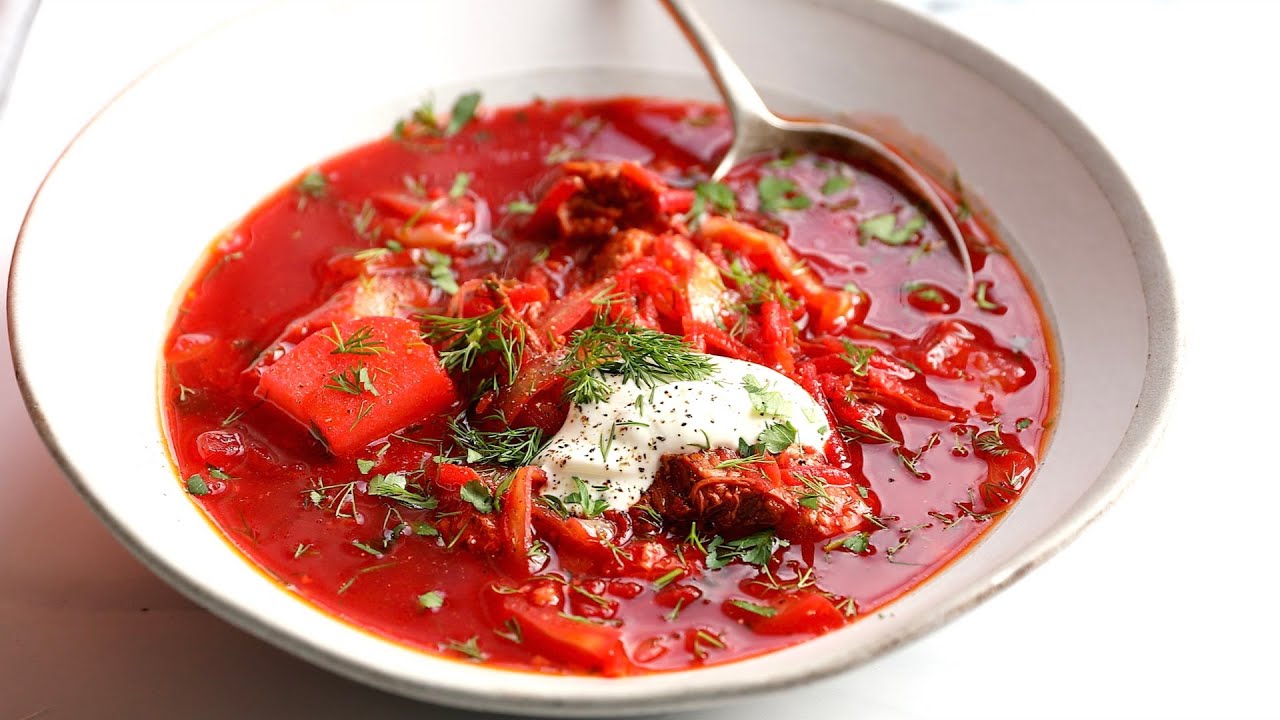
Borscht Soup Recipe: Borscht is one of the most iconic soups in Eastern European cuisine. Famous for its deep red color and rich flavor, this hearty soup is traditionally made with beets, vegetables, and sometimes meat. It is especially popular in Ukrainian, Russian, Polish, and other Slavic cultures.
The beauty of borscht lies in its balance of earthy sweetness from beets, acidity from vinegar or lemon, and savory depth from broth and vegetables. It can be served hot during cold seasons or chilled in summer. Many families have their own versions of this beloved recipe, making it a dish that carries both cultural history and comforting flavor.
In this detailed guide, you will learn everything you need to prepare authentic borscht at home—from selecting the best ingredients to mastering the cooking process.
Ingredients You’ll Need
To make a traditional and flavorful borscht soup, gather the following ingredients.
Main Ingredients
- 4 medium beets, peeled and grated
- 1 large onion, finely chopped
- 2 medium carrots, grated
- 2 medium potatoes, diced
- ½ small cabbage, shredded
- 2 cloves garlic, minced
- 2 tablespoons tomato paste
- 6 cups beef or vegetable broth
- 2 tablespoons vegetable oil or butter
Flavor Enhancers
- 1 tablespoon vinegar or lemon juice
- 1 teaspoon sugar
- 1 bay leaf
- Salt to taste
- Black pepper to taste
Optional Additions
- 1 cup cooked shredded beef or pork
- Fresh dill or parsley for garnish
- Sour cream for serving
These ingredients combine to create the classic balance of sweet, sour, and savory that defines traditional borscht.
Step-by-Step Guide to Making Borscht Soup
Step 1 – Gather the Ingredients
Prepare the ingredients needed for the soup. You will need fresh beets, cabbage, potatoes, carrots, onion, garlic, tomato paste or tomatoes, vegetable or beef broth, salt, black pepper, and fresh dill. Sour cream is often used for serving.
Step 2 – Prepare the Vegetables
Wash and peel the vegetables. Grate the beets and carrots, chop the cabbage, dice the potatoes, and finely chop the onion and garlic.
Step 3 – Cook the Onion and Garlic
Heat 1 tablespoon of oil in a large pot over medium heat. Add the chopped onion and garlic and sauté for about 2–3 minutes until they become fragrant and slightly soft.
Step 4 – Add Beets and Carrots
Add the grated beets and carrots to the pot. Cook for about 5 minutes, stirring occasionally so the vegetables soften and release their color.
Step 5 – Add Tomatoes and Broth
Stir in 2 tablespoons of tomato paste or chopped tomatoes. Pour in 6 cups of vegetable or beef broth and bring the mixture to a gentle boil.
Step 6 – Add Potatoes and Cabbage
Add the diced potatoes and chopped cabbage. Reduce the heat and allow the soup to simmer for 20–25 minutes until the vegetables become tender.
Step 7 – Season the Soup
Add salt, black pepper, and a small splash of vinegar or lemon juice to balance the flavors.
Step 8 – Serve the Soup
Ladle the hot borscht into bowls and garnish with fresh dill and a spoonful of sour cream. Serve with bread or rolls for a hearty meal.
How to Serve Borscht Soup
Borscht is traditionally served with a dollop of sour cream and fresh herbs.
To serve:
- Ladle the hot soup into bowls.
- Add a spoonful of sour cream on top.
- Sprinkle chopped dill or parsley.
The sour cream melts slightly into the soup, creating a creamy contrast to the earthy beet flavor.
Many people also serve borscht with crusty bread or garlic bread.
In Eastern Europe, it is sometimes paired with rye bread or small dumplings.
Tips for the Best Borscht
Use Fresh Beets
Fresh beets provide better flavor and vibrant color.
Don’t Overcook the Vegetables
Vegetables should be tender but not mushy.
Balance Sweet and Sour
The key flavor profile of borscht is a balance between sweetness and acidity.
Let It Rest
Borscht develops deeper flavor after sitting for several hours.
Adjust Thickness
If you prefer thicker soup, reduce the broth slightly.
Variations of Borscht
Borscht comes in many regional versions.
Ukrainian Borscht
Often includes beef, beans, and more vegetables.
Russian Borscht
Usually lighter and sometimes served cold.
Polish Borscht (Barszcz)
Often strained and served clear with dumplings.
Vegetarian Borscht
Uses vegetable broth and focuses entirely on vegetables.
Each variation highlights different flavors while maintaining the classic beet base.
Nutritional Benefits of Borscht
Borscht is not only delicious but also highly nutritious.
Beets are rich in antioxidants and vitamins such as vitamin C and folate.
Carrots provide beta-carotene, which supports eye health.
Cabbage is packed with fiber and beneficial plant compounds.
Together, these vegetables create a nutrient-dense meal that is both satisfying and healthy.
Because it contains many vegetables, borscht is often considered a wholesome comfort food.
Storage and Reheating
Borscht stores very well.
Refrigerator
Store in an airtight container for up to 4 days.
Freezer
Borscht can be frozen for up to 3 months.
Reheating
Reheat gently on the stove over medium heat until hot.
Add a little water or broth if the soup becomes too thick.
Common Mistakes to Avoid
Using Too Much Vinegar
Excess vinegar can overpower the soup.
Skipping the Sauté Step
Sautéing vegetables builds flavor.
Cooking at High Heat
Borscht should simmer gently.
Not Tasting While Cooking
Adjust seasoning gradually to maintain balance.
Why Borscht Is Loved Worldwide
Borscht is more than just soup—it represents tradition, comfort, and cultural heritage.
The dish has been passed down through generations and remains a staple in many households.
Its striking color, nourishing ingredients, and deep flavor make it a standout dish in global cuisine.
Because it can be customized in many ways, borscht continues to evolve while preserving its timeless character.
FAQs about Borscht Soup Recipe
1. What is borscht soup made of?
Borscht soup is a traditional Eastern European dish mainly made from beets, cabbage, potatoes, carrots, onions, tomatoes, and broth. Some versions also include beef or pork, while vegetarian recipes use only vegetables.
2. Why are beets important in borscht?
Beets are the main ingredient in borscht. They give the soup its deep red color and slightly sweet, earthy flavor, which makes the dish unique.
3. Can borscht be made vegetarian?
Yes, borscht can easily be made vegetarian by using vegetable broth instead of meat broth. The soup still remains rich in flavor because of the vegetables and seasonings.
4. How long does borscht last in the refrigerator?
Homemade borscht can be stored in an airtight container in the refrigerator for about 3–4 days. Many people find that the flavor becomes even better the next day.
5. Can borscht soup be frozen?
Yes, borscht freezes well. Store it in freezer-safe containers for up to 2–3 months. Thaw it in the refrigerator and reheat gently before serving.
6. What is traditionally served with borscht?
Borscht is often served with sour cream, fresh dill, and crusty bread. In many traditional meals, it is also paired with rye bread or garlic rolls.
7. Why does borscht sometimes taste sour?
A slightly sour taste is normal. Many recipes add vinegar, lemon juice, or fermented ingredients to balance the sweetness of the beets and enhance the overall flavor.
Final Thoughts
With its rich color, balanced taste, and hearty texture, borscht is perfect for family dinners, cold winter evenings, or even light summer meals when served chilled.
By following this step-by-step guide, you can confidently prepare authentic homemade borscht that captures the traditional taste loved around the world.
Enjoy your bowl of warm, nourishing borscht!